Gournia, the town that still whispers, does so not with the booming theatrical voice of Knossos or the clifftop drama of Phaistos. Instead, it feels more like a neighbour leaning over a garden wall.

This ancient Minoan settlement sits on a low ridge above the Gulf of Mirabello in eastern Crete’s Lasithi region. It’s one of those rare archaeological sites where the past genuinely feels like it might pop round for a cup of tea—or, more likely, a sip of something from a very large clay jar.
Locals call it Γουρνιά. The name doesn’t come from any grand Minoan inscription; it’s just the Greek word for the stone troughs and basins scattered here before archaeologists got serious about digging.
The ancient name is lost, which honestly fits a place whose charm is all about quiet, unpretentious honesty. What makes Gournia stand out is that it preserves not a palace spectacle, but the texture of a real Bronze Age town—streets, houses, workshops, storage rooms, and cemeteries, all packed into one compact hilltop.
The site sits about 18 kilometres southeast of Agios Nikolaos and roughly the same distance from Ierapetra. It’s perched on the narrow Isthmus of Ierapetra, where Crete squeezes itself thin.


If you’re willing to look past the blockbuster sites, Gournia rewards you. Ancient Gournia was a working town, and the whisper it carries across four millennia is surprisingly chatty.
Why Gournia Matters at First Glance
Gournia matters because it’s the best-preserved example of a medium-sized Minoan town. It offers a view of Bronze Age Crete that the great palaces at Knossos, Phaistos, Hagia Triada, and Zakros just can’t provide.
It sits on the north coast of the Isthmus of Ierapetra in eastern Crete, within the Lasithi regional unit. Its location tells you as much about its purpose as its stones do.
What Gournia Is and Where It Sits
The Gournia settlement occupies a low hill near the shore of Mirabello Bay. It’s close to the modern village of Pachyammos, between Agios Nikolaos and Ierapetra.
The isthmus location was strategic. This narrow land corridor connects Crete’s north and south coasts, so any settlement here was a natural waypoint for trade and travel.
The landscape forms a basin, open to the sea on the north but enclosed by limestone hills on three sides. It’s a spot that almost feels designed for a town like this.

Why It Feels More Human Than Monumental
Most visitors to Minoan palace sites see grand staircases and restored frescoes. Gournia offers something different: a late Minoan town with over sixty houses and workshops that show off functional architecture.
You can actually walk through the ancient streets. It’s been called the “Pompeii of Minoan Crete”—maybe a bit dramatic, but honestly, not that far off.
The preservation is good enough that you can stand in what were clearly doorways and look into rooms where potters, weavers, and metalworkers once worked. Suddenly, the Minoan world stops being abstract and starts feeling like a neighbourhood.
A Small Centre With Big Interpretive Value
Gournia’s palace was modest compared to Knossos, but that’s the point. This little Bronze Age town shows how Minoan civilization actually worked at the local level: administration, craft production, agriculture, and maritime trade all woven together.
Setting, Sea Routes, and the Lost Harbour World

The Isthmus of Hierapetra, the Gulf of Mirabello, and nearby sites like Zakros and Mochlos form the backdrop for Gournia. Without this network, the town is just a hillside ruin. But with it, the lost harbour world of eastern Crete starts to make sense.
The Isthmus as a Corridor Between Coasts
The Isthmus of Hierapetra is Crete’s narrowest point—barely 12 kilometres across. For millennia, it’s served as a corridor between the north and south coasts.
Anyone moving goods, people, or news across eastern Crete almost certainly passed through here. Gournia sat right at the northern end of that corridor. It was like a customs booth with a sea view, minus the bureaucracy.
How Gournia Linked Inland and Maritime Networks
Excavations led by L. Vance Watrous from 2010 to 2014 showed that Gournia’s northern edge wasn’t a sleepy fringe. It was one of the busiest parts of town, facing the coast and the harbour approach below.
The town connected inland farming routes with coastal shipping. Regional surveys in the 1990s put Gournia at the centre of a territory, linking farms, small communities, and harbour landings around Mirabello Bay.
It wasn’t a cul-de-sac; it was a hub.
Neighbouring Sites in the Mirabello Orbit
Gournia was part of a constellation of Minoan sites. Mochlos and Gournia shared maritime trade connections, while Pseira, a small island settlement, added another node to the network.
Vasiliki, just inland, had its own long story. Archaeological surveys show these sites were interconnected communities in the Mirabello region. Think of eastern Crete as a web of small towns and harbours, each depending on the others, with Gournia near the middle.
From Early Minoan Roots to Late Minoan Change

The visible ruins at Gournia mostly date to the Late Minoan period. But the site’s roots reach back to the Final Neolithic.
Early and Middle Minoan layers beneath the town show centuries of growth, destruction, and rebuilding. All that happened long before Gournia’s most famous phase.
Early Occupation and Growth
People lived on the Gournia ridge during the Early Minoan period. They picked this spot for practical reasons: close to the Gulf of Mirabello for fishing, on defensible high ground, and right by the Isthmus corridor.
By the Early Minoan period, the settlement had already developed an industrial character. This wasn’t a latecomer riding the coattails of a palace system—Gournia had its own history and probably its own opinions about how things should be done.

Middle Minoan Destruction and Rebuilding
Like many Bronze Age Cretan sites, Gournia suffered a major destruction during the Middle Minoan II period. The cause? Still up for debate, but earthquakes seem likely on an island that treats seismic activity as a regular event.
Rebuilding followed in Middle Minoan IIIA. This brought the more formal town layout and palace complex that visitors see today. Pebble floors, cobbled areas, and older walls beneath the visible structures all point to this cycle of recovery.
The Late Minoan IA Peak and Later Phases
Gournia peaked during the Late Minoan IA period, around 1550 to 1450 BC. The population may have reached 4,000 people, making the town organised, productive, and well connected.
Destruction came again, likely by fire, at the end of the Late Minoan IB period. The town was looted and never rebuilt to its old size. LM III evidence is thin. Whatever whisper Gournia carries now, it mostly comes from that golden Late Minoan IA moment.
At its height, the town looked out over the busy waters of Mirabello Bay, full of merchant ships.
Walking the Town: Streets, Houses, and the Palace

Walking through Gournia is what sets it apart from almost every other Minoan site. The urban planning, domestic architecture, and compact palace survive in enough detail to make the town feel genuinely navigable—less like a museum, more like a place.
Urban Planning on a Stepped Hillside
Gournia’s streets are paved and narrow, climbing the hillside in a way that makes it clear the town planners worked with the land. Houses were built in blocks along these streets, rising in stepped rows.
The layout is practical. There’s nothing showy about it. Spaces feel used, not displayed, and many streets offer glimpses of Mirabello Bay in the distance.
You get the sense that if you left a shopping list on one of these stone thresholds, someone might still find it legible.

The Gournia Palace and Central Court
At the top of the hill sits the building people call the palace at Gournia. It’s small—compared to Knossos, it’s downright tiny.
The palace had a central court, rooms for administration, and evidence of Linear A tablets and stone seals. That confirms its role as a centre of record-keeping and regional authority.
A megaron-style room and fragments of horns of consecration suggest ritual and political functions. But this was a palace fitted into a living town, not a town built around a palace. That distinction feels important.

Workshops, Storage, and Everyday Domestic Life
Gournia was a place of work. Pottery workshops, stone vase production areas, and metalworking spaces have all been found.
Large pithoi for oil, grain, and wine filled ground-floor rooms across the settlement. The Gournia Excavation Project uncovered a cluster of eleven updraft kilns, showing sixteen phases of use from Middle Minoan III to Late Minoan IA.
That’s not hobbyist pottery—that’s an organised craft quarter working over generations. Tools found on site—chisels, hooks, hammers—show that residents were fishers, farmers, weavers, and artisans.
Minoan art and luxury items like rhyta turned up, too, so it wasn’t all blue-collar. Many of these finer pieces now live in the Heraklion Archaeological Museum.
The Cemeteries and What They Reveal About the Living

The cemeteries at Gournia tell a quieter story than the streets and workshops, but it’s just as revealing. How people were buried says a lot about how they lived, what they valued, and where they fit in the social order.
Sphoungaras and the North Cemetery
The Sphoungaras cemetery sits north of the Gournia ridge. People used it during the Early Minoan period, and its burials predate the town’s most visible phase by centuries.
The north cemetery perches on the narrow northern tip of the hill. Both burial grounds make it clear—the dead stayed close to the living.
At Sphoungaras, archaeologists found fishing equipment among the graves. That’s a pretty direct clue about the community’s daily life and priorities.
House Tombs and Changing Burial Customs
House tombs line the gentler eastern and western slopes of the hill. House Tomb I and House Tomb II are the best-documented examples, if you’re keeping track.
These tombs look a lot like small houses. It’s a tradition you’ll also spot at Mochlos, not far away.
People shifted from simpler pit or cist burials to these built house tombs during the Early and Middle Minoan periods. That kind of effort usually signals a community growing more complex—and maybe a few folks wanting to show off a bit.
Pithos Burials, Memory, and Social Status
Pithos burials—where someone is placed inside a huge clay storage jar—turn up at Gournia and all over Minoan Crete. These jars weren’t just old kitchen leftovers. They were chosen or made specifically for burial.
The type of burial probably reflected social status, family traditions, or both. Goods placed with the dead—from plain tools to finer ceramics—suggest the living kept strong ties to their ancestors.
Excavation History and Where the Finds Are Now
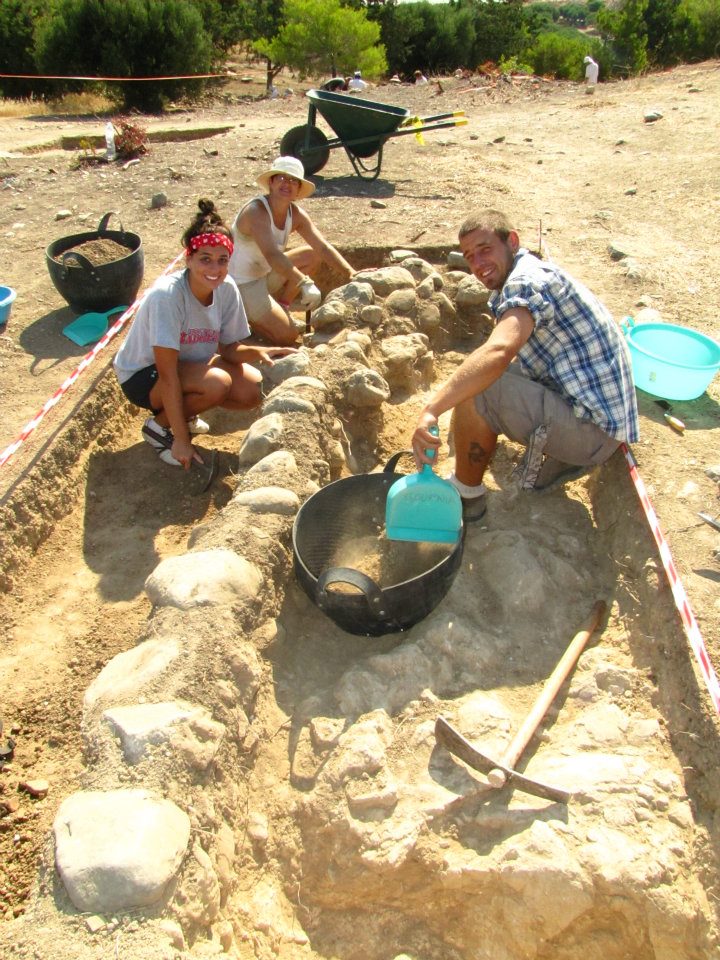
The story of Gournia’s rediscovery is almost as fascinating as the site itself. There’s a pioneering American archaeologist, a Greek schoolteacher, a missing notebook, and decades of changing ideas.
Harriet Boyd Hawes and the First Major Excavations
Harriet Boyd Hawes showed up at Gournia in 1901, with Georgios Perakis, a schoolteacher from Vasiliki, pointing the way. Over several seasons, she dug into the central town, its streets, houses, palace area, and cemetery.
Her work was groundbreaking. She became one of the first women to direct a major archaeological excavation in Greece.
She didn’t just find walls—she uncovered a whole town. That discovery changed how people thought about Minoan civilisation. Scholars compared her results to Arthur Evans at Knossos and Federico Halbherr at Phaistos.
Later Research by Soles, Davaras, and Watrous
In the 1970s, Jeffrey Soles and Costis Davaras brought new attention to Gournia. They found Harriet Boyd’s lost notebook, reconnecting early records with modern research.
Things really picked up with L. Vance Watrous and the Gournia Excavation Project from 2010 to 2014. These digs showed the town was older, more industrial, and much more maritime than people had thought. Survey work in the 1990s had already placed Gournia in its wider landscape. The newer excavations confirmed it was a working harbour town, not just a sleepy settlement by the sea.

Museums, Ongoing Study, and Why Interpretations Changed
Most of the finds from Gournia now live at the Heraklion Archaeological Museum. You can see pottery, tools, and stone seals from the site there, right alongside treasures from Knossos, Zakros, and other big Minoan sites.
Interpretations have shifted because each generation keeps asking new questions. Boyd Hawes wanted to know what the town looked like. Soles and Davaras focused on how it was organised. Watrous dug into how it connected with its harbour and territory. Gournia keeps offering answers—sometimes, it almost feels like it’s trying to help out.
Frequently Asked Questions

Why is Gournia such a big deal in Minoan history (aside from sounding like a sneeze)?
Gournia is the most fully excavated example of a medium-sized Minoan town in Crete. While the great palaces at Knossos and Phaistos show ceremonial power, Gournia shows how ordinary Minoans actually lived, worked, and organised their communities.
It’s the closest thing to a complete Bronze Age neighbourhood you’ll find.
Who excavated Gournia, and did they get any credit for all that digging?
Harriet Boyd Hawes first excavated the site in 1901. She absolutely deserves her place in archaeological history as one of the first women to lead a major dig in Greece.
Later work by Jeffrey Soles, Costis Davaras, and L. Vance Watrous expanded and reinterpreted her discoveries in big ways.
Where exactly is Gournia in relation to Ierapetra, and will my satnav have a meltdown?
Gournia sits about 18 kilometres southeast of Agios Nikolaos and about the same distance north of Ierapetra. It’s right on the main road between the two.
Most satnavs handle it just fine. It’s even signposted from the national road along the north coast of the Isthmus of Ierapetra.
What can you actually see at the Gournia site today: ruins, streets, or just very committed stones?
You can walk through paved Minoan streets and spot the foundations of over sixty houses. There are workshop areas, a small palace, and a central court at the top of the hill.
The walls don’t stand very high, but the layout is clear enough to give you a real sense of the town’s shape.
How does Gournia compare with other Cretan ancient sites like Gortyn, Kommos, or Karfi for a day out?
Gournia is more compact and domestic than Gortyn (which is mostly Roman) and much easier to reach than Karfi (that one’s a hike). It gives a fuller picture of daily Minoan life than Kommos.
If you’re curious about the feel of a Bronze Age community rather than just big monuments, Gournia’s pretty hard to beat.
What was Minoan Crete known for, and how does Gournia fit into the whole labyrinthine saga?
Minoan Crete was famous for its sprawling palace complexes and lively maritime trade. The island’s people also created distinctive art and developed early writing systems like Linear A.
But here’s the thing: Gournia shows that the Minoan world wasn’t just palaces and legends. This site reveals a working town, complete with a harbor, craft workshops, and some form of local administration.
It’s like a glimpse into the everyday lives that ran alongside the myths.