Newsflash from Monday, 6 April 2026:
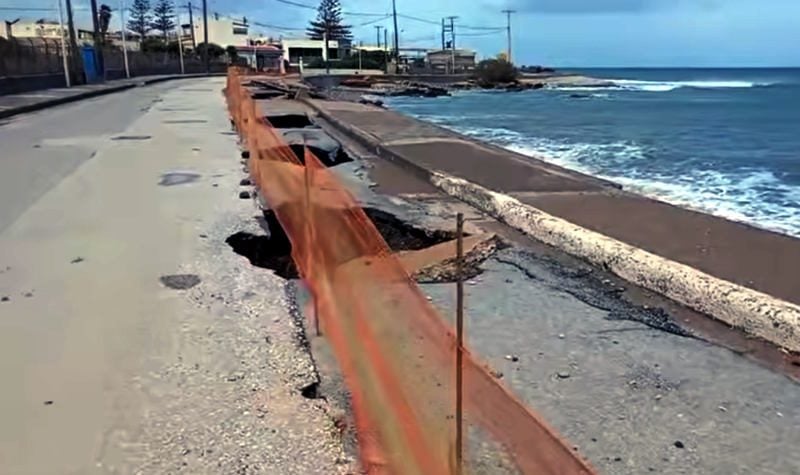
The picturesque coastline of Crete is facing a silent but devastating crisis. In the municipality of Hersonissos—one of the island’s most popular tourist destinations—entire stretches of beach and coastal infrastructure are vanishing at an alarming rate. Villages like Kokkini, Gournes, and Analipsi are witnessing firsthand the brutal reality of coastal erosion, raising serious questions about the future of tourism, safety, and sustainable development in the region.
A Crisis Decades in the Making
The erosion affecting Hersonissos is not a new phenomenon, but recent reports suggest the situation has reached a critical point. What was once a gradual process has accelerated into what local residents and environmental experts are calling a “catastrophic” collapse of the coastal zone.
The damage spans multiple villages:
* Kokkini: Beaches disappearing, infrastructure at risk
* Gournes: Severe erosion threatening residential areas
* Analipsi: Coastal retreat endangering tourism facilities
The Perfect Storm: Climate Change Meets Development
Greece has already lost approximately 250 square kilometers of beaches over the last 30 years due to climate change and rising sea levels. However, the situation in Hersonissos represents a microcosm of a much larger problem affecting the entire Mediterranean region.
Contributing factors to the crisis include:
1. Rising Sea Levels: Climate change is pushing water levels higher, submerging beaches and weakening coastal defenses.
2. Increased Storm Intensity: Severe weather events—like those that battered Crete in 2025—accelerate erosion and overwhelm existing infrastructure.
3. Coastal Overdevelopment: Decades of unregulated construction have removed natural barriers and disrupted sediment flows.
4. Lack of Protective Infrastructure: Many coastal areas lack proper wave barriers or stabilization systems.
5. Sand Mining & Quarrying: Historical extraction of materials has further weakened natural coastal protection.

The Infrastructure Collapse
What makes the Hersonissos situation particularly urgent is the threat to critical infrastructure. Roads, hotels, restaurants, and residential buildings are increasingly at risk as the shoreline retreats. The irony is bitter: authorities are issuing fines for coastal violations, yet they are not investing in the construction of protective measures to save what remains.
Local frustration is mounting as residents watch their livelihoods quite literally wash away, while government responses appear inadequate. As one report notes, the focus seems to be on penalties rather than prevention—a approach that does little to halt the advance of the sea.
The Tourism Implications
For Crete’s vital tourism sector, the erosion of Hersonissos’ coastline poses an existential threat. The region has been a cornerstone of Greek beach tourism, attracting families and holidaymakers from across Europe. With beaches disappearing and coastal infrastructure compromised, the competitive advantage of these once-thriving destinations is eroding faster than the land itself.
Resorts, water sports facilities, and beach bars that have operated for decades now face uncertain futures. Some may be forced to relocate or close entirely, impacting employment and local economies.

A Regional Context
Hersonissos is not alone in this struggle. Recent satellite analysis reveals that concrete expansion along Greece’s coastlines has created a “coastal cement crisis,” posing mounting threats to both the environment and existing infrastructure.
Additionally, Crete as a whole has faced repeated natural disasters in recent years, including severe storms and flooding in 2025 that particularly devastated island communities.
What Experts Say
Costas Synolakis, a preeminent authority on natural hazards, warns that Greece will experience even more coastal loss as climate change continues. The window for action is closing, and without comprehensive coastal resilience strategies, communities like those in Hersonissos face an uphill battle against the forces of nature—and human neglect.
The Hellenic Centre for Marine Research (HCMR) has been working on coastal resilience strategies, including long-term erosion surveys and assessments of coastal vulnerability to marine flooding. However, these efforts need to be scaled up dramatically and paired with actual infrastructure investment.
A Call to Action
The fate of Hersonissos’ coastline is a wake-up call for Greece and the broader Mediterranean region. Protecting coastal communities requires:
* Investment in protective infrastructure: Sea walls, artificial reefs, and beach restoration projects
* Sustainable development policies: Stricter building codes and zoning regulations
* Climate adaptation strategies: Long-term planning for sea-level rise
* Community engagement: Involving local residents in decision-making

Have you visited Hersonissos or other Cretan beaches? Have you noticed changes to the coastline? Share your observations in the comments—your firsthand accounts help document this crisis.