
Newsflash from Thursday, 19 March 2026:
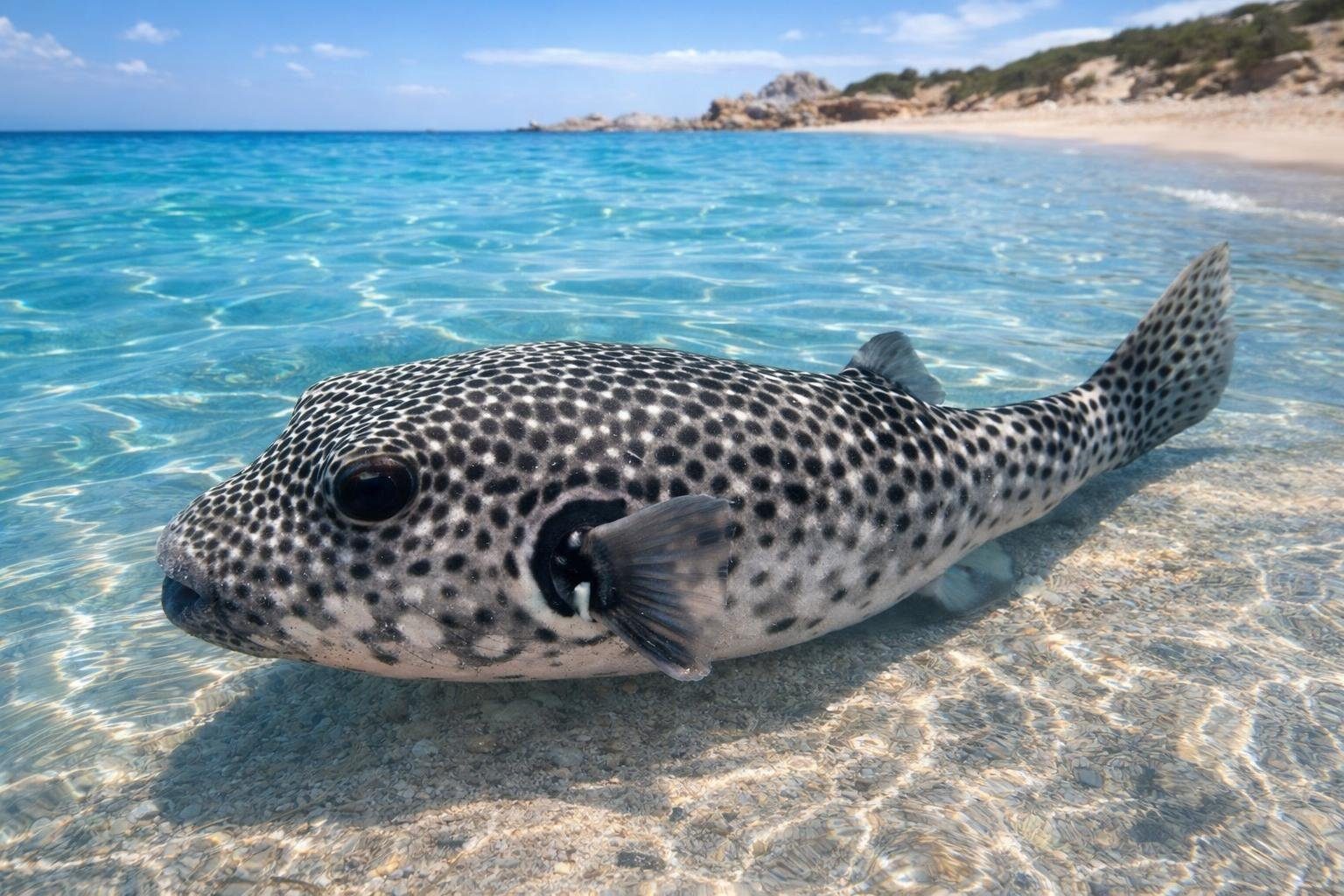

A Record-Breaking Catch
On a recent morning in the waters off Koule, Heraklion, a massive pufferfish weighing approximately 8 kilograms was caught—one of the largest specimens ever recorded in the region. The catch was made by professional fisherman Yiannis Andoulakis and his family, who immediately handed the fish over to ELKTHE (Hellenic Centre for Marine Research) for scientific study.
According to ichthyologist Manolis Metaxakis from ELKTHE, this was “one of the largest samples we have ever seen.” The specimen was caught in waters approximately 6 meters deep near the Venetian harbor entrance.
A Daily Nightmare for Fishermen
What’s particularly alarming is that this isn’t an isolated incident. Andoulakis revealed that his nets were filled with pufferfish that morning, and he and his crew caught and released another nine large specimens weighing between 8-9 kilograms each—all caught in a single outing.
“The sea of Crete is literally boiling with pufferfish,” Andoulakis stated, emphasizing that fishermen now encounter these toxic fish on a daily basis. The problem spans multiple areas including Koule, Linoperamata, and Ammoudara, appearing in depths ranging from just half a meter to depths exceeding 50 meters.
Danger to Swimmers – Beware
Perhaps most concerning is that pufferfish are increasingly appearing in shallow coastal waters—dangerously close to where swimmers and bathers frequent. Professional fisherman Giorgos Andoulakis warned: “The most worrying aspect is that they are now appearing in very shallow waters, even near beaches.”
These fish possess extremely sharp teeth capable of biting through metal and wood, and human attacks have been documented. According to available data, approximately 198 recorded incidents of attacks on humans have been reported in the region.

A Species Out of Control
The invasive species in question is Lagocephalus sceleratus, commonly known as the silver-cheeked toadfish. This toxic pufferfish contains tetrodotoxin, a deadly neurotoxin, making even handling the fish dangerous for fishermen.
The explosive population growth shows no signs of slowing. Despite repeated warnings from the fishing community and marine researchers, substantive government intervention has been limited.
Awaiting Government Action
The Ministry of Rural Development has proposed a pilot fishing program to help control the population and compensate affected fishermen, but negotiations regarding the economic viability of such a program are still ongoing. Many fishermen express frustration, with some stating they won’t participate unless the compensation is adequate.
“There is discussion about a pilot program from the Ministry of Rural Development, and an economic study is underway regarding the costs to fishermen,” Andoulakis explained. “We’re waiting for it to start, but nothing substantial has happened yet.”
The Bigger Picture
This invasion is part of a broader trend affecting the Mediterranean, where warming waters and climate change are facilitating the spread of invasive alien species from the Red Sea and Indian Ocean through the Suez Canal. The situation demands urgent attention to protect both the local fishing industry and public safety.
For now, swimmers are advised to exercise extreme caution when visiting Cretan beaches, and the race is on to develop effective management strategies before the pufferfish population becomes even more entrenched in Mediterranean waters.
Have you encountered invasive pufferfish in your travels? Share your experience in the comments below.