
Newsflash from Sunday, 25 January 2026:
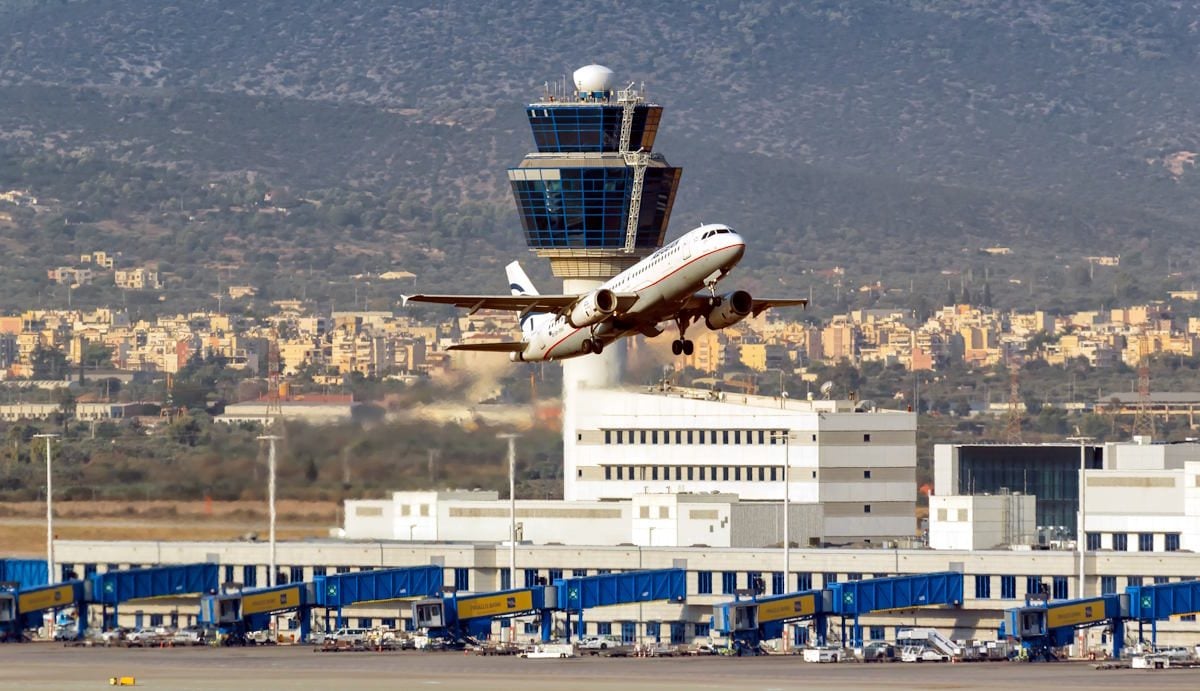
During a critical blackout affecting Greek air traffic control, two commercial passenger aircraft were placed on a potential collision course for nearly 18 minutes, exposing serious vulnerabilities in aviation communications and safety systems over one of Europe’s busiest airspaces.
A Near-Miss Over Greece
The incident unfolded within the Athens Flight Information Region (FIR) during the morning hours of the first Sunday in early 2026. Two Airbus A320 aircraft—one operated by Tunisair, flying from Istanbul to Tunis, and another by EgyptAir, en route from Cairo to London—were flying at approximately the same altitude, just under 36,000 feet, while converging over mainland Greece.
Under normal circumstances, air traffic control (ATC) systems would immediately detect the conflict and instruct one of the aircraft to change altitude or heading. But that day, those safeguards were severely compromised.
What Went Wrong: The ATC Blackout
According to official findings, a widespread and unprecedented communications failure struck the Athens FIR minutes before the incident escalated. The disruption included:
– Severe interference and continuous noise on multiple ATC radio frequencies
– Malfunctions in ground-to-ground and data communication links
– Temporary loss of radar and flight information feeds to both civil and military authorities
– Interference even on the international emergency frequency (121.5 MHz)
For a significant period, air traffic controllers were unable to reliably communicate with aircraft operating in Greek airspace.
18 Minutes on a Collision Course
Flight tracking data later reconstructed through FlightRadar24 shows the two jets gradually converging while cruising at the same altitude. For approximately 18 minutes, they remained on intersecting paths—an interval that aviation experts consider extremely serious in high-altitude, high-speed operations.
A digitally reconstructed video of the event illustrates how close the situation came to disaster. The aircraft ultimately passed each other at a safe distance, but only after last-minute intervention, when one pilot—following repeated and urgent attempts by controllers—descended to a lower altitude.
Why This Incident Matters
Commercial aviation relies on multiple layers of redundancy, but this event highlights how quickly risk escalates when several systems fail simultaneously. While onboard collision avoidance systems (such as TCAS) provide an additional safety net, coordinated air traffic control remains essential for managing dense airspace efficiently and safely.
The Athens FIR covers a strategically vital region connecting Europe, the Middle East, and North Africa. Any prolonged disruption there has implications far beyond Greece.
Questions Raised About Preparedness
Although no passengers were harmed, the near-miss has raised serious questions:
– How resilient are national air traffic control systems to large-scale technical failures?
– Are backup communication channels sufficient and properly protected?
– How quickly can controllers and pilots adapt when multiple layers of infrastructure fail at once?
Investigations into the blackout have emphasized the need for improved redundancy, better protection against signal interference, and enhanced crisis protocols.
A Close Call—and a Warning
This incident will likely be studied as a textbook near-miss, serving as a stark reminder that aviation safety depends not only on advanced technology but also on robust, resilient systems that can withstand unexpected failures.
Eighteen minutes was all it took to bring two full passenger jets dangerously close to catastrophe—and that narrow escape may now drive crucial changes to prevent the next one.