Newsflash from Thursday, 5 March 2026:
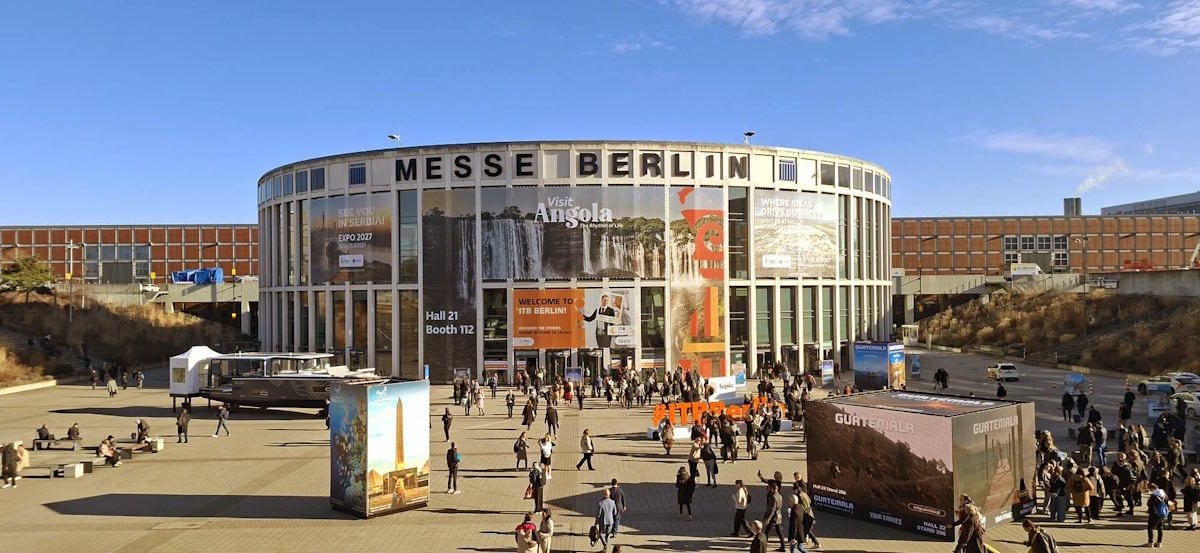
As the global tourism industry gathers for the prestigious ITB Berlin 2026, the atmosphere among Greek participants is a complex mix of professional optimism and private anxiety. While the official displays are vibrant, there is an undeniable “elephant in the room”: the escalating conflict in the Middle East.
According to tourism officials from Crete currently on the ground in Berlin, the geopolitical situation is the primary topic in private circles, even if it remains largely absent from official speeches.
The “Elephant in the Room”
Psychology is the number one factor driving the tourism market, and currently, that psychology is being tested. As reported by Cretalive, many stakeholders at ITB Berlin are maintaining a “wait and see” approach. The prevailing hope is that the current tensions will de-escalate quickly, allowing the 2026 season to proceed as planned.
Perspectives from Crete: Optimism vs. Reality
Key figures in the Cretan tourism sector have shared their insights on how the international market is reacting:
* Nikos Chalkiadakis (President of Heraklion Hoteliers): Chalkiadakis notes that the general climate at the exhibition remains good. Interestingly, he points out that major tour operators are largely avoiding the topic of war in official negotiations. He also highlighted a shifting trend, particularly among British tourists, who are looking toward Crete as an alternative to Cyprus. Regarding the Israeli market—a major investor in Crete—he believes that Israeli travelers are resilient and will likely continue to travel despite the conflict.
* Manolis Tsakalakis (President of Rethymno Hoteliers): Tsakalakis describes a sense of “numbness” (pagomara) in Berlin. While there is no widespread panic, he admits that some potential customers are hesitant. “Potential clients are ‘stiff’ and second-guessing their plans, while some have already proceeded with cancellations,” he noted. He expects a clearer picture of the season’s trajectory within the next two weeks.
* Giorgos Agrimanakis (Vice Mayor of Tourism for Heraklion): Representing the local government, Agrimanakis reports that the European section of the fair hasn’t seen intense discussions regarding the war yet. He remains cautiously optimistic, stating that as long as the conflict does not expand further, Crete’s tourism product is unlikely to be negatively impacted in the long run.
A Shifting Map for Travelers?
One of the most notable takeaways from the fair is the potential redistribution of Mediterranean tourism. With Cyprus being geographically closer to the conflict zone, Crete is seeing an uptick in “exploratory” interest. However, local leaders emphasize that these are currently “investigations” rather than finalized agreements.
The Verdict: A Waiting Game
The 2026 tourism season sits at a crossroads. While the flow of bookings for Crete continues for now, the industry is holding its breath. The “numbness” felt in the halls of ITB Berlin serves as a reminder that in the world of travel, peace and stability are the most valuable commodities of all.
ITB Berlin 2026: Global Tourism Navigates the Shadow of Middle East Tensions
The 60th anniversary of ITB Berlin, the world’s largest international tourism trade fair, was meant to be a landmark celebration of global travel. Instead, the halls of the Berlin Exhibition Grounds are filled with a mix of professional resilience and geopolitical anxiety as the escalating crisis in the Middle East casts a long shadow over the industry.
While the event remains a powerhouse of networking and innovation, the “new flare-up” in the Middle East has fundamentally altered the landscape of this year’s fair.
Greece: “Attention and Composure”
Amidst the uncertainty, the Greek delegation is projecting a message of stability. Speaking from the fair, Deputy Minister of Tourism Anna Karamanli emphasized that Greek tourism is monitoring developments with “attention but also composure.”
Despite the regional volatility, the outlook for Greece remains remarkably strong:
* A Record-Breaking 2025: Karamanli confirmed that 2025 was the best year in the history of Greek tourism, bringing in €23.6 billion in revenue.
* Positive 2026 Momentum: Early indicators for 2026 suggest that demand for Greece as a destination has not yet been impacted by the geopolitical climate.
* Resilience: The Greek tourism sector has shown “remarkable durability” through multiple global crises over the last decade.
The Greek National Tourism Organization (GNTO) is well-represented this year with 81 co-exhibitors, alongside dozens of other independent Greek entities.
A Void in the Exhibition Halls
The impact of the Middle East crisis is most visible in the absence of key players. For the first time in years, Israel and Iran are not participating, nor are Jordan or Qatar Airways.
The ripple effects are being felt across various sectors:
* Canceled Presentations: Many Middle Eastern countries that had invested heavily in impressive pavilions were forced to cancel presentations at the last minute.
* Cruise Industry on Edge: The Cruise Lines International Association (CLIA) canceled a scheduled presentation, deeming it “inappropriate” given the current climate. Currently, over 8,000 tourists remain stranded on two German-interest cruise ships in the Persian Gulf.
* Aviation Concerns: TUI Germany CEO Benjamin Jakobi warned that the volume of passengers moved by Gulf carriers (Emirates, Etihad, and Qatar Airways) is “practically irreplaceable” for European travelers heading to the Far East and Australia.
Unexpected Participants and New Trends
Despite the tension, some surprising voices are present. Palestine is at the fair, focusing on religious tourism, while Syria is represented by officials promoting the “calm and safety” currently found in parts of the country.

This year’s Honored Country is Angola, which is investing nearly $500 million into its tourism sector. “There is no tourism without peace,” stated Angola’s Minister of Tourism, Márcia Daniel, delivering a poignant message to the international community.
Beyond geopolitics, the biggest buzz at ITB Berlin 2026 revolves around Artificial Intelligence. Technology companies are drawing massive crowds as they showcase how AI is revolutionizing travel planning and personalized holiday experiences.
The Bottom Line
ITB Berlin 2026 serves as a stark reminder that the tourism industry does not exist in a vacuum. While Greece remains a “safe harbor” for travelers, the interconnectedness of global aviation and maritime routes means that peace in the Middle East is vital for the entire industry’s health.
Are you planning a trip to Crete this year? How do regional events affect your travel decisions? Let us know in the comments below.