

Newsflash from Friday, 27 February 2026:
The arrival of the Ford strike group on February 23, 2026, has reignited a fierce debate about the island’s vulnerability and Greece’s role in regional geopolitical tensions. For local activists and peace advocates, the answer is increasingly troubling.
A Strategic Asset Becomes a Potential Bullseye
For the U.S. Navy, Souda Bay represents an indispensable logistical hub—a crucial staging ground for operations across the Eastern Mediterranean and Middle East. For Crete’s residents, however, it represents something far more ominous: a lightning rod for potential Iranian retaliation.
Manolis Papadomanolakis, president of the Pan-Cretan Peace Committee, has been vocal about the dangers. During recent anti-war mobilizations in Chania, he made a stark warning:
“Once again, our country—and specifically Crete—is being turned into a war launchpad. This policy has nothing to do with our safety. On the contrary, by providing these facilities, we are turning ourselves into a potential target for retaliation.”
His concern is not theoretical. It’s grounded in hard military data and Iran’s explicit warnings issued throughout early 2026.
The Math of Vulnerability: Distance and Firepower
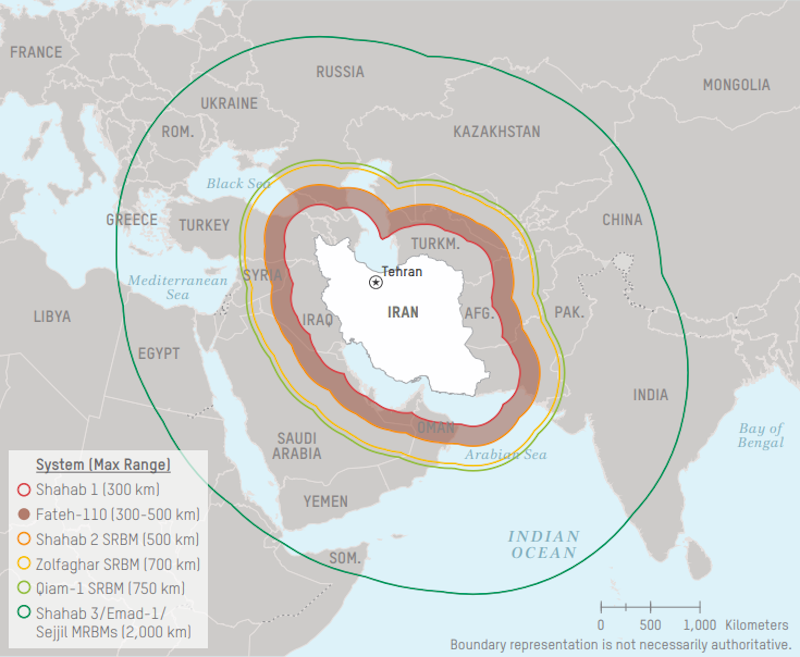
The distance from western Iran to Crete’s naval facilities is approximately 2,100 kilometers (1,304 miles)—well within the strike range of Iran’s most advanced ballistic missiles.
Consider the arsenal at Iran’s disposal:
1. The Khorramshahr-4 (Kheibar) Ballistic Missile
* Range: 2,000–3,000 kilometers (1,240–1,865 miles)
* Payload: 1,500-kilogram (3,306 pounds) warhead
* Speed: Hypersonic capabilities
* Challenge: Even advanced air defense systems struggle with interception
2. The Sejjil Solid-Fueled Missile
* Can be prepped and launched in minutes
* Solid fuel means rapid deployment capability
* Designed to overcome traditional detection systems
3. The Paveh Cruise Missile
* Engineered to fly at low altitudes
* Specifically designed to evade radar detection
* Adds a layered threat dimension to any potential attack
Iranian Military Doctrine: “Reciprocal Retaliation”
Tehran has made its position abundantly clear. Iranian military doctrine emphasizes “reciprocal retaliation,” and throughout early 2026, Iran has issued explicit warnings: any nation allowing its territory to be used as a staging ground for “hostile acts” against Iran will be held accountable.
This is not idle rhetoric. Iran has demonstrated a willingness to follow through on such threats in the past, as evidenced by its January 2020 missile strikes against U.S. bases in Iraq following the assassination of General Qasem Soleimani.
The Saturation Attack Scenario
Military analysts have raised a particularly alarming concern: the possibility of a “saturation attack.” This scenario involves dozens of missiles and drones launched simultaneously to overwhelm existing defenses.
While Crete does have Patriot PAC-3 batteries stationed on the island—providing a layer of protection—experts suggest that a coordinated, multi-vector assault could potentially exceed the system’s capacity to respond effectively.
Greece’s Delicate Balancing Act
The core tension facing Greece is one of alliance obligation versus national security. As a NATO member and a strategic U.S. ally, Greece has benefited enormously from its Western partnerships. Yet hosting the world’s most advanced military hardware while tensions with Iran remain dangerously high places the island—and its 600,000 residents—in an unprecedented position of risk.
The “unsinkable aircraft carrier” of the Mediterranean, as some have called Souda Bay, is increasingly beginning to feel less like a fortress and more like a target.
Local Voices: The Peace Movement’s Growing Concern
The Pan-Cretan Peace Committee is not alone in its concerns. Activists from across the island have mobilized, arguing that:
* Military facilities are being “integrated into offensive war plans”
* The buildup is not for “routine exercises” but for active participation in potential conflict
* The Greek government has shown “unconditional alignment with Euro-Atlantic interests” at the expense of local safety
As one activist put it during a rally in Chania: “The ‘killers of people’ are not welcome here.”
What Happens Next?
The situation remains fluid. Diplomatic channels are active, and international efforts to de-escalate tensions in the Middle East continue. However, the presence of the Ford strike group signals that the U.S. is preparing for a prolonged posture of deterrence in the region.
For Crete, the question is no longer abstract. With one of the world’s most powerful military assets now anchored in Souda Bay, the island has inadvertently become a central player in a geopolitical drama with potentially serious consequences.
The people of Chania are left watching and waiting—hoping that their island remains a Mediterranean haven, and not a casualty of great power conflict.
This analysis is based on publicly available military data, Iranian military doctrine, and statements from local peace advocates. The situation remains a matter of ongoing debate in Greek political and civil society circles.
War or Peace? USS Gerald Ford Departs Crete for East Med as Diplomacy Dims

The tides of the Eastern Mediterranean are shifting as military might takes center stage over diplomatic dialogue. Following a strategic refueling stop at the Souda Bay naval base in Crete, the USS Gerald R. Ford—the U.S. Navy’s most advanced aircraft carrier—has set a direct course for Israel.
This move signals a significantly sharper American posture in a region already teetering on the edge of conflict. As the massive carrier strike group moves closer to the Levant, the world watches to see if this is a move of deterrence or a prelude to something far more serious.
A High-Stakes Game in Geneva
The military movement comes at a paradoxical moment. While the USS Gerald R. Ford sails toward potential combat zones, American and Iranian officials have been meeting behind closed doors in Geneva.
Described as a last-ditch effort to find a compromise that could avert an all-out war, these talks represent the “diplomatic track” of the current crisis. However, the departure of the Ford suggests that Washington’s patience may be wearing thin, and the window for a peaceful resolution is rapidly closing.
The “Win” Strategy: Weighing Limited Strikes
According to reports from The New York Times, the White House is currently evaluating a high-risk military strategy. President Donald Trump is reportedly weighing limited strikes against Iran’s nuclear and ballistic missile programs.
The logic behind such a move appears to be twofold:
1. Political Decisiveness: To allow the President to claim a “win” through a show of strength.
2. Strategic Leverage: To force Tehran into deeper concessions at the negotiating table.
However, officials have warned that this is a “carrot and stick” approach with a very heavy stick. If Iran rejects the current U.S. demands, the “limited” strikes could be followed by a much broader and more destructive wave of attacks.
Military Caution vs. Political Ambition
While the political rhetoric in Washington leans toward action, military leaders are reportedly viewing these scenarios with extreme caution. The primary concern among Pentagon officials is that there is no such thing as a “limited” strike when dealing with a regional power like Iran.
Military experts fear that even a surgical strike on a nuclear facility would almost certainly trigger a significant Iranian response. This could lead to:
* Regional Escalation: Drawing in proxies and neighboring states.
* U.S. Casualties: Increasing the risk to American personnel stationed throughout the Middle East.
* Economic Fallout: Potential disruptions to global energy supplies in the Persian Gulf.
Why Crete Matters
The role of Crete in this geopolitical drama cannot be overstated. As the primary logistical hub for the U.S. Sixth Fleet, Souda Bay serves as the “unsinkable aircraft carrier” that allows the U.S. to project power into the Middle East at a moment’s notice.
The Ford’s presence in Crete earlier this week was a clear message of logistical readiness. Now that it has departed for the Eastern Mediterranean, the message has shifted from readiness to active deployment.
What’s Next?
As the USS Gerald R. Ford nears the coast of Israel, the international community remains on high alert. Will the Geneva talks produce a breakthrough, or will the “limited strike” scenario become a reality?
In a region where diplomacy is dimming, the shadow of the world’s largest aircraft carrier looms larger than ever.



