

Chania International Airport sits on the Akrotiri Peninsula in north-western Crete, about 14 kilometres east of Chania’s city centre. It’s officially named after Ioannis Daskalogiannis, an 18th-century Cretan revolutionary, and uses the IATA code CHQ and ICAO code LGSA.

If you’re heading to western Crete, this airport’s almost always the right one. You can check real-time flight updates on the official website, chq-airport.gr.
Flying into CHQ instead of Heraklion can save you an hour or more of driving. Depending on where you’re staying, your airport choice really shapes your first day.
The terminal’s compact and pretty manageable most of the year. It does get pushed to its limits in July and August when a wave of charter flights from across Europe land in quick succession.
This guide breaks down what to expect on arrival. We’ll look at transfer options, terminal facilities, seasonal crowds, and whether CHQ or Heraklion makes more sense for your trip.
Airport Snapshot
Chania Airport handles about 3 to 3.8 million passengers a year through a single terminal. It connects western Crete with Athens, Thessaloniki, and more than 50 European destinations.
Fraport Greece manages the airport in partnership with the Copelouzos Group. The Hellenic Civil Aviation Authority oversees regulations, and the site is shared with the Hellenic Air Force.
The facility offers on-site parking and modern amenities. Fraport Greece’s management has brought some real operational improvements for travellers.
Where It Is
Chania International Airport “Daskalogiannis” (CHQ) sits on the Akrotiri Peninsula near Souda, about 14 to 15 kilometres east of the city centre and close to the commercial port of Souda.
On a clear approach, you’ll spot the Lefka Ori (White Mountains) to the south and the Aegean Sea to the north. The airport operates a single runway that handles all commercial and military flights.
This runway’s positioned to catch the peninsula’s prevailing winds, which helps keep landings and take-offs safe year-round. The location’s especially handy if you’re staying anywhere from Chania town to the west coast’s beaches and resorts.


Who It Suits Best
CHQ is the obvious pick for anyone staying in or around Chania, the western beaches like Balos, Elafonissi, or Falasarna, or the villages and hiking routes of the White Mountains. It’s also good for road trips starting in the west and heading east across Crete.
If your plans are based in central or eastern Crete, though, Heraklion usually makes more sense.
What To Expect On Arrival
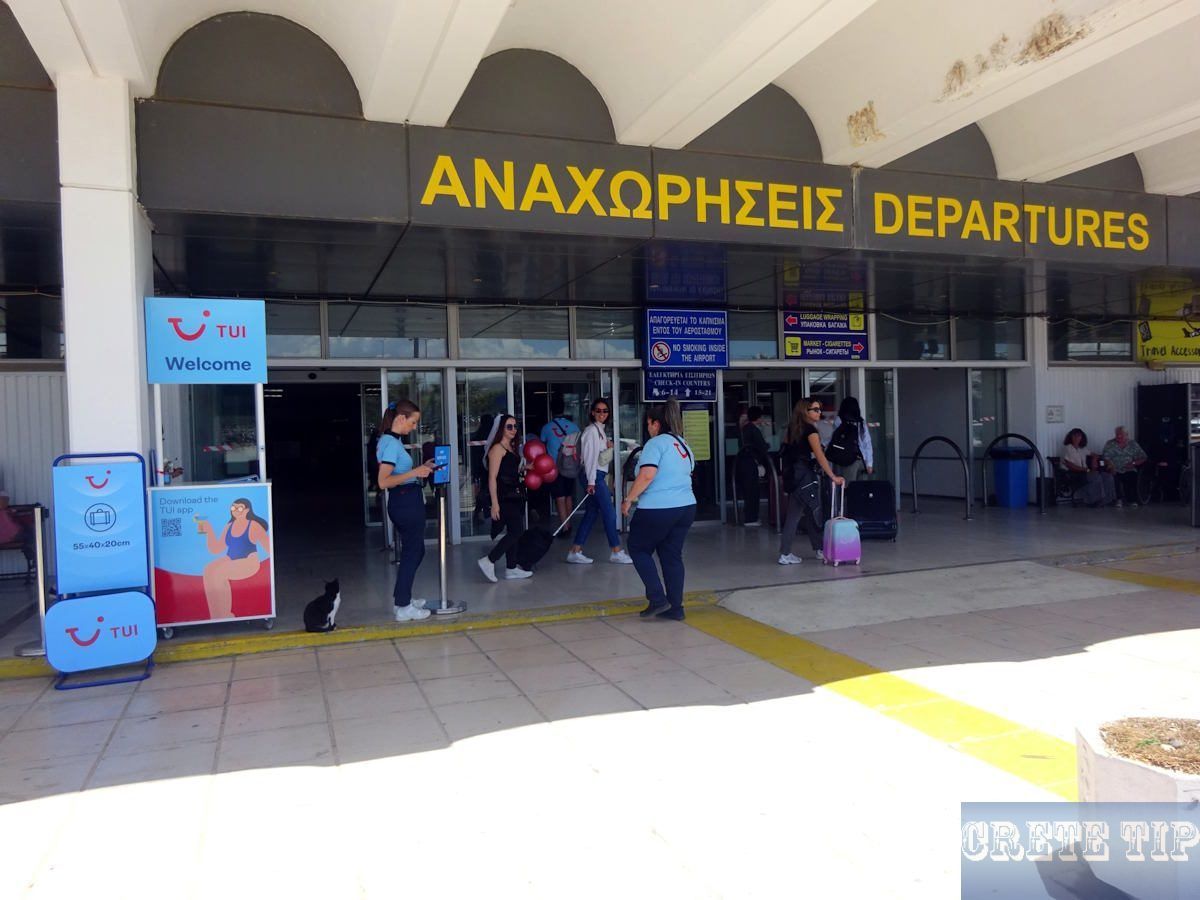
The terminal’s straightforward. Arrivals, baggage reclaim, car hire desks, and exits to taxis and buses are all on one level, so it’s easy to find your way.
The building isn’t big, which means you’ll usually get through quickly if you’re not landing at peak times. In summer, though, baggage belts and the taxi queue can both get crowded around midday when several flights land close together.
If you land during a busy slot, plan for some extra time before you’re on the road.
Flights, Seasonality, And Demand

Chania Airport runs flights year-round, but summer is a totally different beast from winter. Domestic routes to major Greek cities run all year.
Most international flights arrive between April and November, with a huge spike in July and August.
International And Domestic Connections
Daily domestic flights link Chania to Athens and Thessaloniki, mainly with Aegean Airlines. International routes include regular flights from Ryanair, EasyJet, Wizz Air, Norwegian, Lufthansa, TUI, and more, plus lots of seasonal charters.
Ryanair and EasyJet are especially active in summer. Altogether, CHQ connects to over 50 destinations in more than 20 countries during the busy months.
Arrivals and Departures
Peak Summer Patterns
The airport’s busiest stretch is late June to mid-September, with July and August seeing the most passengers. During these weeks, CHQ handles several thousand travellers per day.
In 2024, the airport saw more than 3.8 million passengers by October, up over 13% from 2023. Charter flights from the UK and Northern Europe make up a big chunk of that summer surge.
When The Airport Feels Busiest
Midday arrivals and late afternoon departures are the most hectic. Multiple international flights often land within half an hour or so, which can jam up baggage reclaim, the taxi rank, and car hire pick-up all at once.
Early morning and evening arrivals usually move through the terminal with less hassle. If you can pick your flight, landing before 10:00 or after 18:00 often means a smoother start.
Getting From The Terminal To Your Destination

There’s no metro or train at Chania Airport. Your choices for transfers are bus, taxi, private transfer, or picking up a hire car at the terminal.
Each option fits a different kind of trip. The best choice depends on how many people you’re with, how much luggage you have, and where you’re headed.
Car Hire And Pick-Up Practicalities
Renting a car at CHQ is genuinely handy for exploring western Crete. You get the freedom to go where you want, when you want.
Most major international brands have desks in the terminal—Sixt, Avis, Hertz, Budget. Local outfits like Autocandia and Cretarent are there too. In low season, prices start around €20–25 a day but can jump to €40+ in July and August.
It’s smart to book ahead in summer. Desks run out of cars fast during peak weeks, and last-minute walk-in rates are much higher.
When you collect your car, check your rental agreement for insurance excess and fuel policy. You’ll need a valid licence, a credit or debit card for the deposit, and your passport or ID.
Parking Options
If you’re driving to the airport, you’ll find several parking zones right outside the main terminal. Both short-stay and long-stay options are available for different needs.
The parking lot’s well-lit and monitored, so it feels secure. Most people find it easy to access from the main airport road.
Taxi Transfers
Taxis wait outside the arrivals exit 24/7. A ride to Chania city centre costs about €25 to €30 and takes around 20 minutes if traffic’s light.
Most drivers still prefer cash, though a few take cards. Going further west, like Platanias or Agia Marina, adds a few euros.
In peak summer, the taxi queue can get long after a busy landing. Pre-booking a private transfer at a fixed price skips the wait and is great for families or anyone with lots of luggage.
Bus Links To Chania Town
The KTEL airport bus is the cheapest way into Chania, usually €2.50–3 per person. It runs every 30 to 60 minutes during the day and takes about 25–30 minutes to reach Chania Central Bus Station near the Old Town.
You can buy tickets at the airport kiosk or straight from the driver. Buses don’t go directly to most beach resorts, so if you’re staying outside Chania town, a taxi or car hire will be easier.
Travel Times To Popular Areas In Western Crete
The table below gives realistic driving times from the airport in typical summer traffic.
| Destination | Approximate Drive Time |
|---|---|
| Chania Old Town | 20 to 25 minutes |
| Agia Marina | 25 to 30 minutes |
| Platanias | 30 to 35 minutes |
| Kissamos / Kastelli | 50 to 60 minutes |
| Elafonissi Beach | 1 hour 15 minutes to 1 hour 30 minutes |
| Balos Lagoon (car park) | 1 hour 10 minutes to 1 hour 20 minutes |
| Rethymno | 1 hour to 1 hour 15 minutes |
| Heraklion | 2 hours to 2 hours 30 minutes |
Main roads like the E75 motorway are generally in good shape. Smaller mountain roads—especially to places like Elafonissi—can take longer than you’d expect from the map.
Inside The Terminal

CHQ uses a single-terminal layout, so it feels straightforward for both arrivals and departures. Airside and landside facilities aren’t huge, but they cover the basics well.
Security lanes doubled in recent upgrades, from four to eight. This expansion helps manage the summer crowds a bit better.
Check-In And Security Flow
Check-in desks sit on the ground floor of departures. Most charter and budget airlines open check-in about two or three hours before takeoff.
Scheduled airlines usually offer online check-in, so you can skip the desk if you’re traveling with just cabin baggage. Security screening is what you’d expect at a Greek island airport: 100ml liquid rule, laptops and tablets out, belts off.
Staff at Chania International Airport “Daskalogiannis” (CHQ) do their best to keep the lines moving. During peak summer, queues at check-in and security can stretch to 20–40 minutes during busy departure windows.
The extra security lanes help, but don’t expect miracles. If you’re flying internationally in July or August, arriving three hours before departure is honestly the safest bet.
Food, Shops, And Basic Services
Inside, you’ll spot cafés, a restaurant with hot meals and snacks, and a duty-free shop with alcohol, tobacco, and cosmetics. There are also stands selling Cretan olive oil, honey, and herbs—makes for a handy last-minute gift.
ATMs and a currency exchange counter are landside. SIM card stands and mobile operators are right there if you need a Greek or European data plan on arrival.
Free Wi-Fi covers the terminal, though the signal slows down when things get busy. It’s usable for emails, but don’t count on it for big downloads.
Accessibility And Family Travel
The terminal has accessible toilets and baby care rooms. Most of the arrivals process is on a single level, so it’s easy to get around.
If you’re traveling with young kids, the small size of Chania Airport is a blessing. Baggage claim, car hire, and the exit are all close together.
Pre-booked assistance is available for travelers with reduced mobility. Arrange it with your airline before you travel to keep things smooth once you arrive at the terminal named for Ioannis Daskalogiannis.
Practical Arrival Tips

A little prep before landing goes a long way at CHQ in summer. The airport’s manageable, but it doesn’t have the buffer of a big international hub, so small delays can pile up fast when the terminal’s packed.
How Early To Arrive For Departure
For domestic flights to Athens or Thessaloniki, arriving two hours before departure is usually fine. If you’re flying internationally in July or August, allow three hours.
This covers check-in queues, security, and any surprises at the gate. There’s not much to do airside, but it’s way less stressful than cutting it close.
Navigating Summer Queues
The main pinch points at CHQ are baggage reclaim on arrival and check-in plus security on departure. If your flight lands in a busy midday slot, you might wait 20–30 minutes at the belt.
Can’t really speed that up, but you can use the time to confirm onward transport or get your luggage plan sorted. On departure, online check-in lets you skip a queue for most airlines.
Pack your liquids right before you leave your hotel. Small things like this actually shave time off the bottlenecks. Taking a look at the terminal map and services at chq-airport.gr before you arrive isn’t a bad idea either.
Money, Mobile Data, And Essentials
ATMs are in the arrivals hall, so you can grab euros before hitting the taxi rank or bus stop. Most businesses in Chania and the main resorts take cards, but smaller tavernas and village shops often want cash.
Having at least €30–€50 in notes on arrival just makes life easier. For mobile data, a Greek or EU SIM from the airport will work all over Crete.
Most UK networks now charge roaming fees, so check your plan before you go. Free Wi-Fi at the airport is spotty when crowded, so don’t rely on it for maps or navigation apps.
Download offline maps for Crete before you fly. Saves hassle later.
Common First-Day Mistakes To Avoid
- Thinking you’ll just walk up and get a hire car in peak season. Book ahead, seriously.
- Forgetting there’s no Uber or Bolt on Crete. Plan for taxis or pre-booked transfers.
- Underestimating drive times on mountain roads. The map says it’s close, but the actual road takes longer.
- Skipping cash completely. Rural Crete still runs on it in lots of places.
- Arriving at the terminal just one hour before an international summer departure. That’s cutting it way too close.
Choosing Between Chania And Heraklion
Picking the right airport matters more than most travelers expect. Crete’s a big island—about 260 kilometers west to east—and the drive between the airports takes roughly two hours on the main motorway.
Landing at the wrong end can tack on two or three hours of extra driving your first day. Not exactly how you want to start a holiday, right?
Best Airport For Western Crete
If you’re staying in Chania city, the Old Town, Agia Marina, Platanias, Kissamos, Falasarna, Elafonissi, or anywhere in Apokoronas, fly into CHQ. You’ll probably be at your accommodation within 20–60 minutes of leaving the terminal, depending on where you’re based.
This is especially important if your trip is short and you want to make every hour count. No need to spend half your first day in the car.
Best Airport For Central And Eastern Crete
If you’re headed to Heraklion city, Knossos, Hersonissos, Malia, Agios Nikolaos, Elounda, or Lassithi Plateau, Heraklion Airport (HER) is the way to go. Landing at CHQ for an eastern Crete trip means a two-hour-plus drive on arrival, then the same again at the end.
That’s a lot of extra road time unless the flight price difference is huge. Be honest—how much is your time worth?
Driving Distance Versus Flight Price
If you find a cheaper CHQ flight but your base is in central or eastern Crete, do the math. Add in extra fuel, maybe a toll, and two hours’ drive each way—sometimes a slightly pricier Heraklion flight is actually better value.
If your road trip starts in the west and ends in the east (or vice versa), flying into one airport and out of the other is a pretty smart move. Not everyone thinks of that.
When Heraklion Makes More Sense
Heraklion works best if your accommodation is east of Rethymno, your plans center on Knossos or central Crete’s archaeological sites, or you’ll be beach-hopping between Heraklion and Agios Nikolaos. Heraklion also has more year-round flights from the UK, so it’s more flexible outside summer.
When Chania Is The Better Option
Chania’s your airport if you’re focused on western Crete—the Samaria Gorge, far west beaches, the White Mountains, Chania city, or the quieter Apokoronas villages. It’s also a calmer arrival, since the terminal is smaller and less intense than Heraklion in summer.
If you’re flying from the UK and staying west of Rethymno, CHQ almost always gives you the smoothest start. No contest, really.
Frequently Asked Questions

How do I get from the airport to Chania city centre using public transport?
The KTEL airport bus runs to Chania Central Bus Station every 30–60 minutes during the day. A ticket costs about €2.50–€3 and the ride takes 25–30 minutes.
You can buy your ticket at the airport kiosk or straight from the driver. Couldn’t be simpler.
What are the taxi fares and pick-up points for getting to popular resorts?
Airport transfers are easy—Chania airport taxis wait outside arrivals 24/7. The standard fare to Chania city centre is about €25–€30.
Fares to Agia Marina or Platanias are a bit higher. Most drivers prefer cash, though some will take cards.
Can I hire a car on arrival, and what documents do I need?
Yes, you’ll find several car hire companies inside the terminal. Renting a car gives you the freedom to explore Crete at your own pace.
Bring your driving licence, passport or national ID, and a credit or debit card for the deposit. Book ahead for summer—cars go fast.
What are the check-in and security queue times like during peak season?
In July and August, check-in and security can each take 20–40 minutes when it’s busy. Arrive three hours before an international flight to be safe.
Online check-in lets you skip the desk if you’re traveling with cabin baggage only. It really helps when the airport’s crowded.
Which shops, cafés, and facilities are available in the departures area?
The departures area offers a handful of cafés and a restaurant. You’ll also find a duty-free shop, plus stands with Cretan specialties like olive oil and honey.
ATMs and a currency exchange counter are on site. SIM card stands pop up here and there, and free Wi-Fi is available if you need to get online.
There are baby care rooms tucked away in the terminal. Accessible toilets are provided as well.
What are the baggage allowance rules and what should I do if my luggage is delayed or lost?
Baggage allowances really depend on your airline and the type of ticket you have. It’s always smart to double-check your booking confirmation before heading to the airport.
If your bag doesn’t show up on the belt, don’t panic. Head straight to the baggage services desk in the arrivals hall before you leave the airport.
The staff there will take your details and work on getting your bag delivered to your accommodation once they find it. Definitely hang on to your boarding pass and those little luggage receipt tags—they’re more important than they look.


