

I’ve spent more than two decades zigzagging Crete’s mountain roads, and honestly, these authentic Cretan villages still surprise me more than any beach ever could.

The 14 most beautiful mountain villages in Crete include Kritsa, Archanes, Anogia, Margarites, Krasi, Zaros, Kapetaniana, Theriso, Axos, Milia, Vamos, Loutro, Spili, and Argyroupolis.
Each settlement offers its own slice of Cretan culture and that real-deal Cretan food you’ll remember long after. If you use a Crete travel guide, you’ll find these tucked-away places and avoid seeing just another pretty square.
Exploring these mountain villages means wandering through areas soaked in history. Vineyards and pottery traditions here aren’t just for show—they’ve been passed down for generations.
Picking the right village really depends on your mood. A couple after a slow lunch and church frescoes will want something different than a photographer chasing dawn over stone rooftops.
I tried to be honest about altitude, road comfort, and how remote these places get, so you can plan a route that fits your legs, your car, and whatever time you have on the island.
1) Kritsa

Kritsa [Google Maps] sits above Agios Nikolaos in eastern Crete, its lanes strung with lace, embroidery, and quiet balconies. I always tell friends to park below and walk up, since the streets narrow fast and cars barely squeeze past each other.
The village has a lived-in charm, not a polished one. Locals hang washing over alleyways and chat outside kafeneia, so it feels less like a movie set than some coastal towns.
Kritsa works well as a half-day stop, especially if you pair it with nearby ancient sites or a visit to Spinalonga. Bring good shoes—the cobbles get slippery when wet, and you’ll be climbing between terraces.
2) Archanes

Archanes [Google Maps], especially the upper settlement of Ano Archanes, feels like Crete’s wine country squeezed into a village. It’s about twenty minutes from Heraklion, sitting at roughly 400 metres between Mount Psiloritis and Mount Spathi.
Mount Ida rises nearby over vineyards and olive groves. Neoclassical façades line the squares, with touches of Venetian architecture—a nod to nineteenth-century pride after Ottoman rule faded.
More than 200 buildings here are protected, and you can tell people care about keeping them up. History runs deep—there was once a Minoan palace at the village centre, and nearby Vathypetro has old wine and olive presses dug up by archaeologists.
These sites give you a real sense of the Minoan era and how far back Cretan history goes. The village is close to Knossos Palace, so it’s a great spot for a late lunch after wandering the ruins.
I like arriving late morning, poking around the archaeological corners, then finding a traditional taverna. For proper Cretan food, I usually order slow-cooked lamb and a glass of local wine—can’t go wrong.
3) Anogia

Anogia [Google Maps] has a different spirit altogether. Perched high in the Psiloritis range, about 39 kilometres from Heraklion, it carries a proud, independent character shaped by its wartime resistance history.
This is Crete’s music heartland. The Xylouris family grew up here, and the Nikos Xylouris House gives a genuine sense of the Cretan lyra tradition that still fills traditional tavernas most evenings.
The road from Anogia climbs toward the Nida Plateau and the Ideon Cave. Along these high routes, you’ll spot old mitata—stone huts shepherds still use. The cave is said to be Zeus’s birthplace in myth.
Many travellers stop at Sfendoni Cave nearby for its colourful rock formations. Snow settles here in winter, so I always check conditions before heading up if it’s cold out.
Handwoven textiles and sharp Cretan cheese, especially the local graviera, make good reasons to linger. You might even get offered a glass of raki by a friendly local while browsing the shops.
4) Margarites

Margarites [Google Maps], tucked into the hills above Rethymnon, has shaped clay for centuries. Pottery workshops line the main lane, and many are still run by families who learned the craft from their parents.
I like watching potters throw those classic pithari jars—some big enough to store a season’s worth of olive oil. It’s smarter to buy directly from the workshop rather than a tourist shop by the coast; prices are better and you know it’s made right there.
The village itself is compact, easy to wander on foot in about an hour. You’ll find stone houses, tiny chapels, and sweeping views over the Mylopotamos valley—a relaxed stop, not a strenuous one. Pair it with a longer loop through Rethymno’s hill villages if you’ve got the time.
5) Krasi
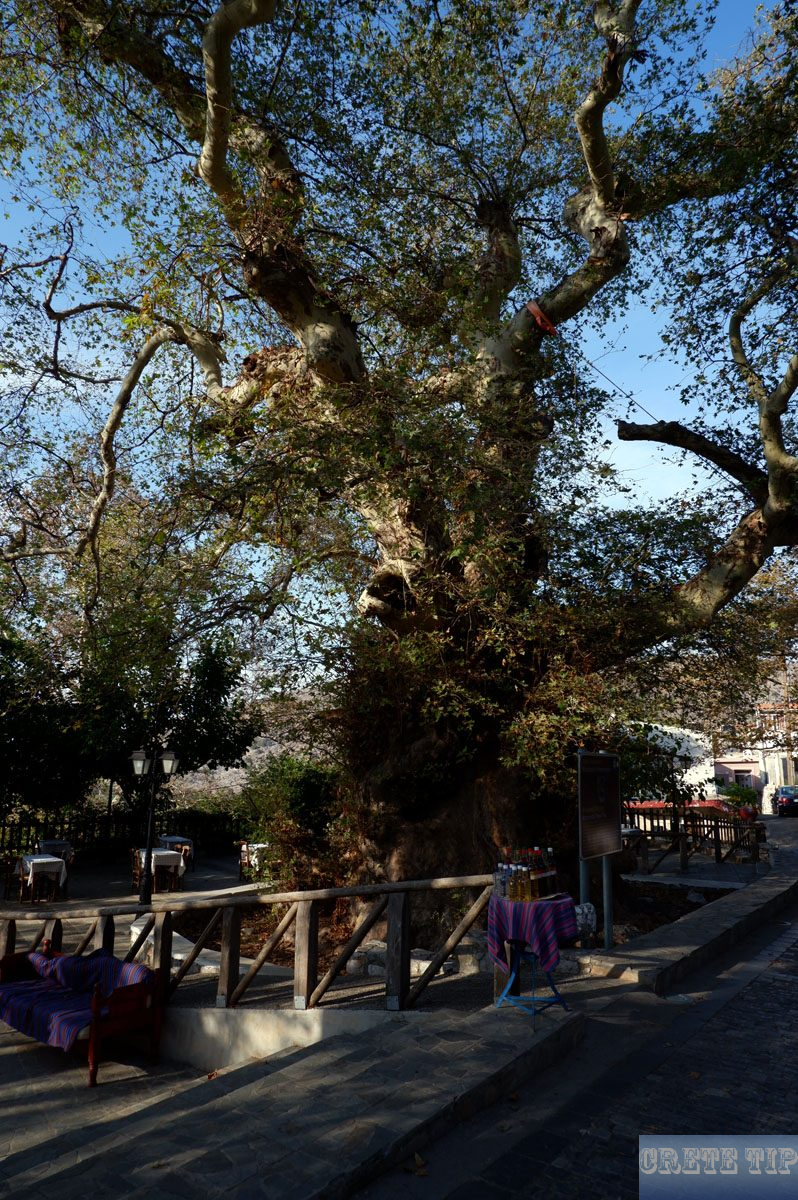
Krasi [Google Maps] sits on the road toward the Lasithi Plateau, and its square is home to one of the oldest plane trees on the island—it’s said to be over a thousand years old. Sitting beneath it with a coffee is one of my favourite quiet moments in eastern Crete.
Spring water runs through stone fountains, and the shade keeps the square cool even in high summer. It’s a small village, easily seen in half an hour, but worth stopping at on the way to Psychros or Tzermiados.
Traffic picks up in season, so arriving early morning gives you a calmer, more peaceful feel before the coach groups roll in.
6) Zaros

Zaros [Google Maps] lies on the southern foothills of Psiloritis, overlooking the fertile Messara Plain. It’s about 44 kilometres from Heraklion and feels genuinely tucked away.
Locals still use centuries-old water mills, and spring water is a point of pride here. Lake Votomos, not quite two kilometres from the village, is a lovely picnic spot with cafés along the shore.
From there, the Rouvas Gorge trail—part of the E4 European long-distance path—winds through oak, pine, and maple woodland. It has a proper mountain feel underfoot.
Nearby trout farms serve fish caught that morning, which pairs nicely with a slow lunch after a gorge walk. I’d allow a full day here if you plan to walk, since the scenery really rewards a slower pace.
7) Kapetaniana

Kapetaniana [Google Maps] sits at around 800 metres in the Asterousia Mountains, making it the highest village on this list. The drive up is narrow and winding, so take it easy—no need to rush.
The reward is a sweeping view over the Libyan Sea, especially stunning at sunset when the light softens the rocky hillsides. Not many tourists make it this far, so the atmosphere stays genuinely quiet.
There’s little in the way of facilities, so bring water and fuel up beforehand. I’d recommend this stop for travellers who value stillness and a real sense of remoteness over convenience.
8) Theriso

Theriso [Google Maps] sits in a gorge southwest of Chania, reached by a winding mountain road that’s scenic but demands your full attention. The village carries real historical weight—Cretan rebels declared autonomy from Ottoman rule here in 1905.

Like other historic Cretan villages, it keeps a strong sense of local pride. Plane trees shade traditional tavernas, many serving hearty stews and freshly baked bread.
Streams run close to the road in wetter months, adding to the cool, green feel that sets it apart from Crete’s drier coastal towns. It’s a satisfying half-day loop from Chania, especially if you fit in a gentle gorge walk beforehand.
I always suggest visiting outside peak lunchtime—seating fills up fast on weekends.
9) Axos

Axos [Google Maps] perches on a hillside along the road between Rethymno and Anogia, with views stretching toward the Aegean on clear days. It’s smaller and quieter than its neighbours, with Byzantine church ruins scattered among the houses.
Stone lanes wind past old olive presses and small family-run shops selling honey and herbs. The Potamianos Wax Museum in nearby Zoniana displays intricate figures representing Cretan historical figures.
I like stopping here briefly on the way to Anogia—it’s rarely crowded and the pace feels unhurried. The village square offers simple, honest food rather than tourist menus.
It suits travellers who enjoy discovering smaller stops along a longer mountain route. I wouldn’t treat it as a standalone destination, but it’s a nice detour.
10) Milia

Milia [Google Maps], in western Crete, isn’t really a conventional village anymore—it’s a restored eco-settlement built from abandoned stone houses. Getting here means a rough track, so you’ll want a sturdy car or just take it slow.
The setting feels wonderfully isolated, surrounded by forest and hills with no mains electricity—just solar power. The road here often passes through the scenic Topolia Gorge, offering some of the best mountain views in western Crete.
Meals use ingredients grown or foraged right here, which gives the food a distinct, honest character. This one is for travellers wanting a genuine disconnect, not a quick photo stop.
I’d treat it as an overnight destination, not a rushed afternoon visit. The peace is really the point.
11) Vamos

Vamos [Google Maps] is the historic capital of the Apokoronas region in western Crete. It’s one of the most well-preserved Cretan villages, known for its commitment to traditional architecture and agrotourism.
The village features stone-paved lanes and restored mansions that highlight the local history. It’s a great base for exploring the foothills of the White Mountains, but you still stay close to the coast of Chania.
12) Loutro

Loutro [Google Maps] may be at sea level, tucked away in the Sfakia region in the south of Crete. Most people reach it from Chora Sfakion, and to be honest, it feels like a hidden gem of a mountain village.
The massive Lefka Ori, or White Mountains, tower over Loutro and trap it in. You can only get here by boat or a steep coastal hike, so there are no cars—just a rare, peaceful quiet.
White-washed houses pop against the deep blue Libyan Sea and the sun-bleached rocks above. It’s the kind of place for slow mornings, swims that last forever, and meals of fresh fish, far from the busy roads up north.
13) Spili

Spili [Google Maps] brings a breath of cool, green air to the middle of the Rethymnon prefecture. It’s a must-see if you’re wandering the mountains.
The Venetian fountain steals the show. Twenty-five stone lion heads gush cold mountain water into a marble basin, showing off that classic Venetian style.
Plane trees throw dense shade over the village square, making it an ideal spot for a break. The hills around Spili burst with wildflowers and herbs, and local shops sell honey and botanicals gathered nearby.
14) Argyroupolis

Argyroupolis [Google Maps] hides in the lush Rethymnon region, built right on top of ancient ruins. Springs gush through the village, spilling down in small waterfalls.
Down in the lower village, you’ll find classic tavernas serving up real Cretan food. You can eat right beside the rushing water, which is a treat on a hot day.
Stone paths link the upper village and the lower springs, winding past Roman mosaics. Cretan culture really comes alive here, thriving wherever there’s water and greenery.
Planning A Mountain-Village Day Trip

Choosing Villages By Region And Driving Time
If you’re planning a day trip, it makes sense to group villages by region. Archanes, Krasi, and Zaros cluster near Heraklion, while Theriso and Milia belong to a western route from Chania.
This path often skirts the entrance to Samaria Gorge, which is probably Crete’s best-known natural wonder. Anogia and Axos fit together for a loop towards the Nida Plateau.
Kritsa is an easy match for an eastern Crete day trip from Agios Nikolaos. It’s also a good base for exploring Lasithi’s villages or heading south to Ierapetra.
Kapetaniana sits at the end of a narrow, winding road, so it really deserves its own half-day if you can spare it.


Best Seasons, Times Of Day, And Road Conditions
Spring and autumn make driving pleasant, and everything looks greener. If you’re heading out in summer, mornings before ten are best to avoid heat and coach crowds, especially near Krasi and Kritsa.
Mountain roads get tight fast, and spots like Kapetaniana and Milia have barely enough space for cars to pass. Before winter visits, check KretaTipp’s local advice—higher villages like Anogia can get snow and occasional road closures.
Respectful Visits To Living Villages
These villages aren’t museums—they’re people’s homes. Keep voices down near houses, ask before snapping photos of people, and support local workshops instead of just walking by.
Parking can be tricky, since most lanes weren’t built for cars. A bit of patience with the narrow streets goes a long way for everyone.
Landmarks, Walks And Stays To Pair For Villages

Kritsa Gorge
Kritsa Gorge makes a great half-day walk, winding through limestone cliffs and shady ravines right outside the village. It’s best for reasonably fit walkers with solid shoes, and pairs well with a relaxed morning in Kritsa itself.
Ancient Lato And The Church Of Panagia Kera
Just a short drive from Kritsa, you’ll find Ancient Lato—a Dorian site with sweeping valley views. The Church of Panagia Kera nearby has some of Crete’s best Byzantine frescoes, and the small entry fee is worth it.
Ecotourism Stays At Enagron Cretan Ecotourism Village And Βίλλα Δύο Πέτραι
If you’d rather stay overnight, Enagron Cretan Ecotourism Village near Axos offers a working-farm vibe, mountain views, and homegrown food. Βίλλα Δύο Πέτραι, a restored stone house, is perfect for couples wanting a quieter, more private spot in the hills.
Local experiences with Get Your Guide
If you fancy a bit of guidance, Get Your Guide offers group tours through mountain villages and to local attractions. This is ideal if you don’t have a hire car or simply want to hear a few stories from locals whilst you’re out and about.
Frequently Asked Questions

Which mountain villages in Crete are the most beautiful to visit?
Kritsa, Archanes, Anogia, and Margarites each have their own vibe—from wine lanes to pottery studios and music traditions. The “best” depends on what you’re looking for, honestly.
What is the prettiest village in Crete for a peaceful stay?
Kapetaniana and Milia both stay quiet, thanks to their remote spots and fewer tourists. Milia especially is good if you want to stay overnight and just soak up the silence.
Which Cretan mountain villages are best for couples?
Archanes works well for couples, with wine tastings, neoclassical streets, and a slow taverna pace. Theriso is also a nice pick for an easygoing half-day away from the coast crowds.
Where can I find traditional small villages in the mountains of Crete?
Axos, Krasi, and Margarites all keep a strong traditional feel, with pottery workshops, old plane trees, and classic tavernas. They’ve managed to avoid the big tourist developments you see in larger towns.
What are the best villages in Crete to stay in for local food and scenery?
Zaros combines fresh trout, spring water, and gorge walks, all right by the village. Archanes also mixes local wine and classic dishes with some of the prettiest scenery around.
Which mountain villages in Crete are easiest to reach by car?
Archanes, Krasi, and Margarites all sit on fairly wide, well-kept roads. You can get to them with a regular rental car and not worry too much.
Kapetaniana and Milia, though, are a different story. The roads there get narrower, and you’ll find fewer spots to pass other cars, so you’ll need to take it slow and pay attention.


Thank you for this article, very helpful with trip planning. Which villages are easiest to reach by public bus from Heraklion, Chania or Reythmno? Or hiring a driver/car for the day?
There is a map further down in the article, where you can see a overview for the distances for the three main cities in Crete. The easiest way would be to hire a car, since most smaller villages will not be frequently visited by regular busses.
But there is for sure a bus to Kritsa and Archanes.