

Greece strictly enforces driving violations under its current Road Traffic Code, including traffic, parking and speeding offences. Using a handheld phone while driving now costs €350 and 30 days without your licence for a first offence. Many violations bring both a cash fine and time off the road, while the most serious can end up in court.

Driving in Greece in 2026 is governed by Law 5209/2025, the new Road Traffic Code (known as the KOK). It links fines to the danger an offence poses, suspends licences for serious behaviour and raises penalties for repeat offences. The code was last amended in October 2026. Older guides written before the new code took effect are no longer a reliable source on traffic fines.
If you’re hiring a car on Crete, touring the mainland or planning a move, learning a few rules can help you avoid most penalties. They cover phones, alcohol, speed, red lights and parking, and apply from the moment you collect the keys.
How Much Are Common Driving Fines?
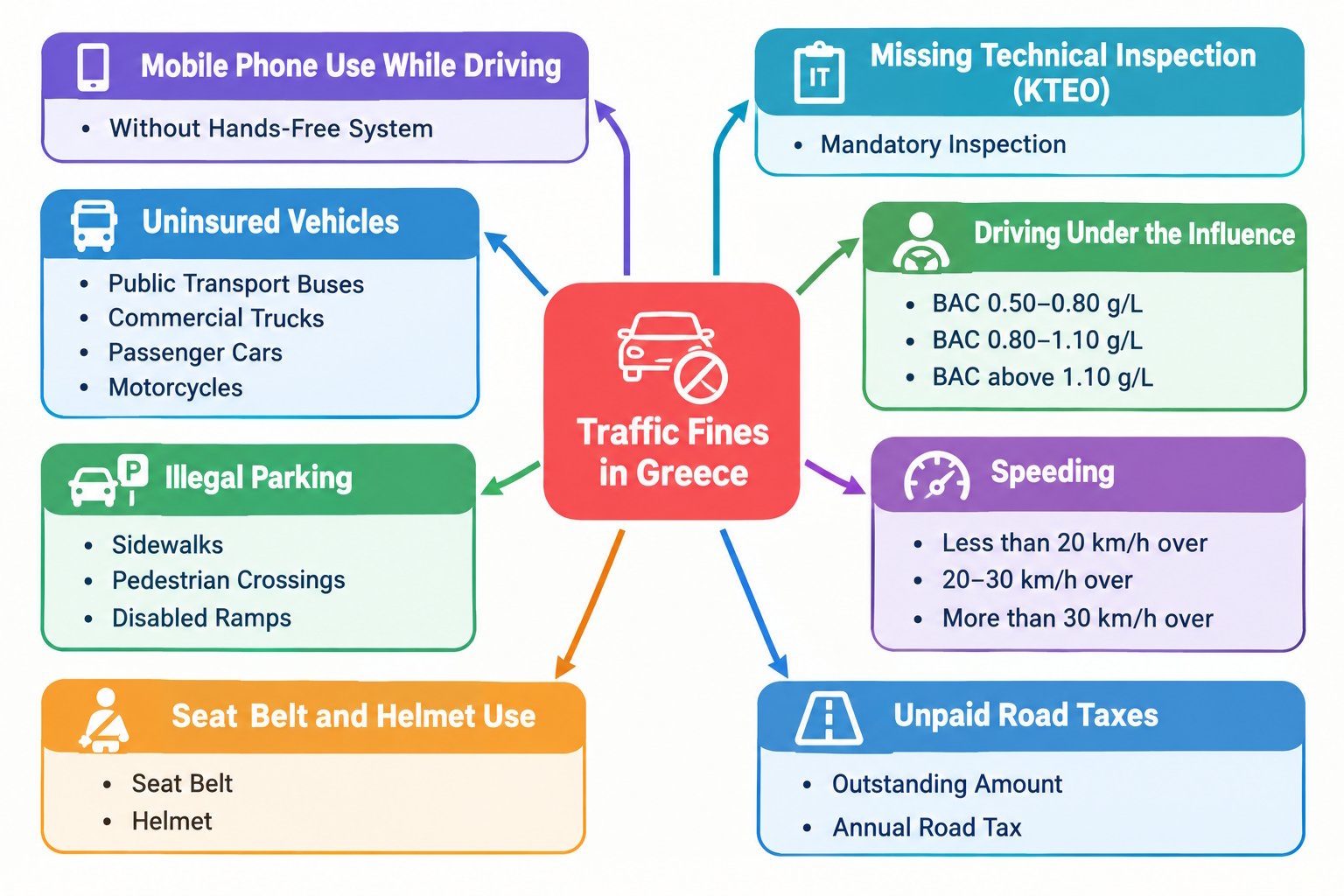
Fines in Greece depend on how much danger an offence poses to road safety. Phone use, drink-driving, speeding and running a red light put lives at risk, so they carry the heaviest fines and licence suspensions. Minor parking mistakes cost less, though local towing and removal fees can still add up.
Common Offences
Visitors most often run into these offences:
- Mobile phone use while driving, including touching a phone that isn’t in a fixed holder
- Speeding, which cameras and police patrols can detect
- Running a red light or ignoring a stop sign
- Driving under the influence of alcohol or drugs
- Not wearing a seat belt or helmet, or carrying children without the right seat
- Illegal parking, especially in disabled bays, bus lanes or on pavements
First-Offence Fines and Licence Consequences
| Offence | Legal basis in the KOK | First-offence consequence |
|---|---|---|
| Handheld phone use | Driver obligations | €350 fine and licence removed for 30 days |
| Speeding | Article 24 | Fine and possible suspension, graded by km/h over the limit |
| Drink-driving | Article 46 | Graduated fines, suspension and, at higher levels, court |
| Red light or stop sign | Articles 9 and 30 | Fine, with suspension for dangerous breaches |
| Illegal parking | Article 38 | Fine, plus possible towing under local rules |
| Street racing | Article 53 | Criminal proceedings |
The phone penalty shows how the new code works: one mistake costs you money and a month off the road.
When a Fine Also Means Losing Your Licence
Authorities order a formal licence suspension when an offence falls into one of the code’s higher-risk categories. Phone use, serious speeding and driving under the influence all qualify. These penalties aim to protect road safety across every region.
Article 109 covers full licence revocation, which authorities reserve for the most serious and repeated cases.
Seatbelt, helmet and phone fines in Greece under Law 5209/2025
- Driver without seatbelt: The driver is fined €350 and has their licence removed for 30 days.
- Passenger without seatbelt: The passenger is fined €150, with no licence removal.
- Passenger without seatbelt: The driver is fined €150 and has their licence removed for 20 days.
- Child under 12 in the front seat without an approved restraint: The driver is fined €350 and has their licence removed for 30 days.
- Rider without helmet: The rider is fined €350 and has their licence removed for 30 days.
- Passenger without helmet: The passenger is fined €350, with no licence removal.
- Passenger without helmet: The rider is fined €350, even when wearing a helmet, and has their licence removed for 30 days.
- Handheld phone while driving or riding: The driver or rider is fined €350 and has their licence removed for 30 days.
What Changed Under the New Traffic Code?
The new traffic code made penalties stricter and more structured. It sorts offences by risk, links most penalties to the driver rather than the car, and tracks repeat offenders through a monitoring system. It also introduced digital enforcement and new rules for e-scooters and small electric vehicles.
Law 5209/2025 and the Rules in Force in 2026
Law 5209/2025 appeared in the Government Gazette (A 100) on 13 June 2025, and its provisions are now in force. Law 5338/2026 amended it in October 2026. The current text is the consolidated version dated 7 October 2026, and the law states three aims:
- Adapting the code to modern road safety needs for pedestrians and vehicles
- Making penalties more of a deterrent
- Simplifying procedures by linking most penalties to the driver, with only a few exceptions tied to the vehicle
The third point matters if you rent. Penalties for the way you drive follow you as the driver, not the rental company’s car.
How KOK Penalty Categories Work
Article 108 groups offences by how dangerous they are and how much they affect other traffic. Low-risk offences bring smaller fines. Higher categories add licence suspensions, and some also lead to the removal of number plates.
Obstructing public transport or parking across pedestrian ramps brings tougher penalties. The most serious acts, such as street racing, leave the administrative system and go to the criminal courts.
How Repeat Offences Increase Penalties
Article 110 establishes a driver behaviour monitoring system. It records offences and increases penalties for repeat offenders.
| Offence | First offence | Repeat offence |
|---|---|---|
| Handheld phone use | €350, 30-day licence removal | Higher fines and longer suspensions; number plates can be removed |
| Other high-risk offences | Fine, often with suspension | Steeper fines, longer suspensions, possible revocation |
Repeat-offence penalties in Greece under Law 5209/2025, Article 110
- Phone, driver seatbelt, helmet, child restraint, red light, STOP sign, more than 50 km/h over the speed limit, drink-driving up to 1.10 g/l, or disabled-bay parking:
- 2nd offence within 5 years: €1,000 fine and licence removal for 180 days.
- 3rd offence: €2,000 fine and licence removal for 1 year.
- Racing, stunt driving or driving above 200 km/h:
- 2nd offence within 5 years: €4,000 fine and licence removal for 2 years.
- 3rd offence: €8,000 fine and licence removal for 4 years.
- Red light or STOP sign causing a crash; phone use causing a crash with serious injury or death; or driving while your licence is removed:
- 2nd offence within 5 years: €2,000 fine and licence removal for 4 years.
- 3rd offence: €4,000 fine and licence removal for 8 years.
- Drink-driving above 1.10 g/l or driving on drugs:
- 2nd offence within 5 years: €2,000 fine and licence removal for 7 years.
- 3rd offence: €4,000 fine and licence removal for 10 years.
- Hit-and-run:
- 2nd offence within 5 years: €2,000 fine and licence removal for 7 years.
- 3rd offence: €4,000 fine and licence removed for life.
How Much Are Speeding Fines?
Greece sets speeding fines in bands based on how many km/h you were over the limit. A small excess brings a fine. Larger ones also bring a licence suspension, and extreme speeds can lead to court.
Article 24 sets the limits, penalty bands and fines. It also bans devices that block speed checks.
Speeding Fines and Licence Removal
Up to 20 km/h over the limit: Fine: €150. Licence removal: none.
20–30 km/h over the limit: Fine: €150. Licence removal: 20 days.
30–50 km/h over the limit: Fine: €350. Licence removal: 30 days.
More than 50 km/h over the limit: Fine: €700. Licence removal: 60 days, on the spot.
Driving above 200 km/h: Fine: €2,000. Licence removal: 1 year, on the spot.
Authorities measure the excess against the posted limit where they caught you. The same amount over the limit is treated more seriously on a 30 or 50 km/h stretch through a village than on an open road.
Which Speed Limits Apply in Towns and on Main Roads?
The new code changed speed limits, and many urban areas now have lower ones. Look for the white “start of built-up area” sign with the place name. Then follow the limit on the round, red-bordered signs; local authorities can set it below the default. Main-road limits change often, so read each sign and don’t assume.
Posted signs override default speed limits.
Default Speed Limits by Road and Vehicle Type
Urban street, one lane per direction: Car or motorcycle over 125 cc: 30 km/h; motorcycle up to 125 cc: 30 km/h.
Urban road with 2+ lanes per direction or a central median: Car or motorcycle over 125 cc: 50 km/h; motorcycle up to 125 cc: 50 km/h.
Road outside built-up areas: Car or motorcycle over 125 cc: 90 km/h; motorcycle up to 125 cc: 70 km/h.
Unpaved road outside built-up areas: Car or motorcycle over 125 cc: 40 km/h; motorcycle up to 125 cc: 40 km/h.
Expressway: Car or motorcycle over 125 cc: 110 km/h; motorcycle up to 125 cc: 80 km/h.
Motorway: Car or motorcycle over 125 cc: 130 km/h; motorcycle up to 125 cc: 80 km/h.
Speed Cameras, Police Checks and Alleged Tolerances
Greece is expanding digital enforcement, including fixed cameras and recorded checks, while police also use handheld radar. You’ll see claims online about a “safe margin” above the limit. Don’t plan around them. Treat the number on the sign as the maximum.
What Are the Penalties for Drink-Driving?

Article 46 sets out a sliding scale of penalties for driving under the influence. The more alcohol in your system, the larger the fine, the longer the suspension and the greater the chance of a criminal case. New and professional drivers, as well as motorcyclists, face lower limits.
The new code made the system stricter than before to deter dangerous driving.
Blood and Breath Alcohol Limits
Police use a breathalyser at the roadside and may follow up with a blood test. Greece sets separate limits for breath and blood, with stricter limits for higher-risk groups. In practice, even one glass of wine at a long taverna lunch can bring a small driver close to the limit. If you’re driving, the simplest plan is not to drink at all.
Alcohol Penalty Bands and Vehicle Immobilisation
| Alcohol level | Typical consequence |
|---|---|
| Just over the limit | Fine, short licence suspension |
| Moderately over | Higher fine, longer suspension |
| Well over | Court case, long suspension |
| Repeat offence | Much higher fine, multi-year ban |
Article 50 lets police immobilise your vehicle on the spot, so you can’t keep driving. Greek media reported that one repeat offender in Grevena was fined €2,000 and banned from driving for seven years.
Drug-Driving and Refusing a Test
Article 46 also covers drugs and medicines that affect your driving. Driving under the influence of intoxicating substances carries heavy penalties. Refusing a test is a serious offence in its own right, so it won’t get you out of trouble.
If your prescription medicine carries a drowsiness warning, take it seriously before setting off.
Drink-driving penalties in Greece under Law 5209/2025, Article 46
- 0.50–0.80 g/l blood (0.25–0.40 mg/l breath):
- Fine: €350.
- Licence removal: 30 days.
- Other penalties: Vehicle immobilised; licence returned only on proof of payment.
- 0.80–1.10 g/l blood (0.40–0.60 mg/l breath):
- Fine: €700.
- Licence removal: 90 days, on the spot.
- Other penalties: Vehicle immobilised.
- Above 1.10 g/l blood (above 0.60 mg/l breath):
- Fine: €1,200.
- Licence and registration removal: 180 days, on the spot.
- Other penalties: Vehicle immobilised; at least 2 months’ imprisonment.
- Above 1.10 g/l, 2nd offence within 5 years:
- Fine: €2,000.
- Licence removal: 7 years.
- Other penalties: Retraining and re-testing.
- Above 1.10 g/l, 3rd offence:
- Fine: €4,000.
- Licence removal: 10 years.
- Other penalties: Retraining and re-testing.
Which Everyday Driving Offences Carry Serious Penalties?

Everyday habits can cost you heavily. Holding your phone, rolling through a red light or driving with a child who isn’t in a proper seat can all lead to high traffic fines, and some offences also bring a suspension. These are the mistakes most likely to catch out a careful but tired holiday driver.
Handheld Phones, Navigation and Hands-Free Use
The first offence costs €350 plus 30 days without your licence. The key question is whether you handle the phone at all.
- Allowed: wireless Bluetooth without handling the phone, speakerphone with the phone in a fixed holder, and voice commands for calls or sat-nav
- Not allowed: holding the phone, texting or scrolling, and wired earphones that require you to touch the phone
- Also not allowed: using the phone at a red light or in a traffic jam
Put your phone in a dashboard holder and set your route before leaving the car park.
Red Lights, Stop Signs and Giving Way
Running a red light is a high-risk offence. A Greek stop sign (the red octagon marked ΣΤΟΠ) means you must stop completely, even at an empty country junction. Article 30 covers junctions and the duty to give way. On Crete, the main road often gives priority to traffic already on a roundabout, but always follow the signs.
Seat Belts, Child Restraints and Motorcycle Helmets
Everyone in the car must wear a seat belt, front and back. Children need a seat that suits their size and age, so book one with your rental. Riders and passengers must wear helmets on motorcycles and mopeds. Police often check this in resort towns.
Where Can Parking and Bus-Lane Mistakes Cost You?

Parking Restrictions, Signs and Local Charges
| Situation | What it means |
|---|---|
| Yellow kerb or yellow lines | No parking |
| Blue zones or pay machines | Paid or controlled parking (sign P-69) |
| Taxi rank sign (P-70) | Reserved for taxis |
| Disabled sign (P-71/P-72) | Permit holders only |
Local councils set the hours and prices for paid zones. Many use an app or a kiosk ticket.
Disabled Bays, Pavements and Obstructed Access
Parking in a disabled bay without a permit can bring harsh penalties. The same goes for parking on a pavement, across a ramp or in front of a garage. Under the new code, these offences obstruct other people rather than count as minor mistakes.
Blocking Public Transport and Rules for Taxis in Bus Lanes
Stopping in a bus lane or at a bus stop, even “for one minute”, can be costly. Blocking public transport disrupts urban services and can lead to immediate fines and plate confiscation.
Article 29 sets special rules for public transport. Some bus lanes allow taxis, but only where the signs say so. Private rental cars can never use them.
Towing, Vehicle Removal and Additional Costs
If your car gets towed, you’ll pay the fine plus towing and storage charges. You’ll also lose time finding the pound. Take a photo of where you parked and the nearest signs.
When Can a Driving Offence Lead to Court?

Severe cases of dangerous driving can go beyond a fine and end up in criminal court. This includes street racing, extreme speed, high alcohol levels, driving without a licence and causing an injury crash.
Street Racing, Extreme Speed and Dangerous Driving
Article 53 treats street racing as a criminal matter. Dangerous driving like this can lead to arrest, a court date, a long licence suspension and the loss of the vehicle’s plates.
Driving Without a Valid Licence or While Suspended
Authorities treat driving without a licence, or driving during an active ban, severely. Your insurer may refuse to pay out, and you could face court.
Article 102 also penalises you if you let someone drive when they have no right to do so.
How Causing an Accident Can Change the Consequences
A crash changes everything. Article 47 says you must stop, help and call the police (100) or an ambulance (166). If phone use or alcohol contributed to a crash, authorities can turn an administrative fine into criminal charges.
What Should You Do If You Receive a Ticket?
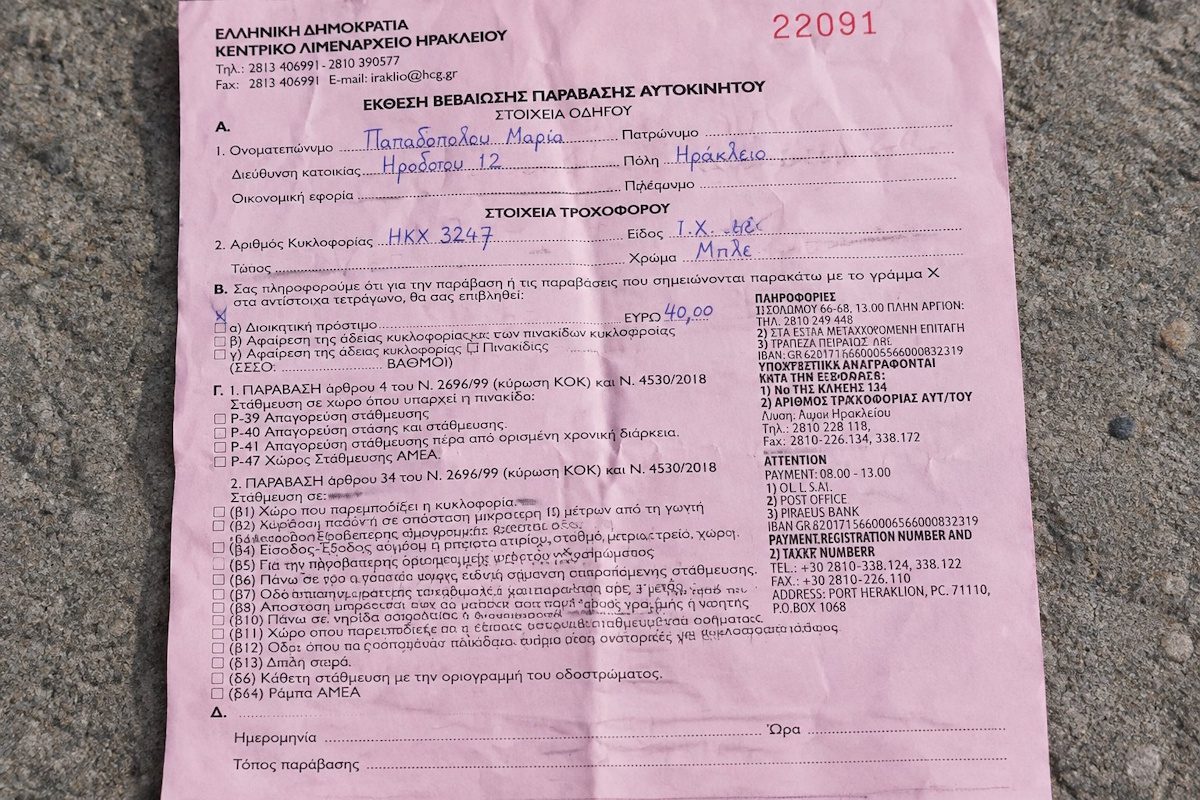
Read the notice carefully, pay only through official channels and act before the deadline printed on it. Keep your rental agreement handy, as the rental firm may get involved.
Checking the Notice and Paying Through Official Channels
Use this checklist when a ticket arrives:
- Check the date, time, place and number plate
- Note the offence and the article of the code cited
- Check whether your licence was kept, and for how long
- Pay only through the method shown on the notice or through official Greek government services
- Keep the receipt and a photo of the notice
Disputing a Fine and Checking Appeal Deadlines
You can challenge a ticket if you believe it’s wrong. The notice gives the deadline and the authority to contact, so act quickly. Photos, rental documents and receipts showing where you were can all help your case.
Rental-Car Notices and Administration Charges
Keep these two charges separate:
| Charge | Who sets it |
|---|---|
| Official fine | Greek authorities, under the KOK |
| Administration fee | The rental company, under your contract |
The rental company may pass your details to the authorities and charge your card for handling the notice. That fee is separate from the fine, so read the contract before you sign.
Tickets Received after Returning Home and Foreign-Licence Suspensions
A notice can reach you after you fly home, often through your rental company. If police suspend your foreign permit, you can’t drive in Greece until the suspension ends. Paying the fine won’t shorten the suspension.
How Can You Avoid Violations When Driving in Crete?

You can avoid most fines on Crete by slowing down near villages, parking legally in the cities and expecting the unexpected on mountain roads. KretaTipp’s founder Norman Kretaner has lived on the island since 2004, and the same patterns show up year after year.
Changing Limits on the North Coast Road and Village Approaches
The north coast road (the BOAK) between Chania, Rethymno, Heraklion and Agios Nikolaos changes speed limits often. Limits drop sharply at junctions, roadworks and town edges near Malia. Watch for the built-up area sign as you approach villages, and brake before you reach it.
Parking in Heraklion, Chania and Smaller Villages
In the old towns of Heraklion and Chania, use paid car parks on the edge and walk in. In villages such as Kritsa or Psychros, streets are narrow, so park at the entrance car park. Don’t leave your car where a bus or tractor needs to pass.
Mountain Roads, Safe Passing and Animals on the Road

Roads up to the Lassithi Plateau or through the White Mountains have sharp bends. You may meet goats and sheep around blind corners. Slow down, sound your horn lightly before tight bends, and overtake only on straight sections where you can see clearly and there’s no solid line.
Tailgating or overtaking without a clear view counts as dangerous driving and puts everyone at risk on these narrow routes.
Checking Your Licence, Rental Documents and Required Equipment
A UK licence lets you drive in Greece for up to six months. If you’re a resident, you must exchange it for a Greek licence after six months. Driving without a licence can lead to heavy fines and vehicle impoundment.
Article 103 lists the documents drivers must carry, so keep your licence, passport and rental papers in the car. Check that your hire car has a warning triangle, first-aid kit and fire extinguisher.
Know the Rules Before You Set Off
Greek traffic fines are tougher and more structured now, and repeat offences cost more. Phone use alone means €350 and a month without a licence. Speeding, alcohol and red-light offences carry graded penalties under Law 5209/2025, while local signs determine parking rules. On Crete, put your phone in a holder, plan not to drink if you’re driving, slow down at every village sign and photograph where you park.
Frequently Asked Questions
How strictly are speed limits enforced in Greece?
Authorities enforce speed limits with cameras, radar and police checks, and enforcement is increasing under the new code. Penalties rise in bands depending on how far over the limit you were. Treat every posted limit as a firm maximum.
Is there a speed camera tolerance in Greece?
Greek authorities don’t publish a safe margin you can rely on. Online claims about tolerances aren’t a safe basis for driving. Stay at or below the posted limit.
Can I receive a rental-car fine after leaving Greece?
Yes. A notice can follow you home, usually through the rental company, which may also add its own administration fee. Keep your rental contract and receipts until you’ve settled any notices.
Does paying a fine end a licence suspension?
No. The fine and suspension are separate penalties. For example, if you use your phone, you pay €350 and still lose your licence for 30 days.
What driving documents do American tourists need in Greece?
Carry your valid national licence, passport and rental documents. Article 103 requires drivers to have their papers with them. Many rental firms also ask non-EU drivers for an International Driving Permit, so get one before you travel. You can show it at the rental desk or during a roadside check.


