Crete’s beaches are some of the most beautiful in the Mediterranean. The warm, clear water makes swimming a highlight of any trip.

Most days, the sea here feels calm and forgiving. Millions of holidaymakers swim safely every summer without any trouble.
The real danger comes from rip currents, powerful channels of water that pull swimmers away from shore quickly and often without warning, even when the beach looks perfectly calm.
Understanding how these currents form—and learning to read the water before you get in—makes a real difference to how safely you enjoy the sea in Crete.
This guide walks through the danger of rip currents in Crete. It covers which coastlines need extra care and what to do if you or someone nearby gets caught in one.
Understanding Rip Currents
A rip current is a narrow strip of water flowing away from the beach, back out towards deeper sea. Many swimmers call this a rip tide, but it’s really powered by waves, not tides.
It forms where breaking waves push water towards the shore. That water needs a way to drain back out again.
How Water Escapes Back To Sea
When waves break, they carry water up onto the beach. That water has to go somewhere, so it finds the quickest route back out—often through a gap in a sandbar or a channel between rocks.
This creates a fast-moving current that can flow much quicker than most people can swim.
Why Strong Swimmers Can Be Caught Out
Rip currents aren’t about how well you swim. Even fit, confident swimmers get caught because the current pulls them straight out, not under.
Panic and exhaustion from fighting the current cause most of the danger, not the current itself.
Rip Currents Versus Waves And Undertow
Waves push water towards the beach. A rip current pulls it away, usually in one defined channel, not across the whole shoreline.
Undertow is different. It’s just a mild backward pull as waves retreat—nothing like a rip.
Why Conditions Change Around Crete

Crete’s coastline sits between two very different seas. Local wind, beach shape, and man-made structures all shift how likely a rip current is on any given day.
Wind, Swell And Seasonal Weather
Strong, steady wind pushes water and waves harder onto the shore. This increases the amount that needs to drain back out.
Summer winds like the Meltemi, along with sudden storms, can turn a gentle beach into choppy water within an hour.
Beach Shape, Sandbars And Rocky Gaps
Wide, sandy beaches often have sandbars running parallel to the shore, with gaps where water funnels through. At low tide, these channels can become more defined as the water levels drop.
Beaches with rocky headlands or reefs can channel water into narrow, fast-moving currents in similar ways.
The Influence Of Boats, Harbours And Breakwaters
Harbour walls, piers, groins, jetties, and breakwaters change how water moves along a coastline. Currents often form right alongside these structures, since they interrupt the natural flow of water and can create a strong pull near the wall itself.
Coasts And Beaches Requiring Extra Awareness

No beach in Crete is permanently dangerous. Some coastlines, though, are more exposed to the wind and swell that create rip currents.
Reading the sea on the day always matters more than any beach’s reputation.
Exposed Northern Shores During Meltemi Winds
The north coast—including popular areas near Heraklion, Malia, and Rethymno—faces the Aegean and takes the full force of Meltemi winds in summer. On a windy afternoon, waves here can build quickly, and the sea can look very different from how it looked that morning.
Open Southern Beaches On The Libyan Sea
Southern beaches along the Libyan Sea, like those near Matala, are often calmer. But they can also see sudden swell from distant weather systems.
If the sea develops unusually choppy water for a normally quiet bay, it’s worth pausing before swimming. This often signals that subsurface currents are strengthening.
Wide Sandy Bays, River Mouths And Unsupervised Coves
Wide bays with shifting sandbars, and spots where a river or stream meets the sea, tend to develop stronger currents. Remote coves without lifeguards deserve extra caution since help is further away if something goes wrong.
Warning Signs To Spot Before Entering The Water
A rip current rarely announces itself with white, foamy water. It’s usually the calmer, flatter patch that hides the risk, so it pays to look carefully before wading in.
A Darker Or Choppier Channel
You might notice a strip of water that looks darker than the sea around it, often because it’s slightly deeper. It can also look choppier or more textured, breaking the usual pattern of waves rolling in.
Foam, Seaweed Or Sediment Moving Seawards
Watch for foam, seaweed, or sandy, cloudy water drifting steadily out to sea rather than washing in with the waves. This is one of the clearest signs that water is being pulled away from the shore in that spot.
Flags, Lifeguards And Local Beach Advice
Organised beaches in Crete often use flag systems. It’s safest to check what the colours mean before you swim.
A yellow flag signals moderate hazard, while a red flag means the water is closed for swimming. A lifeguard’s whistle or wave isn’t just fussiness—it’s usually based on something they’ve spotted that you haven’t.
What To Do If You Are Carried Seawards

Being pulled out by a rip current is frightening. But it’s rarely a reason to think you can’t get back safely.
Knowing the right response in advance makes it far easier to stay in control.
Stay Calm And Conserve Energy
Fighting directly against the current wastes energy fast and leads to panic. It’s safest to keep your head up, breathe steadily, and remind yourself that a rip current pulls you out, not under.
Float Or Swim Parallel To The Shore
Swim across the current, parallel to the beach, rather than straight back towards it. Most rip currents are narrow, so a short sideways swim is often enough to escape the pull. Then you can swim back in at an angle.
How To Signal For Help
Raise one arm and wave to attract attention from the beach. Shouting can help too, but a raised arm is often seen more quickly by a lifeguard or fellow swimmer further away.
Helping From Land Without Becoming A Casualty
If you see someone in trouble, alert a lifeguard immediately or contact the coastguard. Going in yourself without training or a flotation aid often turns one struggling swimmer into two.
Safer Swimming Habits For Visitors
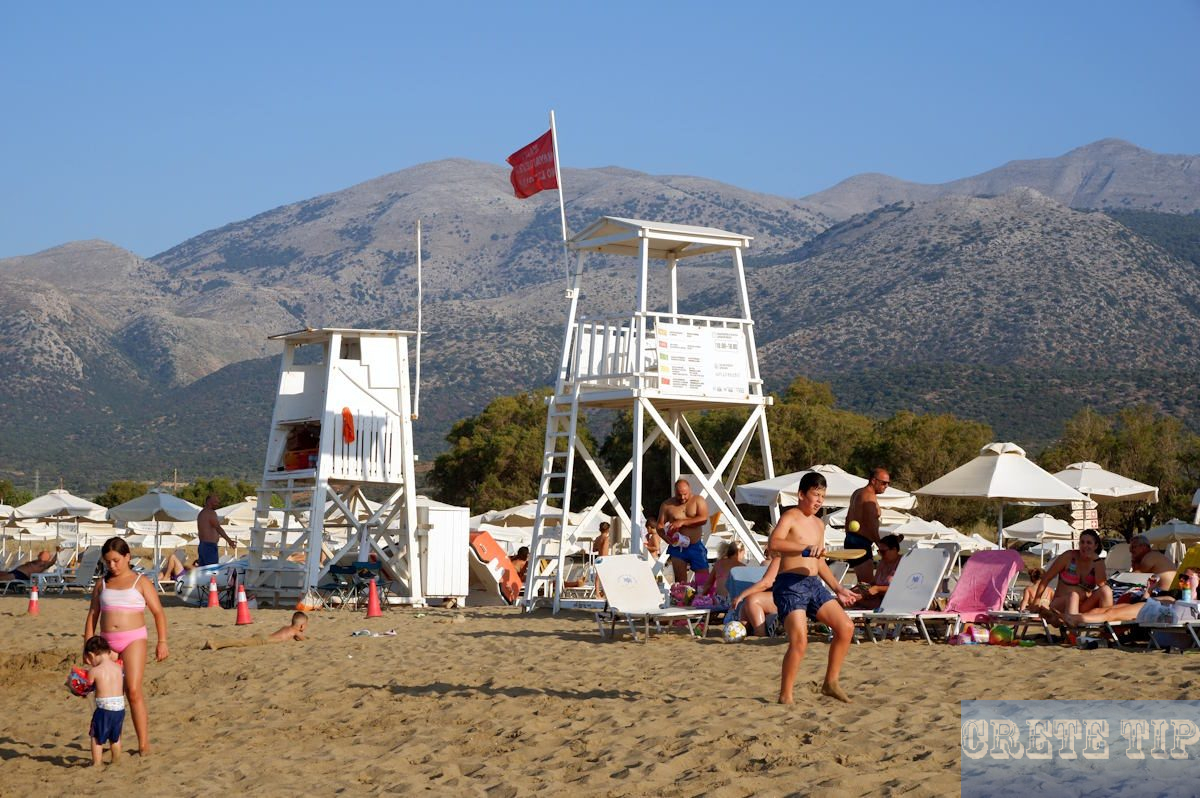
Good habits, more than any single rule, keep most beach days in Crete trouble free. A little planning before you even reach the sand goes a long way.
Choosing A Suitable Beach And Entry Point
Lifeguarded beaches with gently shelving sand are the most forgiving choice, especially for families or less confident swimmers.
It’s worth checking KretaTipp or similar local resources for notes on a beach’s usual character before you travel out to it.
Checking Conditions On The Day
Look at the sea before you commit to a spot, since wind and swell in Crete can shift through the day. If the beach you had planned looks rougher than expected, a short drive to a more sheltered bay is often the simplest solution.
Keeping Children And Less Confident Swimmers Safe
Keep young or inexperienced swimmers within arm’s reach, in water no deeper than waist height on a calm day. It’s safest to agree on a clear boundary together before anyone goes in, rather than calling instructions once they’re already swimming.
Frequently Asked Questions
How common are rip currents around Crete’s beaches?
A rip tide or rip current can develop on many Cretan beaches, particularly when wind or swell picks up. They’re not present every day, but conditions can change quickly, so it’s worth checking the sea each time rather than assuming yesterday’s calm water will repeat.
Is it safe to swim in the sea in Crete?
Swimming in Crete is usually safe. Most people enjoy the sea here without much trouble.
If you stick to lifeguarded beaches and pay attention to the flags, you’ll lower your risk. Avoid rough or unfamiliar water, especially on windy days.
Which beaches in Crete are most likely to have strong currents?
The north coast can get pretty wild during the Meltemi winds. Wide bays with shifting sandbars and areas near river mouths or harbour walls often have stronger currents.
It really depends on the weather that day. No beach is risky every single time, but some spots are known for it.
How can I recognise a rip current before entering the water?
Watch for a darker or flatter patch of water, or maybe an oddly choppy channel. Foam, seaweed, or sand drifting out to sea is a giveaway too.
Honestly, these areas can look weirdly calm compared to the waves breaking nearby. It’s easy to get fooled.
What should I do if I get caught in a rip current while swimming?
Try to stay calm. Don’t fight the current directly.
Swim parallel to the shore until you’re out of it. If you need help, raise your arm, then head back to the beach at an angle once you’re free.
Are there warning flags or lifeguards on Crete’s beaches?
Many organized beaches in Crete use flag systems. Lifeguards usually show up during the busy summer months.
A yellow flag means conditions are moderate. If you see a red flag, the risk of rip currents is high—definitely not a great time for a swim.
Smaller or remote coves? Most don’t have flags or lifeguards at all. That’s exactly why you’ve got to be extra careful in those unsupervised spots.