Deep in the Cretan countryside, there’s a village that just won’t stay buried. Sfendili sits in a valley that fills and empties with the seasons.

It appears when water levels drop and vanishes again when rains return. The village was evacuated and flooded in 2012 to create the Aposelemi Reservoir, but it re-emerges each summer, revealing stone houses, courtyards, and a 14th-century church that still stands amongst the ruins.
This isn’t a legend or some old myth—it’s a real place. You can visit, though whether you’ll see anything depends entirely on when you turn up.
The reservoir controls the north coast’s water supply, and as it breathes through dry spells and wet winters, Sfendili comes and goes like a ghost that can’t quite leave. The sight of a drowned village is eerie enough, but it’s the story behind it that really gets under your skin.
The trade-off between modern infrastructure and village life lingers in the air. History keeps surfacing, no matter how deep you try to bury it.
From its medieval frescoes to its role in Crete’s water future, Sfendili sits at the crossroads of old and new.
Sfendili: The Village That Comes and Goes
Sfendili was a small Cretan village that stood for centuries before disappearing beneath reservoir waters in 2012. Its residents built their lives around agriculture and traditional practices until forced evacuation came with the dam’s completion.
Origins and Early History
Sfendili traces its roots back to the 16th century when settlers first established the village in the hills south of Hersonissos. The community grew slowly over the generations, tucked between the larger villages of Potamies and Avdou.
Your ancestors, if you had lived there, would have built stone houses using local materials. They farmed the surrounding land and raised livestock in the Cretan tradition.
The village remained relatively isolated for most of its existence. Old customs and ways of life were passed down since its founding.
By the early 2000s, Sfendili was home to a small but tight-knit community. Families had lived there for generations.
Etymology and Name Variations
The village goes by several different spellings, which can make researching it a bit confusing. You might see it written as Sfendyli, Sfentyli, Sfedyli, Sfendigli, or Sfendilos.
These variations come from different transliterations of the Greek name into English. There’s no single “correct” English spelling since Greek letters don’t always have direct equivalents.
Official documents sometimes use one spelling whilst locals or tourists might prefer another.
Daily Life Before the Flood
Life in Sfendili centred around farming and animal husbandry. You would have grown olives, grapes, and vegetables in the rocky Cretan soil.
Many families kept goats and sheep that grazed on the hillsides. The village had the essential buildings you’d expect: a church, a few small shops, and traditional stone houses with thick walls to keep out summer heat.
Most residents knew each other by name. Social life revolved around family gatherings, religious festivals, and seasonal agricultural work.
Water came from local springs and wells. Roads connected Sfendili to nearby Potamies and Avdou, but the settlement stayed pretty quiet and removed from the tourist-heavy coast.
The Final Days and Evacuation
When the Greek government approved the Aposelemi Dam project, Sfendili’s fate was sealed. The dam would create Crete’s largest water supply reservoir, but the village sat directly in the flood zone.
Residents received compensation from the state for their properties and had to relocate. Imagine the difficulty of leaving homes that had been in families for generations.
People packed up centuries of history and memories, abandoning the village that had stood since the 1500s. The dam was completed in 2012, and water began filling the reservoir.
Sfendili disappeared beneath the surface, becoming what some now call the “Atlantis of Crete” or the “sunken village.” Today, the submerged village reappears when water levels drop during droughts or periods of high demand.
The church and house ruins emerge from the depths, drawing visitors who come to see this ghost settlement that comes and goes with the reservoir’s changing levels.
The Aposelemi Reservoir and Dam
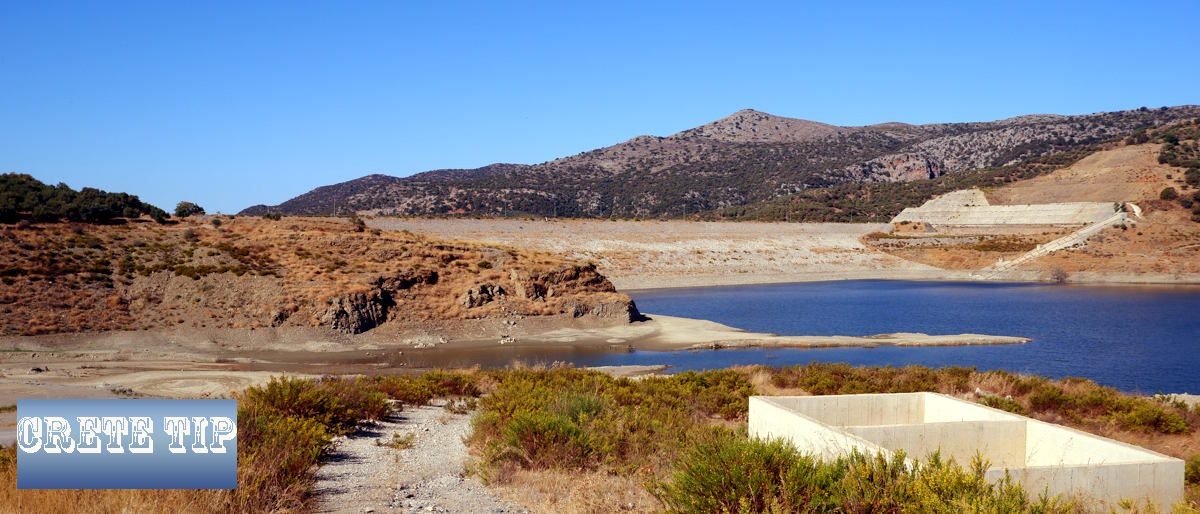
The Aposelemi Dam stands as Crete’s largest water supply project, built between 2008 and 2012 to address severe water shortages across the island’s northern coast. This massive earthen structure created a 27 million cubic metre reservoir that forever changed the landscape and displaced entire communities.
Purpose and Construction
The dam was built to solve critical water supply problems affecting northern Crete, especially the areas stretching from Heraklion to Agios Nikolaos. The region’s booming tourism industry and growing population had pushed existing water resources to their limits.
Construction took place between 2008 and 2012 near the villages of Potamies and Avdou, roughly 32 kilometres southeast of Heraklion. Engineers chose an earthfill embankment design, building the structure 61 metres high using locally sourced phyllite and limestone with a central impervious clay core.
The dam collects water from the Aposelemi River, fed by runoff from the Lasithi Plateau and the surrounding basin. The reservoir now holds up to 27.3 million cubic metres of water.
It serves as the primary freshwater source for major population centres including Heraklion, Hersonissos, and Agios Nikolaos. It provides both drinking water and irrigation for the agricultural areas in between.
How the Dam Changed the Landscape
The creation of the reservoir completely transformed the valley where the Aposelemi River once flowed freely. What was once a fertile agricultural area with olive groves and farmland became Crete’s largest artificial lake, stretching across the foothills of the Dikti range.
The dam altered the natural flow of the Aposelemi River, redirecting water into the reservoir instead of letting it follow its original course downstream. This change affected local ecosystems along the old river path, though new wetlands have formed around the reservoir’s edges.
These wetlands now attract migratory birds and other wildlife, creating a different type of habitat than existed before. The surrounding hills now reflect off the calm reservoir waters, creating scenery that draws photographers and nature enthusiasts.
Hiking trails wind through the area, offering panoramic views you won’t find elsewhere on the island.
Effects on Surrounding Villages
Sfendyli bore the heaviest burden of the dam’s construction. The village, which dated back to the 16th century, sat in a low-lying position within the valley that would become the reservoir.
Every resident had to evacuate their homes, and the state provided compensation for their lost properties. As the reservoir filled, Sfendyli disappeared beneath the water.
The village only becomes visible when water levels drop during particularly dry periods, revealing half-submerged stone houses and narrow streets. The nearby villages of Potamies and Avdou remained above the waterline but experienced significant changes to their surroundings.
The communities lost access to traditional farmland and had to adapt to living beside a large reservoir rather than a river valley. However, these villages gained improved water security and new tourism opportunities as visitors began arriving to see the dam and the occasional appearance of Sfendyli’s ruins.
The Submerged Village Phenomenon

Sfendili doesn’t stay hidden forever beneath the Aposelemi Reservoir. The water level rises and falls throughout the year, which means the village appears and vanishes in a cycle that depends on rainfall, drought, and how much water gets pumped to the coast.
Why Sfendili Disappears and Reappears
The village sits in the footprint of the Aposelemi Dam reservoir, so its visibility is tied directly to how full the lake is at any given time. When Crete gets heavy winter rains and mountain snowmelt, the reservoir fills up and swallows the ruins completely.
During dry periods, particularly in late summer and autumn, the water level drops and Sfendili emerges from the depths. This isn’t a predictable schedule you can mark on a calendar.
Some years bring more rain than others, and water demand from coastal towns like Heraklion and Agios Nikolaos changes how quickly the reservoir empties. The village might be fully visible one summer and completely underwater the next.
That unpredictability is part of what makes Sfendili so compelling. You can’t plan a visit and guarantee you’ll see the ruins.
You have to check current conditions, ask locals, or just show up and see what the water has decided to reveal that day.
Seasonal Water Level Changes
Summer usually offers the best chance to see Sfendili exposed. The combination of low rainfall, high temperatures, and increased water demand for tourism and agriculture along the coast pulls the reservoir level down.
By late August or September, the water can recede enough to reveal streets, house walls, and courtyards. Winter and spring bring the opposite effect—rain fills the reservoir, and snowmelt from the Dikti Mountains adds to the volume.
During these months, the village usually disappears beneath several metres of water. Even the taller structures can vanish completely when the lake reaches its highest levels.
The fluctuation can be dramatic. In a particularly dry year, you might be able to walk through former streets and peer into doorways.
In a wet year, you might only see the top of the church if you’re lucky.
Iconic Landmarks Emerging from Water
The 14th-century Byzantine church of Agios Theodoros is the most recognisable landmark when Sfendili reappears. Its stone walls and painted interior have survived decades of submersion, and it often becomes visible even when much of the village remains underwater.
The church sits on slightly higher ground, which means it’s usually the first structure to emerge and the last to disappear. When water levels drop significantly, you’ll also see:
- Stone house walls marking where families once lived
- Courtyard boundaries and doorways
- Former streets that connected the settlement
- Foundation outlines showing the village layout
The church draws the most attention because it’s both the oldest and most intact structure. Visitors often describe it as eerie to see a medieval building standing in the middle of a modern reservoir, especially when water still surrounds its base like a moat.
Cultural and Historical Significance

Sfendili holds layers of history from Byzantine times through Venetian and Ottoman rule. It’s anchored by a 14th-century painted church and surrounded by archaeological finds that reach back to Minoan Crete.
Byzantine Church and Religious Heritage
The Church of Agios Theodoros stands as Sfendili’s most important cultural landmark. Built in the 14th century during the later Byzantine period, it features wall paintings tied to the Cretan iconographic tradition, including frescoes likely created by the Phokas brothers.
These medieval artworks were meant for prayer and to last, not to face flooding every year. Still, the church stands—sometimes surrounded by water, sometimes open to visitors on foot.
When the water pulls back, you can see the building almost as it was—a painted interior that’s survived centuries. It’s wild to think how it’s endured rulers, floods, and now the rise and fall of a reservoir.
This isn’t just some old building. It shows the faith and effort of a small community who hired skilled artists to decorate their village church.
The frescoes that remain make Agios Theodoros a rare bit of medieval religious art, now caught between its original purpose and the realities of modern water management.
Archaeological Discoveries and the Minoan Cemetery
The area around Sfendili holds deeper history than the village itself. Archaeologist Athanasia Kanda uncovered significant finds here, including a Minoan cemetery discovered nearby.
This cemetery dates back thousands of years before Sfendili even existed. The fact that Minoan burial sites are here tells you people have valued this valley for millennia.
The same landscape that attracted Bronze Age communities later drew Byzantine Christians, Venetians, and Ottomans. Water, fertile land, and shelter—those things never stop mattering.
With all these archaeological layers, you realize the loss was bigger than just a drowned village. This place carries traces of Crete’s earliest civilizations.
Venetian and Ottoman Past
Sfendili appears in written records during the Venetian period. A census from 1577 lists the settlement.
The village name probably comes from Sfendilos, a family name found on Crete. It likely started as a family holding that grew into a small hamlet.
Under Venetian rule, Sfendili was a modest rural community, counted and taxed like so many others. The Ottomans kept it going as a small Christian settlement, with people holding onto their faith and language inside the empire’s framework.
Those centuries of continuity matter. Sfendili wasn’t some ruin waiting to collapse. It was a working village, surviving regime changes and keeping its identity—right up until the reservoir arrived.
Nature, Wildlife and Modern-Day Experiences

The Aposelemi Reservoir has created a unique ecosystem. Water levels shape both wildlife activity and when you can actually get to the sunken village.
The area attracts migratory birds and offers hiking across the Lasithi foothills. The best views? Totally depends on how much it rained recently.
Wetlands and Birdwatching
When water levels rise, the reservoir acts like an artificial wetland and draws in all sorts of birds. You’ll spot herons and egrets along the shore, especially during spring and autumn migrations.
Cormorants perch on the exposed ruins when the water sits at mid-level. The shallow areas around Sfendili turn into feeding grounds for wading birds.
If you like birdwatching, bring binoculars. The reservoir’s edge has decent viewing points, and early mornings are best for quiet and good light.
This isn’t one of Crete’s top birdwatching destinations, but the mix of open water and scrubland creates some habitat variety. Sometimes you’ll see raptors hunting over the valley, and small songbirds nest in the abandoned structures when they’re dry.

Outdoor Activities and Hiking
The land around the reservoir offers walking routes through classic Cretan countryside. You’ll find paths from Potamies and Avdou that give you views over the water and up to the Lasithi mountains.
The terrain is moderate, with a few rocky spots. When water levels drop a lot, you can walk among Sfendili’s ruins.
There’s no marked trail through the village. You’re just picking your way between stone walls and foundations, so wear good shoes. It can get muddy if the water just receded.
Photography is probably the main draw here. The changing water levels mean every visit looks different, and the light shifts all day long.
Visiting Tips and Best Times to See Sfendili
Late summer and early autumn usually offer the lowest water levels, so that’s when Sfendili is most visible. Check recent reports or ask locals before you go, since water levels change with rainfall and how the reservoir is managed.
No facilities at the site—bring your own water, sun protection, and whatever else you need. Potamies and Avdou are the nearest villages, and they’ve got cafés and basic supplies.
Access is free, and there’s informal parking near the dam. The church of Agios Theodoros stands out as a landmark. Respect the site—this was home for people until recently, and some former residents still live nearby.
Getting There and Exploring Nearby
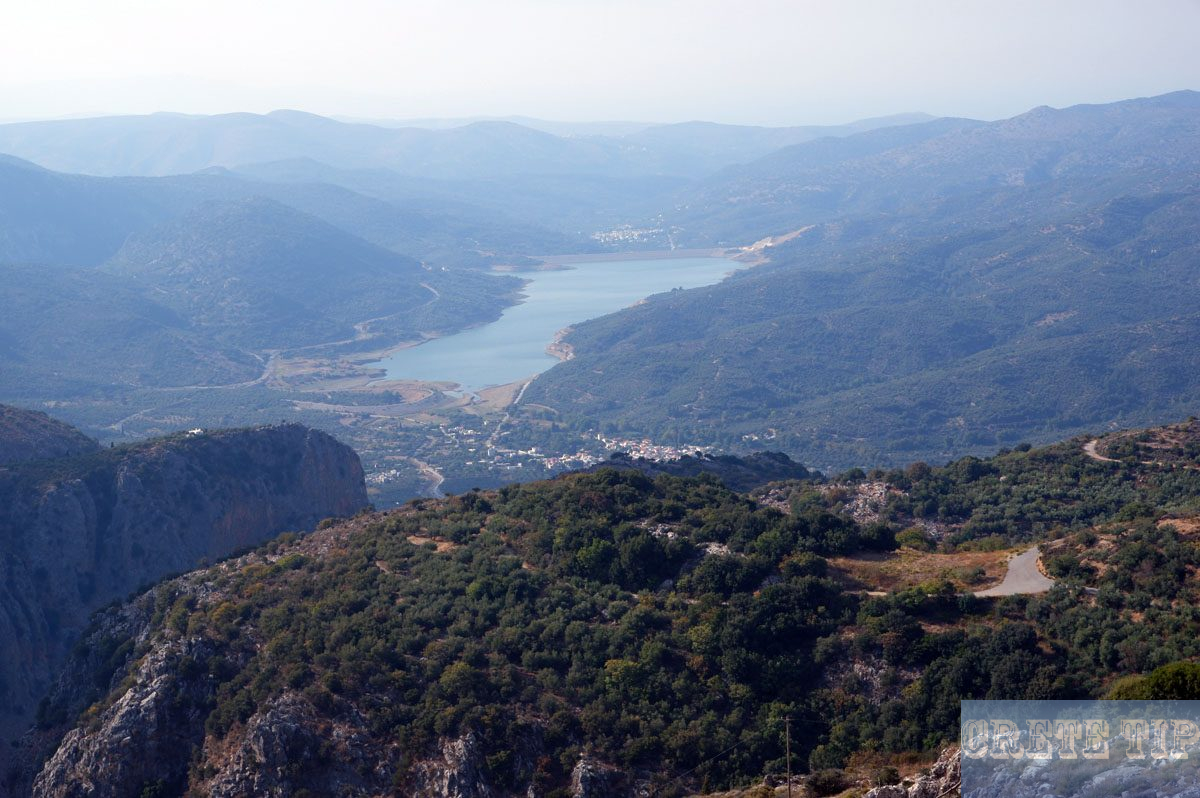
Sfendili and the Aposelemi Reservoir sit in central Crete, between Heraklion and Agios Nikolaos. Potamies and Avdou are your closest reference points.
The area connects easily to main roads but still gives you access to traditional mountain villages and local highlights.
How to Reach Sfendili and the Reservoir
The reservoir is about 25 kilometres southeast of Heraklion and 30 kilometres west of Agios Nikolaos. The drive from either city takes around 30-40 minutes along the main coastal road.
From Heraklion, head east towards Hersonissos on the E75 motorway. Exit for Potamies and follow signs to the Aposelemi Dam.
If you’re coming from Agios Nikolaos, take the coastal road west and turn inland near Stalida. You’ll pass olive groves and countryside before you hit the reservoir.
Getting around:
- Hiring a car is your best bet for flexibility
- Quad bike tours run from Hersonissos and stop at the dam
- Local buses go to Potamies but not right to the reservoir
- Park near the dam for easy access to viewing points
The final stretch is a short drive on smaller roads. Bring a GPS or a good maps app—mobile coverage gets patchy in the mountains.
[flexiblemap center=”35.2451194,25.4104164″ width=”360″ height=”360″ title=”Sfendili” directions=”true” showdirections=”false” directionsfrom=”Hersonissos, Crete”]
Potamies and Avdou Villages
Potamies sits just north of the reservoir and makes a great base for exploring. You’ll find traditional tavernas serving local food and a few rooms to let if you want to stay overnight.
The village keeps its authentic Cretan vibe with narrow streets and stone houses. Local shops have basic supplies, and you can chat with residents who remember Sfendili before it went under.
Avdou is a bit further south, deeper into Lasithi. It’s quieter, with stunning views across the valleys and mountains. Both villages give you a taste of rural Cretan life away from the crowds.
Other Attractions in Central Crete
The Lasithi plateau stretches out past Avdou, offering dramatic mountain scenery and the famous Dikteon Cave—supposedly where Zeus was born. You can reach it in under an hour from the reservoir.
Lyttos and Kastelli show up on local routes and are worth quick stops for their traditional architecture. The Panagias monastery sits near the reservoir and welcomes visitors during daylight hours.
Nearby highlights:
- Hersonissos old town (20 minutes)
- Mountain villages of Koutouloufari and Piskopiano
- Olive groves and fruit orchards along the valley
- Small Byzantine churches scattered in the countryside
Frequently Asked Questions
Sfendili raises a lot of practical questions—access, timing, and what it’s really like when a village spends half the year underwater. The answers depend on water levels, the season, and how much of the site is visible when you show up.
What’s the story behind Sfendili and why does it disappear and reappear?
Sfendili sits inside the Aposelemi Dam reservoir, built to supply water to towns along Crete’s north coast. The village was abandoned in 2012 when the dam finished and the reservoir started filling. Residents left after the state compensated them.
The disappearing act happens because reservoir levels change through the year. Water drops during dry summer months when demand is high and rain is scarce. When the water recedes, parts of the village come back into view.
In wetter times, the water rises and covers the ruins again. That cycle just keeps going—year after year, the village never fully vanishes but never fully returns. It just hangs in between, depending on the rain and how much water gets used.
How did the creation of Aposelemi Reservoir affect the village of Sfendili?
The reservoir meant everyone in Sfendili had to evacuate. People who’d lived there for generations left their homes, fields, and the church of Agios Theodoros behind.
The state paid compensation for lost property, but you can’t really put a price on leaving your home.
The dam is Crete’s biggest water project, built to fix shortages between Heraklion and Agios Nikolaos. The valley where Sfendili stood was right in the path of the planned reservoir.
The village didn’t fade away slowly like other abandoned places. It was deliberately emptied because modern infrastructure needed that land. That makes it a different kind of ghost village for Crete.
Can you visit the submerged village of Sfendili, and what should you expect?
You can visit Sfendili when the water drops low enough to expose the ruins. The site is near Potamies and Avdou in the Dikti foothills, and it’s accessible by car on roads serving the reservoir.
What you see really depends on the water level when you get there. Sometimes you can walk through courtyards and along old paths. Other times, only the tops of buildings or the church rise from the water. Occasionally, the whole village is completely submerged.
The church of Agios Theodoros is usually the most visible part. It dates back to the 14th century and has Byzantine-era frescoes. When the water drops further, the stone walls and house foundations show up too.
Don’t expect facilities or marked trails. This isn’t a managed tourist site—no signs, no guides. It’s a place that sits in between official recognition and abandonment.
What are the best times of year to view the re-emerging village of Sfendili?
Late summer and early autumn usually give you the best shot at seeing Sfendili exposed. Water levels drop during the dry season—June through October. September and October often have the lowest water after months of draw-down.
If Crete gets a dry winter, the reservoir stays lower and the village remains visible longer into spring. Wet winters do the opposite, raising water and covering the ruins until the next dry spell.
You can’t predict visibility months ahead. Local weather, water demand, and dam management all play a part. The best way is to check with locals in Potamies or Avdou before you visit—they’ll know what’s visible right now.
Are there any guided tours available to explore the phenomena of Sfendili and Aposelemi Reservoir?
Organised tours that focus just on Sfendili? Honestly, you won’t find many. There’s no official tour operator or regular schedule like you might see for Crete’s big-name archaeological sites.
The water level changes all the time, so tour companies can’t really plan around it. It’s just too unpredictable to guarantee what you’ll see.
Some local guides near Heraklion might squeeze Sfendili into a custom tour, but only when the conditions are right. Usually, these are private deals, not big group outings.
If you’re interested, you’ll probably need to reach out to local tour operators and ask if they can work it in, depending on how much of the village is visible that day.
Most people just go on their own. You can drive there with a rental car, and nobody’s stopping you from viewing the ruins when they’re above water.
No official tours also means you’re on your own for safety and finding your way around. It’s a bit of an adventure, honestly.
What measures have been taken to preserve the remnants of Sfendili?
No one’s really tried to preserve the village structures in any serious way. The place sits in this strange limbo—sort of managed, but definitely abandoned rather than cared for.
Buildings just take what comes, with water rising and falling, slowly wearing everything down. It’s a tough environment for anything to last.
The church of Agios Theodoros, though, has gotten a bit more attention. Those 14th-century frescoes inside? They’re pretty significant for Cretan Byzantine art.
Still, flooding keeps threatening the paintings, which were never meant to handle all that water. It’s hard to imagine how they’d protect them, honestly.
Mostly, people have relied on documentation. Photos, videos, and written accounts try to capture the village before and after the floods.
These records act as a kind of time capsule, since the actual place keeps crumbling. It’s bittersweet—watching history fade, but at least we’ve got something left.