Up on a quiet hillside above the village of Kavousi—sometimes spelled Kavoussi—a single olive tree has grown since the Bronze Age. It was already here long before anyone even dreamed up the Parthenon.

Its trunk is thick, twisted, and hollow in spots, shaped by wind, drought, and countless harvests. This is the Ancient Olive Tree of Kavousi, estimated to be around 3,500 years old. It’s among the oldest living things in Greece, quietly witnessing the last days of the Minoan civilization on Crete.
The tree is a protected natural monument and a relic of the Minoan civilization. Somehow, it’s survived for millennia in the tough Cretan landscape.
People often bring up this ancient olive when talking about the oldest trees in the world. Researchers visit to study how a plant can manage to stick around for thousands of years.
Most folks come to Crete for the beaches, palaces, or maybe the gorges. Not many expect a tree to stop them in their tracks, but standing beneath this ancient olive—with its wide, gnarled base and surprisingly modest crown—can really make you feel the weight of history.
This guide covers where to find the tree, how old it might actually be, and why it matters far beyond its size. You’ll also get a sense of how it compares to Crete’s other famous ancient olive, the tree at Vouves, and what to expect if you visit.
Location And Setting

The tree grows near the old settlement of Azoria and the peak of Vrontos, just above the village of Kavousi. It’s also close to the Minoan site of Vronda.
This area adds a lot to the historical depth of the Lasithi region. It even includes the ancient hilltop site of Kastro.
Some call it the olive tree in Azorias. The village belongs to the municipality of Ierapetra.
The nearby ridge of Vrondas and the Azoria Acropolis make the landscape feel even more dramatic.
The site is pretty convenient for travelers coming from Agios Nikolaos, the regional capital. Most people get there by the main road between Ierapetra and Sitia.
To reach it, you leave the busy coastal highway and follow quieter roads that wind through farmland shaped by centuries of work. The hill of Azorias rises behind the grove, making a striking backdrop.
It’s about 25 kilometers from Sitia, a main town in the eastern part of the island.
Where To Find The Monument Near Kavousi
The olive tree stands at a spot called Plai tou Kastrou [Google Maps], on a rocky slope near the Azoria archaeological site and above the modern village of Kavousi. A short but uneven walking trail winds through olive groves and old stone terraces to connect the two.
There’s no big car park or ticket booth. You’ll just come across a fenced area that protects the tree, with a small sign offering a bit of info. It’s a humble setup, and honestly, that fits a monument this old.


The Landscape Of Eastern Crete
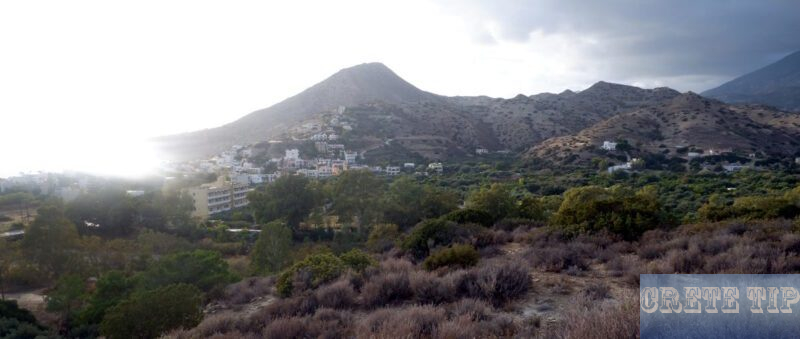
Eastern Crete feels quieter and rougher than the busier touristy parts out west. Hills roll down toward the Gulf of Mirabello and the wild Avgos valley.
These slopes are dotted with olive groves, probably cultivated since ancient times. Nearby, the Azoria site shows the remains of an Iron Age settlement, complete with an old olive press.
Walking here, you can’t help but sense how olive cultivation shaped daily life for centuries—long before anyone wrote “Kavousi” on a map.
Age, Evidence And Uncertainty

Researchers think the tree took root between 1350 and 1100 BC, right at the tail end of the Bronze Age. That would make it a silent witness to the last flickers of Minoan influence on Crete.
The 3,500-year estimate comes from several clues. The tree was already mature long before Odysseus supposedly set sail, but it’s still just an educated guess, not a single precise number.
Why Its Age Is Estimated At Around 3,500 Years
Experts look at the trunk size, growth patterns, and compare it with other ancient olive trees around Crete. Its spot next to settlements from the Late Minoan period helps, even if we can’t say for sure the Minoans themselves planted it.
The Association of Cretan Olive Municipalities calls it a monumental tree, mostly thanks to its massive trunk. Some sources say it’s closer to 3,000 years old, others push it to 3,250 or 3,500.
These ranges aren’t really arguments—they’re just scientific caution. The late academic George Grammatikakis often used this tree as a perfect example of Crete’s natural and historical continuity.
The Challenges Of Dating Living Olive Trees
Olive trees aren’t like oaks or pines. Their trunks hollow out over the centuries, and the old wood decays from the inside, destroying the rings that scientists usually count.
So, traditional tree-ring dating doesn’t really work. Researchers have to rely on trunk shape, old records, and comparisons to other ancient trees. It’s a fair approach, but it gives you a range, not a birth certificate—and that’s worth remembering when you see a single, bold number on any ancient olive.
A Living Link To Minoan Crete

For the Minoans, olives were way more than food. They served as currency, medicine, lamp oil, and played a role in rituals—all packed into one little fruit.
This farming tradition was at the heart of Minoan life. That legacy still shapes the groves around Kavousi today.
Olive Cultivation In The Minoan Period
Minoan Crete leaned heavily on olive farming. Groves spread across the hills much like those you see around Kavousi now, tended with tools and methods that barely changed for ages.
The Mastoidis variety, believed to be what grows at Kavousi, has always been valued in eastern Crete. It’s tough enough for dry, rocky soil, and people have grafted it onto wild olive roots—a practice that probably started back in Minoan times.
Olive Oil, Trade And Everyday Life
Archaeologists digging at the big Minoan palaces like Knossos, Phaistos, and Malia found huge storage jars—pithoi—that once held olive oil. This wasn’t just a luxury; it was used for cooking, lighting lamps, religious offerings, and even skincare.
Cretan olive oil traveled all over the Eastern Mediterranean. Later Linear B tablets show how carefully people managed it, proving olives stayed central to Crete’s economy long after the palaces faded.
How An Olive Tree Can Endure
Not many trees can survive for three and a half millennia. Olives, though, have some tricks up their sleeve that make this kind of lifespan possible.
Olea europaea, the species, hides its secret underground—in a root system built for bouncing back, not just supporting a single trunk.
Regeneration From The Root System
When an old olive’s main trunk gets damaged or partly dies, new shoots can sprout from the base or roots. Over time, these shoots fuse and thicken, letting the tree basically start over—second, third, even fourth lives—all from the same rootstock.
This explains why so many ancient Cretan olives look sculpted and twisted instead of just tall. The Kavousi tree’s hollow, swirling form is what you get after centuries of dieback and renewal.
The Tree’s Remarkable Form And Resilience
Today, the tree covers about 112 square meters, stands roughly nine meters tall, and has a trunk circumference of around 21 meters at its base. Those numbers alone hint at a slow, patient kind of growth.
Olive trees also handle Crete’s dry summers and rocky soil way better than most species. That toughness, plus the ability to regrow from damaged wood, is exactly why a tree like this can keep producing olives after thousands of years.
Comparison With The Olive Tree Of Vouves

Crete actually has more than one legendary olive tree, so comparisons are pretty much inevitable. The Olive Tree of Vouves, near Kissamos in the Chania region, often comes up in the same breath as the Kavousi tree—even though they’re in totally different corners of the island.
Different Age Estimates And What They Mean
The Vouves tree is usually thought to be about 3,000 to 4,000 years old. The Kavousi tree is often estimated at 3,250 to 3,500 years.
People debate which is oldest, but both are recognized worldwide among the oldest olive trees. Their ages overlap so much that picking a winner feels a bit pointless.
Experts base these numbers on trunk shape, history, and comparisons with other trees—not one single, confirmed date. Anyone claiming a final, precise age is probably stretching what the evidence can really show.
Two Ancient Trees In Two Cretan Regions
Vouves sits in western Crete and has become a well-known attraction. There’s even a small museum and plenty of visitor facilities.
Kavousi, over in the east, is much quieter and feels way more rural. Visiting both gives you a real sense of contrast.
Vouves shows how an ancient tree can turn into a polished heritage site. Kavousi just keeps going, quietly, in the middle of working farmland.
Respectful Visits And Long-Term Protection

Greek authorities named the Kavousi olive tree a Protected Natural Monument in 2019. They recognized its ecological and historical importance.
This protection matters, especially now that more travelers are searching for less crowded spots in eastern Crete.
What Visitors Should Know Before They Go
Wear sturdy shoes—the path from Kavousi is rocky and uneven. There’s no entrance fee, and you won’t find a formal visitor center.
Bring water. Expect a peaceful, low-key visit—don’t count on crowds or much signage.
After your walk, stop at a local taverna for some traditional dakos. This simple dish really lets the local olive oil shine.
Stay behind any fencing and don’t climb on the roots or trunk. If you’re staying in Ierapetra or Sitia, the site makes for an easy detour.
You can also combine your visit with a stroll around the nearby Azoria archaeological site. This corner of Crete gets overlooked by most tourists, which honestly adds to its charm.
Why Ancient Agricultural Heritage Matters
Trees like this are living proof of how Cretans have farmed these hills for thousands of years. Protecting them saves more than just one tree—it keeps alive old olive varieties, grafting know-how, and rural traditions passed down for ages.
If you stick to the paths and leave no litter, you help make sure the tree survives for future visitors, just like it did for the generations before us.
Frequently Asked Questions

Where is the 3,000-year-old olive tree located?
The ancient olive tree, often said to be around 3,000 years old, grows near the village of Kavousi in eastern Crete’s Lasithi region. It stands close to the Azoria archaeological site, up on a hillside just outside the village.
How old is the ancient olive tree in Kavousi?
Most estimates land between 3,000 and 3,500 years, with a lot of sources settling near 3,250 to 3,500. Since dating living olive trees is tricky, it’s best to treat that as a well-informed guess, not a hard fact.
Can visitors see the olive tree in Kavousi?
Yes, the tree is open to the public. There’s a short walking path from Kavousi village, no entry fee, and you’ll want proper shoes and to respect the fencing around the trunk.
Why is the Kavousi olive tree historically important?
It’s a rare, living link to the late Minoan era and Crete’s long olive-growing tradition. Its spot near the Azoria settlement—where an ancient olive press once operated—ties the tree straight into the island’s agricultural history.
How has the ancient olive tree survived for so long?
Olive trees can sprout back from their roots, even if the main trunk gets damaged or hollowed out. This ability to regrow, plus the tree’s toughness in dry, rocky soil, means some can stick around for thousands of years.
What does the ancient olive tree in Kavousi look like?
This tree has a thick, twisted trunk that’s partly hollow. Its base stretches to about 21 metres around, which is honestly wild when you see it up close.
It stands roughly nine metres tall. The shape is gnarled and almost sculptural, showing off centuries of regrowth—like it’s been stubbornly reinventing itself for ages.