Sightseeing of the wine region south of Heraklion: the Aqueduct, burial ground at Fourni, Arhanes and Minoan megaron of Vathypetro.
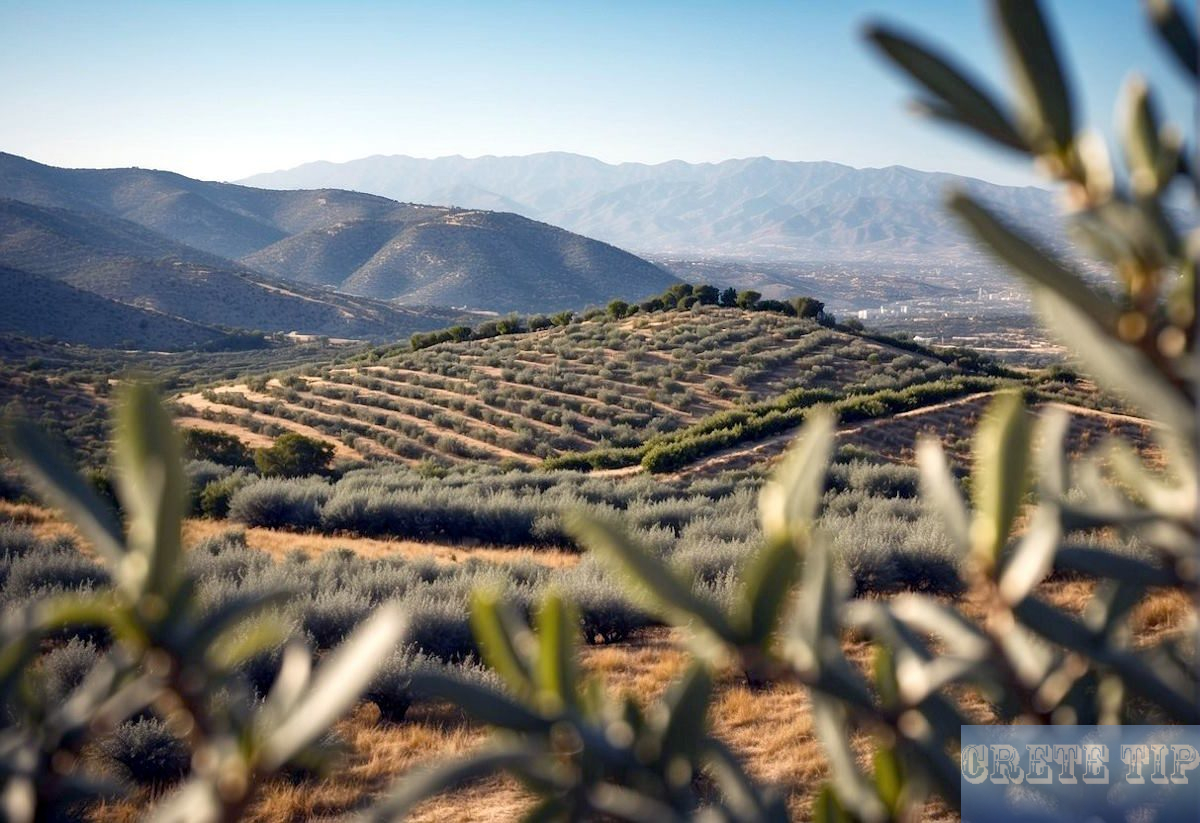
Arhanes, south of Heraklion
Sightseeing south of Heraklion:
Aqueduct of Heraklion

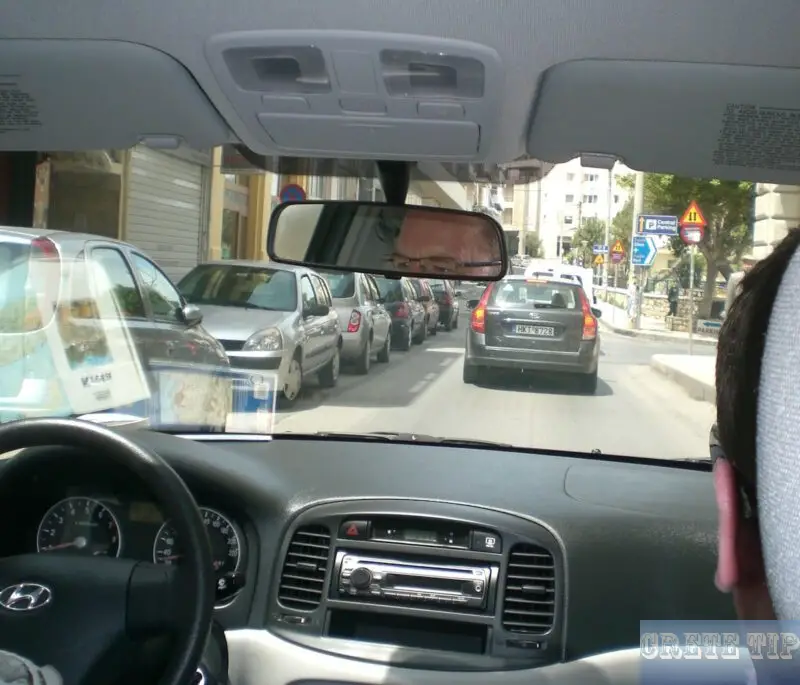
If one drives from Heraklion via Knossos in the southern direction, one reach the Venetian bridge of Ayia Irini after about 4.2 miles (7 km), where the remains of an extraordinary aqueduct are visible, which once supplied Heraklion with fresh water.
The aqueduct has a medieval or even ancient appearance, but is in reality not even two centuries old. It was built in the short time of the Egyptian administration of Crete in the years from 1832 to 1840.
A little further, at an inconspicuous crossroads where you turn to Arhanes, the German commander of Crete, General Kreipe, was kidnapped by British and Cretan agents during WW2 on April 26, 1944, and later brought to Egypt. The site is now marked with a monument.

Village of Arhanes
After another 3.5 miles (6 km) you reach Kato Arhanes and 500 yards (0.46 km) further Epano Arhanes (or Archanes), which is a beautiful, historical village with many neoclassical buildings and the trading center of this wine-growing region. There are also wine tours into the region.

Churches in Arhanes
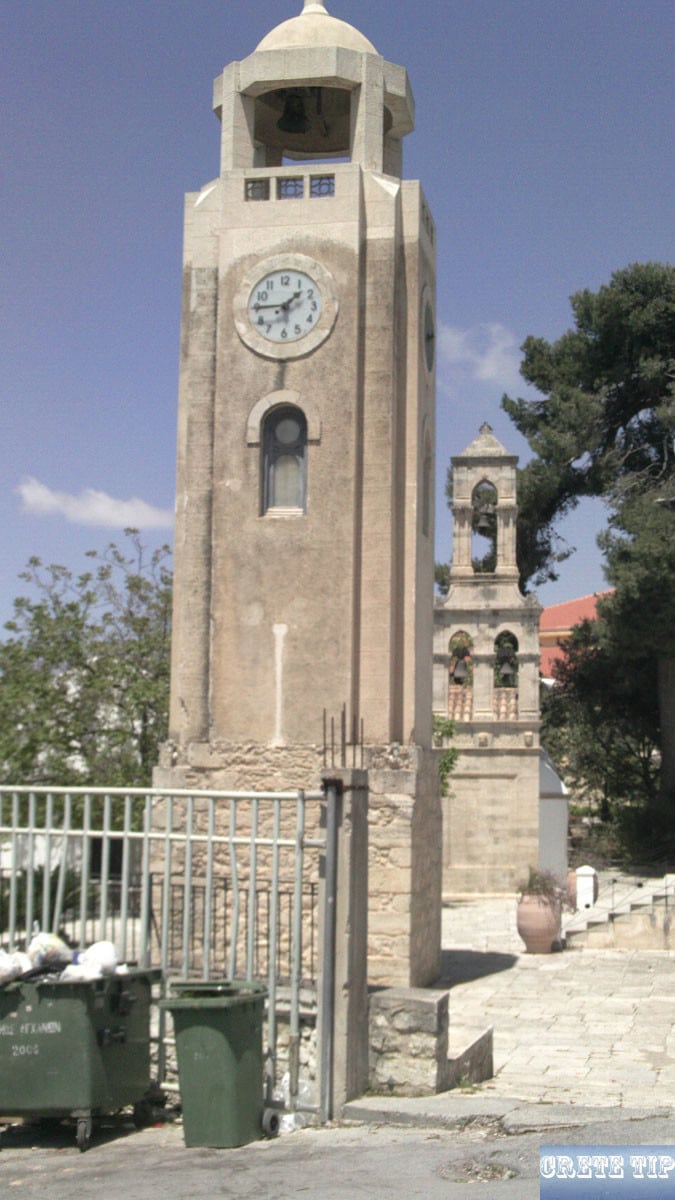
The church of Agia Triadha, with its Byzantine frescoes, is located on the outskirts of Arhanes and the church of Asomatos in the east, where the excellent works of the 14th century show a cruel depiction of the Crucifixion and the fall of Jericho with Joshua in full medieval armor.
It is best to find a parking place at the Panayia church, which is not to be overlooked, near the post office, as there are many one-way and winding streets. This church has a bell tower and icons.
Minoan Palace District in Arhanes

From the Panayia church, follow the road to the south and keep left after 100 yards (ca. 91 m). Then again the first alley to the left and then again to the right and you are in front of the area of the Minoan palace district in the middle of the village.
Here the existence of a significant Minoan city was already proved by excavations from the Prepalatial period (2,500-1,400 BC).
Minoan buildings and a small palace, which was rather a large villa and perhaps the summer residence of the priest-king of Knossos, were discovered in the former Turkish village of Tourkogitonia of Arhanes.
The buildings are from the time of 1,600 BC and were discovered by the archaeologist couple Efi and Jannis Sakellarkis, and since 1964 have gradually been excavated.
The excavations are located behind fences along the road between modern buildings and are gradually being continued.
The buildings were destroyed in 1,450 BC, but the place was still inhabited. In today’s town-name, the old name ‘Aharna’ (or ‘Archana’) which is proofed since 500 BC, still exists.

Archaeological Museum of Arhanes
The archaeological museum of Arhanes is located in the street Mihali Kalohristianaki, between the two one-way streets and about 80 yards (ca. 73 m) north of the main square.
The museum, which is imaginatively designed in a single room, shows some important originals and copies of finds from the excavations in the village and its surroundings.
Near the entrance are some well-preserved Minoan Larnaks (clay coffins, complete with the bones found in them) from the necropolis of Fourni.
Nearby is the copy of a sistrum, a simple and tambourine-style musical instrument from the year 2000 BC. This is probably the oldest, still existing musical instrument of Europe and it is also from the grave field from Fourni. The original is to be seen in the archaeological museum of Heraklion.
There are fascinating finds from the temple of Anemospilia, where a human sacrifice was offered during the collapse of the building. The temple is located about 2.5 miles (4 km) northwest of Arhanes on the northern slope of the Jouchtas and the route north of the Panayia church is well signposted.
The temple of Anemospilia was excavated in 1979 by the archaeologist couple Sakellarakis and contained a sensation. In the west was found the skeleton of a bound young man, in whose breast a nearly 16 inch (ca. 41 cm) long bronze dagger was. Two more skeletons were found in the room, a presumptive priest with rich jewelry and a presumptuous assistant woman.
Outside this room in a corridor was found the skeleton of another man slain by the chunks of stone, who was wearing a ritual vase.
The sacrificed youth was already dead when the building finally collapsed. Until this discovery, the Minoans were regarded as exemplary peaceful civilization, but this is the first clearly documented human sacrifice of Minoan culture.
The event happened at the same period – about 1,700 BC – as the destruction of the first palaces, which had to be caused by a huge earthquake.
A copy of the dagger found on the victim is displayed here in the museum. The dagger has slit the strange motif of a deformed wild boar on the blade. To this the copy of the seal ring, which the priest carried on his left wrist.
In the destroyed temple, a life-size clay feet were found, which must have belonged to a wooden cult statue and is also exhibited here. Life-size Minoan statues were not found anywhere else on Crete so far.
There are also frescoes from the walls of the small palace and pottery, which prove that the place had been populated for five thousand years. There are also exhibits from the Minoan, classical Greek, Roman, Byzantine, Venetian and Turkish periods.
Opening hours: Wednesday to Monday from 8:30am – 2:30pm, entrance free.
Burial ground at Fourni

The long existence of Arhanes testifies to the burial ground of Fourni, a hill about 1 miles (1.5 km) southwest of the village. It is the most important prehistoric cemetery in the entire Aegean.
The complex of the cemetery is fascinating, as there are early tholos tombs, dome graves and rectangular tombs from the Prepalatial to the Protopalatial times. In addition, there are six shaft graves surrounded by a Mycenaean wall, the only ones which have been found outside of Mycenae. In all of these graves numerous burial offers were found.
The dome grave (about 1.400-1.350 BC), found at the north end and the only one not looted until our times, had valuable gold, bronze and ivory offers, and must come from a royal burial. The finds are located in the archaeological museum of Heraklion.
Also, noteworthy are the buildings for the grave and necropolis cult, the so-called ‘cemetery service’ in the early days and also the view from the necropolis to the surrounding landscape is great.
Anemospilia
Anemospilia is located 1 1/4 miles (2 kilometres) northwest of Arhanes and is known for a spectacular find and its controversial history. However, the site can only be seen through a fence and cannot be visited inside.
The access road leads northwards from Arhanes. Coming from the direction of Heraklion, take a one-way street and almost immediately turn sharp right, just after a small chapel. If you follow the road leading north-west out of Arhanes, it begins to climb up the north side of Mount Jouchtas, winding around jagged rocks that have been strangely shaped by the wind. Anemospilia translates as the ‘caves of the winds’ and tradition has it that Zeus is buried in one of the many caves of Jouchtas.
You soon reach a fenced-in place, which lies on a steep bend in the road.
A temple once stood here and the interpretation of its discovery has been the source of outraged controversy among Minoan scholars since its excavation in the early 1980s. The building, which was probably destroyed by an earthquake around 1700 BC, has a simple layout and consists of just three rooms connected by a north-facing portico.
The cause of the dispute is the fact that the temple in Anemospilia was destroyed in the middle of a ceremony. An obvious human sacrifice was found, which is the only evidence of such a ritual in the Minoan civilisation on Crete.
This discovery came as a severe shock to those who wanted to portray the Minoans as the perfect peaceful society.
However, the evidence is difficult to refute. Three skeletons were found in the western room, one of which wore a lot of jewellery, indicating a priest. Another was a woman, presumably a priestess or assistant, and the third was curled up on an altar-like pedestal and, according to the scientists, was already dead when the building collapsed, burying the other two beneath it.
A large bronze knife lay on this third skeleton. Outside the western room, another man was slain in the corridor, apparently carrying some kind of ritual vase.
These events have been dated to around the time of the earthquakes that destroyed the first palaces and in these circumstances it seems reasonable that the priests took desperate measures to appease the gods who were ravaging their civilisation.

Minoan megaron of Vathypetro

3 miles (5 km) south of Arhanes are the ruins of the Minoan megaron of Vathypetro (estate villa), built around 1600 BC.
The villa is located on the south-west side of Mount Juktas in the area of Livadia. From here one have a wonderful view in the middle of the vineyards and on the lower ground.
The exterior walls are made of cuboid (carved stone), while the interiors are of ordinary masonry. Perhaps some buildings were also two-storey and there were many rooms. However, only the western part was completed and the estate was abandoned after 50 years.
Some rooms are roofed and there is a central courtyard. Inside are restored workshops, including a very well-preserved wine-press, an olive press, pottery stoves and storerooms. In these are 16 huge ‘Pithoi’ vessels.
The place gives a good idea of the craft skills during the Minoan period.

Video of the visits south of Heraklion
Aqueduct of Heraklion, burial ground of Fourni, Panayia Church in Arhanes, Minoan megaron of Vathypetro:
(Duration 1 min 45 sec)
A remarkable discovery at the Minoan palace excavation

The latest archaeological dig at the Minoan palace in Arhanes, Crete, has yielded an extraordinary find. Dr Efi Sapouna-Sakellaraki, leading the excavation, unearthed a unique gate sanctuary outside the main entrance of the palace. This discovery marks the first time such a structure has been identified at a Minoan palace site.
The gate sanctuary’s location is particularly noteworthy. It sits alongside four previously discovered altars and two stone platform arms. Together, these elements underscore the area’s religious significance. The excavation also revealed two bases for double axes, one of which had been unearthed in previous digs. A third base may exist, as fragments were found on the western arm of the platform.
Dr Sapouna-Sakellaraki’s return to the Arhanes site follows the groundbreaking work of renowned archaeologist Yannis Sakellarakis in the 1960s. While the initial goal was to clarify certain structural remains, the dig yielded far more exciting results than anticipated.
The southern section of this year’s excavation focused on a 96-square-metre area south of the entrance with the four altars. The eastern side presented a significant challenge, with an enormous fill of fallen massive stones. This layer yielded few artefacts, primarily consisting of:
- Recent pottery
- Greek-era ceramics
- Mycenaean pottery
- A small amount of Old Palace period pottery
Beneath this disturbed layer, in the southernmost part of the excavation, researchers uncovered a Mycenaean destruction layer. This stratum showed evidence of a fire that had damaged part of the Minoan palace. It’s worth noting that Archanes, like other Minoan palaces, continued to be used and modified during the Mycenaean period.
The fire-damaged layer contained numerous fragmented Mycenaean kylikes (drinking cups). The destruction was extensive, leaving few Minoan artefacts intact. However, some notable Minoan pieces were recovered, including:
- A fragment of a stone relief vessel
- A piece of rock crystal
These findings provide valuable insights into the palace’s history and its transition between Minoan and Mycenaean periods.
The excavation’s results highlight the importance of Archanes in the development of Minoan civilisation. This three-storey building, along with Knossos, played a crucial role in shaping the culture of ancient Crete.
The discovery of the gate sanctuary is particularly significant for several reasons:
- Uniqueness: It is the first of its kind found at a Minoan palace.
- Religious significance: Its location and associated structures point to important ritual practices.
- Architectural insight: It adds to our understanding of Minoan palace design and function.
The presence of multiple bases for double axes further emphasises the religious nature of the site. The double axe, or labrys, was a sacred symbol in Minoan culture, often associated with religious and ceremonial contexts.

The excavation also sheds light on the palace’s later history. The Mycenaean layer provides evidence of:
- Continued use of the site after the Minoan period
- Modifications and repairs made by Mycenaean occupants
- A significant destruction event, possibly due to fire
This information helps archaeologists piece together the complex history of Arhanes and its role in the broader context of Aegean Bronze Age civilisations.
The limited number of intact Minoan artefacts from the destruction layer presents both challenges and opportunities for researchers. While it hampers efforts to fully reconstruct Minoan life at Arhanes, it also:
- Highlights the intensity of the destruction event
- Provides a clear stratigraphic marker for dating purposes
- Offers insights into the transition between Minoan and Mycenaean occupation
The discovery of the rock crystal fragment is particularly intriguing. Rock crystal was highly prized in Minoan culture, often used for:
- Ritual objects
- High-status jewellery
- Intricate inlays in furniture and other luxury items
Its presence at Archanes underscores the site’s importance and the wealth of its inhabitants.
The ongoing excavations at Archanes continue to reshape our understanding of Minoan civilisation. Each new discovery adds another piece to the puzzle, helping archaeologists to:
- Refine chronologies
- Understand religious practices
- Explore trade networks
- Examine social structures
The gate sanctuary, in particular, opens up new avenues for research into Minoan religious architecture and ritual practices. Its unique nature raises questions about:
- Why it was constructed at Archanes specifically
- Whether similar structures might exist at other, yet-to-be-excavated Minoan sites
- How it relates to known Minoan religious practices and beliefs
As the excavation continues, researchers will undoubtedly uncover more clues to help answer these questions and others.
The work at Archanes also highlights the importance of revisiting previously excavated sites. New technologies and evolving archaeological methods can often reveal details that were missed in earlier digs. This approach allows for:
- Reinterpretation of existing evidence
- Discovery of new features and artefacts
- More accurate dating and analysis of finds
The layered nature of the Arhanes site, with its Minoan foundations and Mycenaean occupation, provides a valuable opportunity to study the transition between these two cultures. This can help archaeologists better understand:
- How Mycenaean culture adapted and incorporated Minoan elements
- The extent of continuity in religious and social practices
- Changes in material culture and artistic styles
As work progresses, researchers will undoubtedly employ a range of cutting-edge techniques to analyse their findings. These may include:
- 3D scanning and modelling of architectural features
- Residue analysis on pottery and other artefacts
- DNA analysis of any organic remains
- Geophysical surveys to map unexcavated areas
Directions to Arhanes
 Link to map with directions:
Click here: Directions Arhanes.