When you think of Hersonissos, the beach promenade, bars and nightlife are probably the first things that spring to mind. Yet just a few kilometres inland lies a completely different world: the old town of Hersonissos with its three hilltop villages – Ano Hersonissos, Piskopiano and Koutouloufari.

Here you’ll find narrow alleyways and stone houses adorned with blooming bougainvillea. Cosy tavernas and a tranquillity you’ll search for in vain on the beach complete the picture.
The three villages lie on the slopes of Mount Harakas, just around two kilometres from the coast. They offer a Cretan experience that has little in common with the hustle and bustle down below.
Each village has its own character. Ano Hersonissos is the most traditional with its small village square, Piskopiano captivates with panoramic views and village tranquillity, and Koutouloufari entices with atmospheric dinners in winding alleyways.
Here you can find out what awaits you in each of the three villages. You’ll get practical tips on getting there, routes and day trips.
If you’d like to delve even deeper into these authentic insights into Crete, it’s well worth taking a look at KretaTipp!
What awaits visitors in the three mountain villages

The three mountain villages of Ano Hersonissos, Piskopiano and Koutouloufari are so close together that their boundaries almost merge. Nevertheless, each village has its own atmosphere, its own tavernas and its own view of Malia Bay.
Ano Hersonissos at a glance
Ano Hersonissos, often referred to as Old Hersonissos, is the oldest of the three villages. It lies at the foot of Mount Harakas and was the main settlement for centuries when the coast was too unsafe due to pirates.
In the centre, you’ll find a small village square shaded by plane trees with a few traditional tavernas.
In the evenings, locals and visitors sit here together.
The atmosphere is noticeably quieter than down by the water. Stone houses, olive groves in the surrounding area and the occasional stray cat characterise the scene.
Ano Hersonissos is the place for you if you’re looking for a genuine Cretan village atmosphere, without everything being geared towards tourism.

Piskopiano: village life and views
Piskopiano lies about 1.5 kilometres west of Ano Hersonissos and dates back to the Middle Ages. The village has retained its traditional Cretan architecture.
Many of the old stone houses have been lovingly renovated. What makes Piskopiano special is the view.
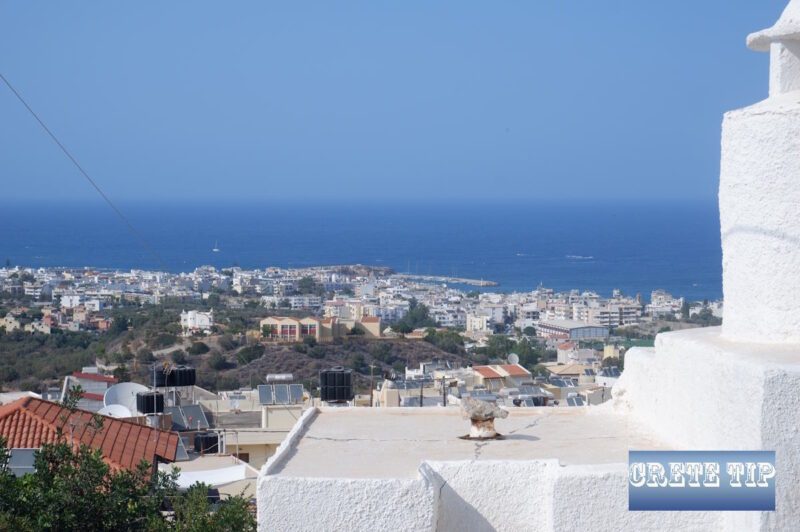
From the upper streets, you can look out over olive groves down to the north coast and the sea. During the day, it is pleasantly quiet.
A few small cafés and tavernas invite you to linger, without crowds of tourists jostling through the streets. Piskopiano is particularly suitable if you want to combine peace and quiet, photo opportunities and village life.
Koutouloufari with its narrow streets, charm and tavernas
Koutouloufari is the best-known of the three villages among holidaymakers. It lies between Piskopiano and the coast.
The village has earned a reputation as an atmospheric spot for good food. The narrow, steep alleyways are lined with restored stone houses, small hotels and tavernas with terraces.
In the evening, when the lights come on and the scent of grilled meat and Cretan cuisine wafts through the alleyways, Koutouloufari reveals its full charm. Families and couples staying near Hersonissos but wanting to avoid the noise of the party scene will find a genuine alternative here.
The walk down to the coast takes 15 to 25 minutes, depending on your fitness level.
The difference from the coast is striking
The contrast between the mountain villages and the coastal town could hardly be greater. Down by the water, bars, souvenir shops and nightclubs dominate, whilst up in the villages, tavernas, narrow streets and birdsong set the pace.
Coastal Hersonissos and Limenas Hersonissou explained
The coastal area of Hersonissos, officially Limenas Hersonissou (Port of Hersonissos), is the tourist hub. Here, hotels, restaurants and shops line a long beach promenade.
During the day the atmosphere is relaxed; in the evening it gets noisy. Limenas Hersonissou only developed during the tourism boom of the 1970s.
Before that, it was a small fishing village. Today, it is one of the most developed holiday resorts in the whole of Crete.
Who the old town and harbour promenade are best suited for
The mountain villages are ideal for you if you:
- are looking for peace and authenticity
- want to sit comfortably in a tavern in the evenings
- want to experience Crete away from mass tourism
- are travelling with family or as a couple
The coast is a better fit if you:
- want to be close to the beach and enjoy the nightlife
- are looking for shopping and entertainment
- want snorkelling or water sports right on your doorstep
Many visitors combine both: the beach during the day, dinner up in the village in the evening. The distance is short, so it works perfectly.
Between seaside resort, nightlife and a quiet village evening
You don’t have to choose between the two. A taxi from the coast to Koutouloufari or Ano Hersonissos costs just a few euros and takes under five minutes.
It’s also possible to walk, though it’s uphill, which can be tiring in the summer heat. Up in the villages, you’ll experience an evening that feels quintessentially Cretan.
Down on the promenade, you’re right in the thick of the international holiday scene. The experiences couldn’t be more different.
History from antiquity to tourism

The history of Hersonissos stretches far back into antiquity. The Minoans, Romans, Byzantines and Venetians have all left their mark here.
The shift of the settlement from the coast to the hinterland explains why the mountain villages came into being in the first place. Ancient Cherronesos was a coastal town with a harbour, an aqueduct and a Roman theatre.
Why the settlement moved from the coast to the hinterland
With the end of Roman rule and the unrest of the following centuries, the coastal location became a risk. The inhabitants retreated inland, to the slopes of Mount Harakas.
There, the elevated position and distance from the sea offered protection. This is how what is now known as Ano Hersonissos came into being.
Pirate raids, earthquakes and the location on Mount Harakas
Pirate raids were a real threat along the northern coast of Crete for centuries. In addition to the raids, the region was also hit by earthquakes.
The combination of both made life right by the water dangerous and unattractive. On Mount Harakas, protected by the hillside and surrounded by olive groves, the inhabitants were able to practise agriculture.
They had the opportunity to spot enemy ships at an early stage. This practical consideration shaped the settlement structure over many centuries.
From the Byzantine era to a modern holiday resort
During the Byzantine era, the region around Hersonissos was a modest, rural place. Remains of early Christian basilicas near the coast bear witness to this era.
Under Venetian and later Ottoman rule, the area remained relatively insignificant. It was not until the 20th century, with the advent of mass tourism from the 1960s and 1970s onwards, that the coast came back into focus.
Hotels, bars and restaurants sprang up overnight. The mountain villages were largely spared and retained their traditional character.
Insider tips around the old town and the surrounding area
Off the beaten track, there are a number of places and experiences around the old town of Hersonissos that are often overlooked in most guidebooks. Here are some specific tips for quiet evenings, good food and excursions beyond the usual beach activities.
Lovely spots for a quiet evening
The village square in Ano Hersonissos is one of the most atmospheric places in the area in the evening. You sit beneath old trees, listen to the crickets chirping and gaze out over the illuminated coastline.
In Koutouloufari, you’ll find several small terraces tucked away amongst the narrow streets. The higher-up spots in particular offer a truly sweeping view across the bay at sunset.
Piskopiano is the quietest. If you’re looking for an evening away from the hustle and bustle, this is the perfect spot.
Local tavernas and a view of Taverna Harakas

The selection of tavernas in the three villages is good, but not overwhelming. In Ano Hersonissos, it’s worth having dinner right on the square—the prices are fair, the portions are genuinely Cretan.
Taverna Harakas is located just outside the village and is popular with locals. Here you can enjoy Cretan cuisine in a rustic setting. Booking? Yes, especially at weekends or in high season, it’s best to ring ahead.
In Koutouloufari, you have the widest choice. Many tavernas cater to visitors but still maintain a high standard. Be sure to try dakos, lamb chops or stuffed vine leaves—they’re always a hit.
Recommended tavernas in Old Hersonissos:
- Myrtios Traditional Taverna in Old Hersonissos
- Restaurant Zachos (Old Hersonissos)
- Oasis Traditional Taverna in Old Hersonissos
- 10 top restaurants in Hersonissos
Short detours away from the classic beach programme
- Lychnostatis Open Air Museum: Just a few minutes from the coast. Showcases traditional Cretan life with workshops, gardens and exhibitions.
- CretAquarium: Perfect for families. Located between Hersonissos and Heraklion, it showcases the underwater world of the Mediterranean.
- Dinosauria Park: A real highlight for children, with life-size dinosaur models and a small play area.
- Snorkelling along the coast: The small bays east of the harbour are quieter and great for snorkelling away from the main beaches.
- Water City Waterpark: An option for a family day out, but it’s a bit further south towards Anopoli.
Museum of Rural Life
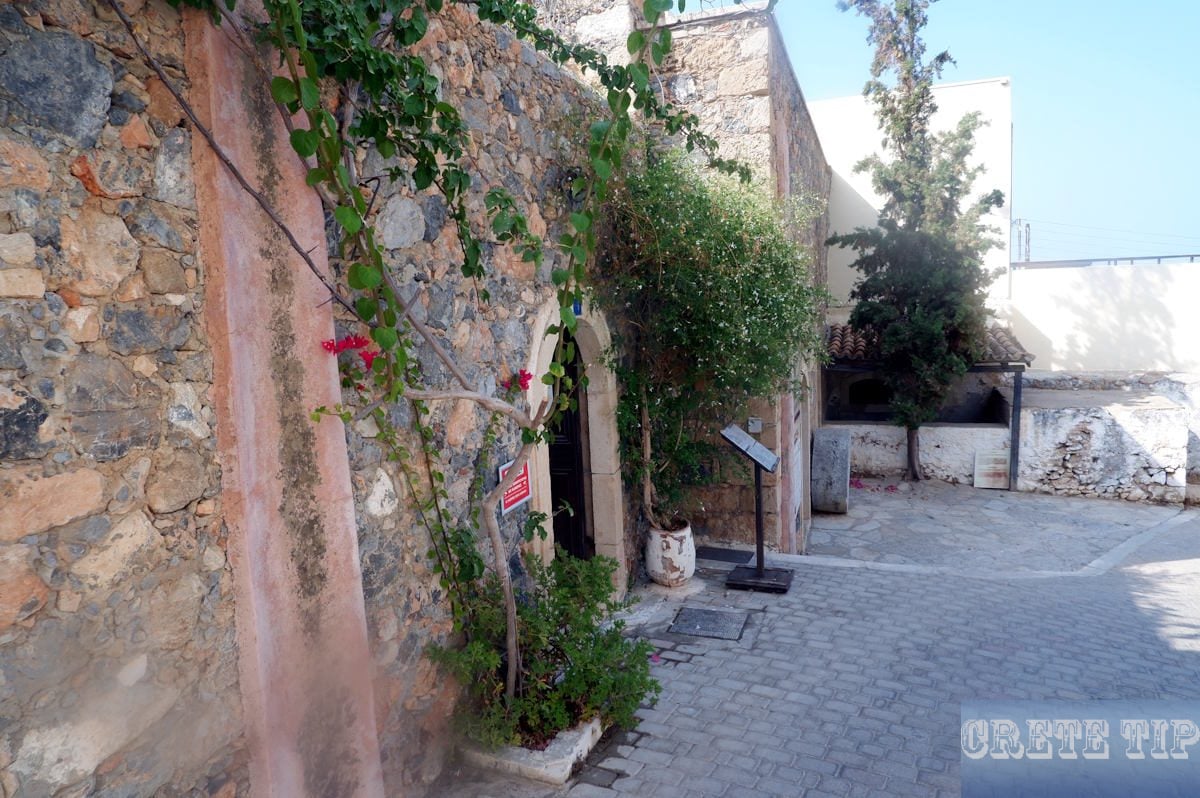
In Piskopiano and open Monday to Saturday from 11am to 2pm and 4pm to 6pm.
Location:
Parlamas Museum of Rural Life (Google Maps)
Admission fee: 5 euros
Parking information: There are practically no parking spaces in the narrow old town surrounding the museum! It is therefore better to look for public parking spaces further away and walk through the old town to the museum.
The only real important destination for sightseeing in the villages behind Hersonisos is the new and impressive Museum of Rural Life. It is housed in a wealthy mansion in the village, which has been modernized and forms the main part of the museum.
There is also a traditional workshop and barn showing all aspects of rural life from carpentry to olive oil and raki production. Above all, there are some fine examples of traditional weaving.

The Parlamas Museum of Rural Life is a small cultural museum located in Hersonissos, Crete, dedicated to preserving and showcasing the traditional rural life of the island. It offers visitors a glimpse into the agricultural practices, crafts, and everyday activities of Cretan villagers in past centuries.
Here’s what you can typically expect there:
Traditional Tools & Equipment: Displays of old farming tools, olive oil presses, weaving looms, and other implements used in agriculture and home production.
Folk Costumes & Household Items: Examples of traditional Cretan clothing, kitchenware, and furniture.
Cultural Exhibits: Insights into local customs, rural architecture, and the self-sufficient lifestyle of the past.
Olive Oil Production: Often, there’s a focus on olive cultivation and oil-making, which has been central to Cretan life for thousands of years.

The museum is named after the Parlamas family, who established it to preserve their heritage and share it with visitors. It is located in a traditional mansion in the old town above modern Chersonissos.
It’s a good stop if you’re interested in Cretan history beyond the ancient ruins and want to understand the island’s more recent rural traditions.


Furever Happy Village dog shelter

Furever Happy Village is a dog rescue and shelter close to Piskopiano (Hersonissos) that focuses on rescuing, rehabilitating, and rehoming abandoned and abused dogs. It’s known for providing a more personal style, open environment rather than a traditional kennel setup, aiming to give dogs a happier and more natural life while they wait for adoption.
Facebook: Furever Happy Village
Practical tips on getting here, getting around and your stay

The mountain villages are fairly easy to reach, but a few tips will make planning a bit more relaxed. Here’s some information on how to get there, getting around and where it makes sense to stay.
Getting there from Heraklion and Heraklion Airport
Hersonissos is located about 25 kilometres east of Heraklion. From the airport, you can get there in about 20 to 30 minutes by hire car; simply take the national road (E75).
There are also regular buses from Heraklion to Hersonissos. The KTEL buses stop at the coastal town, but from there you’ll need to travel further into the mountain villages.
A hire car gives you the most freedom, especially for day trips. There are plenty of hire car companies at the airport.
On foot, by taxi or hire car between the village and the coast
| Means of transport | Duration (approx.) | Cost (approx.) | Suitable for |
|---|---|---|---|
| On foot (uphill) | 20–30 mins | Free | Fit walkers, early in the morning or in the evening |
| On foot (downhill) | 15–20 mins | Free | Everyone, much more pleasant |
| Taxi | 3–5 mins | €5–8 | Dinner in the villages, with local families |
| Hired car | 3–5 mins | Daily rate from approx. €25 | Flexibility for excursions |
Walking up the hill in the summer heat is really exhausting. It’s better to do it in the evening. Walking downhill to the coast, on the other hand, is a relaxing stroll and you get beautiful views for free.
Where to stay
If you’re looking for peace and atmosphere, book your hotel in Koutouloufari or Piskopiano. There are small hotels and renovated stone houses full of charm.
From Koutouloufari, you’re quickly at the coast and have tavernas right on your doorstep in the evenings. For proximity to the beach and nightlife, hotels in the coastal area of Hersonissos are better. Many larger resorts are located directly on the main road.
Ano Hersonissos offers less touristy accommodation. However, if you’re looking for real peace and authenticity, this is undoubtedly the place for you.
 Search for Hotels in Piskopiano (Booking.com)
Hotel recommendations:
Full-day excursions from Hersonissos
Hersonissos is quite centrally located on Crete’s north coast. Perfect for day trips in various directions.
Heraklion and Knossos for culture lovers
The island’s capital, Heraklion, is just 25 kilometres away. There you’ll find the Archaeological Museum—well worth a visit, with finds from the Minoan period.
The Palace of Knossos is a few kilometres south of Heraklion. It is considered the most significant testament to Minoan civilisation on Crete. You should allow at least two hours for Knossos, ideally early in the morning before the coach tours arrive.
Combining a visit to Knossos with a stroll through Heraklion’s old town and the Venetian harbour easily fills a day.
Lassithi Plateau and the Cave of Zeus
The Lassithi Plateau lies at an altitude of around 800 metres and feels very different from the coast. The drive from Hersonissos takes about an hour and winds along serpentine roads with stunning views.
On the plateau you’ll find the Dikteon Cave, also known as the Cave of Zeus. According to mythology, Zeus is said to have been born here. The climb takes about 15 minutes on foot, or you can hire a donkey—yes, you really can.
The plateau itself, with its fields and old windmills, is perfect for a lunch break in one of the tavernas.

Agios Nikolaos, Elounda and Spinalonga as a change of pace
Agios Nikolaos lies about 40 kilometres east of Hersonissos. The small town is lively, with the famous Lake Voulismeni at its centre.
Boats depart from Elounda, a few kilometres north of Agios Nikolaos, to Spinalonga. The former leper colony is now one of Crete’s most visited attractions. The crossing and tour take around two to three hours.
This trip works well as a round trip: Hersonissos, Agios Nikolaos, Elounda, Spinalonga and then back.
Frequently asked questions
What’s the best way to get from the coast up to the villages, and is there public transport?
The easiest way is to take a taxi; it only takes a few minutes and costs between 5 and 8 euros. Public buses mainly run along the coastal road, not directly into the mountain villages. It takes about 20 minutes to walk uphill to Koutouloufari—it’s much more pleasant in the evening than at midday.
Which sights and photo spots are particularly worth visiting on a stroll through the narrow streets?
In Koutouloufari, the flower-bedecked stone-paved alleys with sea views are truly photogenic. The village square in Ano Hersonissos has a great atmosphere in the evening under the old trees. In Piskopiano, the view of the bay from the upper streets is well worth it, especially just before sunset.
Where can you enjoy a cosy and authentic meal, and should you book in advance?
In the village square of Ano Hersonissos, you’ll find traditional tavernas serving Cretan cuisine at reasonable prices. In Koutouloufari, there’s a wider choice, and during the high season from June to August, it’s best to book a table in the evening. Taverna Harakas, just outside the village, is popular with locals and definitely worth a visit.
What is the best time of day to visit, so it’s not too crowded or too hot?
The evening hours from around 6 pm are ideal. By then, the heat is more bearable, the narrow streets are slowly filling up, and the light is perfect for photos. Or you could go very early, say by 10 am—then the villages are still quiet and you’ll have the streets almost to yourself.
Which small shops, craft shops or local products are worth a detour?
In Koutouloufari and Piskopiano, you’ll find small craft shops selling ceramics and handmade jewellery. They also stock locally produced olive oil.
Cretan honey and herbs such as dictamos are also quite popular souvenirs. The selection isn’t huge, but everything feels much more authentic than what you’d find in the usual souvenir shops along the coast.
Are there any family-friendly activities or short circular walks that work well with children?
A walk from Koutouloufari via Piskopiano to Ano Hersonissos works quite well with children. The walk takes about 30 to 45 minutes.
For a bit of variety, there’s Dinosauria Park and the CretAquarium near the coast. Water City Waterpark, south of Hersonissos, is ideal for a whole day out with the family.