Visitor Guide for Diktaion Cave on Lasithi Plateau.

Crete boasts around 3,000 caves, but only one claims to be the birthplace of the king of the Greek gods. The Diktaion Cave, perched at 1,025 metres on Mount Dikti’s northern slopes, has been attracting visitors for over 4,000 years—yes, that’s older than most British pub chains.
Whether you call it the Dikteon Cave, the Psychro Cave, the Dictaean Cave, or just the Cave of Zeus, the destination’s the same: a spectacular underground world of stalactites, stalagmites, and a hidden lake, all wrapped up in one of Western civilisation’s most enduring myths.
If you’re staying near Malia, Hersonissos, Stalida, or Agios Nikolaos, the cave makes for a solid half-day trip. Expect fresh mountain air, a genuinely impressive geological site, and enough mythology to satisfy any classics nerd.
This guide lays out everything you’ll need: the route up, what to wear on those slippery steps, why locals insist a baby god once lived here, and what archaeologists have actually pulled from the rock in the last 150 years.
The Diktaion Andron (yet another name—Greeks do love renaming things) sits above the village of Psychro on the Lasithi Plateau. This region, also called the Lassithi Plateau, gives the site a dramatic backdrop.
The setting alone is worth the winding drive. But the real spectacle waits inside the cave.
A visit to the reopened Dikteon Cave: A journey into Crete’s most legendary underground wonder

After months of extensive restoration work and critical safety upgrades, one of Greece’s most mythologically significant caves has finally reopened its doors. The Dikteon Cave in the Lasithi Plateau—a site steeped in ancient legend—is now welcoming visitors once again with a completely transformed experience.
A New Chapter for an Ancient Wonder
The Dikteon Cave, also known as Psychro Cave, holds a special place in Greek mythology and history. According to legend, this is where Zeus himself was born and hidden from his father Kronos. For centuries, it has captivated visitors seeking to connect with ancient stories carved into stone.
After closing in October 2024 for major renovations, the cave reopened on May 29, 2026, initially offering free admission through June 7. But this is far more than a simple reopening—it marks the beginning of a new era for one of Crete’s most important archaeological sites.

What’s New Inside?
The restoration project has completely transformed the visitor experience. Key improvements include:
- Modern Lighting Systems: Advanced illumination now highlights the cave’s spectacular formations while ensuring safe navigation
- Enhanced Pathways: New walkways have been constructed alongside careful restoration of existing trails
- Rock Reinforcement: Extensive safety work has secured unstable sections, protecting visitors and preserving the natural formations
- Deep Cleaning: The entire cave has undergone thorough cleaning to reveal its natural beauty
- Improved Infrastructure: Better access routes and facilities now accommodate modern visitor needs
Images released following the reopening show a dramatically improved cave environment—the new lighting reveals intricate stalactite and stalagmite formations in stunning detail, while the new pathways make exploration safer and more comfortable than ever before.

A Massive Collaborative Effort
According to Giorgos Athanassakis, Mayor of Oropedio Lasithi, the restoration was no small feat. Multiple government agencies and local authorities worked together to bring this project to completion:
- The Municipality of Oropedio Lasithi handled rock reinforcement work
- The Ministry of Culture oversaw interior cave interventions
- The Regional Authority of Crete managed the surrounding plaza and pathways
- The Daedalus Company provided technical expertise
“The cave’s condition is excellent, fantastic,” the mayor stated, emphasizing that what was once a challenging situation has been transformed into a safe, visitable archaeological treasure.
More Than Just a Cave: A Regional Revival
The reopening of Dikteon Cave is expected to breathe new life into the entire Lasithi Plateau region and surrounding villages. Picturesque traditional settlements like Krasi and Kera stand to benefit significantly from increased visitor traffic.
Complementing the cave’s restoration, work is also underway on Europe Square (Plateia Evropy) in Psychro village. This plaza renovation—approximately 70% complete—aims to improve access to the cave and create a welcoming gateway to the site. The project is scheduled for completion by June 30, 2026.

Overcoming Obstacles
The journey to reopening wasn’t without challenges. When the current municipal administration took office in January 2024, the project was in serious jeopardy. The Ministry of Culture warned that without a contractor by April 12, the entire project would be suspended and the cave would remain closed indefinitely until new funding could be secured.
In response, local authorities restructured the project, breaking it into smaller components that different agencies could manage. This creative solution proved effective—the deadline was met, and work proceeded ahead of schedule.

Visitor Access During Transition
During the final stages of construction, temporary measures have been put in place for visitor access. Tour buses currently drop passengers at lower points in the village, where visitors walk uphill to the cave entrance. This arrangement will remain in effect until traffic infrastructure improvements around the roundabout are completed.
Practical Information for Visitors
The Dikteon Cave is now open for public visitation. Those planning a trip should note:
- The cave features modern lighting throughout
- New pathways make navigation easier than before
- Comfortable walking shoes are recommended
- The cave maintains a cool temperature year-round
- Improved infrastructure awaits completion by late June

Why This Matters
For archaeology enthusiasts and mythology lovers, the Dikteon Cave represents far more than a tourist attraction. It’s a tangible connection to ancient Greek civilization—a place where history, mythology, and natural beauty converge in one extraordinary location.
The successful completion of this restoration project demonstrates what is possible when local communities, regional authorities, and national agencies collaborate toward a shared vision. The result is a site that honors its ancient significance while welcoming 21st-century visitors with modern safety and comfort.

A Journey Worth Taking
Whether you’re drawn by the mythological legacy of Zeus’s birthplace or simply seeking to experience one of Greece’s most spectacular natural formations, the newly reopened Dikteon Cave offers an unforgettable journey into legend and geology alike.
With its transformative upgrades complete, there has never been a better time to descend into this legendary underground world.
What Makes This Cave So Famous

The Dikteon Cave has three things most Cretan caves can’t offer: a direct link to Zeus, a confusing number of names, and an interior that actually lives up to the hype.
Why It Is Linked to Zeus
The ancient poet Hesiod tells us that the goddess Rhea fled to a cave near Lyktos in east-central Crete to give birth to Zeus, hiding him from Kronos (who, let’s be honest, had some serious parenting issues). Most people now identify the Dikteon Cave as that spot.
The myth says the baby Zeus was nursed by the goat Amaltheia while the Kouretes, a group of warrior-dancers, clashed their weapons to drown out his cries. It’s a dramatic origin story that made this cave one of the most important religious sites in ancient Greece.
The Different Names You Will See
Searching online? You’ll run into a wild range of names for the same cave. Here’s a quick decoder:
- Dikteon Cave / Diktaion Andron: the formal archaeological name, from Mount Dikti.
- Dictaean Cave: the anglicised version you’ll see in older books.
- Psychro Cave: named after the nearby village.
- Cave of Zeus / Birthplace of Zeus: the tourist-friendly labels.
All these names point to the same place. No need to hunt down five different caves.
Why It Stands Out Among Caves in Crete
With about 3,000 caves on the island, competition’s fierce. The Dikteon Cave stands out because it blends rich mythology, real archaeological finds, and striking rock formations with an underground lake.
Not many caves on Crete can tick all those boxes in one visit.
Where It Is and How to Reach It
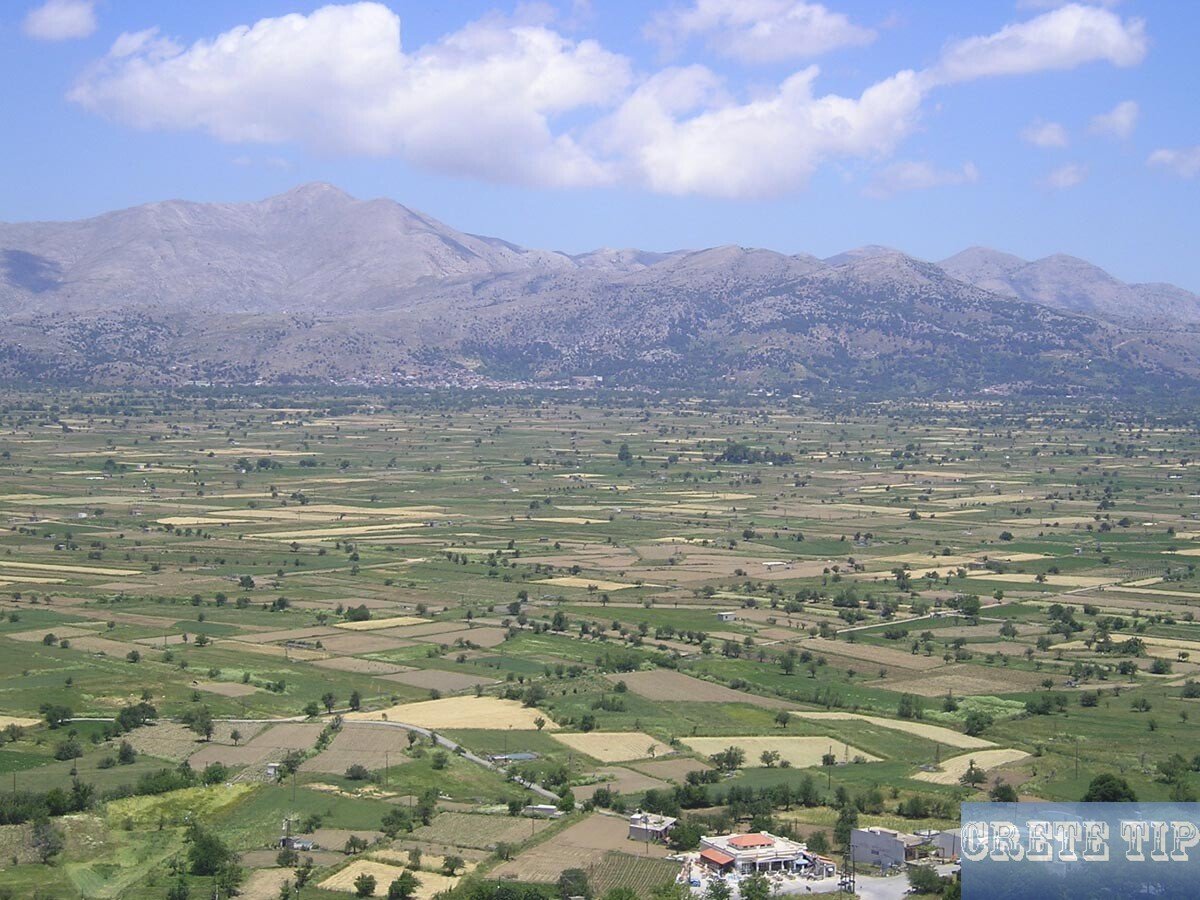
The cave sits on the Lassithi Plateau in East Crete, above Psychro village. Getting there from the north-coast resorts is pretty straightforward, as long as you don’t mind a few hairpin bends and the occasional goat blocking your path.
Setting on the Lassithi Plateau
The Lassithi Plateau is a large, fertile highland basin at about 840 metres above sea level. It’s famous for its old windmills and farming history.
People have lived here since the Neolithic Period, around 6000 BC, making it one of the earliest high-altitude settlements in the Mediterranean. The plateau is flat, green, and ringed by mountains. It feels like a different world compared to the beach resorts below.
The Dikteon Cave itself sits at 1,025 metres on Mount Dikti’s northern slopes, which dominate the plateau and much of East Crete.
Diktéon Ántron Cave (on Google Maps)
Getting There From Nearby Resort Areas
Most visitors drive. Here’s roughly how long it takes from the main resort towns:
| Starting Point | Approximate Distance | Approximate Drive Time |
|---|---|---|
| Malia | ~40 km | 45–60 min |
| Hersonissos | ~45 km | 50–65 min |
| Stalida | ~42 km | 50–65 min |
| Agios Nikolaos | ~48 km | 55–70 min |
The roads are well-surfaced but winding. If you’re prone to carsickness, motion sickness tablets are a smart idea.

The Final Walk From Psychro Village
In Psychro village, you’ll find plenty of parking and a handful of tavernas for a pre-cave snack. Two paths lead up to the cave entrance.
The easier, paved route takes about 15 minutes and is shaded by oak trees. If you’re feeling adventurous (or just tired), donkeys wait at the start of the path. Whether the donkeys enjoy this setup is anyone’s guess.
What to Expect During the Visit
A visit to the Dikteon Cave means a short uphill walk, a descent into a cool, humid underground world, and a climb back up that’ll remind you why you skipped leg day. Knowing what’s ahead definitely makes the whole thing more fun.
The Uphill Approach and Entrance
The walk from the Psychro car park to the cave mouth takes about 15 minutes at a steady pace. It’s uphill, and in summer the sun is relentless, so bring water and a hat.
At the top, you get a panoramic view of the Lasithi Plateau. The plateau looks especially striking in the morning light. The air smells of thyme and sage, which beats the air-conditioned bus you probably just left.
The entrance is a wide, rocky opening. Step inside and the temperature drops fast. Humidity can hit 85%.

Inside the Chambers and Walkways
The cave covers about 2,200 square metres, and the tourist route runs for roughly 250 metres. Metal walkways and steps lead you through the chambers down to the underground lake.
The steps are sturdy but can get slippery, so use the handrails. Lighting is dim, just enough to see the formations without killing the mood.

The revamped and new visitor route in the cave for the reopening in 2026
Timing, Footwear and Practical Tips
- Footwear: Wear sturdy shoes with good grip. Flip-flops are just asking for trouble.
- Time needed: Most people spend 30 to 45 minutes inside.
- Best time to visit: Early morning or late afternoon to dodge the crowds and midday heat.
- The lake: Water levels change with the seasons. It’s lowest in late September and highest after winter rains.
Inside the Cave: Highlights to Look For

The Dikteon Cave has two levels. The upper level isn’t much to write home about, but the lower level splits into five chambers packed with the best sights—those famous stalactites, stalagmites, and the underground lake.
The Main Hall and Rock Formations
As you enter, you pass through an antechamber where ancient worshippers once burned offerings on an altar. Archaeologists found the altar’s foundations during digs.
Beyond the antechamber, the cave opens into bigger chambers decorated with huge stalactites and stalagmites. Some of these formations have been growing for thousands of years and are absolutely massive.
The mix of low light and glistening rock gives the place an atmosphere that’s both eerie and oddly peaceful.

The Underground Lake
At the cave’s lowest point is a small underground lake. Dense formations surround it, and tradition claims this is where Zeus was born.
Even if you don’t buy the myth, the lake is undeniably atmospheric. The water is clear, still, and cold. Its level changes with the seasons—deepest in winter, shallowest in late September.
The Mantle of Zeus and Cloak of Zeus
Above the lake in chamber D, you’ll spot a large stalactite called the “Mantle of Zeus” (or sometimes the “Cloak of Zeus”). It hangs over the water like a chandelier, and, if you squint, kind of looks like a draped cloak.
Centuries of local legend have cemented the name, and it’s easily the cave’s most photographed feature. It’s just a stalactite, but it’s got top-notch branding.
Myth, Ritual and the Cult of Zeus

The Diktaion Andron wasn’t just a cave for casual visits. For thousands of years, it served as one of the most important religious sites in the eastern Mediterranean.
The birthplace of Zeus drew pilgrims, offerings, and plenty of noisy celebrations.
Rhea, Infant Zeus and the Kouretes
The myth goes something like this: Kronos, the father of the gods, had a nasty habit of eating his own children. He wanted to stop a prophecy that said one would overthrow him.
Rhea, his wife, got fed up and ran off to the Dikteon Cave to give birth to Zeus in secret. She hid the baby inside the cave, where the goat (or maybe nymph) Amaltheia nursed him.
The Kouretes, a group of armored dancers, protected Zeus by clashing their shields and stomping around to cover his cries. Not exactly your average babysitting gig, but it worked.
Zeus survived, grew up, and eventually overthrew Kronos to become king of the gods.
Why the Cave Became Sacred
This myth turned the Dikteon Cave into a sacred spot. The cave became a central sanctuary in East Crete, possibly tied to sites at Praisos and Palaikastro.
Archaeologists found a fragment of the Hymn to Diktaean Zeus here, where worshippers invited “the Greatest Kouros” to return each year to Dikti, with lyres, pipes, and chanting.
The god worshipped here appeared young and beardless, dying and being reborn each year. People marked this with fire blazing from deep inside the cave.
Offerings and Worship Practices
Worshippers left offerings—olive oil, honey, wine, wheat, and animal sacrifices—on a built altar in the cave’s antechamber. They burned these offerings, then carefully collected the ashes, treating them as sacred.
Centuries of repeated use meant many finds got burned again and again. The ancient Cretans, in their enthusiasm, ended up damaging their own archaeological record.
Archaeology and Historical Importance

The Dikteon Cave is more than just a myth. It’s a real archaeological site, with evidence of human activity going back about 6,000 years, from the end of the Neolithic Period up to Roman times.
Evidence From the Neolithic Period
Archaeological finds show people used the cave continuously since the late Neolithic Period. Early on, people probably lived in the cave and used it for burials.
The Lassithi Plateau, where the cave sits, was settled as early as 6000 BC. That’s one of the oldest high-altitude communities in the Mediterranean, which is pretty wild to think about.

Finds From the Archaic Period and Later
From about 2000 BC to 700 BC, the cave became a formal cult center, spanning the Minoan to the Archaic Period. Worship continued off and on into Roman times—roughly the 1st century BC to the 1st century AD.
Locals rediscovered the site’s importance by accident in 1883. The Italian archaeologist Federico Halbherr did the first small excavation in 1886, and then British archaeologist David Hogarth led a larger dig in 1899.
Hogarth’s team found objects even older than those from the rival Ideon Cave in central Crete.
Figurines, Altars and What Survives Today
Key discoveries include the foundations of a built altar in the antechamber, votive offerings tucked into rock crevices, figurines, and various ritual objects. Many of these artefacts suffered from centuries of repeated burning on the altar.
From the 16th century until 1883, before archaeologists showed up, the cave served as a shelter for local shepherds and hunters. They probably had no idea they were eating lunch in the birthplace of a god.
Frequently Asked Questions

Is the cave currently open, or has it decided to take a nap today?
The cave was closed for the 2025 season for maintenance. It was reopend on May 29, 2027.
What are the opening hours, and do they change by season (because of course they do)?
Opening hours usually were running from about 8:00 AM to 7:00 PM in summer, with shorter hours in spring and autumn. Winter closures are common.
Always double-check current times before visiting. Hours can shift without warning.
How much is the entrance fee, and do tickets need to be booked in advance?
Before it closed, the standard admission price for adults was around €6, with reduced rates for students and free entry for kids. Following the general increase in admission prices for all archaeological sites and museums in 2025, the new price is now €15.
Tickets are usually sold at the gate, and you haven’t needed to book in advance.
Prices can change after the reopening, so it’s smart to confirm before your visit.
Where exactly is it, and what’s the easiest way to get there without arguing with the satnav?
The cave sits above the village of Psychro on the Lasithi Plateau in East Crete—sometimes spelled Lassithi Plateau—about 48 km from Agios Nikolaos and 40 km from Malia. Driving is your best bet.
Search for “Psychro Cave” or “Dikteon Cave” in your satnav. The roads are paved but winding, so plan for up to an hour from the north coast.
How tough is the walk up to the entrance, and should I bring proper shoes or just optimism?
The walk from the Psychro car park takes about 15 minutes along a paved path. It’s uphill and can feel steep, especially in the heat.
Inside the cave, the metal steps are often damp and slippery. Wear proper closed-toe shoes with some grip. Flip-flops and optimism just aren’t enough here.
What’s the story behind the cave, and why is everyone so convinced Zeus turned up here?
Ancient myth says the goddess Rhea hid in this cave to give birth to Zeus. She wanted to keep him safe from Kronos, his notoriously child-eating father.
The poet Hesiod placed Zeus’s birth near Lyktos in east-central Crete. The Dikteon Cave lines up with that description, more or less.
People found thousands of votive offerings inside the cave. That pretty much proves it was a major cult site for Zeus, going all the way back to the Minoan period.