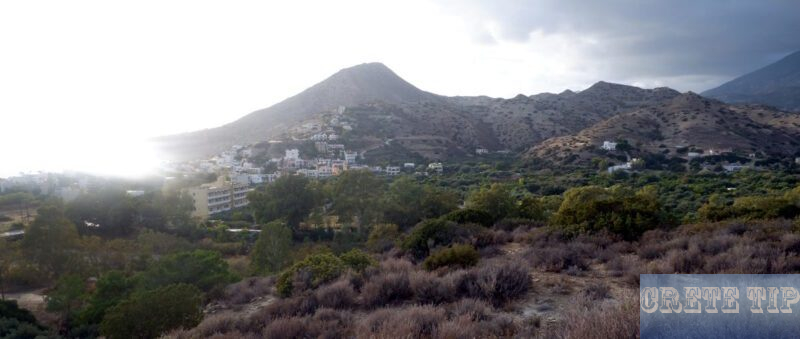
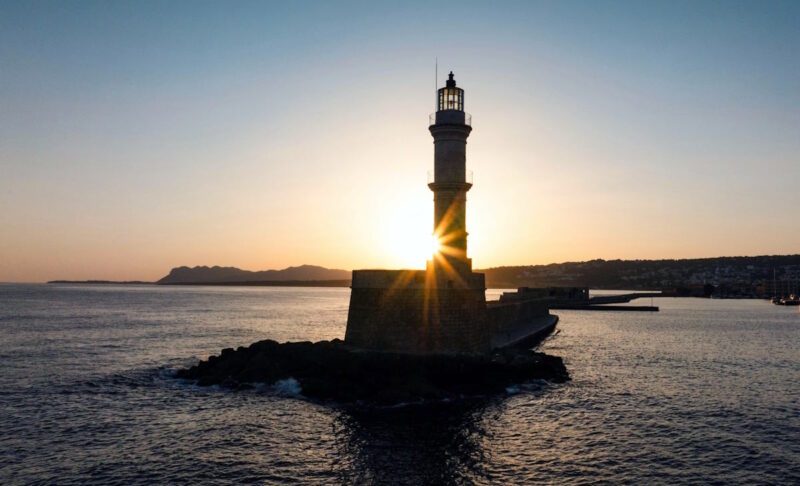
A tour around the Lasithi Mountains (also known as Dikti mountains) gives you one of the best full days, or full weekends, you can spend behind the wheel on Crete. The route links Agios Nikolaos, the Ierapetra coast, the Viannos villages and the Kastelli countryside into one loop of roughly 160 to 190 kilometres, depending on your start point, with pure driving time of about four to five hours if you never stopped once. Nobody drives it that way, though.

This part of Crete rewards a slower pace. You get Minoan ruins tucked behind olive groves, a wartime memorial that still matters to local families, and mountain roads that climb through Dikti Mountains scenery without ever feeling like a stunt drive.
Eastern Crete is quieter than the resorts further west, offering a deeper connection to rural Crete. Across quiet stretches and traditional villages, you will often encounter warm Cretan hospitality from local residents.
Planning the Circular Drive

Treat this as a loop you can join and leave anywhere, rather than a fixed line on a map. The Lasithi Mountains circuit works just as well from the coast as it does from a mountain village, and the driving distance stays roughly the same in either direction.
How Long Does the Route Take?
Pure driving time for the full loop comes to around four or five hours without stops. Add even a few pauses for coffee, ruins or a beach, and it easily becomes a full day. Most visitors split it across two days so they don’t have to rush.

Where Can You Start the Round Trip?
You can begin in Heraklion, Malia, Hersonissos, Agios Nikolaos, or Ierapetra, since each sits on or near the loop. Drivers based near Rethymno usually add an hour or so of approach driving before joining the circuit at Heraklion.


If you prefer not to drive, booking an organized tour from Heraklion is a great alternative. Many operators provide hotel pickup from coastal resorts, making it easy to experience the high country.
Mountain-Road Driving
The mountain sections are paved and well maintained on the main routes, with guardrails on the more exposed bends. Expect narrow two-lane roads, frequent hairpin curves and the occasional blind corner, so keep your speed well below the posted limit on the climbs.
Fuel and Seasonal Conditions
Fill your tank before heading into the hills. Petrol stations cluster in coastal towns and rarely appear in mountain villages. Strong winds on exposed ridges and patchy fog in the shoulder seasons are also worth checking before you set off.
The Coastal Route From Agios Nikolaos to Ierapetra
This stretch takes you from a lively harbour town, past a Minoan “Pompeii,” and down to Ierapetra on the south coast. It is one of the most picturesque coastal drives in eastern Crete, passing a clifftop monastery, an ancient olive tree, and one of the island’s earliest planned settlements.
Agios Nikolaos: Harbour, Lake Voulismeni and the Old Town
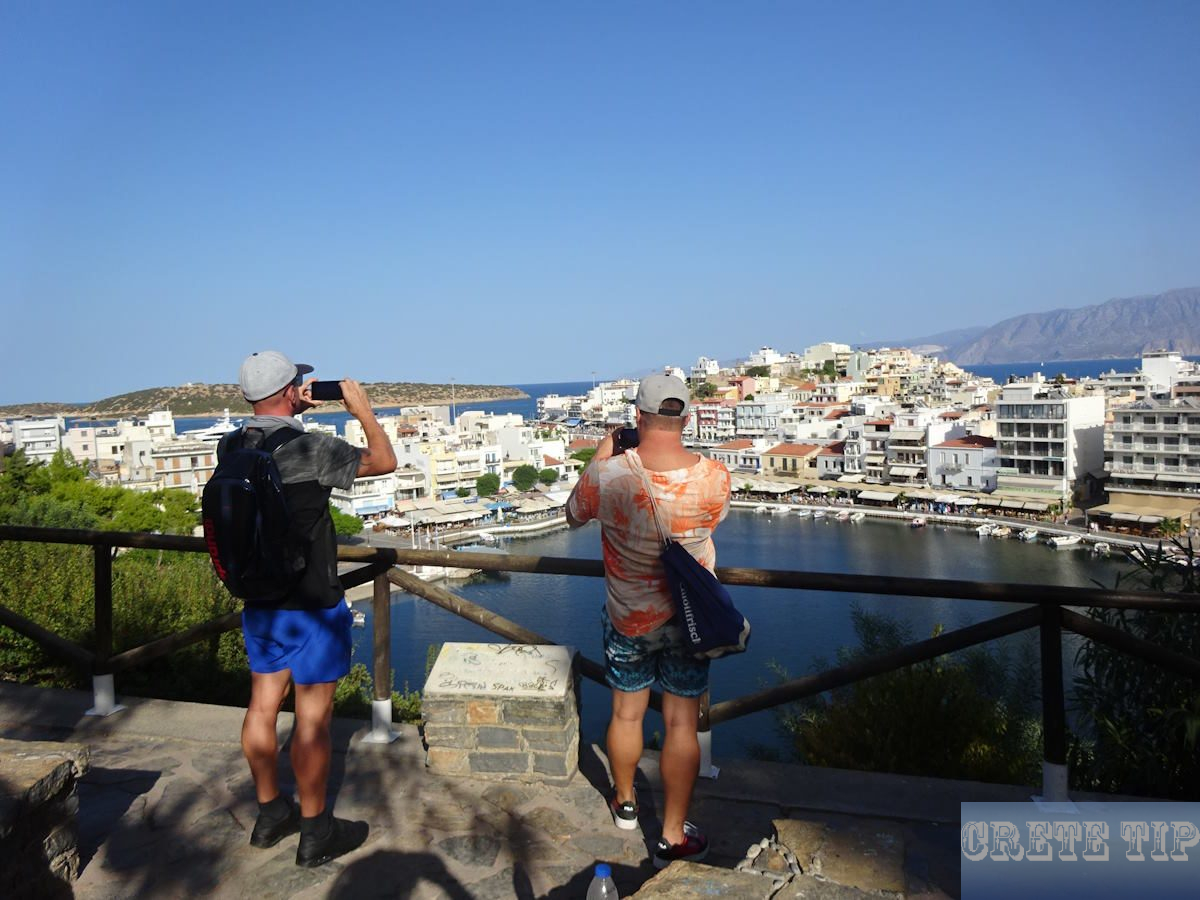
Agios Nikolaos centres on Lake Voulismeni, a small lake linked to the sea by a narrow canal and ringed by red rock and cafés. The old town’s pedestrian streets, particularly 28th October Street, are worth a slow wander before you get back in the car. The harbour makes a natural coffee stop early in the day.
Voulisma Beach and Moní Faneroménis

Voulisma Beach lies a short drive east of Agios Nikolaos and makes a good swimming break if you start the loop in the morning. Moní Faneroménis, one of Crete’s older monasteries, sits on a slope above the Minoan city of Gournia. Its church is built partly into a cave, and a spring inside is said to be miraculous.

Gournia

Gournia is sometimes called the “Pompeii of Minoan Crete,” and the description isn’t far off. The American archaeologist Harriet Boyd-Hawes excavated it between 1901 and 1904, revealing a whole unwalled town with paved streets, workshops and a small palace on the hill.
The site offers a rare glimpse of ordinary Minoan life rather than another grand palace complex.

Pachia Ammos and the Ancient Olive Tree of Kavousi

Pachia Ammos sits on the bay of Mirabello at a crossroads between the region’s major towns, with a long sandy beach and fish taverns along the front. A short detour inland to Kavousi brings you to an olive tree with a trunk over 20 metres round, thought to be thousands of years old and protected as a natural monument.

The Minoan Settlement of Vasiliki and Ierapetra

Vasiliki holds one of the earliest Minoan settlements built with real town planning, dating back to around 2600 to 2300 BC. From here, it is a short run down to Ierapetra, where the coastal route meets the south-coast leg of the loop.
Ierapetra, Myrtos and the South-Coast Archaeology

Ierapetra gives you a working south-coast town rather than a resort, and the drive to Myrtos adds two genuine Minoan sites and one of the sunniest villages on the island. This leg suits an unhurried afternoon, not a quick pass-through.
What to See in Ierapetra’s Old Town and Seafront
Ierapetra’s old town has narrow lanes, a Venetian fort by the harbour, and a seafront looking straight out to the Libyan Sea. It is Europe’s southernmost town of any size, which explains the noticeably warmer, drier feel compared with the north coast.

Fournou Korifi Archaeological Site

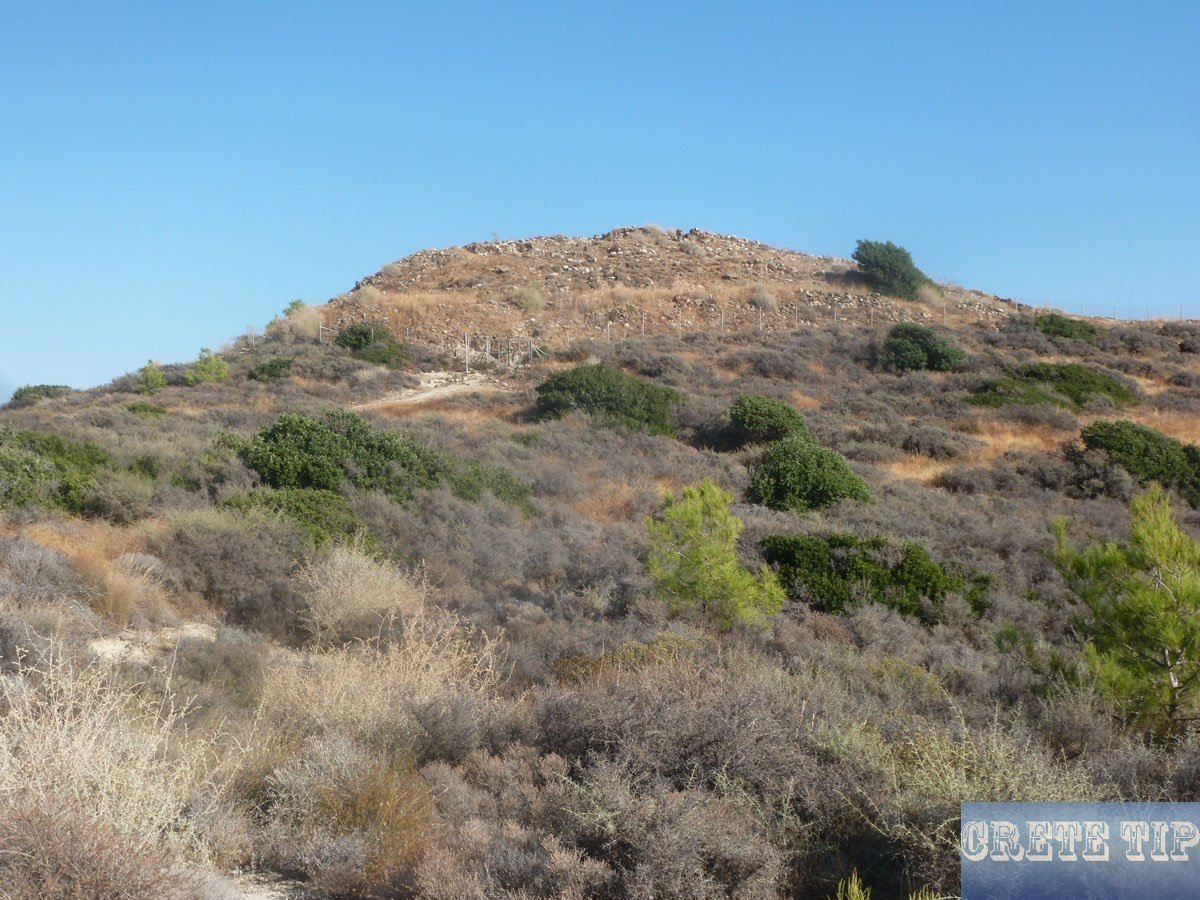
Fournou Korifi sits on a hill about 3.5 kilometres east of Myrtos and dates from 2800 to 2200 BC. Excavations uncovered around ninety rooms, workshops and the famous “Goddess of Myrtos” statuette, now held in the Archaeological Museum of Agios Nikolaos.
Minoan Myrtos and Paralia Mirtos
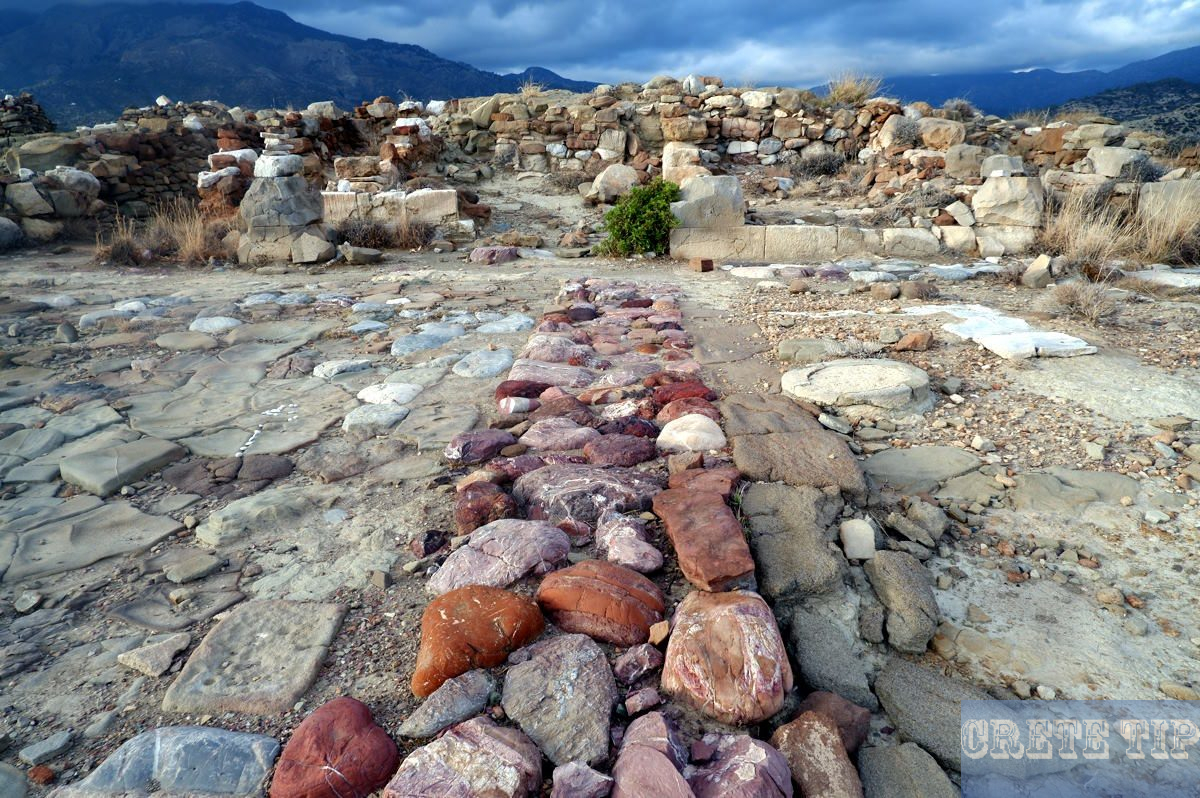
Close by, the hill of Pyrgos held a later Minoan villa with a paved central court and a balcony facing the Libyan Sea, suggesting it was home to a local ruler. Down at Paralia Mirtos, the village itself is small, with around 500 residents, grey sand and quiet tavernas.

A memorial there honours eighteen locals killed by German forces in 1943, a reminder that this coastline carries wartime history too.
Via Amiras and Ano Viannos: Villages and Remembrance

Heading inland from the south coast, the route climbs through Pefkos and Amiras before reaching Ano Viannos, tracing one of the darkest chapters of Crete’s wartime history. This stretch deserves a slower pace and a quiet frame of mind, not a quick photo stop.
Pefkos and the Memorial in Amiras

Amiras, near the site known as Meliana, holds a memorial and small museum dedicated to the Viannos massacre. It is a modest, sombre place rather than a tourist attraction, and it deserves to be treated that way.
Understanding the Viannos Massacre

In September 1943, German forces under Friedrich-Wilhelm Müller executed more than 500 unarmed civilians across twenty villages in the Viannos district. They acted in reprisal for a Cretan resistance ambush that killed 84 German soldiers near Kato Simi.
Ano Viannos alone lost 114 residents, and people still commemorate the massacre every year on 14th September with memorial services.
Ano Viannos and the Road Towards Kastelli

Ano Viannos sits at 560 metres on the southern slopes of Mount Dikti, overlooking vast olive groves. It remains one of the area’s most authentic traditional villages, where life moves at an unhurried rhythm.
Stopping here offers a glimpse into everyday life in rural Crete, along with generous Cretan hospitality. Lunch at a traditional village tavern is a good way to savour local specialities.
Beyond the village, the road climbs towards Kastelli, giving you the first proper mountain-pass driving of this leg.
The Northern Return Through Kastelli, Malia and Neapoli

The return leg brings you back to the north coast through Kastelli’s changing landscape, the old core of Hersonissos, the Minoan palace at Malia, and a roadside monastery before finishing at Neapoli. It is a good stretch for regrouping after the more reflective Viannos section.
Kastelli, the New Airport Area and Aghios Pandeleimon
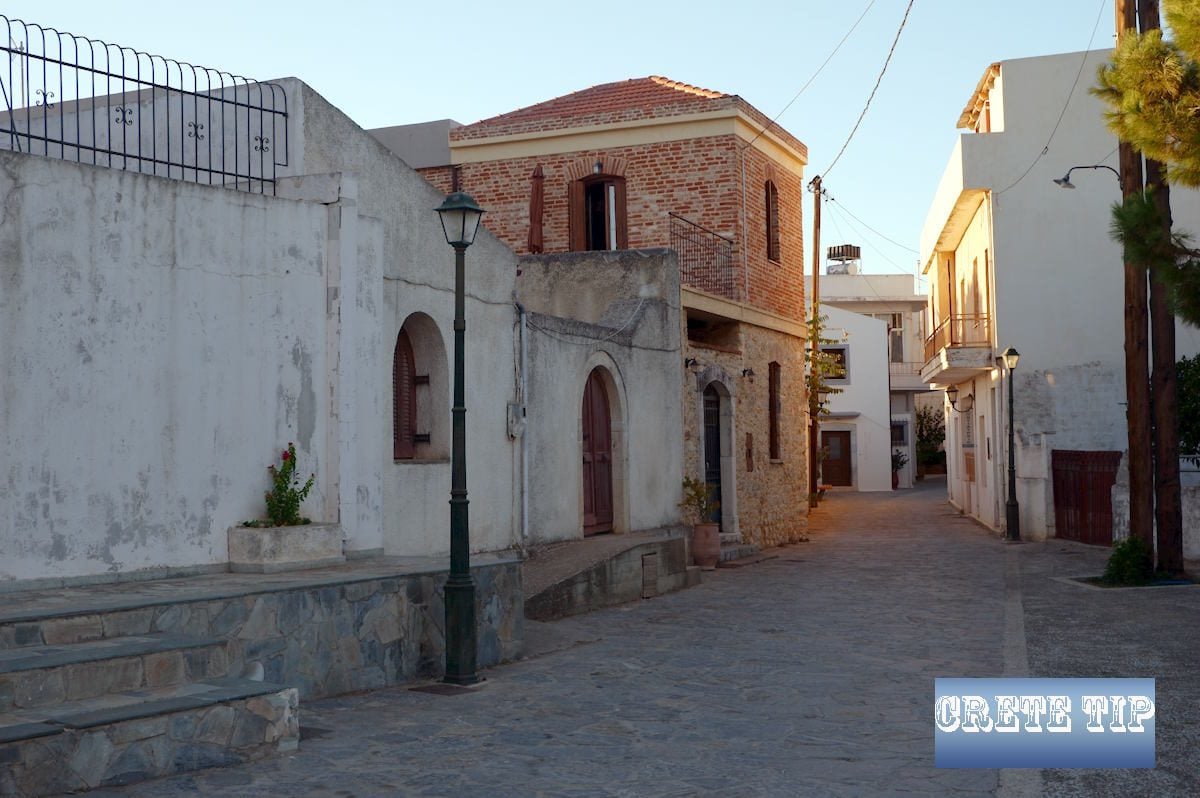
Kastelli sits around 36 kilometres southeast of Heraklion in the fertile Pediada region, known for olive groves, vineyards and Crete’s new international airport, now under construction nearby.

A little to the east of Kastelli, towards the Lassithi Plateau and the Aposlemis Dam, lies the ancient site of Lyctus (Lyttos).
Just north of the village, the Byzantine church of Aghios Pandeleimon stands among plane and oak trees.

Its 13th-century structure uses some older Roman and early Christian stonework. The church opens daily from May to October between 9am and 3pm, with free entry.
Old Hersonissos: Village Square and Traditional Tavern Choices

Old Hersonissos, away from the coastal strip, keeps a proper village square with stone buildings. A traditional tavern here makes a sensible late-afternoon or early-evening dinner stop before you finish the loop.
The Palace of Malia and Potamos Beach
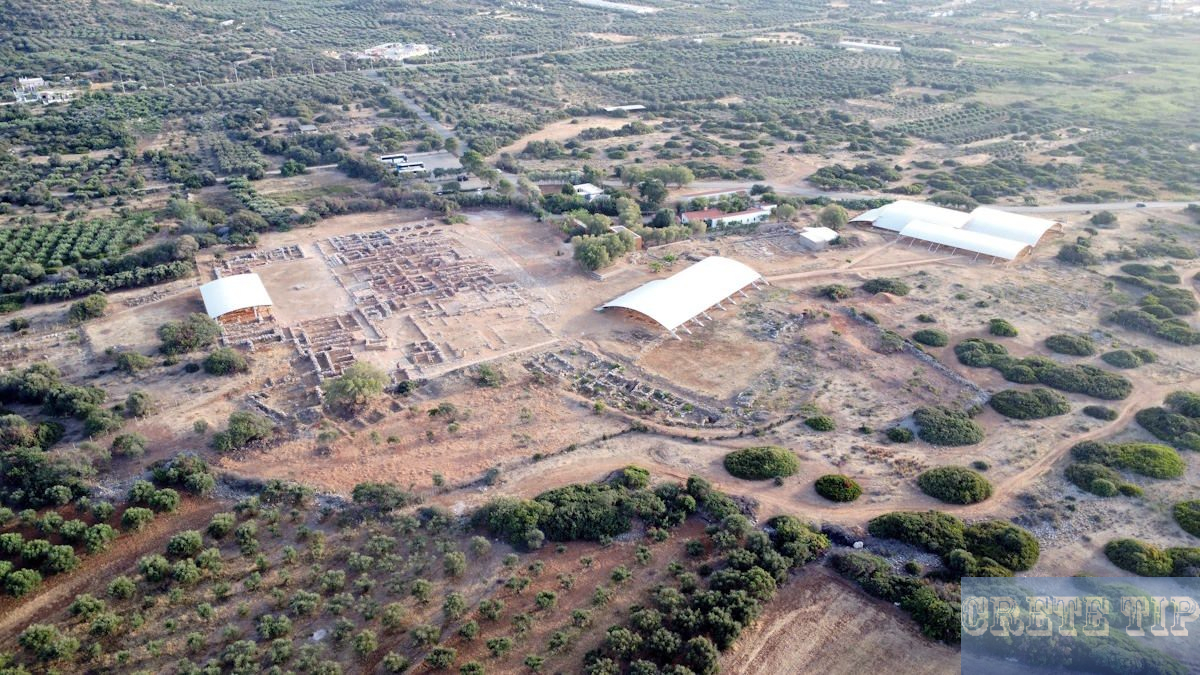
The Palace of Malia is one of Crete’s major Minoan palaces, with a central court, storage silos and the town surrounding it. It is smaller and less elaborate than Knossos or Phaistos, but still worth seeing. Potamos Beach nearby gives you a simple place to stretch your legs before the final stretch north.
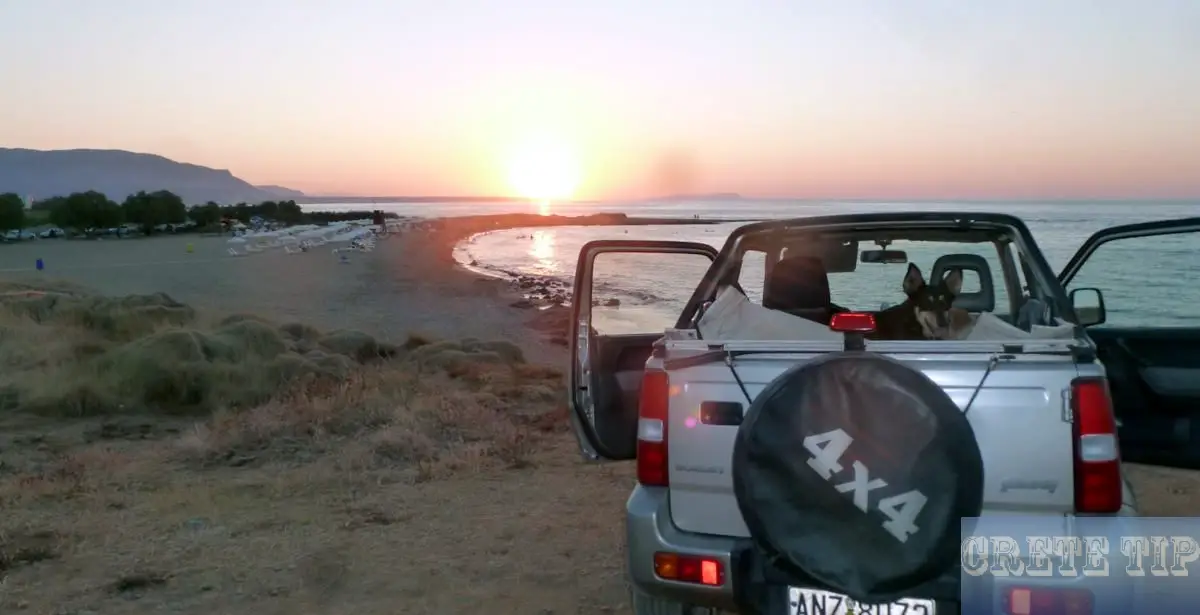
Moní Agíou Georgíou Selinári and Neapoli

Moní Agíou Georgíou Selinári sits beside the main road between Malia and Neapoli, a monastery worth a brief stop rather than a long visit. Neapoli itself, a quieter inland town, makes a natural closing point for the loop before you head back to your base.

Optional Detours Into the Lasithi Plateau
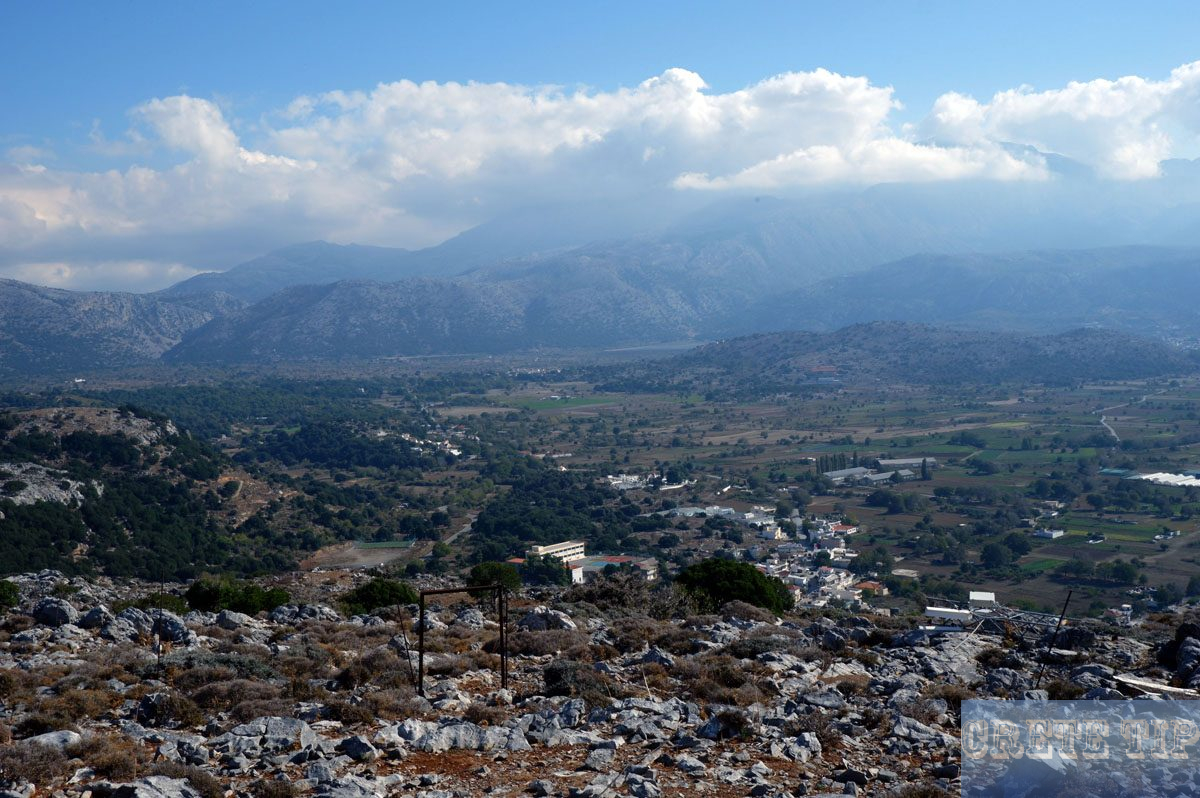
The Lasithi Plateau isn’t exactly part of the core coastal-to-mountain loop. However, it is precisely the centre around which the tour takes place, and so it’s well worth a separate half-day or full-day detour if you have some time to spare.
Reaching it usually means climbing from the Neapoli or Malia side, passing stone windmills before entering a high agricultural plain framed by the Dikti Mountains.
Windmills, Tzermiado and Agios Georgios
The plateau’s old stone windmills once pumped water for the fields. They still stand across the plain, though few of them turn now.
Tzermiado and Agios Georgios are two traditional villages that most travellers use as bases for exploring the plateau on foot or by car. They show off the enduring agricultural charm of rural Crete.
From Tzermiado, walking trails climb toward Karfi, a fortified Late Minoan refuge settlement perched high above the plateau. The site offers commanding views.
Psychro Cave and the Birthplace of Zeus Tradition

Psychro Cave, also called the Dikteon Cave or Cave of Zeus, holds an important place in Greek mythology as the legendary birthplace of Zeus. According to the myth, his mother Rhea hid the newborn there to protect him from his father, Cronus.
The cave is a genuine highlight of a Lasithi Plateau tour, although you’ll need to walk uphill from the car park. It’s best to visit outside the busiest midday hours.
In the village below, travellers can visit the Greek mythology thematic park. Its informative displays and statues bring ancient legends to life before or after the climb.
Krasi, Kera Kardiotissa and Vidiani Monastery

Krasi village, on the northwest slope of Mount Selena, has a striking old plane tree and a Proto-Minoan tomb uncovered in 1929. Nearby, Kera Kardiotissa Monastery and Vidiani Monastery offer quieter, more contemplative stops than the plateau’s busier sites.

Kera Kardiotissa Monastery is known for its Byzantine frescoes and rich monastic history. Trails in this area also connect with the northern ascent to Karfi, attracting hikers interested in ancient hilltop ruins and sweeping views.
Olive Oil Tasting, Jeep Safaris and Guided Excursions
Several producers on and around the plateau offer olive oil tastings. These visits provide a practical look at one of Crete’s oldest industries.
You can visit a preserved traditional olive mill to see historic stone presses and milling tools. A nearby working olive oil factory shows how contemporary cold-pressed oil is extracted and bottled.
Jeep safaris and guided excursions from Heraklion are also available if you’d rather leave the plateau’s back roads to someone else.
Organized tours from Heraklion often include hotel pickup, so you can relax while an experienced guide handles the winding roads.
Choosing Stops That Suit Your Available Time

Match your stops to the days you actually have, not every place mentioned in this guide. Exploring eastern Crete at an unhurried pace lets you appreciate its rugged beauty. With one day in the Lasithi area, choose one coastal stretch, such as Agios Nikolaos to Ierapetra, and one inland detour.
Two days give you enough time to add the Viannos villages and the northern return without feeling rushed. A longer trip across Crete also lets you include the Lasithi Plateau, spread over a separate day so the mountain driving doesn’t pile up all at once.
If archaeology is your main interest, prioritise Gournia, Vasiliki and Fournou Korifi over the beach stops. If history and remembrance matter more, build your day around Amiras and Ano Viannos, then treat the rest of the loop as a scenic bonus.
Conclusion

A tour around the Lasithi Mountains works best as a flexible loop rather than a fixed checklist. Coastal Minoan sites, south-coast villages, wartime memorials and mountain-pass driving all sit within reach of each other, but no single day can do them justice.
Pick a starting point that suits your base, whether that’s Agios Nikolaos, Ierapetra, Hersonissos or Neapoli, and build your day or weekend around the stops that matter most to you. Treat the Lasithi Plateau as a separate detour rather than a mandatory leg, and give the Viannos memorial the quiet attention it deserves along the way.
Frequently Asked Questions

How many days do I need for a drive around the Lasithi Mountains?
Most travellers need two days to cover the coastal route, the south-coast archaeology and the Viannos villages without rushing. Add a third day if you want to include the Lasithi Plateau and Zeus Cave as a separate detour.
Can I complete the Lasithi Mountains route in one day?
You can drive the full loop in one day if you keep stops brief, since the driving alone takes around four or five hours. Fitting Agios Nikolaos, the south coast, Ierapetra, Viannos and the northern return into one day means seeing each place quickly rather than properly.
Where is the best place to start this circular drive?
Agios Nikolaos, Malia, Hersonissos, Ierapetra and Neapoli all work well as starting points because each sits directly on the loop. Choose the one closest to your accommodation to cut down on approach driving.
Is the drive around Lasithi suitable for nervous drivers?
The main mountain roads are paved, maintained and fitted with guardrails on exposed sections, so a standard compact car can handle them without trouble. Drivers who dislike narrow, winding roads and frequent hairpin bends should allow extra time and keep their speed low on the climbs.
Can I add the Lasithi Plateau and Zeus Cave to this route?
You can add the Lasithi Plateau and Psychro Cave as an optional detour, although they sit apart from the main coastal-to-mountain loop. A visit to Lassithi Plateau and the Cave of Zeus takes you into Greek mythology, which is a nice change of pace.
Most travellers treat it as a separate half-day or full-day trip rather than folding it into the main circuit.