

11 November is the feast day of Saint Minas of Heraklion.

Saint Minas is revered as Heraklion’s patron because local tradition says he protected Christian worshippers during the Easter events of 1826. His image as a mounted guardian remains closely tied to the city’s history and to stories of the Great Castle, as Heraklion was once known.
The saint’s feast on 11 November brings worshippers to the Metropolitan Cathedral. For many residents, his place in the city’s identity also lives on in old tales and the writing of Nikos Kazantzakis.
Who was Saint Minas?
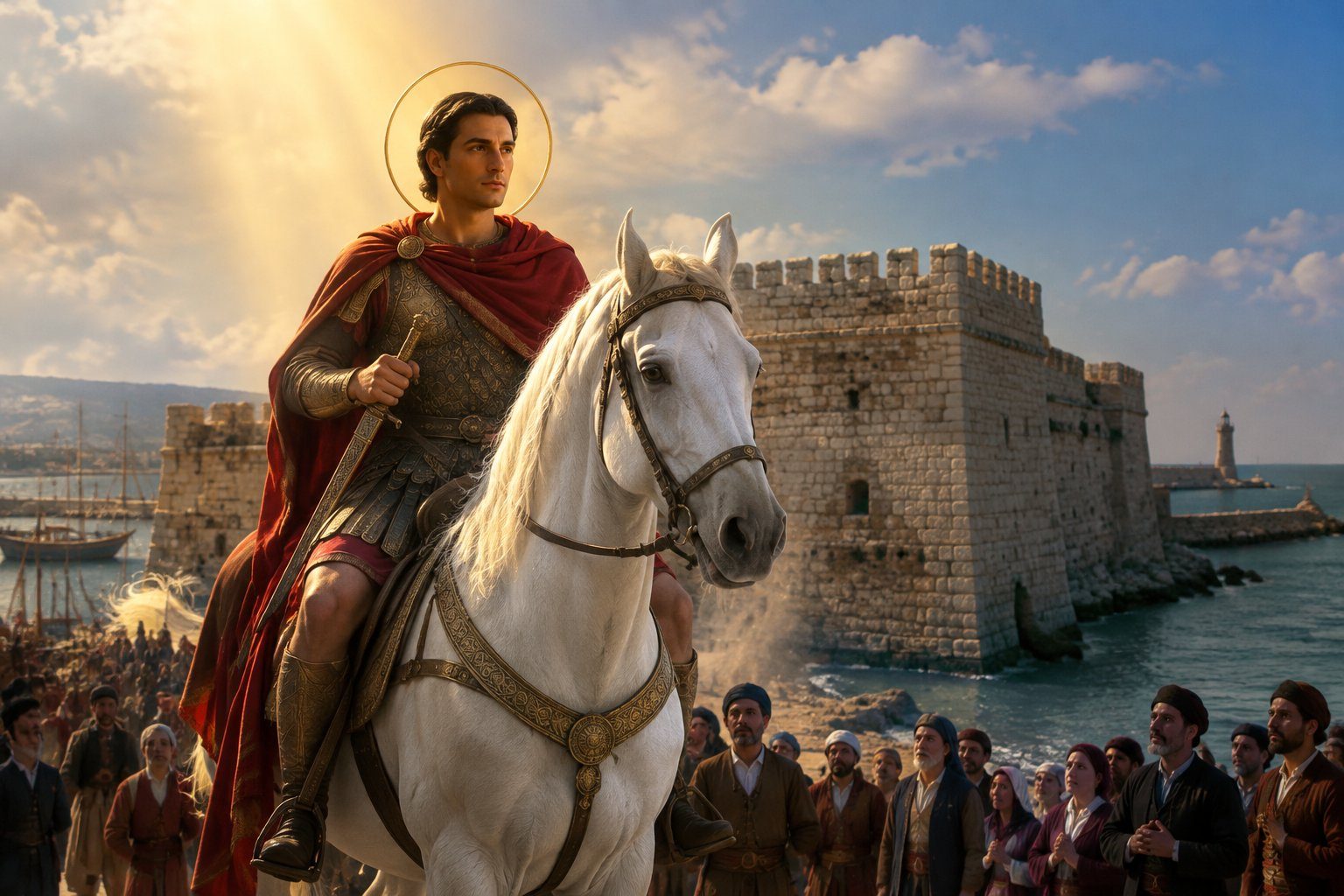
Saint Minas was an early Christian martyr whose life is traditionally placed in the late third and early fourth centuries. Accounts say he was born in Egypt to non-Christian parents and embraced Christianity when he was young.
He later served in the Roman army. Hagiographic accounts describe him as a cavalry officer in Asia Minor. During the persecution of Christians, he left the army and withdrew to a mountain area to pray.
Minas eventually returned to public life and declared his Christian faith. He was arrested, tortured and executed, and his death is commonly dated to around 304. The Orthodox Church honours him on 11 November.
The 1826 miracle linked to the protection of Christians
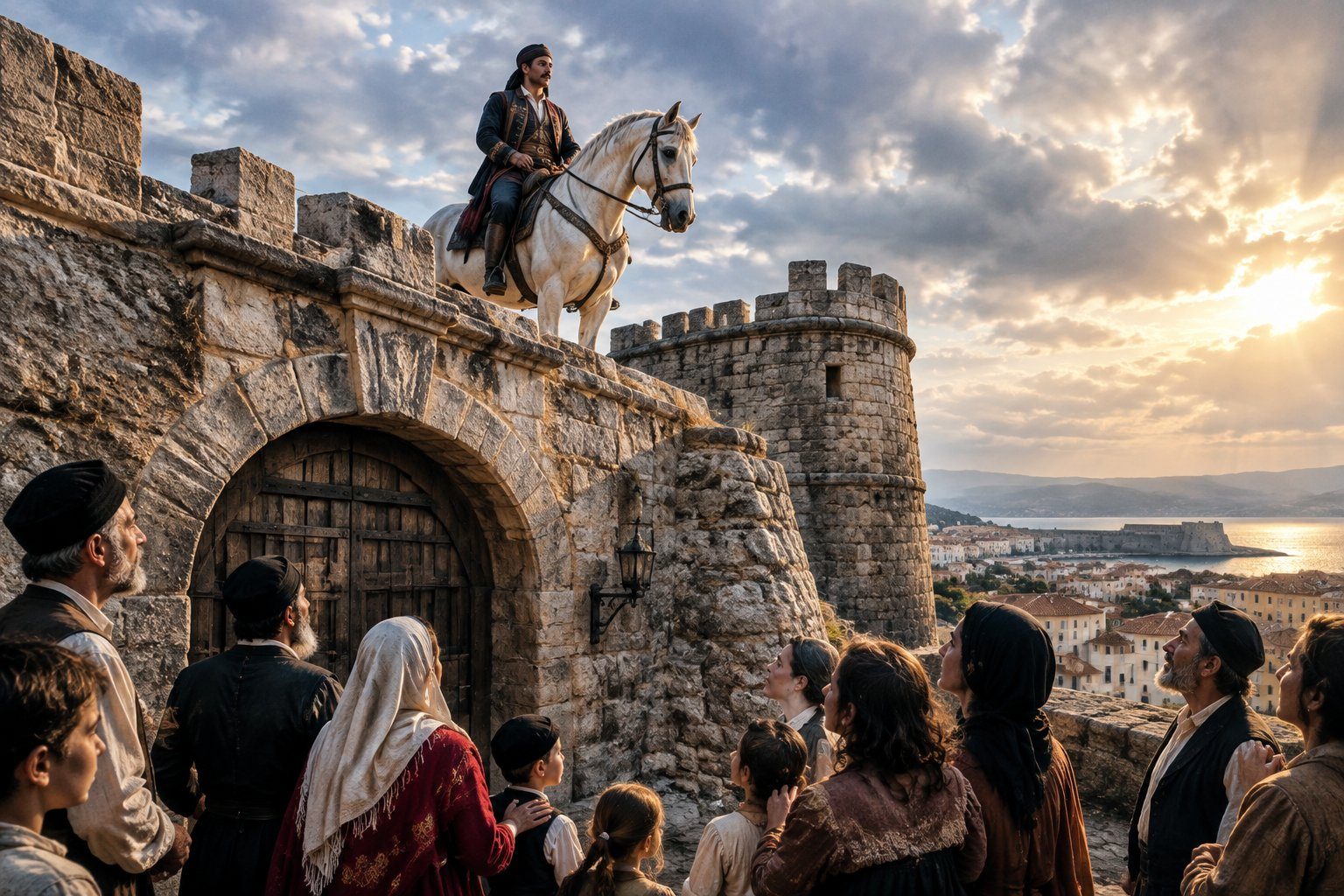
Heraklion’s best-known tradition about Saint Minas tells of his intervention during Easter in 1826. Christians had gathered for a service at the old church of Saint Minas while, according to the story, Ottoman groups planned an attack.
The account describes an elderly rider with a drawn sword who appeared near the church. His arrival alarmed the would-be attackers, and they left the area. When people later tried to identify him, no one recognised the horseman.
The worshippers believed Saint Minas had taken human form to protect them. A historical account of the event appears in a University of Crete seminar text about the 1826 tradition.
The horseman’s appearance became central to the saint’s reputation as the city’s protector. Heraklion commemorates the event on Tuesday in Bright Week, the Tuesday after Easter.
Saint Minas in the writing of Nikos Kazantzakis

Nikos Kazantzakis’s writing captures the important place Saint Minas held in the lives of people from the Great Castle. Born and raised in Heraklion, Kazantzakis drew on the city’s customs and religious memory in works such as Report to Greco.
In Report to Greco, he recalls the people’s devotion to their patron saint in an era of danger and pressure on the Christian community. He also describes his father lighting a candle to Saint Minas and praying for Crete’s freedom.
Kazantzakis tells a story about Hasan Bey, an Ottoman official who, according to the tale, believed the saint warned him when he acted cruelly towards Christians. The story links the official’s fear and respect to gifts of oil and candles for the church.
The saint said to patrol the Great Castle at night
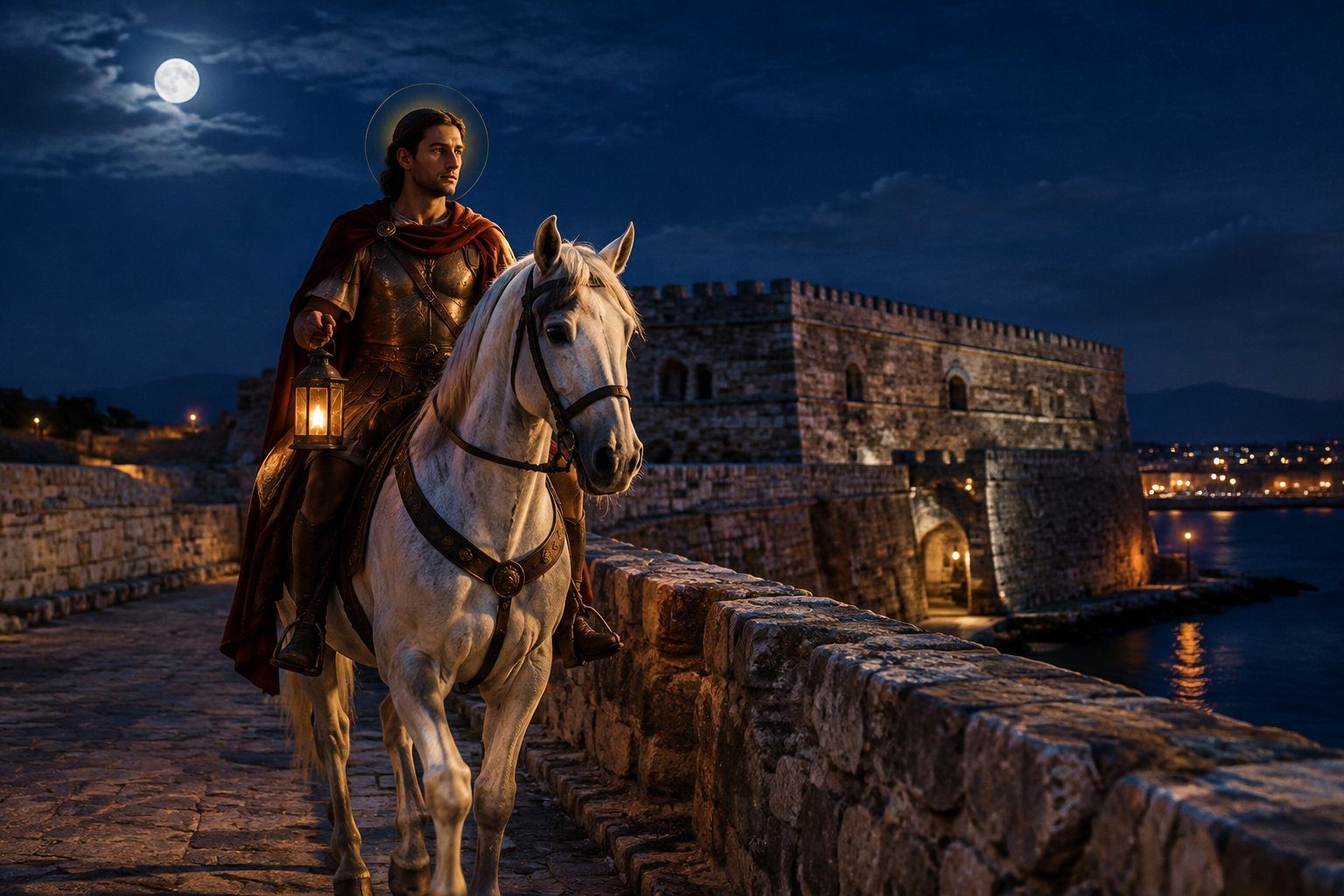
In Captain Michalis, Kazantzakis portrays Saint Minas as a tireless night watchman over the Great Castle. In the novel’s folk-inspired account, the saint steps down from his icon after dark, mounts his horse and rides through the city streets.
At daybreak, the horse supposedly returns soaked with sweat, as if it has covered the town through the night. The scene gives literary form to the belief that the patron saint kept guarding local homes and residents.
For people of the Great Castle, this image made the saint feel like an active guardian of their city. It’s one of the most memorable ways Kazantzakis brought local faith into his fiction.
The cathedral that became a symbol of Heraklion

The Metropolitan Cathedral of Saint Minas is one of Crete’s most important religious landmarks. Its foundation stone was laid on 25 March 1862, while the island was still under Ottoman rule. Epirote architect Athanasios Mousis designed the cathedral.
Construction stopped in 1866 during the Cretan revolt and resumed in 1883. The cathedral opened on 16 April 1895, while Metropolitan Timotheos Kastrinogiannakis led the church; a history of the cathedral’s construction records its long building period.
The older, smaller church of Saint Minas stands nearby and is also known as the Church of the Panagia. From 1735 until the late nineteenth century, it served as an important centre for the Orthodox community in the Ottoman-era city.
The old church and its grounds are also linked to the killings of June 1821. The victims included Metropolitan Gerasimos Pardalis, clergy and other residents.
The local tradition of children left at the church
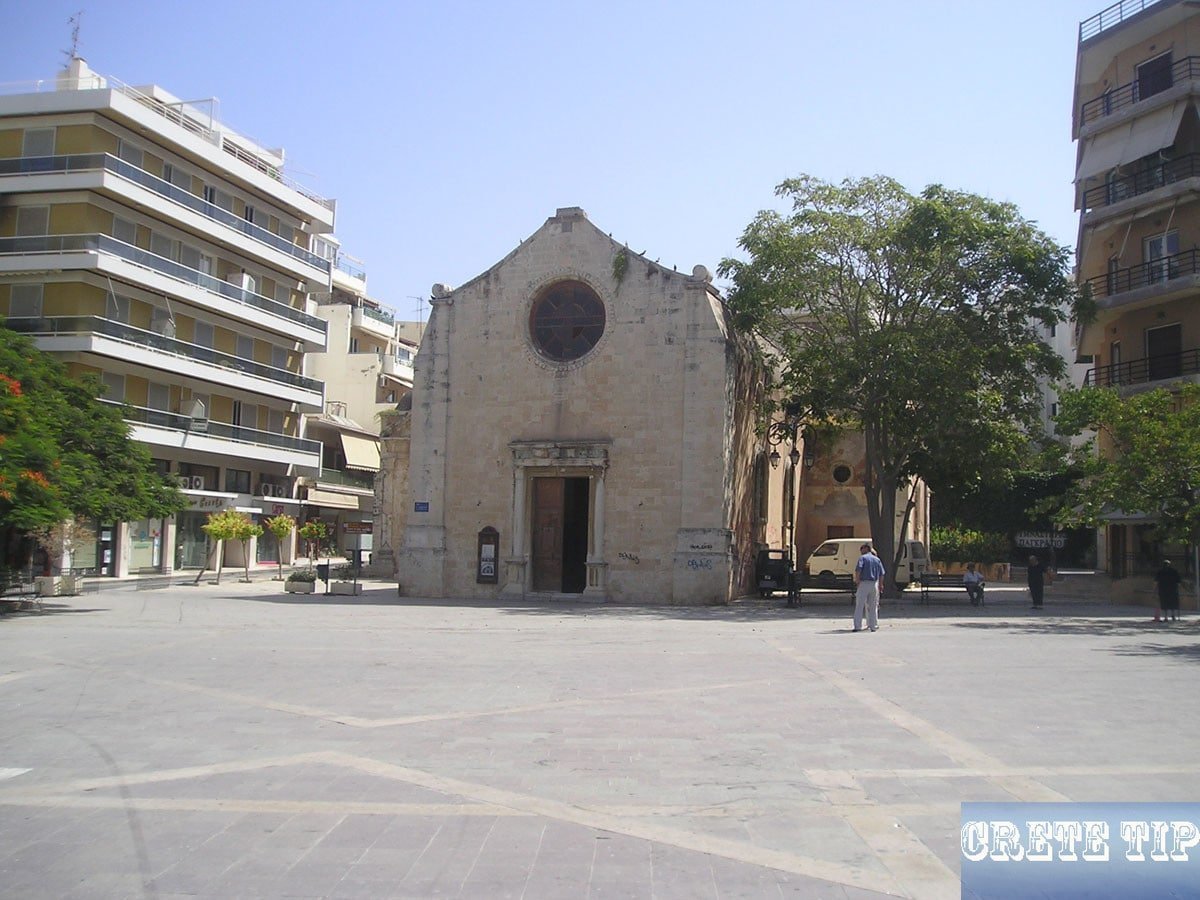
A local oral tradition tells of infants left on the steps outside Saint Minas’s church. According to the story, those who left the children there hoped members of the Christian community would take them in and care for them.
The tale also says that boys raised in the church community were sometimes named Minas in honour of the patron saint. It reflects another part of his place in local memory: he was seen as a figure of shelter and compassion, as well as protection from danger.
The relics and the feast on 11 November
The Metropolitan Cathedral holds a portion of Saint Minas’s relics, an important focus of devotion for worshippers. Local accounts date their arrival in Heraklion to around 1733.
The annual feast on 11 November centres on the cathedral and its religious services. Worshippers come to honour the city’s patron, while stories of the 1826 event and the mounted saint continue to shape Heraklion’s traditions.
A lasting legacy in Heraklion
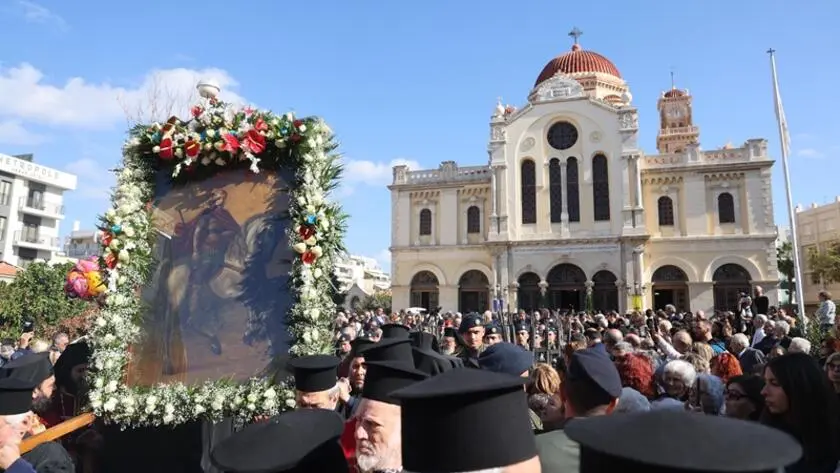
Saint Minas’s place in Heraklion rests on the city’s religious life, its history and traditions passed down through generations. The cathedral, the story of the 1826 horseman and Kazantzakis’s literary memories each preserve a different part of that connection.
Frequently Asked Questions
Why is Saint Minas regarded as the patron saint of Heraklion?
Saint Minas is regarded as Heraklion’s patron because local tradition says he protected the Christian community during the Easter events of 1826. His cult became closely linked to the city and its identity as the Great Castle.
What miracle is Saint Minas said to have performed in Heraklion at Easter in 1826?
The tradition says a mysterious horseman carrying a sword frightened away attackers preparing to strike Christians gathered at the old church. The worshippers believed the rider was Saint Minas, and the city commemorates the event on Tuesday in Bright Week.
Why is Saint Minas depicted as a horseman?
He appears on horseback because the 1826 story describes a mounted protector near the church. The image also reflects his association with the Roman cavalry in accounts of his life.
How is Saint Minas connected to the history of Heraklion, formerly known as the Great Castle?
Saint Minas is linked to the Great Castle through the old church, the 1826 protection tradition and the later cathedral that bears his name. Kazantzakis’s writing also preserves stories about the saint’s importance to the city’s residents.
When was Saint Minas Cathedral in Heraklion built?
Work on the cathedral began when its foundation stone was laid on 25 March 1862. Construction resumed after a pause during the Cretan revolt, and the church opened on 16 April 1895.
How does Heraklion celebrate Saint Minas’s feast day?
On 11 November, Heraklion honours Saint Minas with religious services at the Metropolitan Cathedral. Worshippers gather to remember the patron saint and his place in the city’s religious tradition.


