

Newsflash from Friday, 17 July 2026:

Ancient Lyktos (or Lyttos, Lyctus), one of Crete’s most historically rich archaeological sites, continues to shed new light on the island’s past. The completion of the sixth excavation season was recently marked by a public presentation highlighting significant discoveries and outlining the next phase of research.
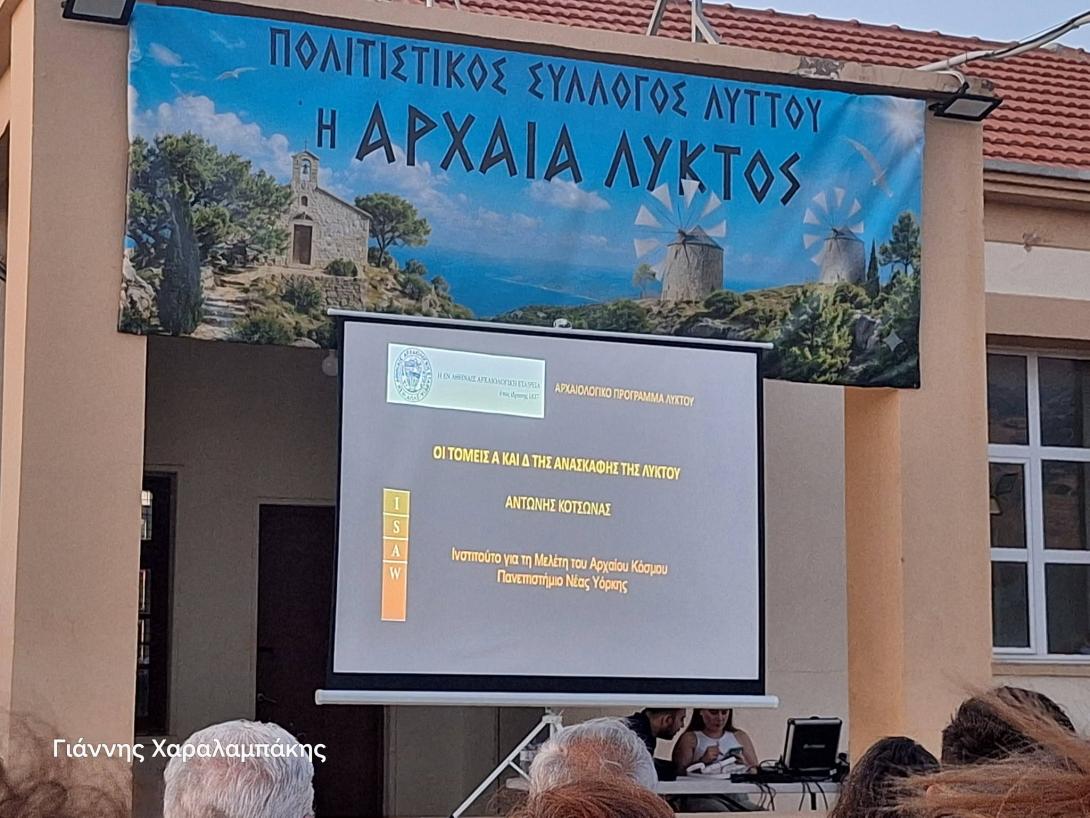
The event, held in the courtyard of the former primary school of Lyttos, drew strong interest from locals, visitors, and archaeology enthusiasts. It also signaled the launch of a new five-year research program, further reinforcing the importance of the site on both a national and international level.
Key Discoveries from the Excavations
Archaeologists Antonis Kotsōnas, Vaso Sythiakaki, and Angelos Chaniotis presented the findings of the latest excavation season, offering valuable insights into the long and continuous history of human presence in Lyktos.
Among the most notable conclusions:
- Evidence of human activity dates back to the Neolithic period, marking the earliest known presence in the area.
- During the Minoan era, activity intensified, particularly at the highest point of the hill.
- From around 1000 BC, signs of habitation increased significantly, indicating Lyktos’ emergence as an important settlement.
- Finds from around 600 BC suggest the existence of a sanctuary dedicated to the goddess Athena on the northern slope.
- Remains from the Hellenistic period include sections of defensive walls and road infrastructure.
These discoveries collectively highlight Lyktos as a key center in ancient Crete, with continuous occupation and evolving cultural significance over millennia.

A Site of Growing Importance
Local authorities emphasized the importance of ongoing archaeological work. The Mayor of Minoa Pediada, Vasilis Kegeroglou, described Ancient Lyktos as a site of “unique historical and cultural value,” noting that recent findings have strengthened its standing on the archaeological map of Greece and the wider Mediterranean.
He also stressed the importance of making archaeological knowledge accessible to the local community, particularly younger generations, so that history remains a living and meaningful part of cultural identity.

Looking Ahead: A New Five-Year Program
The newly launched five-year research initiative aims to deepen understanding of Lyktos through continued excavation and expanded surface surveys across the wider area. These efforts are expected to further clarify the city’s extent and historical development.
Supported by the Archaeological Society of Athens, the Municipality of Minoa Pediada, and local cultural organizations, the project reflects a long-term commitment to uncovering and preserving Crete’s heritage.
As excavations continue, Ancient Lyktos promises to reveal even more hidden chapters of history, offering fresh perspectives on one of the most significant centers of the ancient Greek world.
Source: ekriti.gr – Ancient Lyktos: Important findings from the sixth excavation season



