
Newsflash from Monday, 23 March 2026:
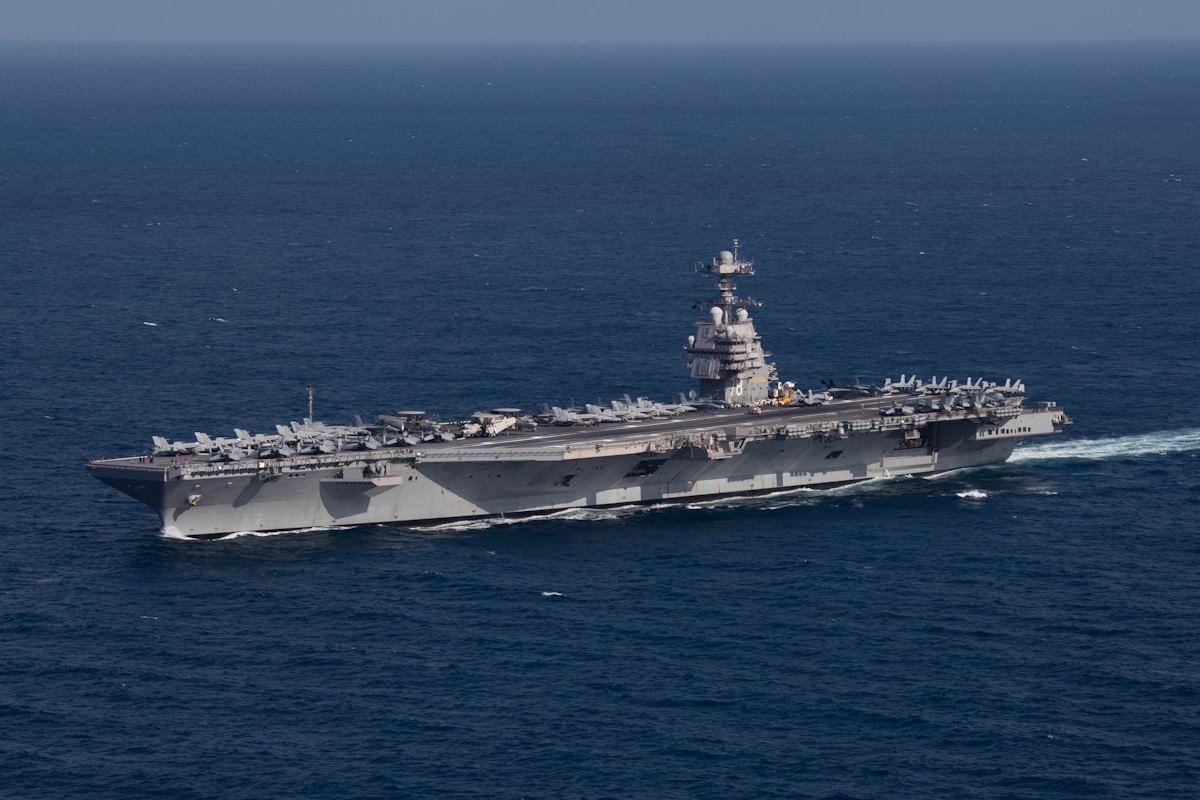
The world’s most advanced aircraft carrier, the USS Gerald R. Ford (CVN-78), made an unexpected return to the Souda Bay Naval Base in Crete on Monday morning. While the massive vessel is a frequent visitor to the island, this latest arrival is not a routine stop—it follows a serious fire incident that occurred while the ship was operating in the Eastern Mediterranean.
The Incident: A 30-Hour Battle
On March 12, a fire broke out in the ship’s laundry area. According to reports, the blaze required a grueling, multi-hour effort to bring under control. While the carrier’s critical combat systems remain functional, the fire left behind a trail of damage.
Several crew members were treated for injuries, primarily related to smoke inhalation. Beyond the immediate physical danger, the fire has raised concerns about the long-term impact of smoke and water damage on the ship’s sophisticated internal infrastructure.
Why Souda Bay?
The decision to divert to Chania highlights the strategic importance of the Souda Bay Naval Base. As a primary hub for U.S. and NATO forces in the Mediterranean, the base is one of the few facilities capable of supporting a ship of this scale during technical emergencies.
Experts suggest that while the ship remains “operationally functional,” the combination of smoke residue and moisture from firefighting efforts can be devastating to sensitive electronics. Technicians in Crete will now conduct extensive inspections to ensure the fire hasn’t caused “chain-reaction” failures in secondary systems.
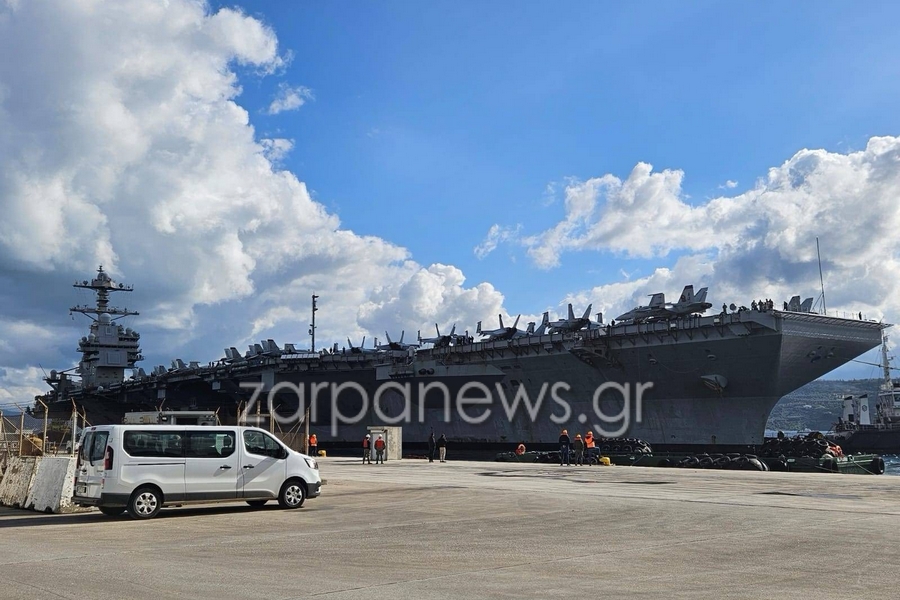
A Crew Under Pressure
The fire comes at a challenging time for the USS Gerald R. Ford. The vessel has been on an exceptionally demanding nine-month deployment, leading to visible signs of fatigue for both the crew and the ship’s mechanical systems.
Military analysts have noted that the incident may be a symptom of the intense pressure placed on U.S. naval assets in the region. There are now questions regarding how long the carrier will remain at port and whether this will lead to a prolonged period of reduced operational readiness.
What’s Next?
For the residents of Chania, the sight of the nuclear-powered giant in the bay is a stark reminder of Crete’s position at the center of global geopolitical developments. For the U.S. Navy, the priority is now a race against time to repair the damage and return the $13 billion “supercarrier” to full strength.
Sabotage at Sea? US Navy Detectives Descend on Souda Bay to Probe USS Gerald R. Ford Fire
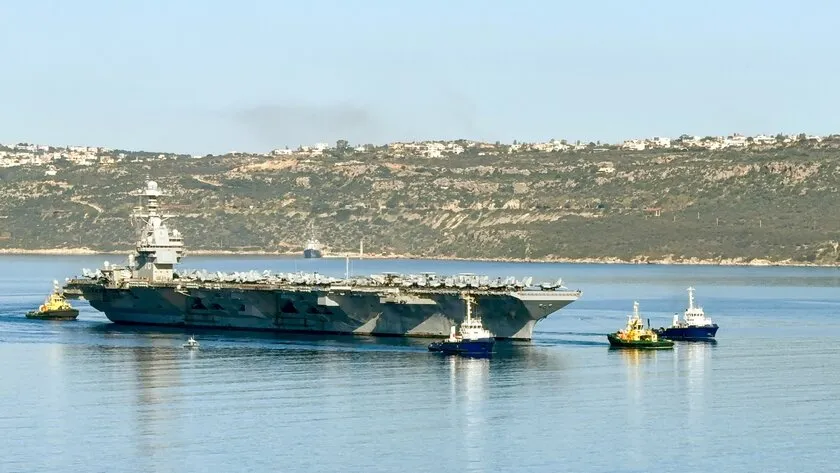
The arrival of the USS Gerald R. Ford (CVN-78) at the Souda Bay Naval Base in Crete has taken a dramatic turn. What was initially reported as a technical mishap is now the subject of a high-stakes investigation, as eight U.S. Navy detectives arrived on Monday to determine if the fire that crippled the world’s largest aircraft carrier was an act of deliberate sabotage.
A Targeted Investigation: 20 Crew Members Under Scrutiny
The investigation is centering on a chilling possibility: that the fire was intentionally set by members of the ship’s own crew. According to reports, investigators are focusing on 20 specific crew members who had authorized access to the main laundry area where the blaze ignited on March 12.
Because the laundry facilities are restricted—with the rest of the 6,000-member crew handing over their clothing to these specific attendants—the pool of suspects is narrow. Detectives are currently taking statements from these individuals and senior officers to determine if the fire was a “technical fault” or a calculated act of arson.
The Motive: Burnout and “Deployment Fatigue”
Why would a sailor sabotage their own ship? Investigators are looking into widespread discontent among the crew as a primary motive.
The USS Gerald R. Ford has been on a grueling, record-breaking deployment that has lasted nearly 11 months. The ship’s mission has been relentless:
* Caribbean Operations: Supporting missions involving Venezuela.
* Middle East Shift: Moving directly to the Persian Gulf and Red Sea to support operations against Iran.
* Lack of Rest: Reports suggest many of the 6,000 sailors have been working without the standard “leave” or scheduled breaks, leading to extreme physical and mental exhaustion.
The theory being explored is that the fire may have been an attempt to force the ship into port, effectively ending a deployment that many felt had gone on too long.
The Damage: 600 Sailors Left Without Beds
The fire, which started in the industrial dryers and steam systems of the laundry room, was far from minor. While the Pentagon maintains the ship’s propulsion system remains operational, the internal toll was significant:
* Injuries: Two sailors were injured (one required off-ship hospitalization), and 200 others suffered from smoke inhalation.
* Displacement: The fire damaged berthing areas, leaving approximately 600 sailors without their regular bunks and forced into temporary living quarters.
* Sanitation: With the main laundry destroyed and smoke infiltrating the ventilation, basic hygiene facilities for the crew were severely compromised.
What Happens Next in Souda?
The USS Gerald R. Ford is scheduled to remain docked at the Souda Bay base until April 2. During this window, technicians will work on repairs while the eight-man detective team continues its interrogations.

The outcome of this probe could have massive implications for U.S. Navy policy regarding deployment lengths and crew mental health. If sabotage is proven, it would represent one of the most serious internal breaches in modern naval history.