

Newsflash from Saturday, 21 March 2026:
The Attack on Diego Garcia
According to reports from the Iranian news agency Mehr and confirmed by the Wall Street Journal, Iran launched two medium-range ballistic missiles targeting the joint US-UK military base at Diego Garcia. Located on a remote island in the Indian Ocean, the base is a critical strategic hub for US nuclear submarines, bombers, and destroyers.
While the attack was unsuccessful—one missile malfunctioned in flight and the second was intercepted by a US warship—the message sent by Tehran was loud and clear. The Iranian agency Mehr noted that this action “proves that the range of Iran’s missiles is greater than what the enemy previously imagined”.

The Khorramshahr-4: A New Strategic Reality
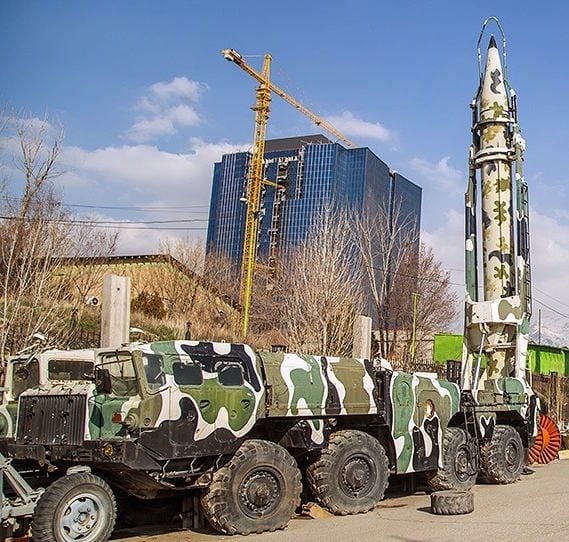
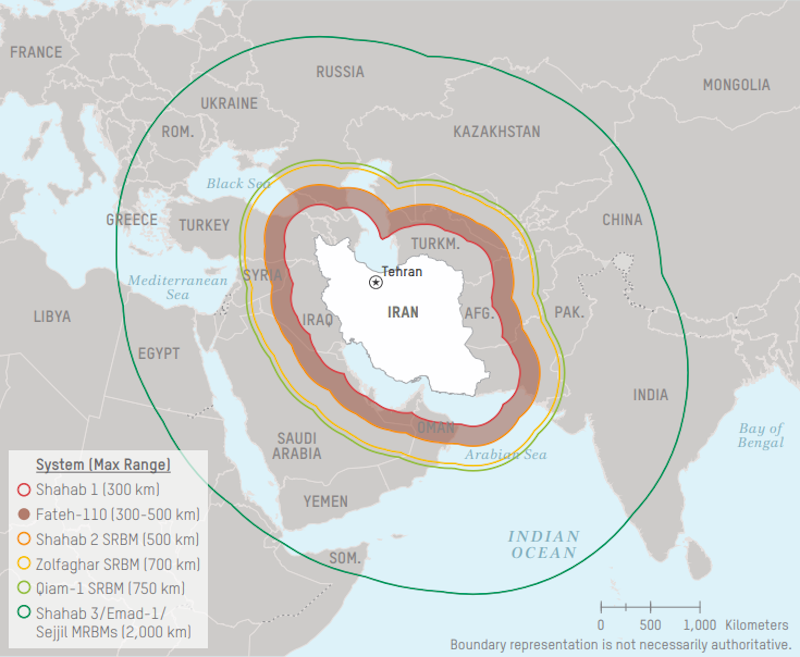
Analysts believe the missile used in the attempt was the Khorramshahr-4. Previously, Western intelligence estimated the range of Iranian missiles to be between 2,000 and 3,000 kilometers. However, the attempt to strike Diego Garcia—located roughly 4,000 kilometers from Iran—suggests a massive leap in capability.
Why this matters for Europe:
* Extended Reach: A 4,000km range means Iran can now potentially reach as far as France and the United Kingdom.
* Greece in the Crosshairs: Given its geographic proximity, all of Greece now falls well within the operational radius of these advanced ballistic systems.
* Lethal Payload: The Khorramshahr-4 is capable of carrying cluster bombs, increasing its potential for widespread damage upon impact.
The Khorramshahr-4 is likely the intermediate-range ballistic missile that Iran used in the attempted attack on Diego Garcia, which analysts had previously assessed may have a range of +4,000km, though it had only been proven at between 2,000-3,000km. Such an attack would suggest… https://t.co/bLj7XzvKlz pic.twitter.com/fGMPtDs2Ih
— OSINTdefender (@sentdefender) March 21, 2026
Europe Forced into Defensive Action
The escalation comes at a time of heightened tension. As the US-Israeli conflict with Iran intensifies, European nations are being dragged into a defensive posture. The UK recently signed an agreement to return the Chagos Archipelago to Mauritius but maintained a 99-year lease on the Diego Garcia base specifically for “defense operations against Iran.”
With Iranian missiles now capable of reaching European capitals, NATO and EU members are facing a new reality. The “buffer zone” that once protected the continent from Middle Eastern ballistic threats has effectively vanished.
❗️The Iranian terrorist regime launched a long-range missile for the first time since the start of Operation Roaring Lion that could reach a distance of ~4,000 km.
During Operation Rising Lion in June 2025, the IDF revealed that the Iranian regime has intentions to develop… pic.twitter.com/iliERIu2hV
— Israel Defense Forces (@IDF) March 21, 2026
What Happens Next?
The Pentagon has yet to issue a formal comment on the interception, but the implications are already being felt in Brussels and Athens. As Iran continues to demonstrate its “strategic fire” capabilities despite international sanctions, the focus will likely shift toward bolstering European missile defense systems.
For Greece and its neighbors, the shadow of the conflict has grown significantly longer. The reach of the Khorramshahr-4 is no longer a theoretical concern—it is a demonstrated reality.



