Bookings for Crete are “frozen”, possible scenarios for the tourist season and a general sense of calm in Chania.
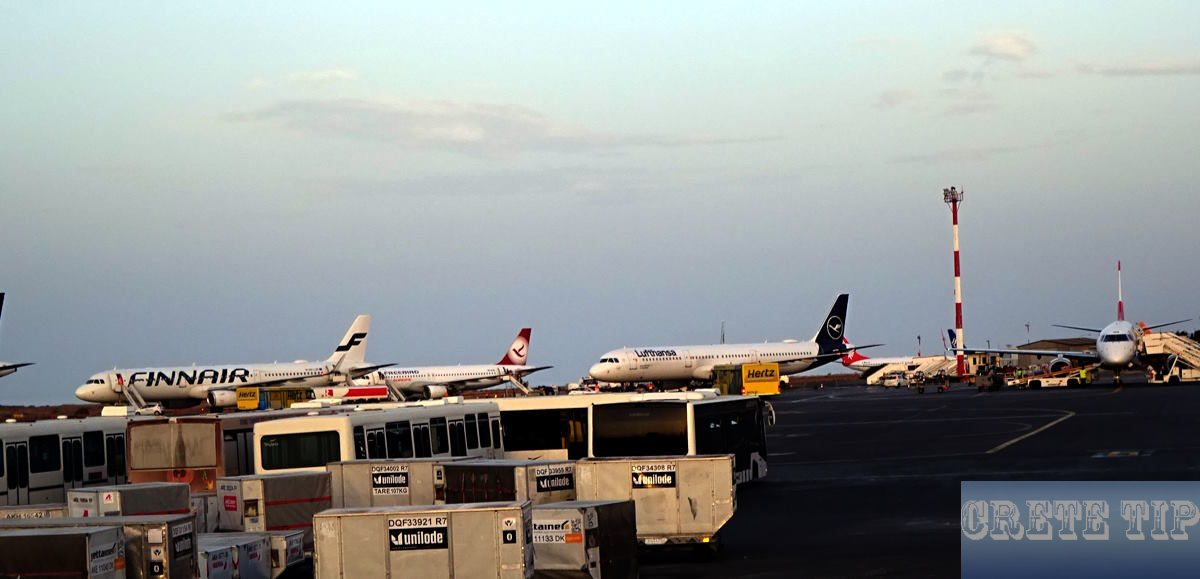
Just a few weeks ago, all signs pointed toward 2026 being a historic, record-breaking year for tourism in Crete. However, the escalating geopolitical tensions in the Middle East have cast a shadow over these optimistic forecasts, leading to what local officials are calling a “freezing” of bookings.
Following the conclusion of the major ITB Berlin tourism trade fair, Kyriakos Kotsoglou, the Vice Governor of Tourism for Crete, spoke with Cretalive to provide a sobering update on the state of the industry.
A Record Year Interrupted
According to Mr. Kotsoglou, all data gathered prior to the recent escalations suggested that Crete was on track for another unprecedented season. “There were all the elements that we would have another record year for Crete, unless something bad happened—and it did,” he noted.
While the island remains a top-tier destination, the proximity of the conflict is beginning to weigh on the minds of international travelers.
The “Booking Freeze” vs. Cancellations
The good news for the local economy is that, so far, there has not been a wave of cancellations. Airlines and tour operators are maintaining their scheduled programs for the island.
However, the pace of new bookings has slowed down significantly. Potential visitors are adopting a “wait and see” approach, leading to a noticeable stagnation in the market. Mr. Kotsoglou emphasized that while the industry hasn’t stopped, it has certainly entered a period of uncertainty.
Shifting Travel Patterns: Crete as a Safe Haven?
Interestingly, the geopolitical crisis is causing a shift in where high-end travelers choose to spend their holidays.
* Redirected Routes: Travelers who originally planned trips to Jordan or Egypt—countries currently seeing a drop in visitors—are now looking toward Crete and mainland Greece.
* High-Budget Shifts: Luxury travelers who typically frequent Dubai are reportedly putting Greece and Spain “in the frame” as safer alternatives.
Despite these potential gains from redirected tourism, the Vice Governor was clear: if tensions escalate further, tourism will naturally take a backseat to the primary concern of global safety.
The Importance of Perception and the French Market
A key factor in maintaining Crete’s appeal is the perception of safety. Mr. Kotsoglou pointed out that as long as locations like Souda remain out of the immediate “public discourse” regarding the conflict, Crete maintains its image as a secure destination.
Looking forward, the focus shifts to an upcoming tourism exhibition in Paris. The French market is vital for Crete; last year alone, half a million French tourists visited the island. The goal for Greek representatives will be to reinforce the message that Greece and Crete remain stable, safe, and welcoming destinations.
The Bottom Line
The 2026 season is currently at a crossroads. While the “record-breaking” momentum has been interrupted by global events, the underlying demand for Crete remains strong. If regional tensions stabilize, the island is well-positioned to recover its momentum and welcome millions of visitors once again.
Three Possible Futures for Crete’s Tourism: Which Scenario Will Play Out?

The escalating conflict in the Middle East has forced Crete’s tourism industry to confront an uncomfortable reality: the 2026 summer season could unfold in three very different ways, each with dramatically different consequences for hotels, restaurants, travel agencies, and local economies across the island.
According to a detailed analysis by the Association of Hotel Owners of N. Lasithi, prepared by its president Giannis Prokopakis, three distinct scenarios are now being modeled based on how long the military conflict lasts and how dramatically it affects global travel patterns.
The Current Situation: Calm Before the Storm
As of early March 2026, the picture remains relatively stable:
* No mass cancellations have occurred yet
* Booking rates have slowed noticeably in the past week, primarily attributed to the natural end of the “early booking” discount period
* Hotel owners across Crete are maintaining composure, with industry leaders urging calm and cautioning against panic-driven price cuts
Prokopakis emphasized a critical point: “What is happening could actually benefit Greek tourism, but that depends entirely on how long this war lasts.”
However, beneath this cautious optimism lies a sobering reality. The outcomes for the island’s $2+ billion tourism sector hinge on three possible developments.
Scenario A: Quick Resolution (Probability: 35%)
The Assumption
* Military conflict resolves within 4–6 weeks (by mid-April 2026)
* Diplomatic settlement is reached
* Cyprus airports resume normal operations by late April
* Gulf region airports reopen within 2 weeks

What This Means for Crete
Summer Occupancy Rates:
* Hotels: 76–78% capacity
* Growth vs. 2025: +2–3 percentage points
Revenue Per Available Room (RevPAR):
* €82–92 (up 8–12% compared to 2025)
Average Daily Rate (ADR):
* €105–120 (up 5–8%)
Overall Impact:
* Total revenue boost: €180–220 million
* Tourist arrivals: +8–10% above normal trends
* Crete records a record season
The Logic Behind Scenario A
In this best-case scenario, the brief disruption actually benefits Greece. Here’s why:
1. Redirected Tourism Flows: Approximately 3 million tourists typically visit Egypt and Cyprus annually. Even if Crete captures just 20% of this displaced traffic, that’s 600,000 additional visitors.
2. Comparative Safety: Greece positions itself as a “island of stability” in the Eastern Mediterranean. Historically, regional conflicts have driven tourists *toward* Greece rather than away from it.
3. Recovery Effect: Once the conflict ends, pent-up demand for summer vacations could create a surge in late-spring and early-summer bookings.
4. The Israeli Market: The Israeli tourism market, which brings significant revenue to Crete, could resume operations by mid-season, adding further momentum.
5. Early Easter Impact: While Easter 2026 (April 12) will be affected by uncertainty, the core summer season (June–August) remains robust.
Scenario B: Extended Conflict (Probability: 50%)
The Assumption
* Military operations continue until June 2026
* Oil prices remain above €100 per barrel
* Diplomatic resolution is delayed
* Regional instability persists
What This Means for Crete
Summer Occupancy Rates:
* Hotels: 72–75% capacity
* Growth vs. 2025: -1–2 percentage points (slight decline)
Revenue Per Available Room (RevPAR):
* €75–85 (down 3–8% compared to 2025)
Average Daily Rate (ADR):
* €95–110 (flat to down 2–5%)
Overall Impact:
* Total revenue impact: -€50 to +€80 million (mixed results)
* Tourist arrivals: +2–4% (modest growth)
* A below-average season with significant uncertainty
The Cascading Effects of Extended Conflict
If the war drags on, the ripple effects become serious:
1. Rising Operating Costs
* Fuel prices surge: High oil prices drive up electricity, water, and transportation costs across the island
* Price increases cascade: Hotels pass these costs to guests, reducing competitiveness
* Package tours become expensive: Flight tickets become 15–20% more costly due to fuel surcharges
2. The “Last-Minute Booking” Effect
* Uncertainty forces travelers to postpone decisions until weeks before departure
* Tour operators shift from “early bird” discounts to last-minute deals
* Hotels lose the revenue advantage of advance bookings
* Occupancy becomes harder to predict and manage
3. Market Fragmentation
* While some displaced Middle Eastern tourists arrive, others simply decide not to vacation at all
* Wealthy travelers go to Spain or other “safer” alternatives
* Budget travelers defer holidays until 2027
4. Competitive Pressure
* The real danger: other Greek destinations and Mediterranean competitors aggressively cut prices
* Hotels desperate for bookings begin undercutting each other
* Profit margins collapse even if occupancy holds steady
Scenario C: Crisis Escalation (Probability: 15%)
The Assumption
* Conflict escalates and spreads to involve additional countries
* Military operations extend beyond June with no resolution in sight
* Economic ripple effects destabilize global travel markets
* Panic and uncertainty dominate travel decisions
What This Means for Crete
Summer Occupancy Rates:
* Hotels: 60–68% capacity
* Growth vs. 2025: -8–15% decline
Revenue Per Available Room (RevPAR):
* €54–68 (down 20–35%)
Average Daily Rate (ADR):
* €85–95 (down 12–20%)
Overall Impact:
* Total revenue loss: -€200 to -€400 million
* Tourist arrivals: -5 to -12% (significant decline)
* Crete faces its worst summer in a decade
The Worst-Case Cascade
If the conflict escalates:
* Global panic: Consumers lose confidence in international travel
* Currency instability: Strong Euro makes European holidays expensive for key markets (UK, US)
* Airline cutbacks: Major carriers reduce flights to the Mediterranean
* Economic recession: High energy prices trigger broader economic slowdown in key tourist-generating countries
* Souda Base Risk: The NATO naval base in Crete becomes a potential strategic target, creating genuine security concerns
* Price wars erupt: Hotels desperate for any bookings slash rates indiscriminately, destroying profitability across the entire sector
The Psychological Factor
In this scenario, perception becomes reality. As Prokopakis warned:
“If panic takes hold and everyone drops prices uncontrollably, we will all suffer immeasurable losses.”
Even if Crete remains physically safe, the perception of proximity to conflict becomes enough to deter millions of potential visitors.
The Industry’s Response: A Message of Calm
Despite these grim possibilities, hotel owners across Crete are practicing restraint. According to Prokopakis:
“What I see is that vacations have changed from a luxury to a necessity for most people. They’ve become part of life, regardless of duration. People will travel.”
This observation reflects a broader trend: even in uncertain times, demand for holidays persists. The question isn’t whether people will vacation—it’s where and when they’ll choose to go.
The message from industry leaders is clear: avoid panic-driven price cuts, maintain composure, and position Crete as a stable alternative to conflict-affected destinations.
A Critical Wild Card: The Suez Canal Disruption
One factor adding urgency to these scenarios: the Suez Canal is being actively targeted, forcing ships to take longer, more expensive routes around Africa. This has already impacted tourism to Egypt and could create lasting advantages for Crete if the disruption persists.
What Happens Next?
All eyes are on the next 4–6 weeks. Here are the key indicators to watch:
1. Booking pace in March: Does it stabilize or accelerate downward?
2. Easter period: How many tourists visit during the April 12 Easter holiday?
3. Airline announcements: Do carriers maintain or reduce flight schedules?
4. Diplomatic progress: Any signs of peace talks or escalation?
5. Oil prices: Do fuel costs stabilize or continue climbing?
The Bottom Line
Crete’s tourism future in 2026 remains genuinely uncertain. The difference between a record-breaking season (Scenario A) and the worst summer in a decade (Scenario C) comes down to variables far beyond the island’s control—the duration and scope of a Middle East conflict.
What Crete can control is its response: maintaining composure, avoiding destructive price wars, and continuing to position itself as a safe, stable destination in an uncertain world.
For hotel owners, restaurant managers, and tourism workers across Crete: the next weeks will be crucial in determining which scenario becomes reality.
Steady Under Pressure: Why Chania Residents Aren’t Worried About the Souda Base
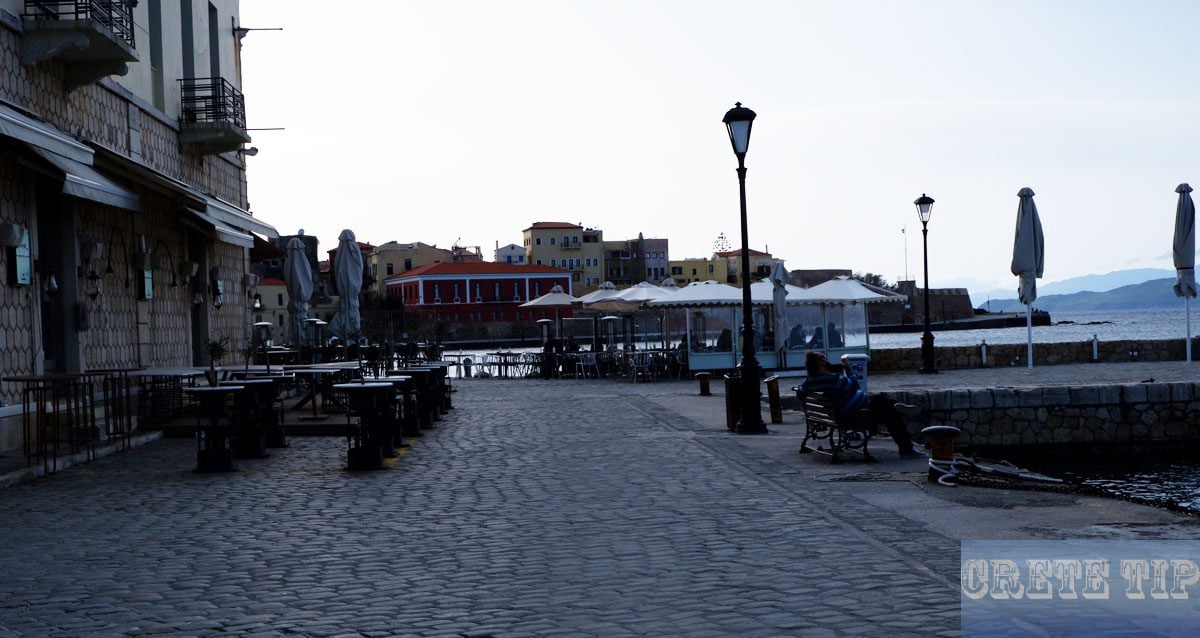
As the conflict in the Middle East intensifies, the “neighborhood” surrounding the Mediterranean is on high alert. With news of attacks reaching as far as British bases in Cyprus, many have turned their eyes toward Crete—specifically the strategic US-NATO naval base in Souda.
However, despite the proximity to the “flaming” region, the residents of Chania are displaying a remarkable sense of composure.
Official Reassurance: “Souda is Not Threatened”
The discussion regarding the safety of Chania reached the highest levels of government this week. In a recent interview with SKAI, Greek Foreign Minister George Gerapetritis addressed concerns about whether the base falls within the range of regional missile threats.
“I do not believe that Souda is threatened,” Gerapetritis stated firmly. He emphasized that the status of the base is strictly governed by the defense agreement between the U.S. and Greece. According to the Minister, the base’s primary role is to provide “facilities” and logistical support rather than serving as a launchpad for offensive actions.
Furthermore, he assured the public that all necessary security measures have been implemented by both American and Greek authorities to ensure the safety of the installation and the surrounding population.
The Local Perspective: A “Distant Scenario”
While international headlines might suggest a state of high anxiety, the reality on the streets of Chania is quite different. According to local reports and interviews, the majority of Chaniotes remain calm and collected.
For most residents, the idea of the base becoming a target is viewed as a “distant scenario.” While some locals express a slight degree of caution or “reservation” given the unpredictable nature of war, very few report feeling a genuine sense of insecurity.
This “cool-headedness” (or psychraimia in Greek) seems to stem from:
* Trust in existing security protocols: Knowing that both Greek and U.S. forces are on high alert.
* The defensive nature of the base: Understanding that Souda acts primarily as a support hub.
* Historical stability: A long-standing presence of the base in the community without major incident.
Safety Amidst Regional Crisis
It is undeniable that the crisis in the Middle East has consequences for regional security. However, the message coming out of Chania is one of resilience. By balancing high-level security measures with a calm public outlook, the city continues to function normally, even as the geopolitical landscape shifts.
For now, Chania remains a pillar of stability in the Eastern Mediterranean, with its citizens choosing logic and composure over panic.
Are you planning a trip to Crete this year? How do current events influence your travel decisions? Share your thoughts in the comments below.