Newsflash from Friday, 20 February 2026:
A Massive Show of American Military Might Docks at Souda Bay
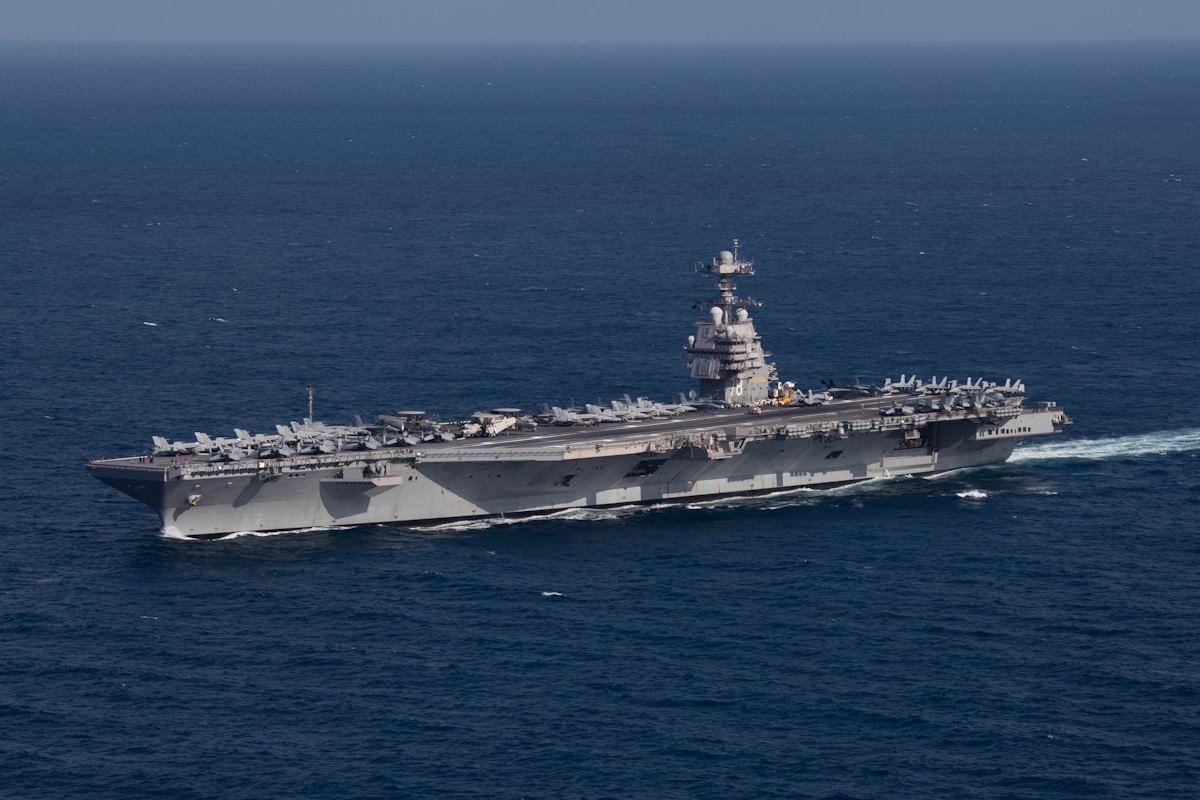
The USS Gerald R. Ford, one of the world’s most powerful military vessels, is set to arrive at Souda Bay in Crete this Sunday, February 22, 2026. The nuclear-powered aircraft carrier will remain in the Greek port for four days of resupply operations before departing for the eastern Mediterranean—signaling a significant escalation in US military presence in the region.
The Arrival: What to Expect
The USS Gerald R. Ford’s visit to Souda Bay marks a critical waypoint in what is shaping up to be one of the most significant military buildups in the Middle East since the 2003 invasion of Iraq.
Arrival Details:
– Date: Sunday, February 22, 2026
– Location: Souda Bay, Crete, Greece
– Duration: Four days
– Purpose: Refueling, ammunition resupply, and provisioning
After departing Crete, the carrier strike group will require approximately one day to reach Israeli waters, where it will join an already massive concentration of American military assets.
The USS Gerald R. Ford: A Floating City of Military Power
The USS Gerald R. Ford is not just any warship—it’s the flagship of a new generation of American sea power.
Key Facts About the Vessel:
– Type: Gerald R. Ford-class nuclear aircraft carrier (CVN-78)
– Displacement: 100,000+ tons
– Power: Two nuclear reactors
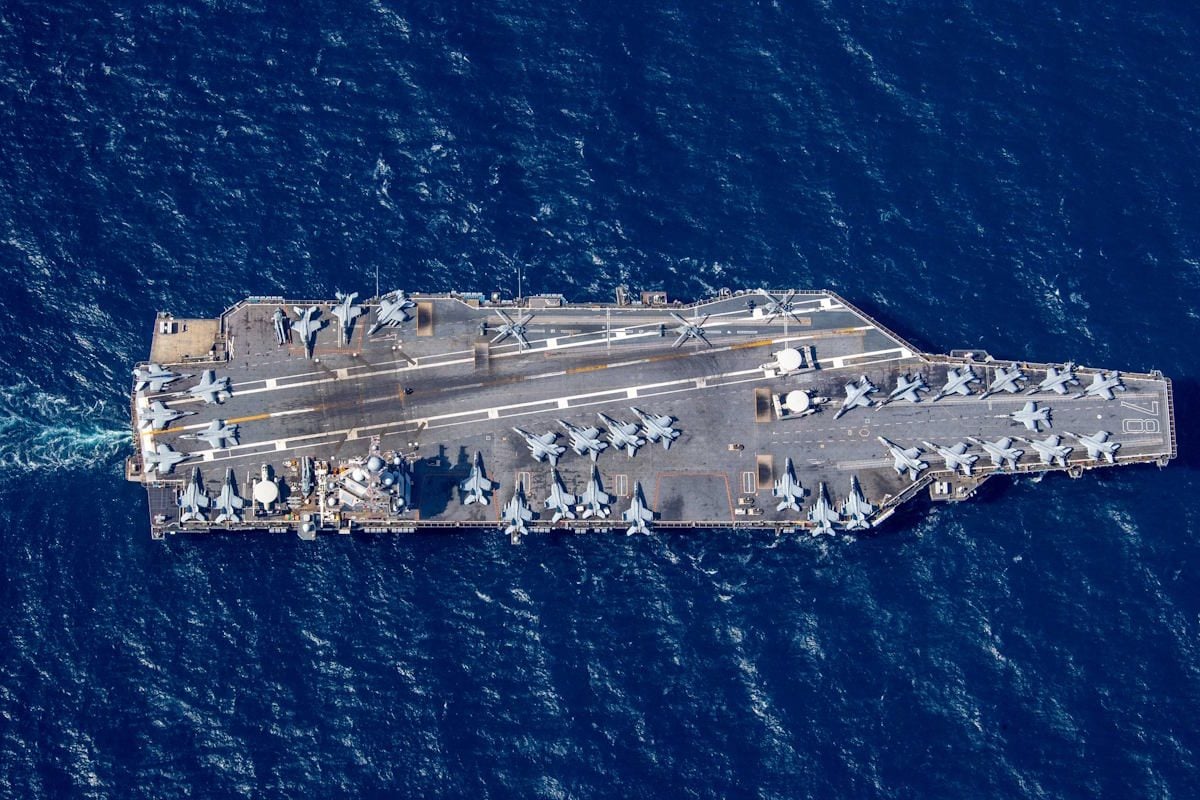
– Air Wing: 65+ aircraft of various types
– Crew: 4,500+ personnel
– Length: 1,092 feet (333 meters)
The carrier features advanced defensive systems, including aircraft capable of detecting and intercepting ballistic missiles and drones—a critical capability given current regional tensions.
The Broader Military Buildup: Largest Since 2003
The arrival of the USS Ford is just one piece of an extraordinary military deployment. The United States has assembled the largest concentration of air power and naval forces in the Middle East since the 2003 Iraq War.
Here’s What the US Has Deployed to the Region:
Naval Forces:
– Two carrier strike groups (each including the carrier, escort vessels, and submarines)
– These two carrier groups alone represent more firepower than all NATO navies combined
Air Assets:
– 200+ American aircraft of every type, including:
– Stealth fighters (F-35s and F-22s)
– Conventional fighters (F-16s)
– Specialized F-16s and Stealth jets dedicated to destroying Iranian air defenses
– 100 support and intelligence aircraft equipped for:
– Electronic surveillance and monitoring
– Anti-submarine warfare
– Combat search and rescue
– Intelligence gathering via advanced electronic surveillance
Logistical Support:
– 48 “flying tankers” (KC-135 and KC-10 refueling aircraft) positioned at airfields surrounding Iran
– These aircraft are essential for extended operations over Iran’s 600,000+ square-kilometer territory
Defensive Systems:
– 20 air defense bases equipped with THAAD and Patriot missile systems
– These will be activated if Iran launches aircraft or missiles
Ground-based aircraft:
– 80+ fighter jets (F-16s and Stealth fighters) en route to Middle Eastern bases, specifically trained for destroying Iranian air defense systems
The Strategic Message: Deterrence or Preparation?
The sheer scale of this deployment has prompted international analysts to assess the likelihood of military conflict with Iran.
Key Points from Military Analysts:
– The concentration of forces is so substantial that few believe diplomacy can prevent military action
– President Donald Trump’s warnings of a potential strike within the next 10 days are being taken seriously by regional and international observers
– Greece’s role is significant: as a NATO ally with strategic geography, its ports (like Souda Bay) are critical staging points for American power projection
Why Crete and Souda Bay Matter
Souda Bay is one of Greece’s most important naval installations and has hosted American forces since the Cold War. Its deep-water port provides ideal conditions for refueling and resupply operations for large vessels.
Strategic Advantages of Souda Bay:
– Located in the eastern Mediterranean, providing access to the Middle East and Red Sea
– Deep natural harbor suitable for large vessels
– Established infrastructure for military operations
– Proximity to Israel (approximately one day’s sailing)
– NATO member country with strong US alliance
Greece’s Position in a Potential Conflict
As a NATO member and host to major American military facilities (including the base at Souda Bay), Greece finds itself at the center of regional tensions.
Greece’s Strategic Considerations:
– Ally status: Greece cannot ignore American military operations
– Geopolitical position: Greece’s location makes it impossible to remain neutral in major regional conflicts
– Economic implications: Military conflict in the Middle East would affect shipping routes and regional stability
– Diplomatic balance: Managing relations with the US, Israel, and other regional actors
What Happens Next?
After the USS Ford departs Souda Bay on February 26, it will join American forces already deployed in the eastern Mediterranean and Arabian Gulf. The carrier strike group will take up defensive positions to support Israel and potentially conduct offensive operations if authorized.
Military analysts note that this appears to be a preparation phase rather than a bluff. The logistics, scale, and specific aircraft deployments suggest readiness for sustained military operations.
Should Greek Citizens Be Concerned?
While the military buildup is significant, Greece itself is not under direct threat. However, regional conflict would have cascading effects:
– Economic Impact: Disruption to shipping routes through the Suez Canal and Red Sea
– Refugee and Migration Issues: Regional instability could drive migration
– Energy Costs: Oil price spikes if major Middle Eastern facilities are damaged
– Security: Increased terrorism risks in Europe and NATO countries
The Bottom Line
The arrival of the USS Gerald R. Ford at Souda Bay this Sunday is a dramatic symbol of American military commitment to the region—and a sign that significant military action may be imminent. For residents of Crete and Greece more broadly, the sight of the world’s most powerful navy refueling in their home waters is a reminder of the geopolitical currents that shape modern life.
Whether this buildup serves as a deterrent or precedes actual conflict remains to be seen. But one thing is certain: the next few weeks will be crucial for the stability of the Middle East.