Every year, massive clouds of Saharan dust drift across the Mediterranean and settle over Crete and southern Greece. What many residents dismiss as a nuisance—dirty air and hazy skies—is actually a serious health threat. Leading Greek cardiologists warn that desert dust particles trigger heart attacks, strokes, and respiratory diseases. New scientific evidence suggests the danger is far greater than previously believed. Here’s what you need to know about protecting yourself.

The island of Crete has always enjoyed a reputation for health and longevity. The Mediterranean diet, the sea air, the sunshine—these are the ingredients of the famous “Cretan diet” that has inspired wellness movements worldwide. Yet in recent years, an invisible threat has been drifting across the sea from Africa, compromising the very air that Cretans breathe.
Each spring and summer, massive dust storms sweep across the Sahara Desert and travel northward, carried by winds across thousands of kilometers. When these particles reach Crete and the eastern Mediterranean, they blanket the islands in a haze of fine sand and minerals. To casual observers, it’s merely an aesthetic problem—dirty windows, dusty cars, hazy sunsets. But to medical scientists, it represents a genuine public health emergency.
What Is Desert Dust? Understanding the Threat
Desert dust, particularly from the Sahara, is not ordinary dust. It consists of extremely fine mineral particles—primarily iron oxides, silica, and calcite—that are small enough to penetrate deep into the human respiratory system and enter the bloodstream.
The Saharan Dust Transport System
The journey from the Sahara to Crete involves a well-understood meteorological process:
* Hot air rising – Intense heat over the Sahara causes air to rise rapidly into the upper atmosphere
* Long-distance transport – Wind currents carry the dust particles thousands of kilometers northward
* Mediterranean crossing – The dust crosses the entire Mediterranean Sea
* Deposition – When weather patterns shift, the dust settles over southern Europe
Major dust events typically occur in spring and early summer, corresponding to seasonal weather patterns that favor this transport. However, dust events can occur year-round, and climate change may be intensifying both the frequency and severity of these events.
The Particle Size Problem
What makes Saharan dust particularly dangerous is particle size. The dust consists primarily of particles smaller than 2.5 micrometers (PM2.5), and many are smaller than 0.1 micrometers.
To put this in perspective:
* A human hair is approximately 70 micrometers in diameter
* PM2.5 particles are 28 times smaller than a human hair
* Particles smaller than 2.5 micrometers can penetrate past the nasal cavity and throat
* They can reach the deepest portions of the lungs—the alveoli where gas exchange occurs
* From the lungs, these particles can enter the bloodstream
Once in the bloodstream, desert dust particles become systemic—affecting not just the lungs, but the heart, brain, and other organs.
The Cardiovascular Crisis: Desert Dust and Heart Disease
The most alarming health consequence of desert dust exposure is its effect on the cardiovascular system. Research presented by leading Greek cardiologists reveals a direct connection between Saharan dust events and acute cardiac emergencies.
The Evidence from Emergency Departments
Professor Georgios Kochiakis, former president of the Hellenic Cardiological Society and former dean of the Medical School at the University of Crete, has documented the pattern:
During periods of high Saharan dust concentration, Greek hospital emergency departments experience a dramatic surge in cardiovascular cases:
* Emergency room visits for cardiovascular disease increase by 26% during dust storm episodes
* Hospital admissions for ischemic heart disease are 16-21% higher on dust storm days compared to other days
* The elevated risk persists for 4-5 days after a dust event, even after the dust has settled
These are not small statistical variations; they represent a substantial increase in cardiac emergencies occurring during and immediately after dust events.
The Pathophysiology: How Desert Dust Damages the Heart
Understanding why desert dust triggers heart attacks requires examining the biological mechanisms at work:
1. Particle Inhalation and Lung Deposition
When you breathe during a dust storm, millions of fine particles enter your respiratory tract. Because these particles are so small, they bypass the body’s initial defenses and deposit directly in the alveoli—the tiny air sacs in the deepest portions of your lungs where oxygen exchange occurs.
2. Chemical Reactions in the Lungs
Once deposited in the alveoli, the desert dust particles undergo chemical reactions with the fluids and tissues of the human body. The minerals in the dust—particularly iron oxides—react with proteins and lipids in lung tissue, generating reactive oxygen species (free radicals) and triggering inflammation.
3. Systemic Inflammation
The inflammation triggered in the lungs doesn’t stay localized. Instead, it triggers a systemic inflammatory response throughout the body. The lungs release inflammatory mediators—cytokines and other signaling molecules—that enter the bloodstream and circulate throughout the cardiovascular system.
4. Particle Translocation to the Bloodstream
Some of the dust particles themselves cross from the lungs into the bloodstream. Once in circulation, these particles continue to trigger inflammation at the cellular level, activating immune cells and promoting the release of pro-thrombotic (clot-promoting) factors.
5. Cardiovascular Effects
The combination of systemic inflammation and circulating particles produces several dangerous cardiovascular changes:
* Increased heart rate – The heart beats faster as the body responds to inflammation
* Elevated blood pressure – Vasoconstriction (narrowing of blood vessels) increases arterial pressure
* Reduced cardiac contractility – The heart’s ability to pump effectively decreases
* Increased blood viscosity – Blood becomes thicker and more prone to clotting
* Vasoconstriction – Blood vessels constrict, reducing blood flow
The Result: Acute Cardiac Events
For people with existing heart disease—atherosclerosis, previous heart attacks, arrhythmias—these changes can be catastrophic:
* Plaque rupture – The increased blood pressure and inflammatory stress can cause arterial plaques to rupture
* Acute myocardial infarction – A ruptured plaque triggers blood clot formation, blocking blood flow and causing a heart attack
* Arrhythmias – Inflammation of the heart muscle triggers dangerous irregular heartbeats
* Stroke – Dust-induced clotting can also trigger strokes when clots lodge in cerebral arteries
Even people without pre-existing heart disease can experience acute cardiac events if the dust exposure is severe enough.
The 4-5 Day Window
One particularly striking finding is that the risk remains elevated for 4-5 days after a dust event. This suggests that:
* The inflammatory response persists after particle exposure ends
* Particles may remain in the lungs and bloodstream for days
* The body’s inflammatory cascade takes time to resolve
For vulnerable populations—elderly individuals, people with existing heart disease, people with diabetes—this extended risk window means they should take precautions not just during the dust event, but for several days afterward.
Beyond the Heart: Systemic Health Effects
While cardiovascular disease is the most dramatic consequence of Saharan dust exposure, the health impacts are far broader.
Respiratory Disease
Desert dust triggers and exacerbates **respiratory conditions**:
* Asthma – Dust particles trigger asthma attacks and increase airway inflammation
* Chronic obstructive pulmonary disease (COPD) – Dust exposure worsens COPD symptoms
* Bronchitis – Acute inflammation of the airways can develop
* Reduced lung function – Even in healthy people, dust exposure temporarily reduces how much air the lungs can hold and exchange
Lung Cancer Risk
Perhaps most concerning, long-term exposure to fine particle pollution from any source—including Saharan dust—is associated with increased risk of lung cancer. This is especially true for people with genetic susceptibilities or those who have other lung disease risk factors.
Neurological Effects
Emerging evidence suggests that fine particles can cross from the lungs into the bloodstream and potentially reach the brain, where they may:
* Trigger neuroinflammation
* Contribute to cognitive decline
* Exacerbate neurodegenerative diseases like Alzheimer’s
Other Systemic Effects
Research indicates that atmospheric pollution—including desert dust—affects:
* Metabolic function – potentially worsening glucose control and diabetes
* Immune function – altering the body’s ability to fight infections
* Kidney function – filtering excess particles places stress on the kidneys
* Pregnancy outcomes – some studies suggest particle exposure may increase miscarriage risk
The Global Burden of Disease: A Major Health Crisis
The health burden from atmospheric pollution—including Saharan dust—is now comparable to other major global health risks.
The WHO Assessment
According to the World Health Organization, atmospheric pollution ranks alongside:
* Poor diet – one of the leading causes of disability and death globally
* Smoking – the other major preventable cause of disease burden
Annually, exposure to atmospheric pollution is estimated to cause millions of deaths and the loss of hundreds of millions of healthy years of life.
The burden of diseases attributed to atmospheric pollution includes:
* Ischemic heart disease – the leading cause of death attributed to pollution
* Stroke – the second leading cause
* Chronic obstructive pulmonary disease (COPD)
* Lower respiratory infections – particularly pneumonia
* Lung cancer
* Increasingly, other conditions – evidence is mounting for impacts on diabetes, dementia, and other diseases
The Economic Cost
Beyond health impacts, atmospheric pollution—including Saharan dust events—imposes enormous economic costs:
* Healthcare expenses – treating dust-related illnesses
* Lost productivity – people missing work due to illness
* Premature mortality costs – the economic value of lives lost
* Reduced quality of life – disability and diminished functioning
For small Mediterranean economies like Crete, these costs are not trivial. The expense of treating the increased cardiovascular cases triggered by dust events diverts resources from other healthcare needs.
Why Crete Is Particularly Vulnerable

Several factors make Crete and the eastern Mediterranean particularly vulnerable to Saharan dust impacts:
Geographic Proximity
Crete lies directly in the path of dust transport from North Africa. The island is closer to the Sahara than most of Europe, meaning dust events tend to be more frequent and intense.
Local Weather Patterns
Seasonal wind patterns in the eastern Mediterranean favor Saharan dust transport northward during spring and early summer. These same patterns that bring warm, sunny weather also bring Saharan dust.
Urban and Tourism Pressures
Crete’s rapid urbanization and massive tourism industry mean:
* Concentrated populations in coastal cities experience higher dust exposure
* Tourist infrastructure concentrates vulnerable populations (elderly visitors, people with health conditions) during peak travel seasons that coincide with dust events
* Air quality monitoring may be inadequate in some areas, meaning residents lack warning of dangerous dust events
Climate Change Acceleration
There is increasing evidence that climate change is intensifying Saharan dust production and transport:
* Rising temperatures are increasing drought severity in the Sahel and North Africa
* Desertification is expanding the areas producing dust
* Changes in atmospheric circulation patterns may be affecting dust transport
* Some studies suggest Saharan dust frequency may be increasing
Who Is Most at Risk? Vulnerable Populations
Not everyone is equally vulnerable to Saharan dust. Certain populations face substantially elevated risks:
High-Risk Groups
1. People with existing cardiovascular disease
– Previous heart attacks
– Angina or other coronary artery disease
– Arrhythmias
– Heart failure
– History of stroke
2. People with respiratory disease
– Asthma
– COPD
– Chronic bronchitis
– Interstitial lung disease
3. Elderly people (65+)
– Reduced physiological reserve
– More likely to have underlying cardiovascular or respiratory disease
– Slower recovery from acute illness
4. Young children (under 5)
– Lungs still developing
– Higher breathing rates relative to body size
– Immature immune systems
5. People with diabetes
Saharan Dust Over Crete: Essential Strategies to Protect Your Health During Dust Storms
Saharan dust events are becoming increasingly common over Crete and the eastern Mediterranean. These aren’t minor air quality issues—they’re serious health threats that can trigger heart attacks, strokes, asthma attacks, and respiratory disease. But you’re not helpless. Leading Greek researchers and pulmonologists have developed comprehensive protection strategies. Here are practical, evidence-based ways to protect yourself, your family, and your workplace during Saharan dust events.
If you live in Crete or the eastern Mediterranean, you’ve likely experienced a Saharan dust event—those days when the sky turns orange, visibility drops dramatically, and everything gets covered in a fine reddish dust. What many people don’t realize is that these dust storms represent a genuine public health emergency. Recent data from the National Observatory of Athens shows that dust concentrations have reached dangerous levels repeatedly in 2026, with some measurements exceeding 500 micrograms per cubic meter of air.
The good news? You can substantially reduce your risk of dust-related illness by taking deliberate protective measures. The key is understanding when dust events occur, how to monitor air quality, and what actions to take at different risk levels.
Part 1: Understanding Dust Events and Monitoring Air Quality
Before you can protect yourself, you need to know when dangerous dust events are occurring.
1. Learn to Recognize Visual Signs of a Dust Event
Don’t wait for an official announcement. You can often spot a dust event yourself by observing:
* Hazy, orange-tinted sky – Normal blue sky turns orange or brown
* Reduced visibility – You can’t see distant mountains or landmarks clearly
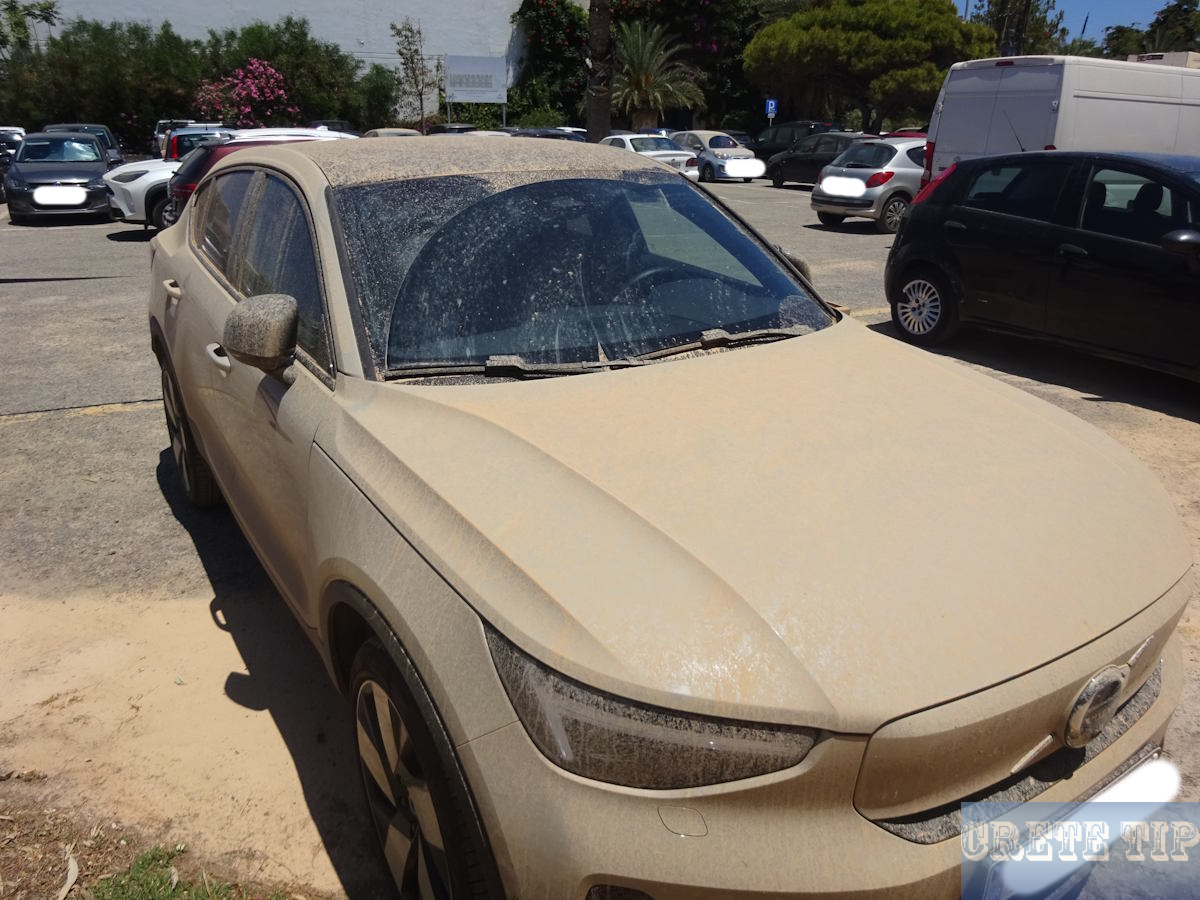
* Fine dust settling on surfaces – Windows, cars, and outdoor furniture show fine dust deposits
* Reddish tint to everything – The sun appears orange; white buildings look tan
* Dry air and poor air quality – The air feels dry and irritating to breathe
If you see these signs, assume a dust event is occurring and take appropriate precautions.
2. Check the National Observatory of Athens Air Quality Data
The National Observatory of Athens operates air quality monitoring stations across Greece, including stations in Rethymno and other locations across Crete. These stations measure PM10 (particulate matter 10 micrometers or smaller) in real-time.
* Visit the observatory’s website regularly during spring and early summer
* Look for PM10 measurements
* Concentrations below 50 μg/m³ = Good air quality
* Concentrations 50-100 μg/m³ = Moderate air quality; take basic precautions
* Concentrations 100-200 μg/m³ = Poor air quality; significant precautions needed
* Concentrations above 200 μg/m³ = Very poor/hazardous; take maximum precautions
3. Monitor International Air Quality Websites
Several international services provide real-time air quality data that can help you anticipate dust events before they reach Crete:
* AirVisual (www.airvisual.com) – Provides real-time PM2.5 and PM10 data
* IQAir – Another excellent real-time monitoring service
* Weather.com – Many weather services now include air quality forecasts
* Your local news stations – Greek TV weather forecasters increasingly mention dust events in their forecasts
4. Understand Seasonal Timing
Research from the National Observatory shows that Saharan dust events are not random. They follow predictable seasonal patterns:
* Peak months: March, April, and May – 80-85% of dust events occur during spring
* Secondary peak: June-July – Summer can see significant events
* Less common: Winter months – Though increasingly, dust events are occurring even in January and February
* Recent trend: earlier onset – Dust events may start in February rather than March
Mark these months on your calendar and increase your vigilance during these periods.
5. Subscribe to Air Quality Alert Systems
Several Greek municipalities and organizations send alerts when air quality becomes hazardous:
* Contact your local municipality – Many Greek cities now have air quality alert systems
* University alert systems – If you’re affiliated with a Greek university, they may have notifications
* Hospital systems – Some hospitals send alerts to patients with respiratory or cardiovascular disease
* Environmental NGOs – Organizations focused on environmental health may send alerts
* Mobile apps – Download air quality apps that provide real-time alerts
6. Learn to Interpret Air Quality Forecasts
When you check air quality data, look for:
* PM10 forecasts – These predict dust concentration 1-3 days ahead
* Wind direction forecasts – Strong southerly or southwesterly winds indicate dust transport from Africa
* Pressure systems – Low-pressure systems moving north from Africa typically bring dust
* Temperature trends – Unusually warm weather in spring can enhance dust transport
7. Keep a Personal Dust Event Log
Track dust events in your area:
* Date and time of the event
* Peak PM10 concentration if available
* Your symptoms (if any) – headaches, shortness of breath, coughing, chest discomfort
* Precautions taken – which strategies you used
* Effectiveness – whether precautions prevented or reduced symptoms
Over time, you’ll develop a personal profile of:
– Which dust events affect you most severely
– Which protective strategies work best for you
– Your personal vulnerability level compared to others
Part 2: Outdoor Activity Modifications (11 Strategies)
Once you know a dust event is occurring, the first line of defense is modifying your outdoor activities.
8. Cancel or Reschedule Outdoor Work
According to Professor Nikos Tzanakis, a leading Greek pulmonologist, the single most effective protective measure is avoiding outdoor exposure during dust events.
If you work outdoors, consider:
* Postponing heavy outdoor work – Construction, landscaping, agricultural work
* Rescheduling to dust-free days – Wait 2-3 days after a dust event before resuming outdoor work
* Working indoors instead – If your job allows flexibility, move work indoors
* Reducing work hours – If outdoor work is unavoidable, limit exposure time
* Planning for dust seasons – During high-risk months (March-May), schedule indoor work preferentially
9. Avoid Strenuous Outdoor Exercise
Exercise increases breathing rate, which means you inhale far more dust particles during physical activity than during normal activity.
During dust events:
* Don’t run or jog outdoors – Even 30 minutes of jogging during high dust conditions exposes you to dangerous levels of particles
* Cancel outdoor sports – Soccer, basketball, tennis, and other outdoor sports should be postponed
* Avoid vigorous outdoor activities – Hiking, cycling, and outdoor gym work should be rescheduled
* Move exercise indoors – Use gyms, indoor swimming pools, or home workouts instead
* Reduce walking time – Even normal walking increases dust exposure; minimize outdoor time
The reason is straightforward: your breathing rate during exercise can increase 5-10 times above resting levels. This means you inhale 5-10 times more dust particles. For a 1-hour run in very dusty conditions, you may inhale as much dust as you would during 8-10 hours of normal activity.
10. Limit Children’s Outdoor Play
Children are particularly vulnerable to dust exposure because:
* Their lungs are still developing – damage to developing lungs may have lifelong consequences
* They breathe faster than adults – higher breathing rate = higher particle inhalation
* They often play vigorously – playground activity increases dust exposure
If your children’s school doesn’t cancel outdoor recess during dust events:
* Request that outdoor recess be moved indoors – Suggest using school gymnasiums or covered areas
* Advocate for policy changes – Work with parent-teacher organizations to establish dust event protocols
* Keep children indoors on high-dust days – If necessary, keep children home during severe dust events
* Monitor symptoms – Watch for coughing, wheezing, or shortness of breath
11. Avoid Unnecessary Outdoor Time
Even non-strenuous outdoor activity increases dust exposure. During dust events:
* Limit errands – Combine necessary outdoor activities into one brief trip
* Use drive-throughs – Reduce time spent outside vehicles
* Shop during early morning or evening – Air quality is sometimes slightly better at these times (though this varies)
* Minimize social outdoor activities – Postpone picnics, outdoor meals, and café sitting
* Stay near entrances – If you must be outside, stay close to building entrances to minimize exposure
12. Cancel or Postpone Construction and Manual Labor
Construction and manual labor create **additional dust exposure** on top of existing atmospheric dust:
* Construction dust combines with Saharan dust
* Disturbed soil from excavation and demolition adds more particles
* Heavy equipment operation raises more dust
* The combined effect is exponentially more harmful than either source alone
If you’re involved in construction or landscaping:
* Stop work during dust events – The added risk is simply too high
* Schedule maintenance work during low-dust seasons (autumn, winter, early spring before March)
* Use water suppression when work must continue – Spray water on work areas to suppress dust generation
* Provide respiratory protection – If work absolutely must continue, provide N95 masks for all workers
13. Minimize Driving if Possible
While driving is safer than being outside the vehicle, prolonged driving during dust events increases exposure:
* Car air intakes draw in dust – Even with air filtration, some dust enters
* Extended driving means extended exposure – An hour-long drive exposes you for a full hour
* If driving is essential, keep windows closed – Use recirculated air (AC set to recirculate)
* Maintain a clean air filter – Replace your car’s cabin air filter frequently, especially during dust season
* Postpone long road trips – Save road trips for dust-free periods
14. Avoid Outdoor Events and Gatherings
Cultural events, festivals, and outdoor gatherings become health hazards during dust events:
* Open-air concerts – postpone or move indoors
* Outdoor festivals – reschedule to dust-free periods
* Beach events – cancel or move to indoor venues
* Weddings and celebrations – relocate to indoor spaces if a dust event is forecast
15. Reduce Tourism Activities
If you’re visiting Crete or the eastern Mediterranean, dust events can substantially impact your health:
* Check air quality before booking travel – Try to schedule trips during low-dust seasons (June-February, avoiding March-May)
* Don’t visit during peak dust season – If you have respiratory or cardiovascular disease, avoid March-May travel
* Reschedule activities – If you arrive during a dust event, modify your itinerary
* Skip outdoor sightseeing during dust events – Visit indoor museums, restaurants, and shopping instead
* Alert your hotel – Inform hotel staff of your health conditions; they may help you find indoor activities
16. Protect Vulnerable Individuals
If you care for someone with cardiovascular or respiratory disease:
* Plan indoor activities for dust event days
* Prepare entertainment – Movies, games, crafts for indoor days
* Stock supplies – Ensure medications are fully stocked before dust season
* Know emergency contacts – Have cardiologist and pulmonologist contact information readily available
* Monitor symptoms closely – Watch for chest pain, shortness of breath, or unusual fatigue
17. Avoid Outdoor Exposure During Peak Dust Hours
Air quality sometimes varies within a single day:
* Dust concentrations often peak mid-afternoon – Usually between 12 PM and 4 PM
* Early morning air quality – May be slightly better (though this varies)
* Late evening – May have some improvement
* Time outdoor necessities