

This year, more than 500,000 French visitors are expected for the first time, and the tourism sector must be protected from its own success.
Greece’s tourism sector delivered a surprising twist this year: even as visitor numbers dipped in July, overall revenue for the first seven months of 2026 climbed significantly.
According to provisional data from the Bank of Greece, travel receipts reached €13.518 billion between January and July 2026 — a 12% increase compared to the same period in 2025.
Spending up, visitor numbers up too — overall
For the full seven-month period, Greece welcomed 20.043 million travelers, an increase of 8.6% compared to 18.455 million in 2025.
That’s roughly 1.588 million more visitors than the previous year.
Average spending per trip also rose, up 2.9% to €642.5, compared to €624.7 in 2025.
Travel payments — meaning what Greek residents spent traveling abroad — rose even faster, by 14.7%, reaching €2.275 billion.
Still, the country’s travel balance surplus grew by 11.5% to €11.243 billion, up from €10.087 billion a year earlier.
July told a different story
Unlike the overall seven-month trend, July 2026 saw visitor numbers actually fall by 3.1%, dropping to 6.552 million travelers from 6.763 million in July 2025 — about 211,000 fewer arrivals.
Yet tourism receipts for the month still climbed by 7.2%, reaching €4.722 billion.
The reason: average spending per trip jumped by 10%, rising to €685.4 from €623.1 in July 2025.
Travel payments abroad also rose sharply in July, up 23% to €407.7 million, moderating the month’s surplus growth to 5.9%, which reached €4.314 billion.
Where the money came from
Receipts from European Union residents rose 6.9% for the seven-month period, totaling €7.094 billion. In July alone, EU-related revenue grew more modestly, by just 0.8%, to €2.568 billion.
Non-EU visitor spending grew much faster — up 18.3% over seven months to €5.783 billion, and up 15.5% in July to €1.923 billion.
Looking at specific countries:
- United Kingdom: Receipts jumped 23.3% over seven months to €2.092 billion, with a striking 49.5% surge in July alone, reaching €912.4 million.
- Italy: Revenue rose 31.6% to €828.1 million over seven months, with July seeing a 32.3% increase to €358.1 million.
- Germany: Receipts dipped slightly by 0.7% over the seven-month period to €1.981 billion, though July showed recovery with an 11.3% rise to €705 million.
- United States: Revenue grew 7.9% over seven months to €1.063 billion, while July figures remained largely stable at €265.9 million.
- France: Receipts fell 16.8% over seven months to €623.7 million, with a steeper 30.7% drop in July to €209.4 million.
By currency zone, eurozone countries contributed €5.884 billion over seven months (+11.3%), while EU countries outside the eurozone saw receipts fall 10.4% to €1.210 billion — with July showing an even sharper 22.2% decline to €461.7 million.
Crete Breaks Records: Over 500,000 French Visitors Expected for the First Time in 2026

Crete is set to reach a major tourism milestone in 2026, as the number of French visitors is expected to surpass 500,000 for the first time ever.
The news comes from Kyriakos Kotsoglou (Κυριάκος Κώτσογλου), the regional councillor responsible for Tourism at the Region of Crete, speaking from Paris.
According to Kotsoglou, the positive trend is expected to continue into 2027 as well.
Announced at a major tourism expo
The announcement was made during IFTM – Top Resa 2026, France’s leading international tourism trade fair for travel industry professionals.
This year’s edition attracted 1,650 exhibitors from 177 countries and more than 32,000 professional visitors.
The Region of Crete, the Greek National Tourism Organisation (EOT), and various tourism professionals attended to strengthen the island’s presence in the French market.
New winter flight route strengthens connections
A key driver behind this growth is the expansion of direct flight connections, especially outside the traditional summer tourist season.
Transavia France, in partnership with EOT, is organizing two familiarization and press trips to Crete for travel industry representatives and French journalists:
- First trip: October 8–11, 2026
- Second trip: October 15–18, 2026
Due to the tight preparation schedule, the Region of Crete is coordinating these visits directly, working with local tourism businesses. Hoteliers will provide accommodation and meals, travel agencies will handle transport and guided tours, while EOT is covering flight costs.
This collaboration ties into Transavia France’s decision to include Crete in its winter flight schedule for 2026–2027, maintaining the direct Paris (Orly) – Heraklion route with up to four flights per week.
This development was confirmed during a meeting between Andreas Fiorentinos (Ανδρέας Φιορεντίνος), Secretary General of EOT, and Transavia France’s management at the Paris expo.
From seasonal to year-round connectivity
Extending flights into the winter months effectively transforms what was previously a mostly seasonal route into a near year-round connection.
Kotsoglou noted that the goal of full twelve-month connectivity is now getting closer — even for France’s main carrier, since Transavia France is part of the Air France–KLM Group.
This is seen as particularly significant for Crete, given the French market’s growing momentum. Stronger winter flight links create opportunities to showcase different aspects of the island beyond beaches, including gastronomy, culture, rural landscapes, nature, and outdoor activities.
Building relationships in the French market
During the expo, Crete’s representatives met with travel agencies, travel platforms, journalists, and influencers to discuss future collaborations.
Topics included organizing more press and familiarization trips, launching promotional media campaigns, and offering webinar training for travel agency staff.
The Region of Crete was represented by Kyriakos Kotsoglou, Deputy Regional Governor for the Environment Nikos Xylouris (Νίκος Ξυλούρης), Head of the Tourism Department for the Heraklion Regional Unit Eleni Vougioukalaki (Ελένη Βουγιουκαλάκη), and Planning and Development Department staff member Alexandra Glykaki (Αλεξάνδρα Γλυκάκη).
When Success Becomes a Problem: Why Crete’s Tourism Needs Protection From Itself

A striking paradox sits at the heart of Crete’s tourism boom: the island’s greatest asset — its popularity — is also becoming its greatest vulnerability.
Michalis Nikolakakis (Μιχάλης Νικολακάκης), Associate Professor of Tourism Sociology at the University of Crete, has articulated a critical challenge facing the island: “The issue is not that we should turn against tourism. Tourism has enormous economic and social importance for Crete. Precisely for this reason, we need to protect it from its own success.”
Understanding overtourism in Crete
The term “overtourism” has become increasingly common in discussions about Crete and similar destinations worldwide.
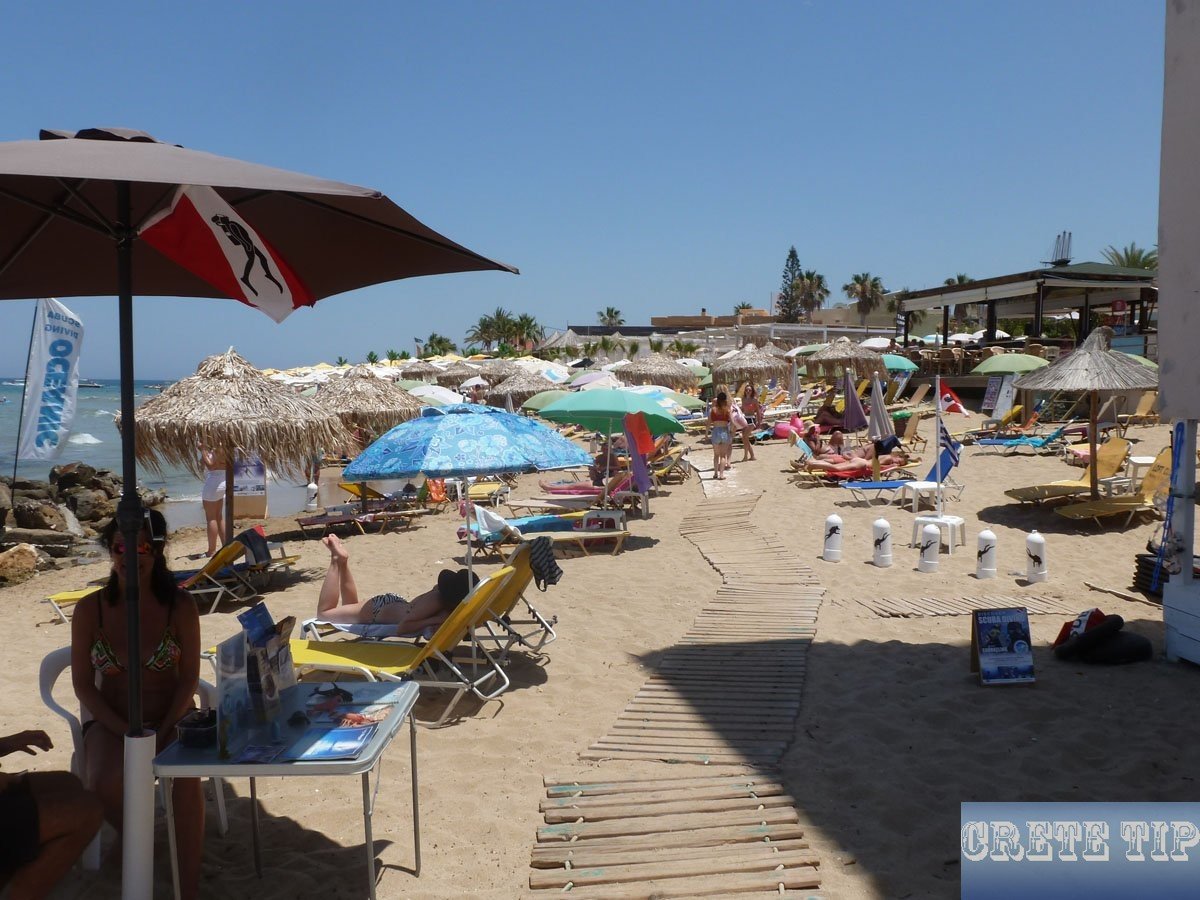
Images of overcrowded beaches where “you can’t drop a pin,” narrow streets “flooded” with visitors, and gorges packed beyond capacity paint a vivid picture of what’s happening in certain parts of Crete.
Yet defining overtourism isn’t straightforward, and Nikolakakis warns against oversimplified understandings of the concept.
Defining the real problem
The term “overtourism” has gained popularity in recent years, but its use requires careful attention.
There is no magic number of visitors beyond which a destination automatically becomes “overtouristed.” The older concept of “carrying capacity” — attempting to determine how many visitors a location can sustain without serious harm to its natural, economic, and social environment — exists in theory.
However, in practice across Greece, the institutional definition of carrying capacity has been systematically undermined, and the new Special Spatial Framework for Tourism proves inadequate in addressing these concerns.
Nikolakakis argues for a more nuanced understanding: overtourism describes a state where tourist activity begins systematically competing with other functions of a place, most importantly with its capacity to remain a location where people actually live and conduct their daily lives.
The real questions to ask
Instead of simply asking “how many tourists are too many?” Nikolakakis suggests focusing on deeper questions: What happens when tourism becomes more intensive?
These crucial questions include:
- Who can afford to live in the area anymore?
- Who uses the public spaces?
- What happens to water systems, transportation, and infrastructure?
- Which economic activities survive, and which get displaced?
Overtourism, viewed this way, doesn’t simply describe “too many tourists.” Rather, it describes the moment when a place’s tourism function begins undermining all its other functions.
Is all of Crete overtouristed?
Nikolakakis urges caution against labeling all of Crete as suffering from overtourism.
Tourist pressures are unevenly distributed across both space and time in Crete. Some areas face intense pressure while others experience minimal impact.
However, several regions clearly show signs of intense touristification, and certain warning signs are unmistakable.
The warning signs appearing now
Modern tourism no longer simply creates new destinations — it rapidly intensifies pressure on existing ones.
Digital platforms, short-term rental services, low-cost airlines, and cruise tourism can dramatically accelerate exploitation of already-known places without requiring massive new hotel investments.
This means that sudden, severe tourist pressure can hit a city, village, beach, or landmark — or even isolated natural resources and infrastructure networks — even without traditional large-scale hotel development.
In Crete specifically, several warning signs are already visible:
- Road networks and water systems are under significant stress
- Urban areas like Chania (Χανιά) and Rethymno (Ρέθυμνο) are experiencing broader disturbances
- Short-term rental growth is rising at an alarming rate and contributing to rental price pressures
- Even Heraklion (Ηράκλειο), traditionally not a primary tourist destination, is seeing concerning changes — recent data from Greece’s tax authority (AADE) shows that beds in short-term rental accommodations now exceed those in traditional tourist lodgings
This pattern in Heraklion is particularly instructive: overtourism shouldn’t be sought only in conventionally “touristy” areas.
The impact on residents and daily life
The increased tourist pressure fundamentally affects how residents live.
Housing affordability is being squeezed by short-term rental conversions. Public spaces that once served local communities now serve primarily tourists.
Water and transportation systems designed for permanent populations face strain from seasonal surges. Economic diversity suffers as local businesses give way to tourist-oriented enterprises.
These aren’t abstract concerns — they directly determine whether younger generations can afford to stay, whether families can maintain their homes in their ancestral communities, and whether local culture and lifestyle can be preserved.
Why this matters for tourism itself
Nikolakakis’s key insight is that protecting tourism from its own success isn’t anti-tourism — it’s essential for tourism’s long-term health.
A destination that loses its character, becomes unaffordable, develops poor infrastructure, or becomes unwelcoming to residents becomes less attractive as a tourist destination.
Conversely, places that manage growth thoughtfully — maintaining livability, preserving character, and sustaining quality infrastructure — remain desirable long-term.
A broader conversation needed
These observations come as Crete and Greece broadly grapple with how to balance tourism’s undeniable economic benefits against the real costs borne by local communities.
The discussion is no longer whether tourism matters — it clearly does. The question is how to ensure it enhances rather than destroys the places and lives that make destinations worth visiting in the first place.
Sources



