

Newsflash from Thursday, 23 July 2026:

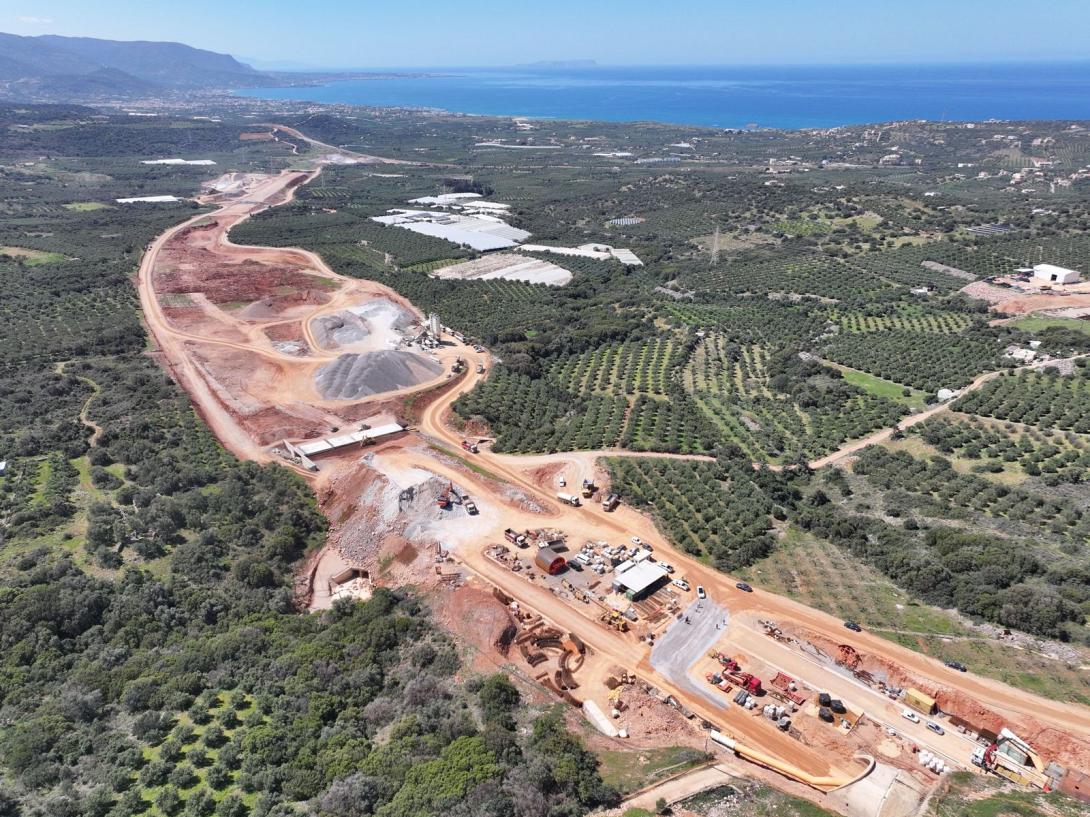
The construction of the Hersonissos–Neapoli section of the Northern Road Axis of Crete (BOAK) has suffered a significant setback, with the project’s completion timeline officially postponed by 447 days. The delay not only impacts the delivery schedule but also carries a substantial financial cost, raising fresh concerns about the long-awaited infrastructure project.
New Timeline Extends Into 2029
According to a decision by Greece’s Ministry of Infrastructure and Transport, the delay stems from late handover of construction sites. As a result, the project’s service availability date has been moved from April 21, 2027, to July 11, 2028. The overall completion deadline is now set for July 11, 2029.
This shift represents yet another postponement for a project widely considered critical for improving road safety and connectivity across Crete.
€97 Million Compensation Approved
Alongside the delay, the Ministry approved compensation of up to €97 million for the project contractor, the special purpose company “PASIPHAE ODOS S.A.”, which operates under a public-private partnership (PPP). The company is backed by major Greek construction firms GEK TERNA and AKTOR.
The compensation covers “positive damages” directly linked to the extended construction period. These include:
- Staff salaries and insurance contributions
- Construction site operating costs
- Equipment maintenance
- Insurance and guarantees
However, claims related to financial costs and lost profits were rejected, as authorities determined these fall under the contractor’s business risk within the PPP framework.
Initial Claim Reduced After Review
The contractor had originally requested €155.75 million in compensation. After evaluation by independent auditors, financial advisors, and ministry services, the approved amount was significantly reduced to €97,009,450.
Ongoing Concerns Over Costs and Delays
The BOAK project has long been plagued by delays, and this latest development adds to growing criticism over its financial and administrative management. Critics argue that repeated postponements ultimately burden taxpayers, who may end up paying both through public funding and future tolls.
Despite the challenges, the project remains a key priority for Crete, aiming to deliver a modern and safer highway network across the island.



