

Kurznachricht vom Montag, 1. Juni 2026:

While signs of strain are beginning to appear across Greece’s tourism sector, Crete is emerging as an unexpected bright spot. Despite a challenging international environment marked by economic pressure and geopolitical uncertainty, the island is not only holding steady—it is outperforming expectations.
According to recent data, Greece recorded a 1.9% decline in international air arrivals in April, marking the first negative April performance since the pandemic. For many in the industry, this dip has raised concerns about how the rest of the season may unfold.
But Crete is telling a different story.
A Standout Performance
While major destinations struggled, Crete’s airports recorded notable growth. Heraklion saw a 3% increase in international arrivals, while Chania posted an impressive 21% surge. These figures sharply contrast with declines in other key hubs, including Athens (-4.8%) and Rhodes (-8.3%).
This divergence highlights Crete’s resilience and enduring appeal, even as broader market conditions become more volatile.
What’s Driving the Shift?
The early-season slowdown across Europe has been linked to a mix of factors. Ongoing geopolitical tensions, combined with rising living costs, have placed pressure on household budgets—particularly in Central Europe, a key market for Greece.
Travel, especially discretionary spending like holidays, is often one of the first areas consumers cut back when uncertainty rises. Adding to the challenge, increased aviation fuel costs have pushed airfares higher, with ticket prices for long-haul travel rising by over 30% on average. Even within Europe, prices have climbed by around 10% to 12%.
Yet despite these headwinds, Crete appears to be benefiting from strong demand, competitive positioning, and its reputation as a diverse, high-value destination.
A Market Driven by Psychology
Industry experts emphasize that tourism is heavily influenced by sentiment. When uncertainty dominates headlines, demand can shift rapidly. April and May—considered part of the low season—are particularly sensitive to such fluctuations.
Crete’s positive performance suggests that, even in a cautious market, travelers are still willing to prioritize destinations that offer a sense of reliability, variety, and overall value.
Spending Caution Remains
However, there is a caveat. While arrivals may be holding up—or even increasing in Crete—visitor spending is expected to be more restrained this year. Travelers are increasingly budget-conscious, which could impact overall tourism revenues.
This shift means that success in 2026 may not be measured solely by arrival numbers, but by the broader economic footprint of tourism.
Looking Ahead
The season remains unpredictable. Market conditions are changing quickly, often influenced by geopolitical developments and economic signals across Europe. As industry insiders note, tourism demand can fluctuate from one week to the next.
Still, Crete’s strong start offers cautious optimism. If the broader climate stabilizes, the island could continue to outperform and help offset weaker trends elsewhere in the country.
In a year defined by uncertainty, Crete is proving that resilience—and the ability to adapt—can still turn challenges into opportunity.
Tourism Boom in Greece: Visitor Numbers Surge by 28.3% in Early 2026

Greece’s tourism sector has kicked off 2026 with remarkable momentum, as new data from the Bank of Greece reveals a sharp increase in both visitor arrivals and travel receipts during the first quarter of the year.
More than 3.4 million international travelers visited the country between January and March 2026, marking a striking 28.3% increase compared to the same period in 2025. The surge underscores Greece’s continued appeal as a top global destination, even outside the traditional peak summer months.
Revenue Growth Outpaces Arrivals
Even more impressive than the rise in visitor numbers is the growth in tourism revenue. Travel receipts jumped by 64.3% year-on-year, reaching €1.676 billion in the first quarter alone.
This significant increase suggests not only more visitors, but also higher spending per trip—an encouraging sign for the broader economy.
Revenue gains were recorded across key markets. Visitors from EU countries contributed €825.2 million, up 66.4%, while travelers from non-EU countries generated €824.2 million, reflecting a 65.2% increase.
Within the eurozone, receipts rose by 64.6% to €709.3 million, while non-eurozone EU countries saw an even sharper increase of 78%, reaching €116 million.
Key Markets Driving Growth
Several major tourism markets posted notable gains in spending. Revenue from German visitors rose by 6.6% to €122.5 million, while French tourists increased their spending by 39.1% to €45.2 million.
Italian travelers stood out with a strong 66.5% rise, contributing €113.8 million. Meanwhile, the United Kingdom remained a key market, generating €213.3 million in receipts, and visitors from the United States added €172.5 million, up by 6%.
Strong Increase in Travel Flows
The rise in tourism was also reflected in travel flows. Visitors from EU-27 countries reached 1.785 million, up 51.5%, while arrivals from non-EU countries increased by 26.2% to 1.615 million.
Travel from eurozone countries grew by 43.9%, and arrivals from EU countries outside the eurozone surged by an impressive 94.4%.
Looking at individual markets, Germany recorded a 21.6% increase in visitors (297,300 travelers), France rose by 27.6% (77,400 travelers), and Italy grew by 25% (159,600 travelers).
Among non-EU countries, the United Kingdom saw a strong 49.3% increase in arrivals, reaching 250,000 visitors. In contrast, arrivals from the United States declined by 8.6%, totaling 172,500 travelers.
A Promising Start to 2026
The first-quarter data paints a highly positive picture for Greek tourism, highlighting both increased demand and stronger economic returns. With momentum building early in the year, the outlook for the 2026 season appears particularly encouraging.
As Greece continues to attract a diverse mix of travelers from across Europe and beyond, the challenge will be to sustain this growth while ensuring long-term sustainability and high-quality visitor experiences.
If current trends continue, 2026 could prove to be another record-breaking year for one of the country’s most vital industries.
Full Hotels, Empty Cash Registers: Crete’s Tourism Boom Comes with a Spending Slump
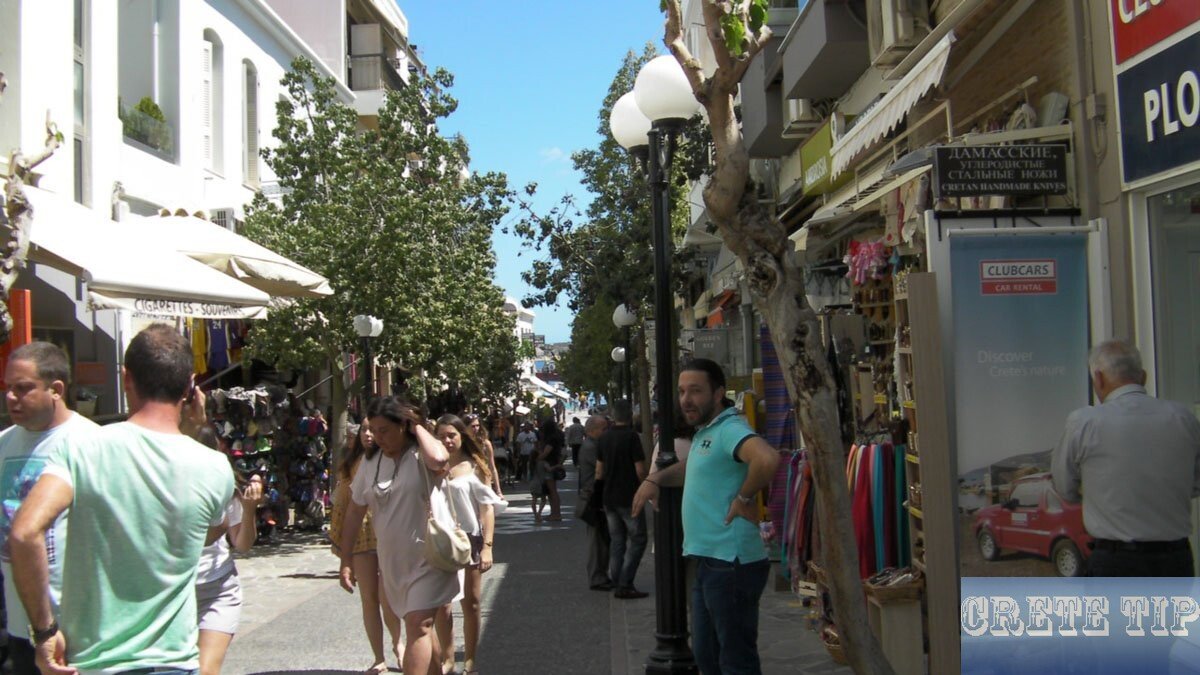
Crete’s tourism season may look strong on the surface, but a closer look reveals a more complicated reality. Hotels across the island are reporting high occupancy rates—hovering between 80% and 85%—yet local businesses are seeing far less of the economic benefit than expected.
This growing disconnect between visitor numbers and actual spending is raising concerns among tourism professionals, who describe the current season as a “double image”: solid arrivals, but subdued consumption.
High Demand, Lower Momentum
Despite the encouraging occupancy figures, overall tourist traffic is estimated to be around 5% lower compared to the same period last year. Industry insiders point to a mix of factors behind the slowdown, including broader economic uncertainty and geopolitical tensions affecting travel behavior.
Visitors continue to arrive primarily from key European markets such as Germany, France, and the United Kingdom. However, businesses report that the pace of activity feels slower than in previous seasons, particularly in popular areas like Hersonissos.
All-Inclusive Packages Limit Local Spending
One of the main reasons behind reduced consumption lies in the growing dominance of all-inclusive holiday packages. Many tourists, having prepaid for accommodation, meals, and entertainment, are choosing to spend most of their time within hotel premises.
This trend is leaving restaurants, cafes, and retail shops outside hotel complexes with significantly less foot traffic—even during peak periods.
Local entrepreneurs describe quieter streets and fewer customers, noting that visitors appear more cautious with their spending and less inclined to explore beyond their resorts.
Rising Costs Squeeze Profits
At the same time, businesses are facing increased operational expenses. The cost of supplies, services, and day-to-day operations has risen between 5% and 15% compared to last year, putting additional pressure on already tight profit margins.
For many, the combination of higher costs and lower consumer spending is creating a challenging environment, despite the outward appearance of a successful season.
Shifting Market Dynamics
The absence of certain key markets is also being felt. The decline in visitors from Israel—traditionally an important segment for eastern Crete—has left a noticeable gap that has yet to be fully replaced.
Meanwhile, international uncertainty continues to influence traveler behavior, with tourists becoming more budget-conscious and selective in their spending.
A Better Picture for Employment
On a more positive note, the labor market has shown signs of improvement. Many staffing gaps that plagued previous seasons have been filled, often with workers from countries such as the Philippines and Egypt. This has helped businesses maintain operations more smoothly during peak months.
The Challenge Ahead
Crete’s current tourism season highlights a critical shift: success is no longer measured solely by how many visitors arrive, but by how they spend—and where.
As the island continues to attract strong demand, the challenge for the industry will be to find ways to distribute economic benefits more evenly across the local economy. Encouraging visitors to explore beyond all-inclusive resorts and engage with local businesses may prove essential for long-term sustainability.
For now, Crete remains busy—but for many on the ground, the tills are not ringing as loudly as the hotel bookings might suggest.
CretaLive | CretaLive | ekriti



