News brief from Saturday, 21 November 2026 (sightseeing, Chania):
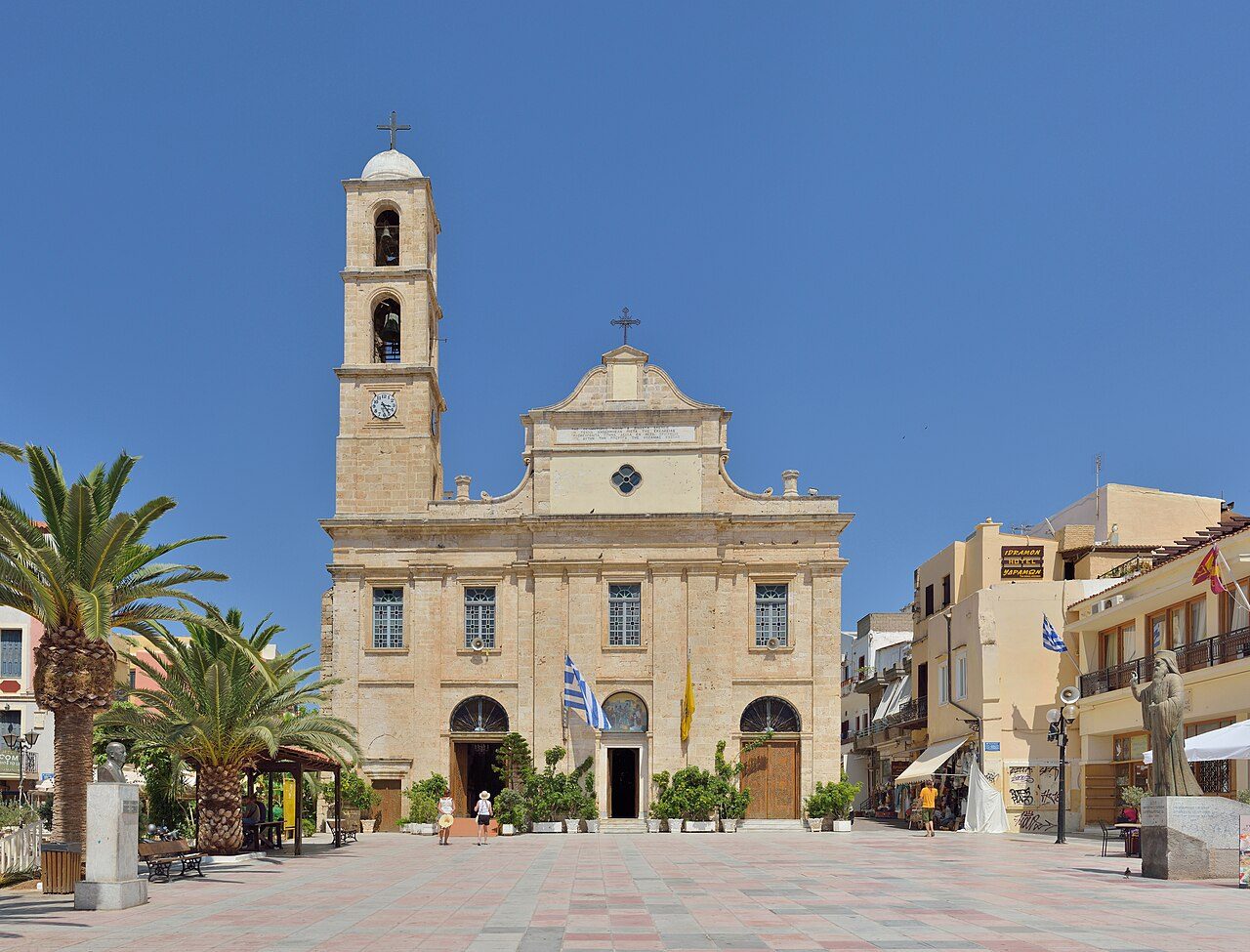
[Taxiarchos228, FAL, via Wikimedia Commons]
In the old town of Chania (Χανιά), in western Crete, the Metropolitan Church of the Presentation of the Virgin is commonly known as Trimartyri. Its site has served very different purposes over the centuries, and the present church was completed in 1860, according to CretaOne.
The building’s three aisles give it the name Trimartyri. The central aisle is dedicated to the Presentation of the Virgin, while the side aisles honour Saint Charalambos and the Three Hierarchs. CretaOne describes the former as associated with protection from epidemics and the latter with learning.
The church stands on a site where a Venetian church dedicated to the same religious feast had existed from at least the 14th century, the report says. After Ottoman forces took Chania in 1645, the building was converted into a soap-making workshop. Local tradition and historical chronicles connect the eventual return of the site to the Christian community with the rescue of the soap-maker’s son. That account is presented as a tradition, rather than as an independently established sequence of events.
Construction of the present church began in the mid-19th century. The project received financial support from Sultan Abdülmecid and the Russian Tsar, according to CretaOne. The Virgin Mary subsequently became Chania’s patron saint, and the city marks her feast each year on 21 November.
What does this mean for visitors or expats?
For visitors interested in Chania’s historic centre, the church may be worth considering as a stop focused on the city’s religious and architectural past. As practical advice, check current access arrangements and service times before setting out. When recounting the site’s past, it is useful to distinguish the reported historical dates from the local story about the soap-maker’s family.