More than 1,216 migrants arrive in Crete within 72 hours – Ierapetra sets up its own emergency shelter, while the two state facilities in Heraklion and Chania continue to be delayed – the silent struggle of the coast guard south of Crete.
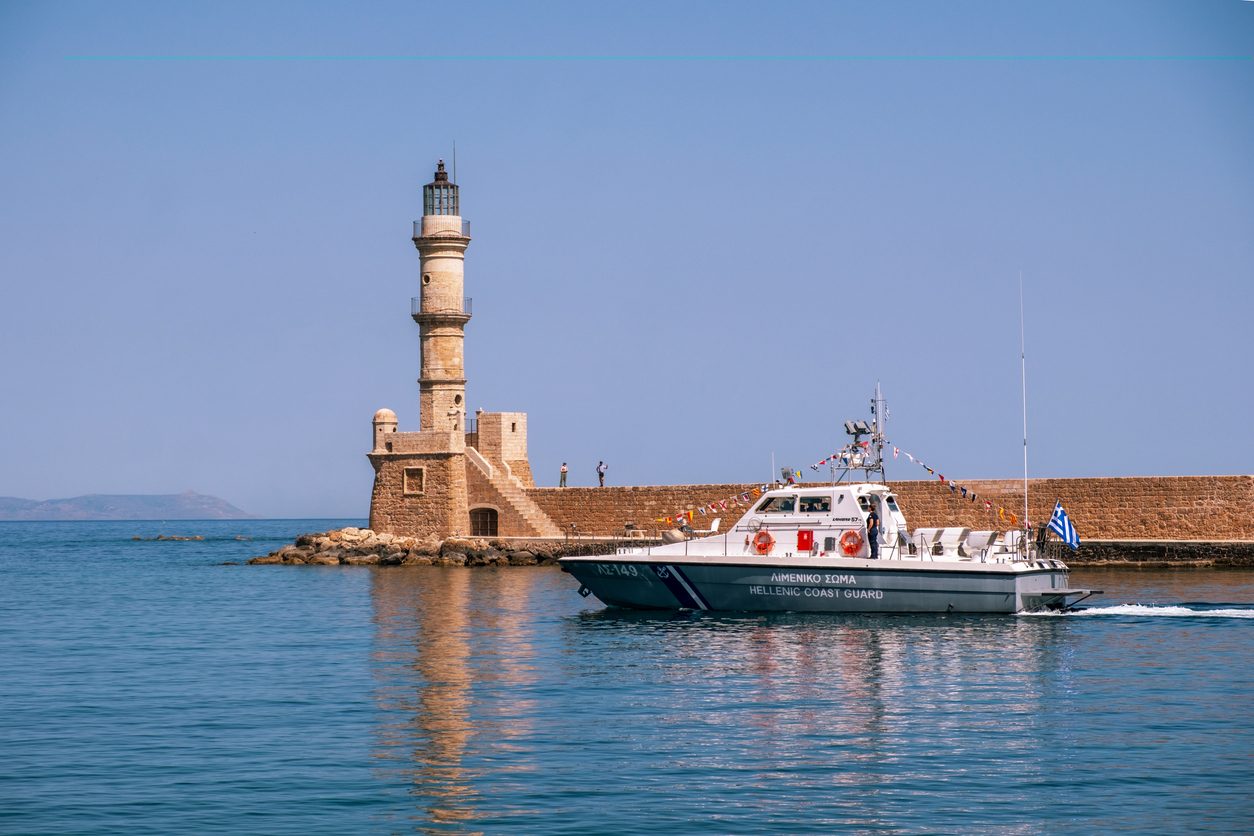
The shores of Southern Crete are witnessing an unprecedented surge in migration, with local authorities sounding the alarm over a massive spike in arrivals. In a staggering 72-hour window, more than 1,216 people reached the island, signaling a major shift in Mediterranean migration routes.
A Growing Crisis South of Crete
According to Giorgos Sfakianakis, President of the Union of Coast Guard Employees of Eastern Crete, the southern coast of the island has now become a “fixed passage” for those seeking entry into Europe. As weather conditions improve, the frequency of these arrivals is expected to intensify.
Intelligence gathered during preliminary investigations suggests that this is only the beginning. Thousands of individuals are currently waiting along the North African coast. Specifically, a massive concentration of people in Egypt is reportedly moving toward Libya, with the ultimate goal of boarding vessels bound for Crete.
The High Cost of the Journey
The business of human smuggling remains a lucrative and ruthless trade. Migrants have testified that the perilous journey across the Mediterranean comes with a heavy price tag:
* Cost per person: Between €3,000 and €8,000.
* The “Migrant Captains”: To lower their own costs, some migrants agree to act as boat pilots, though they are often just pawns for larger criminal networks.
Coast Guard at a Breaking Point
The Hellenic Coast Guard is facing a “complex and Herculean task” that goes far beyond simple interception. Every arrival triggers a massive logistical chain:
1. Search and Rescue: Operations often conducted in gale-force winds.
2. Medical Care & Hosting: Providing immediate aid to those in need.
3. Investigation: Identifying smugglers and processing depositions through translators.
Currently, the temporary hosting facility in Heraklion—infamously known as the “fridge” (psigeio)—is housing approximately 120 people. Authorities admit the space does not meet the necessary standards for long-term stay, yet many remain there for days while awaiting transfer to the mainland.
“A Drop in the Ocean”: The Need for Reinforcements
Despite the mounting pressure, local services are severely understaffed. Sfakianakis described the addition of only four new officers in Heraklion over the last three months as a “drop in the ocean.”
The statistics tell a sobering story:
* 2025: Arrivals exceeded 20,000, far surpassing the initial forecast of 15,000.
* 2026 Outlook: Projections suggest this year could be even more challenging if management strategies are not immediately redesigned.
Local officials are now calling for a strategic reinforcement of Crete’s services, similar to the support provided to the Eastern Aegean islands in previous years. Without a significant increase in personnel and resources, the island’s ability to manage this humanitarian and security challenge remains at a critical threshold.
Crete’s Response to Migration: Ierapetra Takes the Lead as State Facilities Face Delays
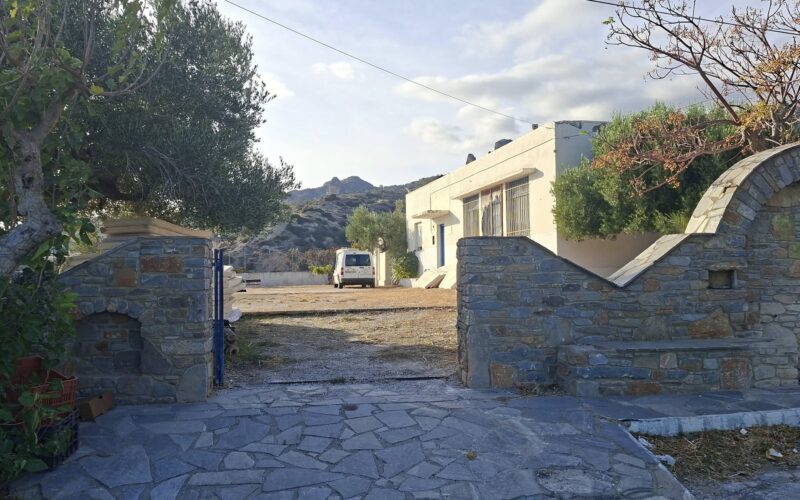
As migration flows to Crete continue to reach record highs, local and national authorities are racing to establish a more organized response. While the central government has plans for state-run facilities in Chania and Heraklion, the municipality of Ierapetra is moving forward with its own initiative to “shield” the region from the logistical strain of sudden arrivals.
Ierapetra: A Proactive Approach to Temporary Hosting
In a move to manage the increasing pressure on its shores, Ierapetra is fast-tracking the creation of a dedicated temporary hosting structure. According to reports from Creta24, this facility is designed to:
* Capacity: Accommodate at least 200 people at a time.
* Duration: Serve as a short-term transit point where migrants will stay for only a few days.
* Next Steps: Act as a bridge before individuals are transferred to official Reception and Identification Centers (RICs) in mainland Greece.
By establishing this local hub, Ierapetra aims to provide a more humane and organized environment for arrivals while reducing the chaotic burden on public spaces and local police resources.
The Stagnation in Heraklion
In contrast to the swift movement in the south, the situation in Heraklion remains in a state of flux. Despite weeks of discussions and the scouting of private properties for lease, a final decision has yet to be reached.
The primary hurdle appears to be bureaucratic. Although rumors suggest the site selection is in its final stages, the necessary Ministerial Decision from the Ministry of Migration and Asylum has not yet been signed. This delay has left local authorities in a difficult position, forced to manage arrivals without a permanent, designated space.
A Disproportionate Burden on Crete
The current situation highlights a growing tension between the central government and local administration. Critics argue that Crete is currently carrying a “disproportionate burden” of the Mediterranean migration route without a clear, long-term strategic plan.
While the state-run facilities planned for Chania and Heraklion are intended to provide a more robust infrastructure, the delay in their implementation has created a vacuum. Local municipalities are increasingly finding themselves on the “front line,” calling for:
1. Clearer Allocation of Responsibility: Defining the roles of the central state versus local government.
2. Faster Funding: Speeding up the resources needed for temporary hosting.
3. Coordinated Planning: Ensuring that no single part of the island is overwhelmed by the logistics of search, rescue, and hosting.

Looking Ahead
With thousands of people reportedly waiting on the North African coast, the need for these facilities has never been more urgent. Ierapetra’s decision to move forward independently may serve as a blueprint for other regions, but the ultimate solution lies in the completion of the state-run facilities in Chania and Heraklion.
As the island prepares for a challenging spring and summer season, all eyes are on the Ministry of Migration to provide the final signatures needed to bring Crete’s hosting infrastructure up to speed.
The Silent Battle South of Crete: Inside the Coast Guard’s Fight for Life at Sea
Behind the turquoise waters and idyllic beaches of southern Crete, a different kind of struggle unfolds every single day. It’s a battle that rarely makes headlines, yet it tests the courage, compassion, and resilience of those sworn to protect Greece’s maritime borders. This is the story of the Hellenic Coast Guard—the men and women on the front lines of search and rescue operations south of Crete.
An “Unspoken War” in the Mediterranean
Over the past two years—and especially in recent months—the waters south of Crete have become the epicenter of a relentless “silent war.” Unlike traditional conflicts fought on battlefields, this struggle unfolds in the open sea, where migrant smuggling networks operate with impunity, and every mission can become a life-or-death operation.
The intensifying migration flows, coupled with deadly sea crossings, have placed an unprecedented burden on Coast Guard personnel. Working in conditions that shift from calm to treacherous in moments, these sailors navigate the impossible: balancing border control with humanitarian rescue, all while enduring months away from their families.
The Crews Behind the Mission
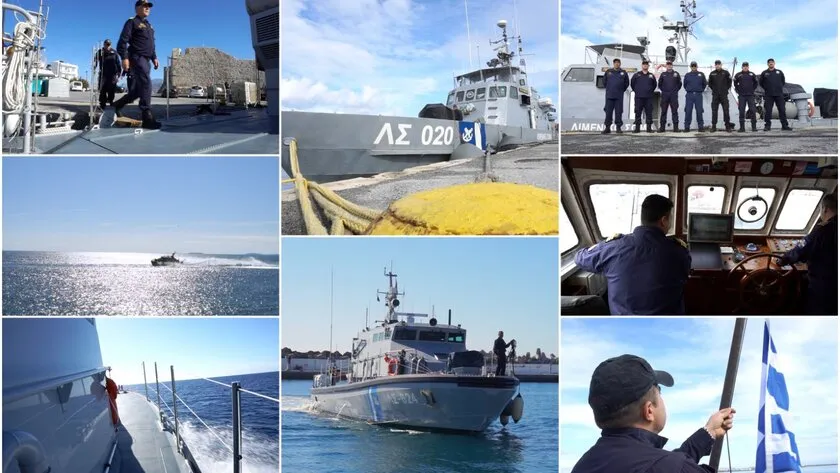
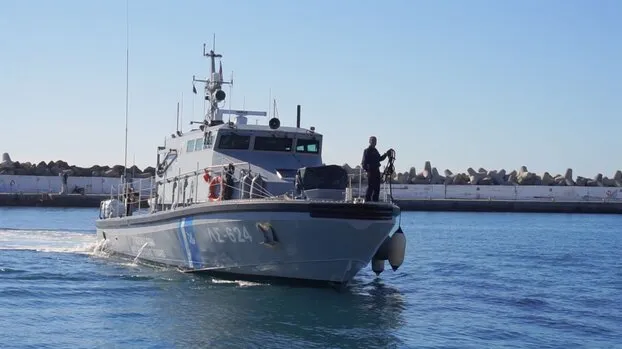
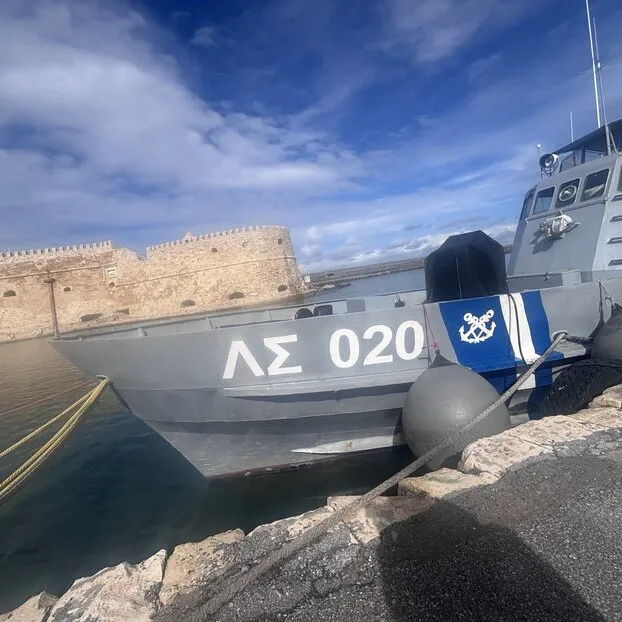
Two vessels stand out in this daily struggle: the ΠΛΣ 624 (PLS 624) and the ΠΛΣ 020 (PLS 020), both operating under the Central Port Authority of Heraklion.
The ΠΛΣ 624: State-of-the-Art Technology Meets Human Compassion
Acquired by Greece in August 2025, the ΠΛΣ 624 is a cutting-edge, Finnish-built patrol ship designed specifically for search and rescue operations in challenging weather conditions. Captain Georgos Marietakis commands this vessel with a crew that has become a true family at sea.
The ship’s capabilities are impressive:
* Thermal cameras for night operations and detecting vessels in distress.
* Advanced satellite communication systems for real-time coordination.
* Direct coordination capability with aircraft and helicopters.
* Powerful floodlights illuminating rescue zones in darkness.
* Mass rescue equipment, including specialized nets and cranes for extracting multiple survivors simultaneously.
* Waterjet propulsion (instead of traditional propellers), allowing safe approach to people in the water while minimizing accident risk.
Yet for all its technological prowess, the ΠΛΣ 624 is only as effective as the hearts and minds operating it.
The ΠΛΣ 020: The Old Guard Still Standing
In stark contrast, the ΠΛΣ 020 is the oldest active vessel in the Coast Guard fleet. Yet its crew—many of whom are veterans of countless rescue operations—bring decades of hard-earned experience to every mission.
These two ships, along with their crews, represent the backbone of Greece’s response to the migration crisis and maritime emergencies south of Crete.
The Mission That Changed Everything
On the night of December 6, 2025—the feast day of Saint Nicholas, the patron saint of sailors—the crew of the ΠΛΣ 624 encountered a scene that would haunt them forever.
A Boat Becomes a Tomb
A small migrant boat was spotted near the island of Chrysi, south of Ierapetra. What the crew discovered was apocalyptic: 17 bodies, tangled together, partially submerged in water that had flooded the vessel. In a corner of the stern, two survivors clung to life—barely.
Ebraam and Ramy, two Egyptian teenagers aged just 16 and 20, had somehow endured hours alongside the dead. Their body temperatures had plummeted to 32 degrees Celsius. Their heartbeats were faint. They drifted between consciousness and confusion, hovering at the edge of death.
The Duty Calls
In those critical moments, the crew had to shift from search-and-rescue mode to something far more complex: saving two dying teenagers while respectfully recovering 17 bodies. The weather was unforgiving. Time was measured in seconds.
“When duty demands it, you stay alert,” one crew member later reflected. “The battle for life compels you to also respect death.”
More Than Colleagues: A Family at Sea
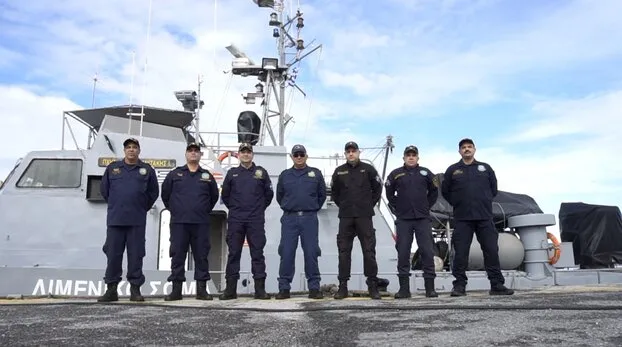
The crews of these vessels spend extended periods away from their families, often with deployment schedules that change suddenly and without warning. The bonds formed at sea transcend typical workplace relationships.
“At sea, we’re not just colleagues,” explained one sailor. “We become a family. Every departure can transform into a life-saving mission. In many cases, the weather is not an ally, and time is measured in seconds.”
Among the crew of the ΠΛΣ 624 are veterans from the legendary ΠΛΣ 119, a patrol ship with a storied history of rescue operations. Captain Marietakis and his team bring with them the memory of previous miraculous saves—including the dramatic rescue of Kushila Stein, a 47-year-old New Zealander who survived 37 hours adrift in the Aegean Sea.
The Kushila Stein Rescue: A Miracle at Sea
In one of the most remarkable rescue operations in recent memory, the crew of the ΠΛΣ 119 located Kushila Stein on what happened to be Captain Marietakis’s birthday and nameday. The New Zealand woman had survived by rationing a few jelly candies from her backpack and maintaining her composure through sheer willpower.
With no fresh water, no supplies, and facing the very real possibility of not surviving, Kushila had written her mother’s name and phone number on her life jacket—a desperate message to be found only if the worst occurred.
That rescue became international news, demonstrating the incredible skill and determination of Greece’s Coast Guard.
The Impossible Calculus of Modern Rescue Operations
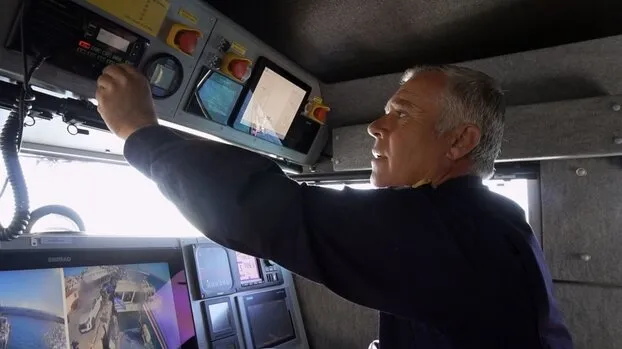
Today’s Coast Guard faces unprecedented challenges that go far beyond the technical aspects of maritime rescue:
1. Scale: Hundreds of arrivals every week, sometimes thousands monthly.
2. Trauma: Recovering bodies, witnessing human suffering on an industrial scale.
3. Exhaustion: Extended deployments with minimal rest between operations.
4. Emotional Toll: Living with the knowledge that despite their best efforts, many lives are still lost.
A Silent Struggle Demanding Recognition
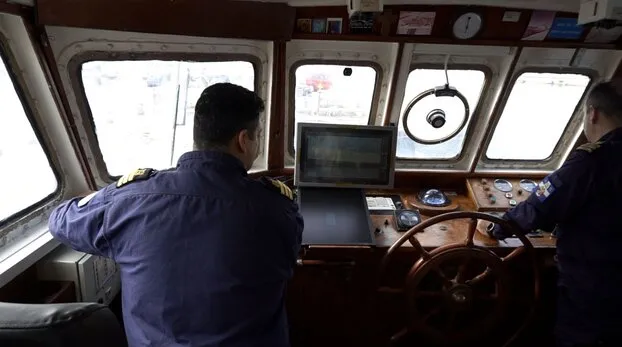
What sets the Coast Guard apart is their silent acceptance of this burden. These sailors rarely speak publicly about their experiences. The traumatic scenes they witness—the bodies they recover, the families torn apart by tragedy—are kept close to their hearts, shared only with those who understand the weight of serving at sea.
Yet their work demands recognition. Every successful rescue, every body recovered with dignity, every teenager pulled back from the brink of death—these moments represent the true measure of their commitment.
The Human Element
Behind every thermal camera, every satellite system, and every piece of advanced equipment, there are human beings making split-second decisions under impossible conditions. Decisions that save lives. Decisions that haunt them long after the mission ends.
“There are many moments and images that they keep to themselves, out of respect and nothing more,” observers have noted of these crews.
Looking Forward: A Crisis Without End in Sight
As the spring and summer months approach, the intensity of these operations is expected to increase dramatically. Weather conditions improve, and more migrants gather on North African shores, preparing to make the perilous crossing.
The silent battle south of Crete will continue—not with the sound of gunfire or explosions, but with the quiet determination of men and women who have chosen to stand watch over the most treacherous waters in the Mediterranean.
Their sacrifice often goes unnoticed. Their bravery is measured not in medals, but in lives saved and families reunited. They are the true heroes of the Mediterranean, fighting a battle that the world can see—but often chooses to ignore.
Dedicated to the Hellenic Coast Guard and all maritime rescue personnel who serve in conditions most of us can scarcely imagine.