

Newsflash from Monday, 9 March 2026:

On International Women’s Day 2026, Crete confronted a sobering truth: domestic violence is not disappearing—it’s accelerating at a terrifying pace. New data released by Greek police authorities reveals a crisis of staggering proportions, with women across the island increasingly forced to rely on emergency “panic button” technology just to survive abuse within their own homes.
The numbers tell a story of systemic failure, widespread trauma, and a community struggling to protect its most vulnerable members.
The Numbers Don’t Lie: A Crisis Spiraling Out of Control
According to Dimitra Liapi, head of the Domestic Violence Unit at the Heraklion Police Department, the trend is unmistakably grim:
* 2023: 270 cases of domestic violence reported in Heraklion
* 2024-2025: 580 cases annually (more than doubling in just one year)
* First Quarter of 2026: 93 cases already recorded (compared to 80 in the same period last year)
The trajectory is clear: domestic violence in Crete is not stabilizing—it’s escalating.
“We are witnessing alarming growth,” Liapi stated during an interview with local media. “The dimensions of gender-based violence are becoming increasingly severe.”

The Panic Button: A Digital Lifeline in a Physical Nightmare
Perhaps the most telling indicator of the crisis is the continuous use of the panic button feature on smartphones by women victims. This emergency tool—which instantly alerts police and enables immediate intervention—has become an indispensable lifeline.
“Women are using the panic button constantly,” Liapi emphasized. “It demonstrates just how widespread and how desperate the situation has become.”
The panic button works on a simple but critical principle: when activated, it triggers an immediate police response without requiring the victim to speak. This is lifesaving for women who cannot safely make a phone call to emergency services because their abuser is present.
The fact that this feature is being used so frequently suggests one horrifying reality: thousands of women in Crete are living in such fear that they need instant access to police intervention within their own homes.
Domestic Violence Knows No Age Boundaries
One of the most shocking revelations from the data is that domestic violence victims span all age groups—from young women in their teens and twenties to elderly women in their 70s and beyond.
“Domestic violence does not discriminate by age,” Liapi explained. “We have young victims and elderly victims. This is a societal problem that cuts across generations.”
This finding challenges any assumption that domestic violence is primarily a young person’s problem or that it diminishes with age. Instead, it reveals a multigenerational crisis where women of all ages are trapped in cycles of abuse.
Breaking the Silence: The Police Response
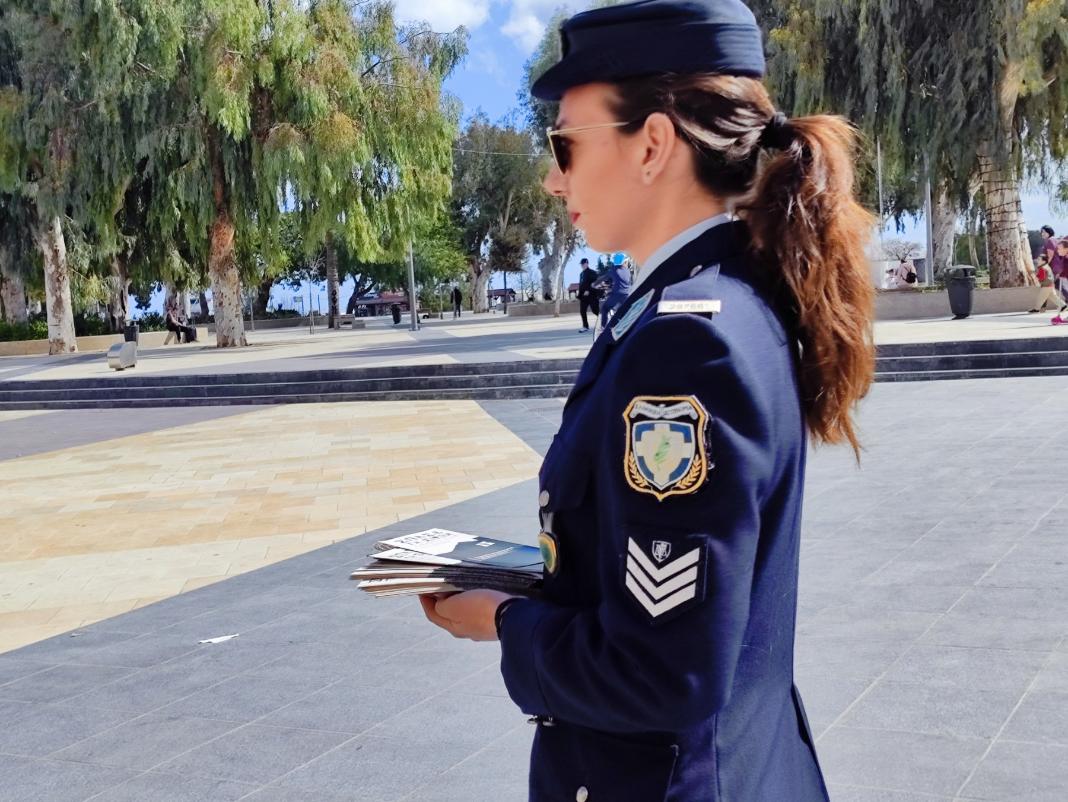
Recognizing the severity of the situation, the Hellenic Police (EL.ΑΣ) launched a major awareness campaign on International Women’s Day with the slogan: “Break the Silence, We Are Here” (Σπάσε τη σιωπή, είμαστε εδώ).
The campaign included several critical initiatives:
1. QR Code Distribution Across Greece
Informational materials containing QR codes were distributed throughout Crete and across the entire country. These codes link directly to:
* Information about domestic violence units
* Available support services
* Emergency contact numbers
* Victim assistance resources
2. High-Visibility Outreach
The campaign was rolled out not just in police stations, but in high-traffic public areas across Heraklion, Chania, and Rethymno—ensuring that victims and concerned citizens could access information discreetly.
3. Comprehensive Support Infrastructure
The Hellenic Police has established:
* 73 specialized domestic violence units across Greece
* 63 domestic violence offices with investigative and pre-trial powers
* A coordinated response system that immediately notifies prosecutors and victim support services
What Victims Need to Know: Steps to Safety
If you are experiencing domestic violence in Crete or anywhere in Greece, here are the critical steps authorities urge you to take:
Immediate Emergency Response:
* Call 100 (the emergency police line)
* If you cannot speak safely, send an SMS to 100 with:
– Your exact address
– Your full name
– The nature of the emergency (e.g., “My life is in danger” or “I am being abused by my spouse”)
If You Cannot Contact Police Directly:
* Ask someone you trust (a family member, friend, or doctor) to contact authorities on your behalf
* Seek immediate medical care and tell healthcare providers the full truth about your injuries
Formal Reporting:
* File a report at your local police station or domestic violence office
* Provide detailed documentation of injuries, threats, and incidents
Long-Term Support:
* Contact the SOS Helpline 15900 operated by the General Secretariat for Demographic and Family Policy and Gender Equality
* This service provides:
– Psychological and emotional counseling
– Legal advice and representation
– Shelter in safe houses
* Email: [contact information available through official channels]
Victim Services:
The Hellenic Police provides guidance on accessing:
* Safe housing and shelters
* Medical and pharmaceutical care
* Mental health and psychosocial support
* Legal assistance and representation
If You Know Someone Being Abused
If you suspect someone is experiencing domestic violence, you have a responsibility to act:
1. In cases of immediate danger, call 100 yourself
2. Inform local police or contact the nearest domestic violence office
3. Reach out to the victim directly if it’s safe to do so
4. Provide information about available services and support hotlines
5. Encourage them to call the SOS Helpline 15900 for confidential counseling
The Legal Framework: Abuse is a Crime
It’s critical to understand that all forms of violence—psychological, physical, and sexual—are prosecuted under Greek law. This is not a private family matter; it is a criminal offense.
The police handle each case of domestic violence and immediately inform the appropriate prosecutorial authorities. This ensures that:
* Cases are properly investigated
* Abusers are held accountable
* Victims receive protection orders if necessary
* Prosecution proceeds even if the victim recants (because it’s a crime against society, not just the individual)
The Broader Crisis: Why is Crete So Affected?
Several factors may contribute to Crete’s high rates of domestic violence:
* Cultural attitudes: Traditional gender roles and patriarchal family structures remain entrenched in some communities
* Economic stress: Financial hardship and unemployment can trigger domestic conflicts
* Social isolation: Rural areas with limited social services may see higher rates of unreported abuse
* Substance abuse: Alcohol and drug use frequently accompany domestic violence incidents
* Lack of awareness: Some victims may not recognize abusive behavior or know where to seek help
The Pandemic Effect: A Hidden Crisis Within a Crisis
While official data only goes back to 2023, experts note that the COVID-19 pandemic created a “perfect storm” for domestic violence. Lockdowns trapped victims with their abusers while isolation prevented them from seeking help. Even as restrictions eased, the psychological trauma and embedded patterns of abuse persisted.
International Context: How Does Crete Compare?
According to the World Health Organization (WHO), approximately 1 in 3 women globally experience physical or sexual intimate partner violence in their lifetime. Greece’s rates align with European averages, but Crete’s recent spike suggests the island may be experiencing a disproportionate crisis.
The fact that Crete is recognized as having particularly severe domestic violence challenges underscores the urgency of intervention.
What Needs to Change
While police and government agencies are stepping up efforts, advocates argue that more is needed:
* Funding for shelters and support services must increase dramatically
* Public education campaigns should begin in schools to prevent abuse in future generations
* Workplace training on recognizing and responding to domestic violence should be mandatory
* Cultural shift: Men and boys must be engaged in conversations about respecting women and rejecting violence
* Prosecution: Abusers must face real consequences, not suspended sentences
The Bottom Line: Breaking the Silence Requires Community Action
International Women’s Day is not a day of celebration in Crete—it’s a day of reckoning. The shocking data confirms what advocates and victims have long known: domestic violence is a pandemic within our society, and it’s getting worse.
Breaking the silence requires courage from victims, responsiveness from institutions, and a fundamental cultural shift in how communities view and tolerate abuse.
The panic button on a smartphone should never be a woman’s only lifeline. Yet for thousands of Cretan women, it currently is.
If you are experiencing abuse, know this: You are not alone. Help is available. And you deserve safety.
Resources for Help:
Emergency: Call 100 (or SMS if unable to speak)
SOS Helpline: 15900 (psychological support, legal advice, shelter)
Email: Contact domestic violence services through official channels
Online: Visit www.isotita.gr and www.womensos.gr for comprehensive information
Source: Fonien



