

Newsflash from Monday, 16 February 2026:
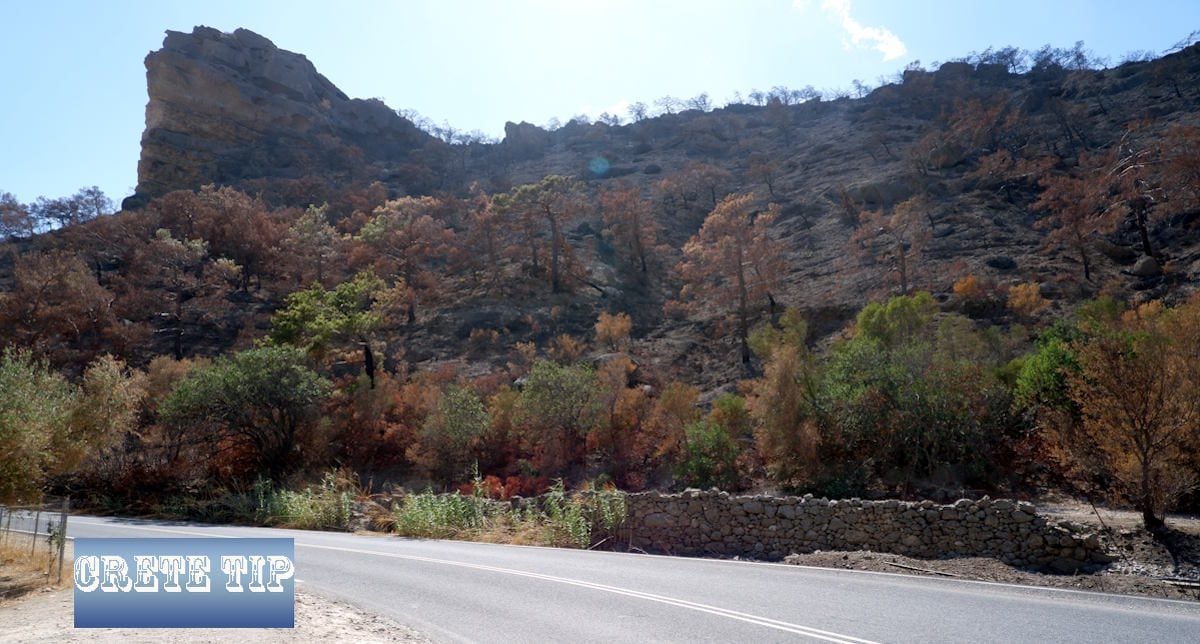
In a dramatic enforcement push that signals Greece’s serious commitment to wildfire prevention, the Municipal Police of Ierapetra conducted an unprecedented campaign throughout 2025, issuing 80 fines totaling €80,000 and performing over 400 field inspections on properties with inadequate fire safety clearing.
The message is unmistakable: Greek authorities are no longer tolerating negligence when it comes to property maintenance and fire prevention.
The Numbers Tell the Story

The scale of Ierapetra’s fire safety enforcement operation reveals both the scope of the problem and the determination of local authorities to solve it.
Inspection and Enforcement Data
* Total Inspections: Over 400 site visits conducted in 2025
* Declarations Recorded: 1,125 cleaning completion declarations submitted via the national platform (akatharista.apps.gov.gr)
* Violations Identified: Through rigorous field inspections, the Municipal Police identified property owners who failed to meet fire safety standards
* Fines Issued: 80 enforcement actions resulting in penalties
Financial Impact
* Total Fines: €80,000 collectively
* Average Fine: €1,000 per violation
* No Exceptions Granted: Penalties were applied uniformly across all violators, regardless of status
No One Escapes Accountability—Not Even Government Agencies
What makes Ierapetra’s enforcement campaign particularly noteworthy is its unwavering consistency. According to Ioannis Gaitanakis, Chief of the Ierapetra Municipal Police:
“The sanctions were not granted to anyone, as among the violators were found even state bodies.”
This statement underscores a critical principle: institutional impartiality. Government agencies, private citizens, and commercial entities all faced the same scrutiny and received the same penalties when found in violation. No one received special treatment or exemptions.
This uniform enforcement sends a powerful message that fire safety is a universal obligation, not a selective guideline.
The Greenhouse Zone: A Special Focus
Recognizing that certain areas face elevated fire risk, the Municipal Police concentrated significant enforcement efforts in Ierapetra’s “greenhouse zone” (thermokinitiki zoni)—the intensive agricultural area where thousands of plastic greenhouses create a unique operational environment with exceptionally high fire danger.
Why the Greenhouse Zone Demands Special Attention
The greenhouse zone presents distinctive challenges:
* Ideal Fuel Load: Dry plant residues and abandoned plastic sheeting create perfect conditions for rapid fire spread.
* Dense Infrastructure: Tightly packed greenhouses mean that a single ignition can quickly spread across entire agricultural areas.
* Economic Vulnerability: A major fire in this zone threatens the livelihoods of thousands of farmers and the entire regional economy.
What the Municipal Police Did
Through targeted interventions, the Ierapetra Municipal Police:
* Removed tons of dry plant waste that had accumulated in fields
* Cleared abandoned nylon and plastic sheeting that serves as kindling for wildfires
* Documented violations and issued citations
* Made it clear that negligent farmers would face serious consequences
The Core Message: Self-Management Is Your Responsibility
The Municipal Police emphasized a critical point that many property owners seem to overlook: Farmers and landowners are primarily responsible for managing their own waste.
As the enforcement campaign demonstrated:
* Haphazard disposal of plant residues in riverbeds and agricultural roads is not acceptable.
* This practice is not merely an environmental nuisance—it represents a direct threat to economic and social stability.
* Uncontrolled waste accumulation creates ideal conditions for catastrophic wildfires.
The Real-World Consequences of Negligence
The 2025 campaign in Ierapetra illustrated the tangible results of enforcement:
For Compliant Property Owners:
* Peace of mind knowing their property meets safety standards
* Reduced insurance liability
* Contribution to community fire prevention
For Non-Compliant Property Owners:
* Fines ranging from €200 to €2,000 (under the new 2026 framework)
* Potential municipal intervention at the owner’s expense for mandatory cleaning
* Legal liability if negligence contributes to a fire
2026 and Beyond: The New Legal Framework
Building on the success of 2025’s enforcement campaign, Greece has enacted a comprehensive new legal framework for 2026 that will intensify fire safety requirements.
Key Changes for Property Owners
* Mandatory Cleaning Period: April 1 – June 15, 2026
* Declaration Requirement: All property owners must submit formal declarations by June 15
* Continuous Maintenance: Properties must be maintained throughout the entire fire season
* Scalable Penalties: Fines now match the severity of violations (€1 per square meter, minimum €200, maximum €2,000)
* Rapid Intervention: Municipalities can conduct emergency cleanings at the property owner’s expense if violations are found
The New Standard: Proportional and Consistent
Unlike the previous system where enforcement was inconsistent and penalties sometimes arbitrary, the 2026 framework introduces **predictable, proportional consequences**:
* Fail to submit declaration (but did clean): €100 fine
* Fail to clean (no declaration): €1/m² (€200-€2,000 range)
* Immediate Correction Possible: Penalties can be reduced if owners promptly remedy violations
Lessons from Ierapetra: What Other Regions Can Learn
The Municipal Police of Ierapetra has set a precedent that other Greek municipalities are beginning to follow. Key lessons include:
1. Consistent Enforcement Works: When authorities apply penalties uniformly, compliance rates increase dramatically.
2. Field Inspections Are Essential: Paper declarations alone are insufficient; on-the-ground verification is critical.
3. High-Risk Zones Deserve Priority: Targeted enforcement in areas like the greenhouse zone yields maximum public safety benefit.
4. Institutional Impartiality Builds Trust: When government agencies face the same standards as citizens, enforcement credibility increases.
What Property Owners Should Do Now
If you own land in Greece, particularly in Crete or other fire-prone regions:
1. Don’t Wait: Begin clearing your property immediately if you haven’t already done so.
2. Be Thorough: Remove all dry vegetation, branches, and combustible materials.
3. Maintain Records: Document your cleaning efforts—you may need proof of compliance.
4. Submit Timely: Ensure your declaration is submitted by the June 15, 2026 deadline.
5. Plan Ahead: Mark April 1, 2026, as your cleaning start date and work systematically.
The Bottom Line
Ierapetra’s 2025 enforcement campaign demonstrates that Greece is serious about fire safety. With 80 fines and 400+ inspections, authorities sent an unambiguous message: negligence will be penalized, consistently and fairly.
The new 2026 legal framework builds on this foundation, creating a standardized national system for property clearing and fire prevention.
For property owners, the lesson is clear: Compliance is not optional. Whether motivated by legal obligation, financial consequences, or community responsibility, now is the time to ensure your property meets fire safety standards.
The fires of summer 2025 are behind us. The challenge of 2026 is ahead.
New Fire Safety Rules for 2026: What Property Owners in Greece Must Know About Mandatory Cleaning

Greece is tightening its grip on wildfire prevention with sweeping new legislation that will fundamentally change how property owners must maintain their land. Starting in 2026, a comprehensive framework introduces mandatory fire safety cleaning requirements, stricter penalties, and a clearer chain of responsibility between property owners, municipalities, and firefighting authorities.
If you own land or property in Greece, this is essential reading.
The Timeline: April 1 to June 15, 2026
Under the new legislation, property owners face a strict deadline for clearing and maintaining their land. Here’s what you need to know:
Cleaning Period: April 1 – June 15, 2026
Key Requirements:
* Property owners must clear their land of dry vegetation, fallen branches, and other flammable materials between these dates.
* Once cleaned, the land must be continuously maintained throughout the entire fire season (which extends through summer and early autumn).
* A formal declaration must be submitted by June 15, 2026, confirming that cleaning has been completed.
This extended timeline, according to the Ministry of Climate Crisis and Civil Protection, gives property owners “adequate compliance margin” and allows better operational planning for inspection mechanisms.
Who Must Comply?
The new rules apply broadly to:
* Private property owners
* Tenants and occupants with responsibility for the land
* Public law legal entities (government agencies and public institutions)
* Businesses and commercial property holders
Notably, the legislation explicitly includes public institutions, ensuring that government-owned properties are held to the same standards as private residences.
Clearer Roles: A “Verticalization” of Responsibility
One of the most significant changes is what authorities call the “verticalization of the process”—a clear hierarchical structure defining who does what.
The Municipality’s Role
* Notification: Municipalities must inform property owners of their obligations.
* Spot Checks: They conduct random sampling inspections of declared cleaning work.
* Enforcement: Where violations are found, municipalities can proceed with self-initiated cleaning at the owner’s expense.
The Fire Service’s Role
* Complaint Response: The Fire Service intervenes following citizen complaints.
* Inspections: They conduct detailed inspections and issue citations.
* Penalties: They impose fines and enforce legal sanctions.
* Coordination: They notify the municipality for immediate restoration work where violations are found.
This clear division of labor eliminates the confusion and unequal enforcement that characterized the previous system.
A Proportional Penalty System: Matching Punishment to Violation
The new framework introduces a scaled penalty system that distinguishes between formal violations and substantive ones.
For Failure to Submit Declaration
If you fail to submit the required declaration by June 15:
* If land IS cleaned: Fine of €100
* If land IS NOT cleaned: Fine ranging from €200 to €2,000, calculated at €1 per square meter, with a minimum floor and maximum ceiling.
For Failure to Clean Property
For properties that haven’t been properly cleared:
* Fine: €1 per square meter
* Minimum: €200
* Maximum: €2,000
Important: Penalty Reduction Available
If a property owner immediately corrects the violation after being cited, the penalty can be reduced. This incentivizes swift compliance rather than protracted violations.
Rapid Intervention Mechanisms: Preventing Disaster
Recognizing that bureaucracy can delay critical fire prevention, the new law includes provisions for emergency intervention in high-risk situations.
Standard Procedure
1. Fire Service attempts to contact the property owner to secure consent.
2. If consent cannot be obtained and there is immediate fire danger (especially in high-risk zones), the Fire Service documents the hazard in writing.
3. The municipality then proceeds with automatic cleaning at the owner’s expense.
Emergency Expedited Procedure
In cases of imminent and extreme fire danger, the Fire Service can authorize immediate intervention without waiting for the standard process—provided the danger has been formally documented.
Climate and Ecological Considerations
The legislation is flexible enough to account for regional differences. Authorities recognize that climate variations across Greece require adaptive management:
* Deadline Extensions: If weather conditions warrant, deadlines can be extended via ministerial decree following committee recommendation.
* Regional Ecology: Different areas’ ecological and climate characteristics are taken into account when determining compliance timelines.
This ensures that mountainous regions with harsher winters or drought-prone areas with unique challenges aren’t penalized for circumstances beyond their control.
Digital Inclusion: No One Left Behind
The new framework prioritizes digital accessibility while ensuring no one is excluded:
* Digital Declaration: Declarations can be submitted online through government portals.
* Physical Alternative: For those unable to use digital services, declarations can be submitted in person and sent by mail or other suitable means.
* Prevention Without Exclusion: This ensures that digital barriers don’t prevent citizens from complying with fire safety obligations.
From Fragmentation to National Fire Prevention Strategy
Authorities emphasize that the new system represents a fundamental shift in Greece’s approach to wildfire prevention:
Before: A fragmented system with unclear responsibilities, inconsistent application, and unequal enforcement.
After: A standardized, digitally supported, operationally active framework that transforms property cleaning from “sporadic practice” into a national fire prevention obligation.
The goal is clear: Make fire safety compliance universal and consistent across Greece, not dependent on which municipality you live in or how vigilant local authorities happen to be.
What This Means for Property Owners
If you own land in Greece, you must:
1. Plan Ahead: Mark April 1, 2026, on your calendar as your cleaning start date.
2. Clear Thoroughly: Remove all dry vegetation, branches, and combustible materials.
3. Maintain Continuously: Don’t just clean once—maintain the property throughout fire season.
4. Submit Documentation: File your declaration by June 15, 2026.
5. Keep Records: Document your cleaning efforts in case you need to prove compliance.
The Bottom Line
Greece’s new fire safety legislation represents a serious commitment to wildfire prevention. With clear timelines, proportional penalties, digital support, and emergency mechanisms, the government is establishing a framework that should significantly reduce the risk of uncontrolled wildfires.
For property owners, the message is simple: Compliance is not optional in 2026. Plan accordingly, clean thoroughly, and submit your declaration on time.
Do you own property in Greece? Are you concerned about meeting the new fire safety requirements? Share your questions and experiences in the comments below.




In previous years the requirement to clear land only appeared to apply to land within a village boundaries. Is that still the case?
Yes, should be the same. The municipality has to inform the owners, anyway – you could ask them or the fire department if you are not sure.