Newsflash from Thursday, 16 April 2026:

The Greek property market is at a critical juncture. While international investors are pouring money into the country and calling it a “rare earth” asset, ordinary Greeks are facing a very different reality: skyrocketing prices, a severe shortage of affordable housing, and the growing sense that homeownership is slipping out of reach.
What’s really happening in Greece’s real estate landscape? Let’s break down the trends, the numbers, and what they mean for both foreign investors and local buyers.
The International Love Affair: Why Global Investors Are All In
In April 2026, at MIPIM Cannes — the world’s largest real estate exhibition — Greece occupied a place of honor in the international investor community’s consciousness. And the verdict was remarkably bullish.
From “Recovery Story” to “Rare Asset”
Not long ago, Greece’s real estate market was marketed as a recovery play — a nation bouncing back from economic crisis with improving fundamentals. Today, the narrative has shifted dramatically.
As Theologos Bosdas, COO of CCRE Group and moderator of the discussion “Greece: Rare Earth Returns,” explained:
“We don’t call something rare because it’s small. We call it rare because it’s hard to replace.”
This single statement captures the sea change in how institutional investors now view Greek property. The country is no longer seen as a bargain-basement opportunity — it’s viewed as a strategically irreplaceable asset in the Mediterranean.
Why the Confidence?
Several macroeconomic factors are driving this international enthusiasm:
* Investment Grade Status: Greece’s recent upgrade to investment-grade credit rating has dramatically reduced country risk premiums, making Greek assets more attractive to institutional investors.
* Lower Borrowing Costs: Declining interest rates and improving access to capital have made Greek investments more economically viable for large-scale projects.
* Macroeconomic Stability: Improved economic indicators and political stability have bolstered investor confidence in the long-term viability of Greek assets.
What International Investors Actually Want (It’s Not What You Think)
The discussion at MIPIM revealed that the era of opportunistic, short-term speculation is over. International capital is now focused on three core pillars:
1. Institutional Credibility and Stability
Investors want to know that contracts will be honored, regulations will be consistent, and political risk is manageable.
2. Project Execution Without Ambiguity
The ability to deliver projects on time and within scope is paramount. As the panel concluded: “The market can develop, as long as it remains consistent on one basic rule: to deliver what it promises.”
3. Adequate Scale and Liquidity
Investors need investment products large enough to move the needle on their portfolios and liquid enough to exit if market conditions change.
The Shift: From Short-Term Speculators to Long-Term Institutional Capital
One of the most significant trends documented at MIPIM is a fundamental reshuffling of who is buying Greek property.
The Golden Visa Effect
The Greek government’s Golden Visa program — which allowed wealthy foreigners to obtain residency permits by investing in property — used to attract a specific profile: younger investors (ages 30–45) looking to flip properties for short-term gains.
But the program’s overhaul has changed the game:
* Minimum Investment Increased: The threshold rose to as much as €800,000 in prime locations, effectively pricing out the “flip” investors.
* Buyer Profile Shift: The new cohort skews older (45–60 years), predominantly from Western Europe, and is searching for quality of life, not quick returns.
According to data from Elxis – At Home in Greece, the number of foreign buyers actively seeking Golden Visa properties has plummeted by 83% year-over-year — a dramatic correction that reflects this structural shift.

Who’s Replacing Them?
The emerging buyer profile tells a fascinating story:
* Dutch Buyers: Up 16.7% over the 2024–2025 period.
* French Buyers: Increased substantially as well.
* Demographics: These are pre-retirees and retirees who view Greece not as an investment opportunity but as a lifestyle destination — a place where they can enjoy Mediterranean living while their home countries face economic uncertainty.
The Domestic Picture: A Market Divided
While international investors are euphoric, the situation for Greeks seeking to buy their first home is considerably more complex.
Price Growth: Slowing But Still Strong
According to data from the Bank of Greece, the domestic property market continues to appreciate, but at a decelerating pace:
* 2025 Overall: Apartment prices rose 7.8% on average — down from 9.1% in 2024.
* Q4 2025: Growth moderated to 7.6% year-over-year.
* Regional Variation:
– Athens: 5.9% increase
– Thessaloniki: 8.0% increase
– Other Major Cities: Up to 10.5% increase
The Critical Problem: A Shortage Where It Matters Most
The most troubling finding in the recent Uniko analysis (Greece’s first digital real estate ecosystem) reveals a severe supply-demand imbalance in the affordable segment:
* Below €100,000: Severe shortage of small, affordable units.
* €100,000–€200,000: Where approximately 70% of domestic demand is concentrated — yet supply remains critically tight.
* Above €200,000: Supply exceeds demand by a factor of more than 2x.
What This Means
Greece has inverted the housing market. The properties that ordinary Greeks can afford to buy are in desperately short supply, while the market is flooded with luxury apartments and high-end properties that sit vacant or attract foreign investors.
Market Maturation: The New Phase
According to the CCRE Group, Greece’s real estate market is entering a phase of greater maturity, characterized by:
* Value Driven by Fundamentals: Rather than speculative sentiment, prices will increasingly reflect building quality, location permanence, and execution capability.
* Institutional Capital: Long-term, patient capital is replacing hot money.
* Professional Standards: The bar for project delivery and transparency is rising significantly.
What Happens Next?
For International Investors
The outlook remains bright. Greece’s combination of geographic desirability, improving macroeconomics, and relative scarcity of comparable Mediterranean assets will continue to attract institutional capital. Expect to see larger, more professional real estate development firms entering the market and higher-quality projects coming online.
For Greek Homebuyers
The challenge is more acute. Until the supply of mid-range residential properties (€100,000–€200,000) dramatically increases, first-time buyers will continue to face affordability pressures. Policy interventions — such as incentives for developers to build units in this price range or subsidized lending programs for young families — may be necessary to prevent a bifurcated market where international investors own luxury properties and Greeks are priced out of ownership entirely.
The Bottom Line
Greece’s real estate market is experiencing a golden moment — but it’s not evenly distributed. International investors see a genuinely rare opportunity and are positioning accordingly. Domestic buyers, meanwhile, are caught in a squeeze between rising prices and stagnant incomes.
The next chapter of Greece’s real estate story will be written by how successfully policymakers balance these competing interests: supporting institutional investment while ensuring that ordinary Greeks can still afford to buy a home.
Crete’s Construction Boom: Why Building Activity is Surging 10.5% Despite Rising Costs
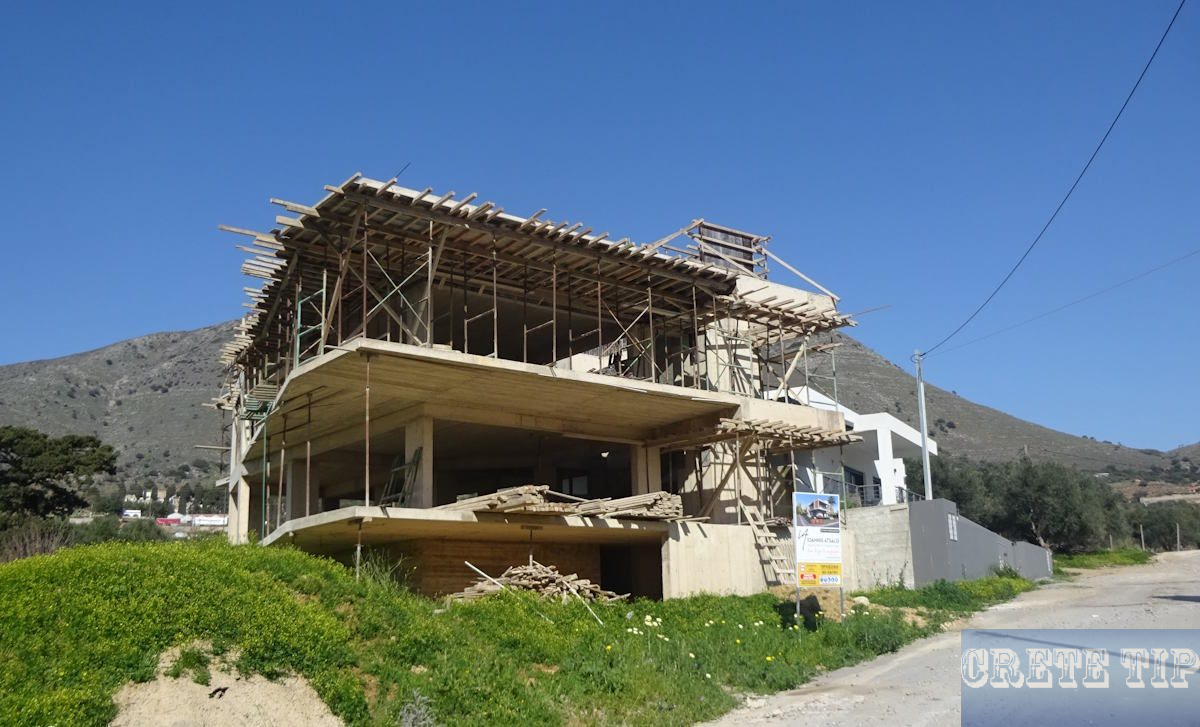
The skyline of Crete is changing rapidly. Despite a global climate of economic uncertainty and soaring material costs, the island’s construction sector is experiencing a massive resurgence.
According to recent data, construction activity across Crete has seen an average increase of 10.5% since the beginning of 2025. This growth is reflected in both the number of new building permits issued and the total square footage under development.
Ierapetra: The Epicenter of the “Construction Orgasm”
While the entire island is seeing growth, the region of Ierapetra is standing out as a frontrunner. Local contractors report that they are struggling to keep up with the sheer volume of work.
“Crews that were left without work during the financial crisis of 2010–2015 have returned to full capacity,” says local contractor Giannis Michalakis. “Today, they don’t even have time to close deals for the new villas, hotels, and apartment buildings being erected.”
The boom isn’t limited to new builds; there is also a significant surge in the restoration and renovation of older properties, a trend that is providing employment for nearly 100 different professions related to the construction industry.
The High Price of Progress
The most remarkable aspect of this boom is that it is happening in the face of unprecedented price hikes. Over the last three years, the overall cost of building a home in Crete has increased by roughly 80%.
Breaking Down the Costs:
* Per Square Meter: Building a 100sqm house in Ierapetra now starts at €2,000 per sqm. High-quality new apartments are selling for as much as €3,500 per sqm.
* Materials: The price of concrete has jumped from €300 to €500 per cubic meter in just three years. Gypsum board prices have doubled, rising from €8 to €16 per sqm.
* Labor: Daily wages have skyrocketed. An unskilled laborer now earns €60+ just for basic cleanup, while master craftsmen earn over **€80**, and concrete specialists can command €100 per day.
National Trends: A Strong Finish for 2025
The growth in Crete mirrors a broader national trend. Data from the Hellenic Statistical Authority (ELSTAT) for November 2025 shows a robust construction landscape across Greece:
* Total Building Permits: 2,910 permits (a 9.9% increase compared to November 2024).
* Total Surface Area: 659,758 sqm (up 10.8%).
* Total Volume: Over 3 million cubic meters (up 17.0%).
Private construction remains the primary engine of this growth, accounting for the vast majority of new permits. Over the twelve-month period ending in November 2025, Greece saw a total of 30,173 building permits, confirming that the construction sector is one of the strongest pillars of the current Greek economy.
What This Means for Investors and Homeowners
For those looking to build or buy in Crete, the message is clear: the market is hot, but it is expensive. The lack of available labor means that project timelines may be longer than expected, and the high cost of materials is firmly baked into current property valuations.
However, the “construction orgasm” currently taking place suggests that demand—particularly for luxury villas and tourism-related infrastructure—shows no signs of slowing down.
The Price of Progress: Building Material Costs Surge 20-30% as Construction Booms in Greece

If you are planning to build your dream home or renovate a property in Greece this year, you might want to double-check your budget. Despite a massive surge in construction activity across the country—particularly in regions like Crete—the industry is facing a significant hurdle: the skyrocketing cost of building materials.
Recent reports from the construction sector indicate that prices for essential materials have jumped by 20% to 30% in a very short period. This “price shock” is sending ripples through the real estate market, affecting everything from small home repairs to multi-million euro hotel developments.
Why are Prices Climbing?
The 20-30% hike isn’t happening in a vacuum. Several global and local factors are converging to drive up the cost of “bricks and mortar”:
* Energy Costs: The production of cement, glass, and steel is incredibly energy-intensive. Fluctuations in energy prices directly impact the factory gates.
* Supply Chain Pressures: While the pandemic-era bottlenecks have eased, logistics and shipping costs remain volatile.
* High Demand: As we recently reported, construction activity in areas like Lasithi is up over 10%. This “construction orgasm” means that demand for materials is outstripping local supply, allowing prices to stay at record highs.
Which Materials are Hit the Hardest?
Contractors and suppliers in the Lasithi region and beyond are seeing the steepest increases in the following categories:
1. Structural Steel and Iron: Essential for earthquake-proofing, these materials have seen some of the most aggressive price swings.
2. Concrete and Cement: The backbone of Greek construction is becoming significantly more expensive to pour.
3. Insulation and Drywall: As energy efficiency standards (like the “Exoikonomo” programs) become stricter, the demand for high-quality insulation has driven prices up by nearly 30%.
4. Aluminum and Wood: Finished goods like window frames and flooring are seeing double-digit increases compared to last year.
The “Domino Effect” on Homeowners
For the average consumer, these increases aren’t just statistics—they are real-world expenses. A 20-30% increase in material costs often translates to a 10-15% increase in the total final price of a new home.
Furthermore, many contractors are now hesitant to give “fixed-price” quotes for projects that will take more than six months to complete. Instead, “price adjustment clauses” are becoming the new standard in construction contracts to protect builders from sudden market spikes.
Is There an End in Sight?
While some experts hope for a stabilization of prices by late 2026, the current momentum of the Greek tourism and real estate sectors suggests that demand will remain high. For now, the advice to prospective builders is clear: Plan for a 20% contingency fund in your budget and secure your essential materials as early as possible.
Despite the costs, the “building fever” in Greece shows no signs of breaking. The question is no longer if people will build, but how much more they are willing to pay to get the job done.