Newsflash from Monday, 13 April 2026:
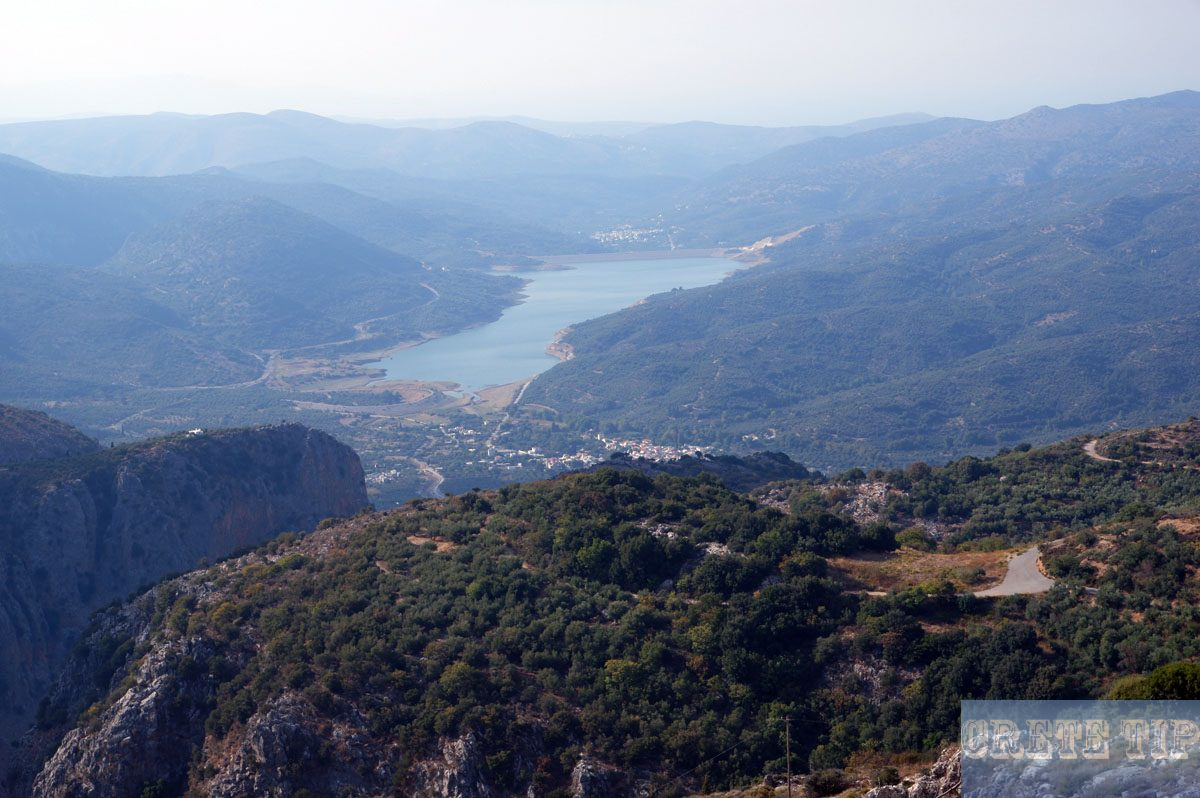
Just three weeks ago, Eastern Crete was staring down the barrel of a water shortage nightmare. The images coming from the Aposelemis Dam were disheartening, and local authorities were bracing for an extremely difficult summer where water demand would far outstrip supply.
But in a dramatic turn of events, nature has “worked its miracle.” Following a period of continuous rainfall just before the recent African dust episode, the outlook for Summer 2026 has been completely transformed.

From Despair to Abundance: The Timeline
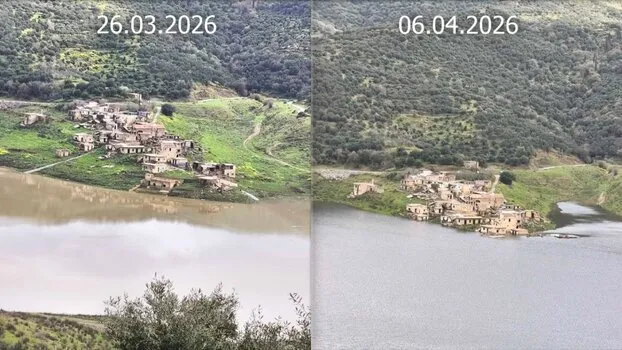
The change in the reservoir’s levels has been nothing short of spectacular. On March 26, 2026, the water levels were at a critical low, sparking fears of strict water rationing. However, by Holy Monday (April 6, 2026), new photos revealed a starkly different reality.
According to Thodoris Ninos, President of the Crete Development Organization (OAK), the figures are now more than satisfactory.
“The values are so satisfying that not only are the needs of this summer covered, but we now have the ability to proceed with the management of the summer of 2027 as well,” Ninos stated.
The Numbers Behind the Miracle
The rapid influx of water has exceeded all expectations. Here are the key statistics that have local officials breathing a sigh of relief:
* Current Volume: As of April 6, the water collected reached 11,300,000 cubic meters.
* Safety Cushion: Experts consider the reservoir to be at “safe levels” when it holds 10–11 million cubic meters by the end of the hydrological period (mid-April).
* Heraklion’s Deficit: The most critical issue was the 5 million cubic meter annual deficit for the Municipality of Heraklion. This is now fully covered.
* Increased Supply: Based on current data, there can now be an increase in water supply by 500 cubic meters per hour.
What This Means for Residents and Tourists
For the “thirsty” regions of Eastern Crete—specifically Heraklion, Hersonissos, and Agios Nikolaos—this news is a game-changer. The fear of dry taps during the peak tourist season has vanished.
However, officials are quick to point out that this abundance should not lead to waste. During Easter week, a working meeting between the water departments (DEYAs) of the three major regions will take place to finalize a realistic management plan for the summer.
Looking Ahead
While nature has provided a much-needed “safety cushion,” the goal remains responsible management. The focus now shifts to ensuring that these reserves, so generously provided by the recent rains, are used wisely to ensure long-term sustainability through 2027.
For now, residents and visitors to Eastern Crete can look forward to the summer months with confidence, knowing that the “miracle at Aposelemis” has secured the island’s most precious resource.
Source: Cretalive.gr
A View from Space: Satellite Images Reveal the Dramatic Expansion of Crete’s Aposelemis Reservoir
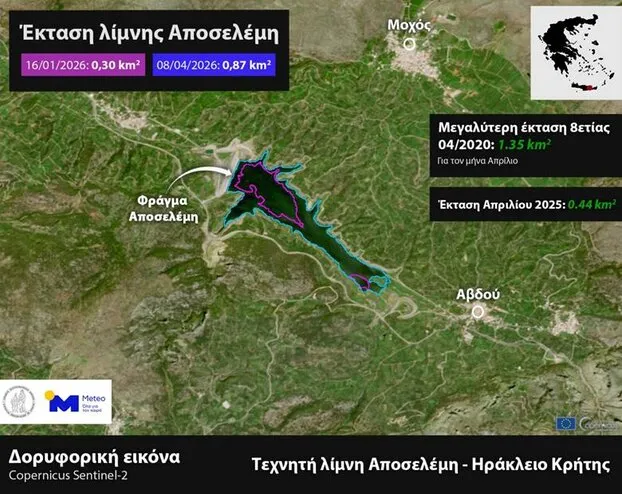
The impact of recent heavy rainfall across Crete is now visible from orbit. New satellite data has confirmed a significant increase in the water surface area of the Aposelemis artificial lake, providing a striking visual representation of the island’s recovering water reserves.
According to the latest analysis, the reservoir has nearly tripled its surface coverage in just three months, offering a much-needed boost to Eastern Crete’s water security.
The Power of Satellite Data
On April 8, 2026, the European Observatory’s Copernicus satellite captured high-resolution imagery of the reservoir. The data revealed that the water surface has expanded to cover 0.87 square kilometers.
To put this growth into perspective, the METEO unit of the National Observatory of Athens analyzed the changes since the beginning of the year:
* Mid-January 2026: 0.30 square kilometers
* April 8, 2026: 0.87 square kilometers
This dramatic expansion follows a period of prolonged rainfall that has successfully replenished the basin after a worryingly dry start to the winter.
Expert Analysis: A Significant Improvement
Kostas Lagouvardos, Director of Research at the National Observatory, highlighted the importance of these findings. “The extent of the Aposelemis lake in April 2026 is much improved,” he noted, pointing out that the current surface area is visibly higher than the levels recorded just three months ago.

While the current figures are encouraging, they still sit below historical peaks. For comparison, the maximum extent recorded for the month of April in recent years was in 2020, when the water surface reached 1.35 square kilometers.
Why Surface Area Matters
While the total volume of water (cubic meters) is the primary metric for water management, the surface area is a key indicator of the reservoir’s health. A larger surface area, as seen in the latest satellite shots, indicates that the “bowl” of the dam is filling up, covering land that was previously exposed due to drought.
For the residents of Heraklion, Hersonissos, and Agios Nikolaos, these images are more than just scientific data—they are a visual guarantee that the region is better prepared for the high-demand summer months ahead.
A Greener Outlook for Summer
The transformation of the landscape around the Aposelemis Dam serves as a reminder of how quickly nature can pivot. From the parched, cracked earth seen in January to the expansive blue waters visible from space today, the “miracle of Aposelemis” continues to be the most talked-about environmental success story in Crete this spring.
Source: Cretalive.gr
Nature’s Comeback: The Historic Springs of Krasi Flow Once More After Years of Drought
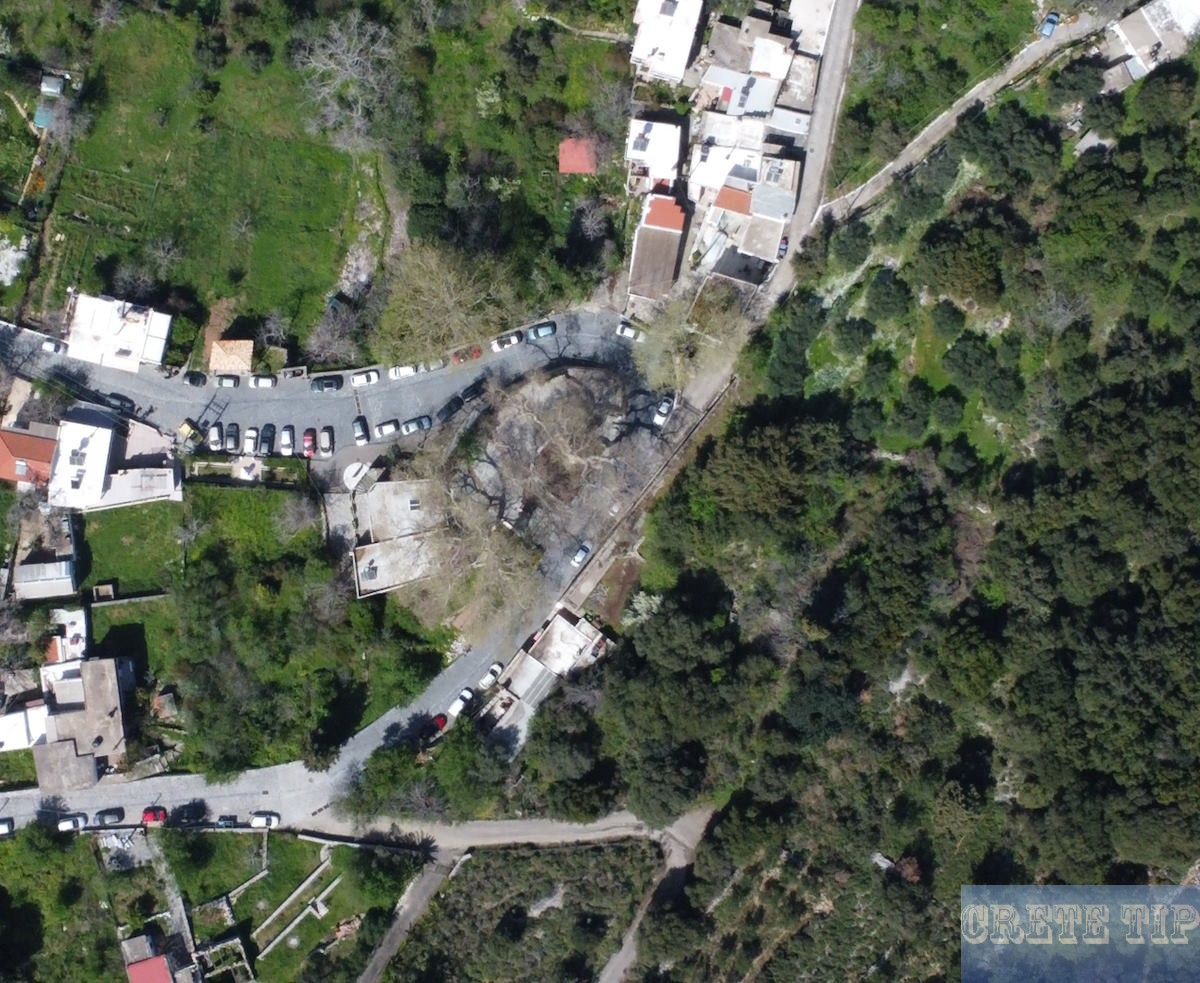
For years, the stone fountains of Krasi, a picturesque mountain village in the Municipality of Hersonissos, stood as silent reminders of the persistent drought affecting Crete. But this April, the silence has been broken by a sound that locals have missed for a long time: the powerful rush of flowing water.
Following a series of heavy rainfalls, the village’s famous springs have “burst” back to life, quenching the thirst of the land and creating a spectacle that is drawing visitors from across the island.
A “Miracle” in the Mountains
The return of the water is being hailed as a major environmental turning point for the region. After several dry years that left the village’s historic water systems struggling, the springs are now flowing with an intensity reminiscent of the “good old days.”
According to local reports, the transformation began following the intense weather phenomena in March 2026. The heavy rains that battered the Selena and Madara mountain ranges did more than just soak the soil—they successfully replenished the deep underground aquifers that feed the village.
Tourism Surges as the Fountains Flow
The sight of water gushing from the traditional stone fountains has turned Krasi into a must-visit destination this spring. Tourists and locals alike are trekking up the mountain to:
* Witness the Flow: Capture photos and videos of the impressive water volume.
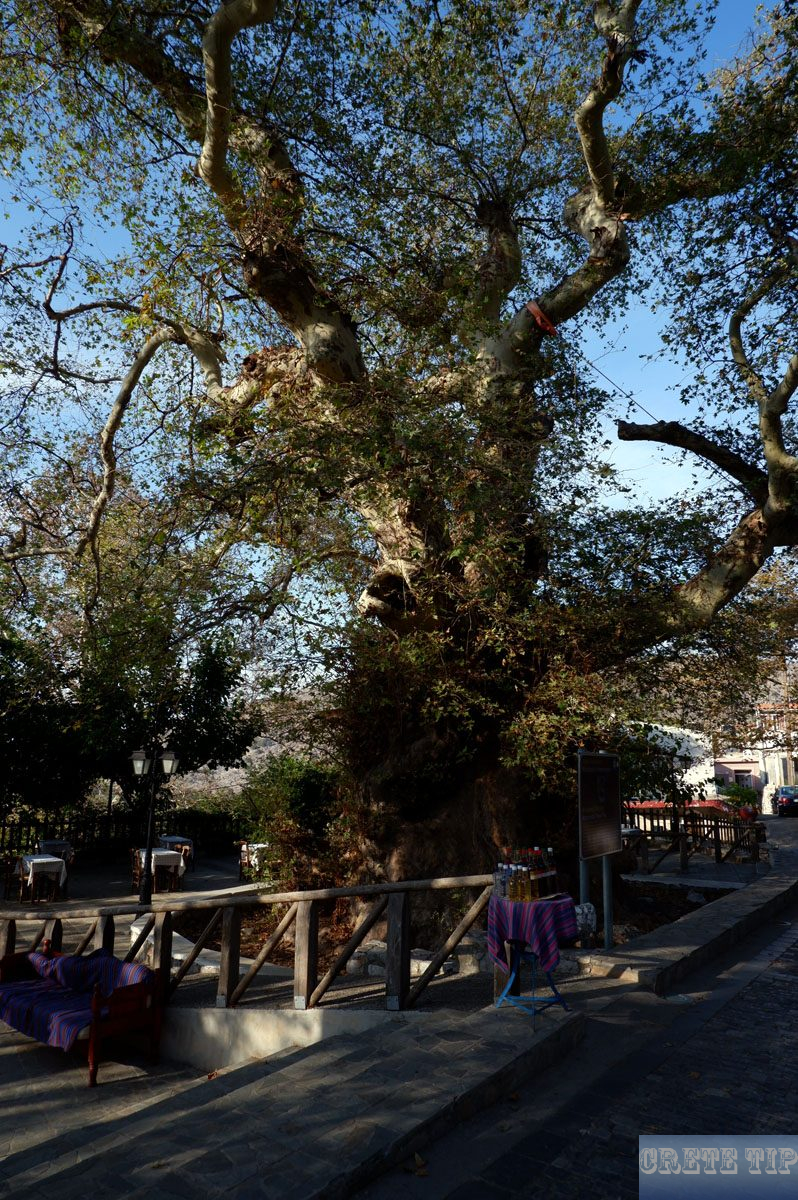
* Visit the Platanos: Marvel at the village’s legendary giant plane tree, a protected natural monument that is now surrounded by the lush, hydrated landscape it thrives in.
* Experience the Soundscape: Enjoy the rare and soothing sound of running water that defines the traditional Cretan village experience.
How Long Will It Last?
The big question for the residents of Krasi is how long this abundance will continue. Based on current flow rates and the saturation of the surrounding mountains, locals estimate that the springs could maintain this high volume for more than five months.
If the region sees additional rainfall throughout the spring, the water security for the village could extend well into the autumn, providing a vital lifeline for local agriculture and tourism.
A Symbol of Hope for Crete
The revival of Krasi’s springs is more than just a local event; it is a symbol of hope for an island that has been grappling with water scarcity. It serves as a reminder of the power of nature to regenerate when given the right conditions.
As we head into the summer season, the “reawakening” of Krasi stands as a testament to the importance of the winter rains and the resilience of Crete’s mountain ecosystems.
Source: Nea Kriti
Crete’s “Meteora” Reborn: The 40 Springs of Kalamafka Flow Again After Years of Drought

The village of Kalamafka in Lasithi, often referred to as the “Meteora of Crete” due to its stunning rock formations, is witnessing a breathtaking natural resurrection. After a grueling five-to-six-year period of severe drought, the region has been transformed by recent rainfall, bringing a surge of life back to its famous landscape.
The most symbolic sign of this recovery? The legendary 40 springs of Kalamafka have “awakened” once more, flowing with the “green color of hope.”
A Speleologist’s Discovery
The transformation was documented by educator and speleologist Michalis Pitykakis, a native of the village who has long championed the area’s unique geology. Returning for the Easter holidays, Pitykakis found a landscape unrecognizable from the parched earth of previous years.
“After the good rains we had this year—approaching 600 millimeters in our village—the countryside has begun to acquire its green color again,” Pitykakis noted. “The 40 springs of Kalamafka have all opened… these waters, the greenery, and the stone landscape are our identity.”
The Return of the Waterfalls
The recent heavy downpours at Makry Livadi created a rare spectacle: the formation of impressive waterfalls in the Chavgas stream. These waters eventually flow into the Kalamafka River and reach the Bramiana Reservoir, a critical water source for the agricultural region of Ierapetra.
Pitykakis attempted to visit all 40 historic springs, including:
* Kefalovrysi and Neria
* Agios Georgios in Chavgas
* Psathochampaso, Goula, and Geraki
* Kissos, Papadia, and Chlio
For years, these springs had run dry, forcing locals to abandon their traditional vegetable gardens. This year, the sound of running water has encouraged residents to start cultivating their plots once again.

A Boost for Beekeeping and Nature
The environmental rebirth is a lifeline for local beekeepers. Kostas Krassas, President of the Lasithi Beekeepers’ Association, expressed newfound optimism. After years where bees struggled to find food, the blooming of the Cretan ebony (*kourmoutsouli*) and other wild flora has provided a much-needed feast for the hives.
“What we see this spring, compared to the last six years, is like day and night,” Krassas said. While he noted that water levels are still not quite at historic peaks—partially due to changes in the underground aquifers—the current flow is a massive improvement.
The “Meteora” Connection
The unique “stone gods” (rock formations) of Kalamafka have led to a proposed twinning between the village and Kalambaka, the home of the original Meteora monasteries. Both Mayors, Lefteris Avramopoulos (Meteora) and Manolis Fragoulis (Ierapetra), have accepted the proposal to formalize the bond between these two geologically similar regions.
Source: Nea Kriti