News brief from Wednesday, 18 November 2026 (hotels):
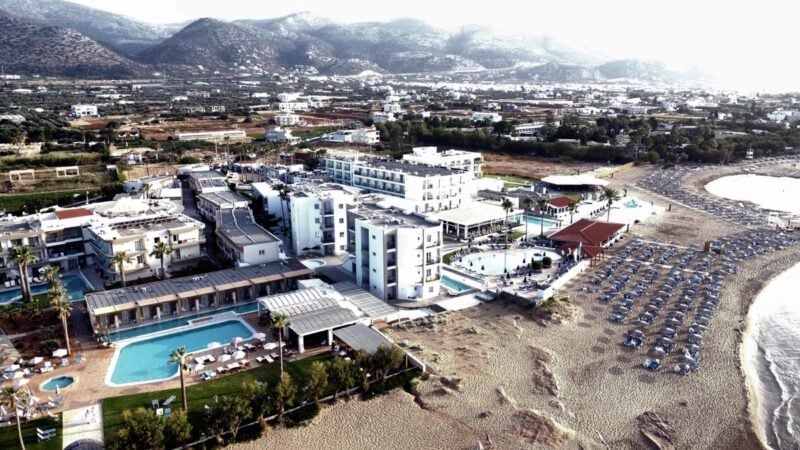
Visitors considering a stay at a Greek resort may encounter relatively high room prices: STR/CoStar put the average daily rate at nearly €300 for January to August 2026. The figures also point to a mixed picture for the hotel sector. Resort occupancy was exceptionally strong in the peak summer months, but average occupancy across Greek hotels fell compared with the previous year.
The findings were presented by Samantha Mardkhah, STR/CoStar’s regional director for southwestern Europe, at the Resort & Residential Hospitality Forum 2026 in Athens, according to money-tourism. The forum took place from 16 to 18 November.
Among the European resort markets included in the comparison, Greece recorded the highest average daily room rate for the eight-month period. Switzerland followed at about €280 and Italy at €250. France, Ireland, Spain and Portugal were each below €200. These are averages across the markets examined, not prices for a specific destination or hotel.
Greek resort occupancy approached 90 percent in July and August, according to STR/CoStar. Malta recorded a similarly high level, while the European resort average was about 85 percent. In Greece’s regions, Friday and Saturday occupancy came close to or exceeded 90 percent. Room rates at Greek resort hotels on those days rose five percent year on year.
The summer performance did not translate into rising occupancy across the entire Greek hotel market. Average occupancy for January to August stood at 69 percent, around 2.5 percent lower than a year earlier. That overall change does not by itself show that demand weakened in every place or season; the mix of destinations, timing and comparison periods can affect the total.
Athens also combined higher rates with a lower occupancy figure. Its average daily rate reached €254 for January to September, up eight percent year on year, while occupancy was 70 percent, down about three percent. Bookings already on the books for the following 90 days were two percentage points below the comparable position a year earlier, based on data dated 26 October. This was a snapshot rather than a final forecast, since additional reservations could still be made.
The presentation also pointed to more subdued expectations for Europe’s hotel markets. Revenue per available room across the 28 European cities covered by a CoStar and Tourism Economics forecast was expected to remain almost flat in 2027, followed by annual growth of two to 2.5 percent in 2028–2030. Athens was not included in that group, so the projection is not a specific forecast for the Greek capital.
What does this mean for visitors or expates?
For trip planning, the reported averages are a reason to compare accommodation prices and dates early, particularly for resort stays in peak summer. They are market-wide figures, not quotes for individual properties, and lower overall occupancy does not guarantee a cheaper room or availability at short notice. Visitors and residents arranging stays in Athens or elsewhere should check current prices and availability for their own dates.