

New arrivals since Tuesday; how people smugglers are marketing Crete as an ‘easy gateway’ to Europe; Greece is calling for immediate action; and protests against the new migration centre continue.
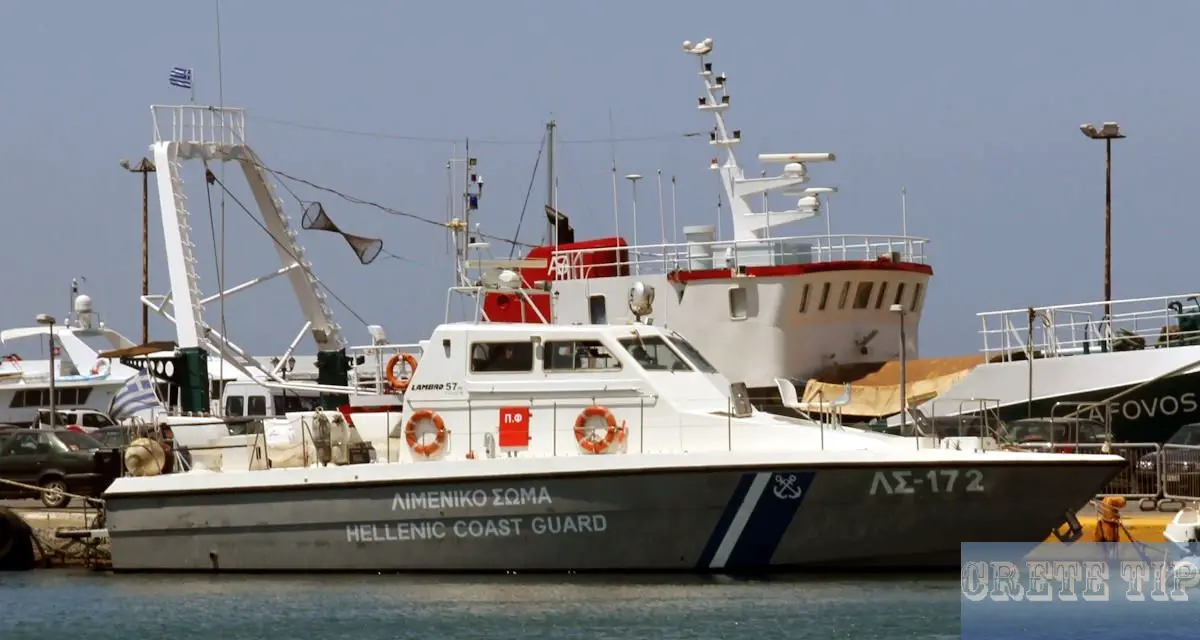
Surge South of Crete: Three Migrant Boats Rescued in 24 Hours Near Ierapetra and Gavdos
A flurry of search and rescue operations off the southern coast of Crete has seen three migrant boats intercepted since Tuesday morning, bringing more than 120 individuals safely to shore. Coordinated by the Hellenic Coast Guard’s Joint Rescue Coordination Center (EKSED) alongside EU border agency Frontex, the operations unfolded in maritime areas near Ierapetra and the island of Gavdos.
Early Tuesday Operation: 50 Migrants Intercepted Southwest of Ierapetra
The sequence of operations began early Tuesday morning when a Frontex aircraft spotted a craft carrying roughly 50 migrants about 19 nautical miles southwest of Ierapetra. Authorities immediately launched a Coast Guard patrol vessel to the area under EKSED coordination.
The passengers were safely picked up from their boat and transported directly to the port of Ierapetra, where local health and emergency services initiated standard reception, registration, and identification procedures (source: Nea Kriti).
Double Rescue Operations Pick Up 78 More South of Crete
Following the early morning rescue, authorities conducted two additional operations within the same 24-hour window, bringing a further 78 individuals to safety, as reported by Creta24:
- Gavdos Operation: On Tuesday night, a Frontex patrol vessel located a boat with 33 foreign nationals onboard, approximately 8 nautical miles southwest of Gavdos. The group was brought ashore at the port of Palaiochora.
- South Ierapetra Operation: Shortly thereafter, Frontex air surveillance identified a second vessel carrying 45 migrants about 37 nautical miles south of Ierapetra. A Hellenic Coast Guard boat completed the rescue and transferred all 45 people safely to the port of Ierapetra.
Smooth Execution and Next Steps
Greek officials confirmed that all three operations concluded without unexpected incidents or reported casualties. The newly arrived individuals are undergoing official processing, health checks, and identification by competent administrative services in Palaiochora and Ierapetra.
Tricked by TikTok: How Migrant Smugglers Market Crete as an “Easy Gateway” to Europe

Migrant smuggling operations across the Mediterranean have evolved far beyond clandestine meeting spots and shadowy deals. Today, human traffickers run sophisticated digital marketing campaigns on platforms like TikTok, Facebook, and Telegram—transforming dangerous sea crossings into glossy online advertisements. Southern Crete, particularly regions around Ierapetra and Gavdos, has increasingly featured as a headline “destination” in these deceptive promotions.
Turning Real Arrivals into Marketing Material
A recent case highlighted by Radio Lasithi demonstrates how quickly smugglers capitalize on successful landings. Following an arrival of migrants at the coastal area of Grias to Pidima near Ierapetra, video footage of the landing was promptly uploaded to social media by smuggling networks.
These clips are curated to act as “proof of work” and client testimonials. By showcasing individuals stepping onto Greek shores under favorable weather conditions, smugglers craft a false narrative that the journey from North Africa to Crete is routine, safe, and virtually guaranteed.
The Digital Playbook of Human Traffickers
According to reports by Europol and Greek law enforcement, digital platforms have become central to modern smuggling infrastructure. Criminal networks use social media to handle every stage of their business model:
- Route Advertising: Promoting specific destinations, such as southern Crete, as simple entry points into the European Union.
- Misleading Promises: Minimizing the extreme hazards of open-sea journeys while exaggerating success rates.
- Client Recruitment: Communicating directly with prospective migrants through encrypted chat apps to negotiate payments and schedules.
When weather conditions clear along routes from eastern Libya towards Crete, a surge in promotional posts online often precedes spikes in actual sea arrivals, as smugglers rush to fill boats while conditions permit.
Countering the Digital Narrative
“Smuggling networks exploit digital platforms to monetize human vulnerability. Countering their propaganda on social media is now as critical as physical maritime surveillance.”
In response to the digital blitz, Greek authorities and international agencies like Europol have stepped up digital monitoring to identify and dismantle smuggling accounts. Greece has also launched targeted counter-campaigns on social media to counter misleading posts, warning vulnerable individuals about the severe risks of illegal sea passages and the predatory nature of human traffickers.
As maritime routes toward southern Crete remain active, disrupting the online hype machine remains a key priority in stopping human smugglers from exploiting desperate people online.
Origin determines almost everything: in the first half of 2026, the overall recognition rate stood at 39.75 per cent for the first degree and 6.09 per cent for the second degree. These average figures mask extreme variations. Yemen is recognised at a rate of 92.93 per cent, Palestine at 76.84 per cent, South Sudan 75.32 per cent, Sudan 75.11 per cent and Afghanistan 69.12 per cent. By contrast, Nepal has a recognition rate of 0.00 per cent, Bangladesh 0.20 per cent, Egypt 0.28 per cent and Pakistan 0.71 per cent.
Integration into the labour market is statistically marginal. A total of 2,970 people were enrolled in the HELIOS+ programme – the main instrument for integration into the labour market – over six quarters from early 2025 to the end of June 2026. In terms of the distribution of people registered by nationality, Ukraine ranks first at 29 per cent, followed by Syria at 15 per cent, Sudan at 12 per cent, and Afghanistan and Palestine at 10 per cent. Egypt does not feature at all. The 2,970 people registered over a period of one and a half years represent roughly one-third of those who arrived in Crete in the first half of 2026 alone.
Returnees: In the first half of 2026, a total of 3,699 returns and departures were recorded, of which 1,541 were forced, compared with 23,362 asylum applications. In June 2026, 23,139 first-instance decisions and 3,785 second-instance decisions were pending, totalling 26,924. The most likely scenario for someone who lands on a beach in Crete is neither finding legal work within two months nor an immediate return flight. It involves a temporary stay that is repeatedly extended, and a decision that is never made.
Almost one in three cases is closed because the person has left the system, not because the system has reached a decision on their case. Moving to another European country is the actual goal for most people, so this is not a deviation from the plan – it is the plan.
Of course, there are also those who somehow manage to remain in the country unseen and survive. In Greece, we know very well how this system works and why.
Greece Urges Emergency Measures: Suspend Asylum and Order Immediate Returns During Mass Migration Influxes

In response to potential emergency situations along Europe’s borders, Greek Migration Minister Thanos Plevris has called for strict measures to handle mass migration surges. Speaking in an interview on MEGA TV, Plevris emphasized that when faced with acute border pressure, European nations—including Greece—must be equipped to temporarily suspend asylum processing and perform immediate returns of unauthorized arrivals.
Citing Ceuta and the Need for Crisis Controls
Pointing to recent migration incidents in Ceuta, Spain, Plevris warned that sudden mass influxes are a scenario any European border state could face. While clarifying that Greece does not wish to reopen discussions around the Schengen Agreement, he stressed that existing European asylum rules are not built for extreme crisis events.
“What happened in Spain can happen anywhere,” Plevris noted, arguing that while the Common European Asylum System functions adequately during periods of low arrivals, it founders when overwhelmed by mass entry attempts.
Lessons from Evros and Libya
To support the policy of temporary suspension, Plevris referenced Greece’s handling of previous migration spikes, including the 2020 Evros border crisis and periods of increased sea arrivals from Libya. According to the minister, implementing tough border measures and halting asylum requests during those periods led to a significant drop in incoming flows, proving the deterrent effect of a firm stance.
Prioritizing Citizen Security
During the interview reported by Nea Kriti, the Migration Minister framed the issue as a fundamental choice regarding European sovereignty and public security:
“On the scales between the theoretical rights of those entering unlawfully and the rights of European citizens, the latter must weigh heavier.”
Under emergency circumstances, Plevris argued, Europe must prioritize three core actions:
- Strong, active protection of external EU borders.
- Temporary suspension of asylum applications where necessary.
- Swift, immediate returns of individuals crossing outside legal channels.
A Stricter European Direction
Plevris concluded by observing that the European Union is overall shifting toward a stricter, more security-focused migration strategy. While acknowledging that current arrival figures—around 50,000 total arrivals across the EU in the first half of the year—remain far below the peaks of the 2015 refugee crisis, he maintained that establishing strong emergency mechanisms now is essential for long-term stability.
Heraklion Protests Escalate: Athanatoi Residents Vow Daily Mobilizations and Legal Action Against New Migrant Facility
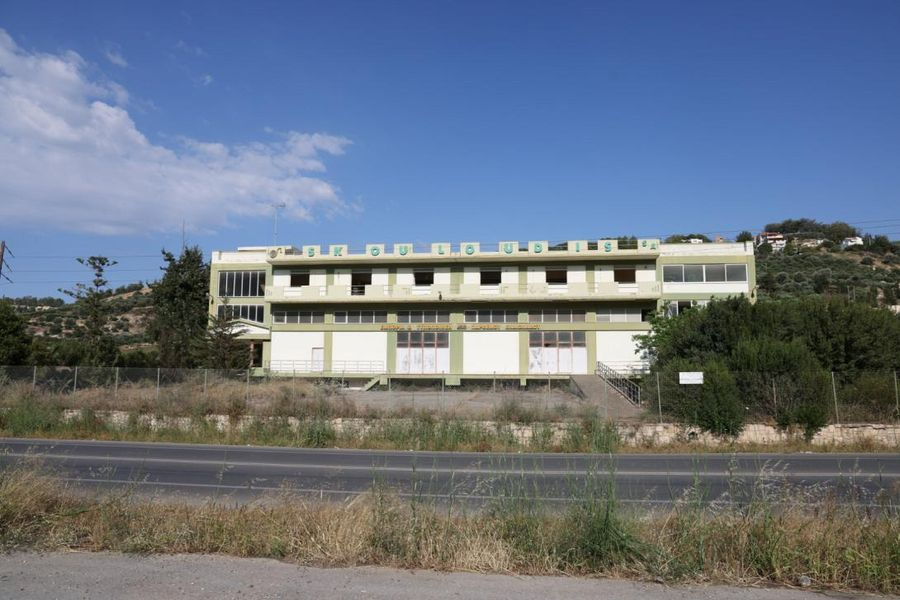
Tensions remain high south of Heraklion as residents of Athanatoi [Google Maps] and neighboring communities continue daily street protests against the establishment of a temporary migrant reception facility in their region. Despite official confirmation that Migration Minister Thanos Plevris has signed the ministerial decree formally establishing the facility, local residents declare they will not back down until their demands are heard.
Daily Demonstrations and Legal Challenges
Following official notification of the signed ministerial order, local citizens pledged to maintain an active presence on the streets. Protesters are now preparing a formal legal appeal to block the ministerial decision in court once it is officially published.
According to local community organizers, residents are maintaining open lines of communication with the Ministry of Migration’s Secretary-General. A high-level meeting between a delegation of local representatives and Minister Plevris is slated to take place after August 16, aimed at addressing the community’s concerns and exploring potential common ground.
However, as reported by Patris, residents remain firm in their position, insisting that daily demonstrations will continue unabated until concrete solutions are presented.
“We Will Not Be Silent”: Core Concerns of the Community
Rallying under slogans such as “We won’t be silent, we won’t retreat” and “United and strong, we say NO to the facility,” demonstrators have voiced several key grievances regarding the ministry’s plans:
- Safety and Security: High anxiety regarding local security and policing resources in the surrounding rural area.
- Lack of Infrastructure: Doubts over whether local basic public services and utility infrastructure can support a reception center.
- Quality of Life: Fear that a facility will lead to long-term economic and social degradation for local towns and villages.
“Residents are determined to stay on the front line every day to protect their community, while taking all necessary legal avenues to stop the ministry’s plans.”
What Lies Ahead
With the legal appeal in development and daily street actions ongoing, all eyes are turned toward the expected post-August 16 meeting with Minister Plevris. Until then, the local community south of Heraklion intends to keep the pressure on, ensuring their opposition remains front and center in the national debate over regional migration management.



