Newsflash from Monday, 9 March 2026:
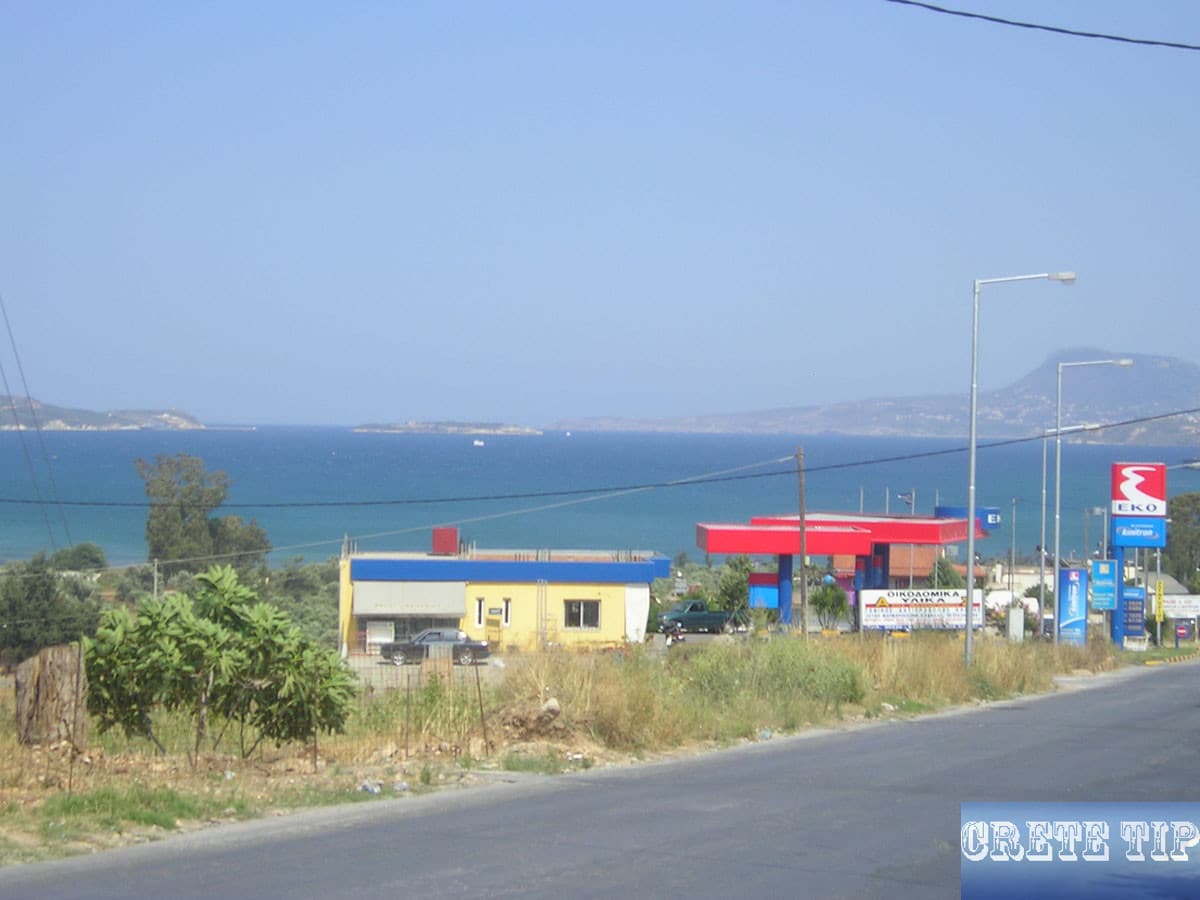
In the strategic landscape of the Eastern Mediterranean, few locations are as vital as the Souda Bay Naval Base in Chania, Crete. As geopolitical volatility continues to ripple through the Middle East, the Greek National Intelligence Service (EYP) has reportedly activated a high-level security protocol codenamed “Operation Desert Scorpion” (Skorpios tis Erimou) to safeguard this critical hub.
Here is what you need to know about the intensified efforts to protect one of NATO’s most important assets.
The Strategic Importance of Souda
Souda Bay is often described as the “beating heart” of US and NATO operations in the region. Its deep-water harbor and adjacent airbase provide essential logistics, refueling, and surveillance support for missions across the Mediterranean and into the Middle East.
Because of this prominence, the base is considered a high-value target for espionage, sabotage, and hybrid threats. With the current conflict in Gaza and broader regional instability, Greek authorities have moved to a state of heightened “Red Alert.”
What is Operation “Desert Scorpion”?
“Desert Scorpion” is not just a standard patrol routine; it is a sophisticated, multi-agency intelligence operation led by the EYP (National Intelligence Service) in close cooperation with the Hellenic Police (ELAS) and anti-terrorism units.
The operation focuses on several key areas:
* Counter-Espionage: Monitoring suspicious movements around the perimeter of the base and identifying potential attempts to gather sensitive data.
* Surveillance of Radical Elements: Tracking individuals or groups that may have links to extremist organizations and could pose a threat to the base or its personnel.
* Infrastructure Protection: Securing not just the military installations, but also the critical energy and communication networks that support the region.
* Port Security: Increased vetting and monitoring of vessels entering the Gulf of Souda.
Why Now?
The activation of “Desert Scorpion” comes at a time when Crete has become a focal point for international military movements. With US aircraft carriers and allied naval forces frequently docking at Souda, the “footprint” of the base has grown, and with it, the potential for security breaches.
According to reports from Nea Kriti, the intelligence focus has shifted toward preventing “lone wolf” attacks and hybrid warfare tactics that could disrupt the operational readiness of the base.
Impact on the Local Community
While the operation is largely “invisible” to the average tourist or resident in Chania, the increased presence of plainclothes officers and heightened security checks at entry points to the Akrotiri peninsula are signs of the new reality.
For the people of Crete, the base is a source of economic stability but also a reminder of the island’s role on the front lines of international diplomacy. Operation “Desert Scorpion” serves as a necessary shield, ensuring that the “Skorpios” remains vigilant against any threat that might emerge from the desert sands of the neighboring conflict zones.
The Bottom Line
As the geopolitical map shifts, Greece is making it clear that the security of Souda is non-negotiable. Through Operation “Desert Scorpion,” the EYP and Greek security forces are sending a strong message of deterrence to any actors seeking to destabilize the region’s most critical military outpost.
Source: NeaKriti
‘The situation is critical and escalating’: Greek expert warns of dangerous developments in the Middle East crisis
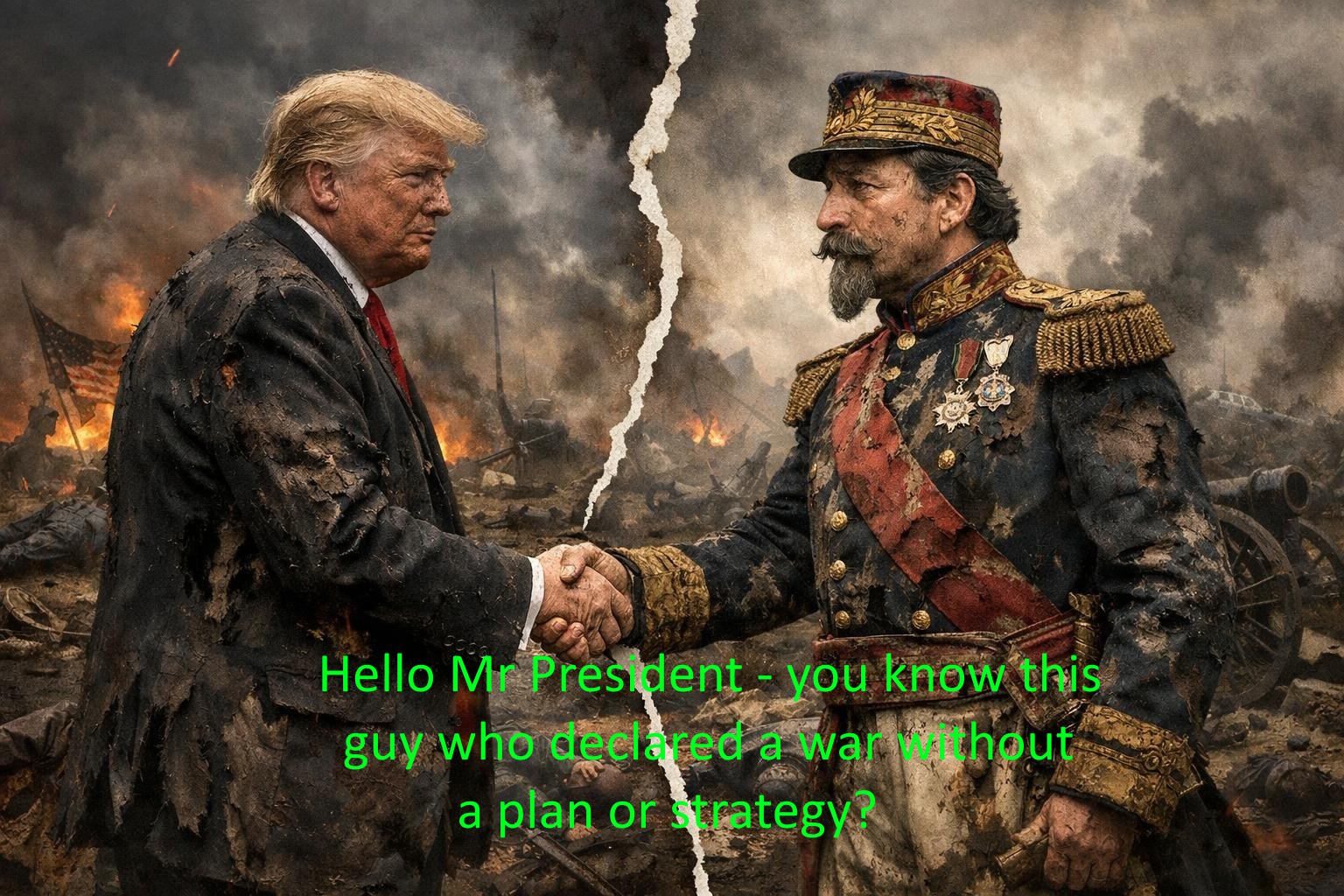
The Middle East conflict has reached a critical juncture, and the international community appears to be running out of time to prevent catastrophic escalation. In a candid interview, independent Member of Parliament Evangelos Apostolakis has expressed grave concerns about the trajectory of the crisis and its far-reaching implications for global stability—and for Greece itself.
Apostolakis, drawing on his military and geopolitical expertise, paints a sobering picture of a conflict that shows no signs of de-escalation despite ongoing diplomatic efforts.
A Crisis Without International Legitimacy
The recent coordinated attacks by the United States and Israel on Iran marked a turning point in the regional conflict. What’s particularly alarming, according to Apostolakis, is that these military operations lack any authorization from international bodies or the UN Security Council.
“The operation is fundamentally illegitimate from an international law perspective,” Apostolakis explains. “The US President decides, acts, and we see the consequences unfold. This sets a dangerous precedent for the rules-based international order.”
The strikes themselves were massive in scale: approximately 2,000 missiles and advanced weaponry were deployed in a combined effort to degrade Iran’s military capabilities and prevent nuclear weapons development.

The Illusion of Negotiation
Before the attacks began, there were diplomatic overtures—negotiations that ostensibly aimed to resolve the crisis through dialogue. However, Apostolakis argues these talks were merely theatrical.
“The negotiations were nothing more than a façade,” he states bluntly. “Regardless of their outcome, the military action was predetermined. Both sides knew what was coming.”
This revelation is troubling because it suggests that diplomacy has become a mere formality while military planners on both sides were already executing their strategies.
Iran’s Arsenal: Deeper Than Expected
One of the most unsettling aspects of the current situation is the apparent underestimation of Iran’s military reserves. Despite the massive bombardment, Iran continues to deploy weapons systems at an alarming rate.
“We don’t actually know what Iran has in reserve,” Apostolakis points out. “It appears the country has stored vast quantities of weapons in secure locations across its territory. Slowly but steadily, they’re being deployed into the air and targeting areas of strategic interest to the United States.”
This revelation raises a critical question: Was the initial assessment of Iran’s capabilities fundamentally flawed? If so, what does that mean for the conflict’s duration and intensity?
Iran’s Strategic Playbook: Create Chaos to Deter Further Attacks
Rather than directly confronting US military might—which would be suicidal—Iran has adopted a different strategy. Its goal is to create maximum regional instability, trigger economic pressure on global markets, and hope that mounting costs force the US and Israel to cease their offensive operations.
“Iran isn’t attacking America directly because it can’t,” Apostolakis explains. “Instead, it’s targeting areas where America has strategic interests and striking supply chains, energy markets, and shipping routes. The objective is to create such economic and geopolitical pressure that the US calculates the cost of further escalation as unacceptable.”
And it appears to be working—at least partially.
Economic Shockwaves Already Rippling Through Global Markets
The evidence of Iran’s strategy succeeding is visible in real-time:
* Stock markets have plummeted across the developed world as investors flee to safety.
* Oil prices are climbing, driven by supply concerns and geopolitical risk premiums.
* Natural gas prices are surging, affecting energy costs for millions.
* Shipping costs have reached astronomical levels, with maritime freight rates becoming prohibitively expensive.
* Insurance premiums for vessels in the region are skyrocketing, effectively strangling global trade.
For countries like Greece—which depend heavily on shipping and tourism—these economic shocks are anything but abstract. They translate directly into job losses, reduced business revenue, and lower living standards.
The Regime Change Fantasy
One of the stated objectives of US policy, according to President Trump, is to overthrow the Iranian regime and prevent it from ever developing nuclear weapons. However, Apostolakis casts doubt on whether this is achievable through military means alone.
“Regime change requires a viable successor government waiting in the wings,” he notes. “We don’t know if such an alternative even exists. Various names are floated, but the reality is more complex.”
This is because Iran’s political system is fundamentally different from Western democracies. It’s a hybrid theocracy where religious leaders hold ultimate authority while maintaining a parliamentary structure. Multiple power centers exist:
* The Supreme Leader and the religious establishment (which have the upper hand)
* The Islamic Revolutionary Guard Corps (IRGC or Pasdaran) — the military’s most powerful and ideologically committed wing
* The regular armed forces — tasked with border defense and supporting the civilian government
These factions have internal rivalries, and the US and Israel are hoping to exploit these divisions. However, removing an entrenched theocratic system is exponentially more difficult than toppling a secular dictatorship.
Why Ground Invasion Remains (Unlikely But) Risky
When asked about the possibility of a full-scale ground invasion, Apostolakis is skeptical—at least for now.
“I don’t see it happening in this phase,” he says. “Iran’s greatest asset is its geography. The country is extraordinarily difficult terrain for conventional military operations. Any ground invasion would face horrific logistical challenges and massive casualties.”
This is a critical constraint on US military options. Air and missile strikes can degrade capabilities, but conquering and holding Iran’s 1.6 million square kilometers would be a nightmare scenario for any invading force.
The Danger Ahead: Escalation Without End
What makes the current situation so precarious is the lack of exit ramps for either side. The US is committed to preventing Iranian nuclear development and possibly realize a regime change. Iran, faced with existential pressure, will likely continue asymmetric attacks and regional destabilization.
“The situation is critical and developing dangerously,” Apostolakis concludes. “There is no clear off-ramp. Both sides are locked into a logic of escalation.”
What This Means for Greece and the Eastern Mediterranean
For Greece, the implications are profound:
* Economic vulnerability: Higher energy costs, disrupted trade routes, and reduced tourism revenue.
* Security concerns: Potential terrorist attacks on strategic assets like Souda Bay.
* Regional instability: Increased refugee flows and humanitarian crises.
* NATO complications: Greece’s role as a NATO ally could draw it deeper into the conflict.
The Bottom Line
The Middle East crisis is no longer a distant regional conflict. It is a systemic global crisis with cascading economic, political, and military consequences. The fact that it’s escalating despite (or perhaps because of) military interventions suggests that traditional power politics and military solutions alone cannot resolve the underlying tensions.
What the world is witnessing is not the controlled degradation of a regional threat, but the uncontrolled acceleration of a conflict that shows every sign of becoming more dangerous, more costly, and more unpredictable.
The window for diplomatic resolution is rapidly closing. Once that window closes, the consequences will be felt far beyond the Middle East—including in Greece and throughout the Mediterranean.
Source: Rethemnos News