

Greece’s tourism boom masks a hidden crisis – but there is another way: a small town in the east with no all-inclusive hotels has fully booked accommodation and restaurants!

Crete’s Tourism Paradox: Record Visitor Numbers, Declining Revenue
Despite welcoming more tourists than ever before in 2026, Crete’s tourism industry is facing an unexpected crisis: record arrivals are not translating into proportional revenue growth, leaving local businesses and the island’s economy struggling.
The numbers tell a confusing story
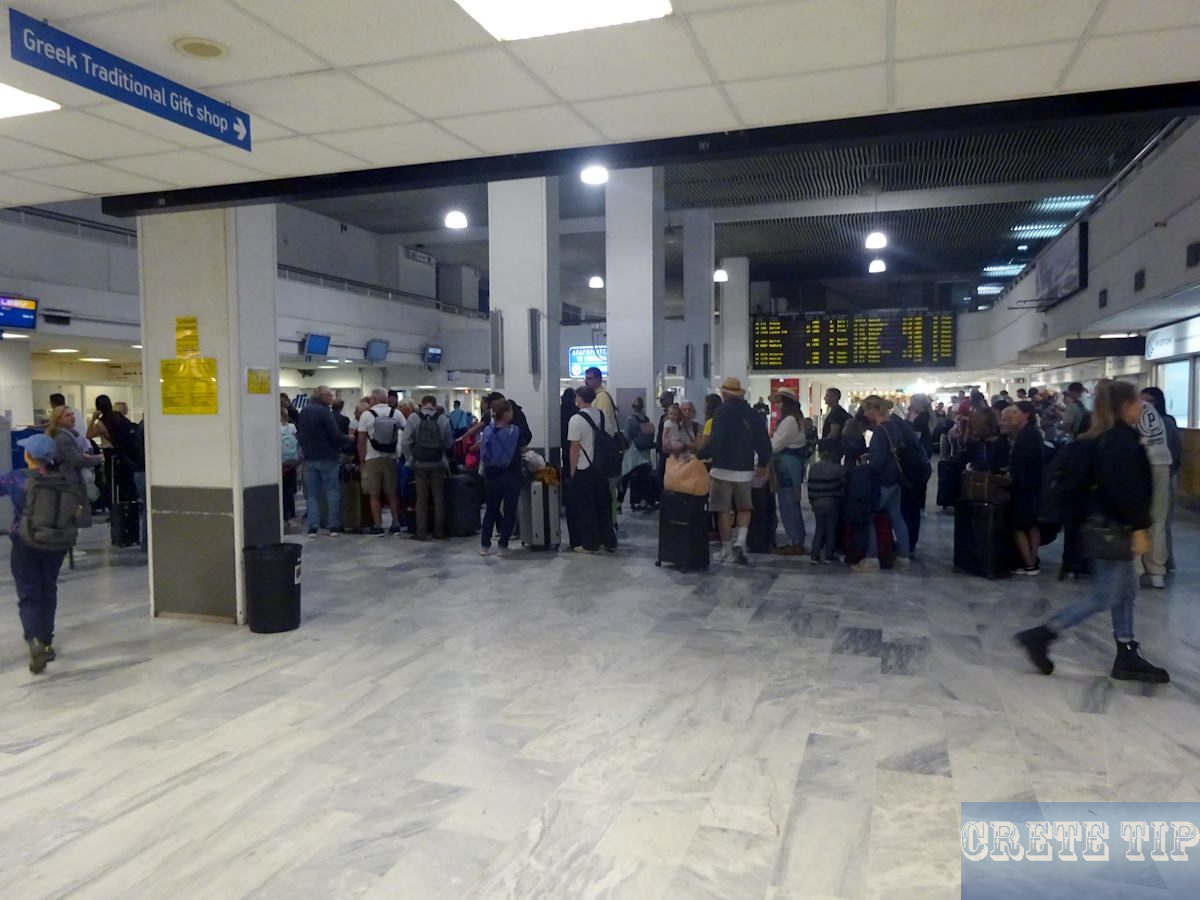
On the surface, tourism appears to be booming. Heraklion Airport recorded a 6% increase in arrivals during May 2026 compared to May 2025. The island welcomed 1.7 million air passengers in the first five months of 2026, maintaining its position as Greece’s most popular regional destination.
Yet industry leaders are sounding an alarm: higher visitor numbers are not resulting in higher spending or profits. Tourism professionals report that many European travelers are limiting their expenditures, creating what observers are calling the “tourism paradox.”
More visitors, less money
The disparity is stark. While Crete is attracting over 100,000 additional tourists compared to previous years, final financial results remain moderate or disappointing for many businesses. Hotels, restaurants, tour operators, and related services are reporting that volume has not compensated for reduced per-visitor spending.
This trend raises critical questions about the sustainability of Crete’s tourism model and whether the island can continue to manage record visitor numbers without compromising profitability—or environmental integrity.
Environmental strain adds pressure
The volume of visitors is also placing unprecedented strain on Crete’s natural ecosystems. Iconic beaches like Balos and Elafonissi in the Kissamos region are experiencing severe overcrowding during peak hours, prompting local authorities to propose visitor caps and managed-entry systems.
Giorgos Koukourakis, environmental advisor to the Kissamos Municipality, has warned that “nature cannot take any more.” He has proposed a pilot system allowing a maximum of 1,200 visitors to enter Balos every three hours, with electronic management via boat reservations and road-access monitoring.
Without immediate intervention, Koukourakis estimates that Crete has “two years” before irreversible damage occurs to its most precious natural areas.
The broader challenge
Crete’s experience reflects a broader global issue: tourism destinations can become victims of their own success. As word spreads and access improves, visitor numbers surge—but quality of experience declines, spending per visitor drops, and environmental degradation accelerates.
The island now faces a critical decision: how to manage tourism growth while protecting both the natural environment and the economic viability of the sector itself.
There’s another way, as demonstrated by Crete’s success story in alternative tourism: a small town with no all-inclusive resorts – yet with fully booked accommodation and restaurants

While many destinations depend on all-inclusive packages, the town of Sitia in eastern Crete is showing how a more local tourism model can benefit both visitors and the community.
August bookings reach nearly 100%
Tourist accommodation in Sitia is reporting exceptionally strong demand this summer, with occupancy levels in August approaching full capacity. September is also expected to perform well, while bookings are already being recorded for October.
The town continues to attract visitors from France, Germany, Italy, Scandinavia and Greece, including many returning Cretan travellers. Some foreign visitors have even chosen to buy homes in the area so they can spend more time there throughout the year.
Local businesses benefit
Sitia’s tourism offering stands out because the overwhelming majority of its accommodation does not operate on an all-inclusive basis. With the exception of one hotel, visitors generally dine outside their accommodation, spending money at local restaurants, tavernas, cafés and traditional rakadika.
According to Giannis Kakourakis, president of the Sitia Hoteliers’ Association, tourists also rent cars, visit archaeological sites and purchase local products—helping tourism revenue circulate through the wider local economy.
“People are moving around because we do not have all-inclusive resorts, and they leave money in the local market,” Kakourakis told Patris.
Authentic Crete around the table
Sitia’s appeal is not limited to its beaches and scenery. Compared with more heavily developed parts of Crete, the town has retained a strong sense of authenticity and a slower pace of life.
In the evenings, the waterfront and narrow streets fill with locals and visitors gathering in traditional rakadika. Shared meze, local specialities and glasses of tsikoudia create a relaxed social atmosphere where meals can last for hours.
For Sitia, this combination of full accommodation, accessible prices and locally focused tourism offers a compelling alternative to the resort model—and a direct boost to the town’s small businesses.
Tourists Outnumber Residents in Greece as Island Nation Joins Global Tourism Hotspot List
Greece has joined a group of 25 countries where international tourist arrivals exceed the resident population, underlining the extraordinary scale—and growing importance—of tourism to the country’s economy.
Nearly three tourists for every resident
According to data compiled from UN Tourism statistics and World Bank population figures, Greece welcomes approximately 2.7 international tourists for every resident. The country ranks 19th worldwide, placing it just behind Portugal and ahead of countries such as Denmark, Slovenia and Ireland.
The figures represent the latest available data for each country. Territories were excluded from the comparison.
Small nations dominate the ranking
Andorra tops the global list by a considerable margin. With a population of approximately 82,000, the Pyrenean country receives around 4.2 million visitors annually—equivalent to about 51 tourists per resident.
Monaco ranks second with approximately nine tourists per resident, followed by:
- Malta: 6.3 tourists per resident
- Iceland: 5.6
- Palau: 5.3
- The Bahamas: 4.7
- Croatia: 4.0
Other countries where visitors substantially outnumber residents include the Maldives, Seychelles, Antigua and Barbuda, Barbados, Cyprus, Austria and Portugal.
Tourism brings opportunity—and pressure
For many of the countries on the list, tourism is a central pillar of the economy. Visitor spending supports hotels, restaurants, transport providers, retailers and thousands of seasonal jobs.
However, exceptionally high visitor-to-resident ratios can also place pressure on housing, infrastructure, water supplies, public services and fragile natural environments. Greece’s position reflects both its success as a global destination and the challenge of managing tourism growth sustainably.
As visitor numbers continue to rise, the debate is increasingly shifting from attracting more tourists to ensuring that tourism benefits local communities while protecting the country’s landscapes and cultural heritage.
Crete at a Crossroads: Protecting Hospitality While Rethinking Tourism’s Future

Crete’s greatest tourism asset may be something that cannot be packaged or easily described: its authentic hospitality. But as visitor numbers grow, the island faces difficult choices about development, identity and the kind of experience it wants to offer.
“There is hospitality—and then there is Cretan hospitality”
Speaking to Cretaone 102.3 after a ten-day journey across the island, Bournemouth University professor Dimitris Buhalis described Crete as a diverse destination of striking contrasts, from Heraklion and Rethymno to Chania, Kissamos, Sfakia, Loutro and its mountain villages.
He said Cretan hospitality is not simply a formal service or a slogan. It is an experience visitors feel for themselves—one that is difficult to convey in words. The culture of welcome is also reflected in everyday social life, where, as Buhalis put it, “many things are solved with a raki.”
Tourism is a blessing—but growth needs direction
Buhalis described tourism as a blessing for Crete, noting its contribution to the island’s economy and cultural activity. However, he warned that development cannot continue without limits or planning.
Large visitor numbers concentrated in particular areas can create pressure on infrastructure, resources and local communities. The central questions, he argued, are straightforward but urgent:
- How many visitors does Crete want to welcome?
- Where should those visitors go?
- What kind of experience should they take home?
These questions are especially important because, as Buhalis stressed, “there is not one Crete—there are many Cret es.” The island’s different regions must find common ground and agree on a shared direction.
Keeping Crete’s identity at the centre
For Buhalis, the problem is not development itself but the absence of a clear identity and strategy. Without a defined destination, he warned, external forces will determine Crete’s future.
He criticised tourism businesses that replace local character with generic international offerings. Recalling visits to establishments where sushi appeared before traditional Cretan dishes on the menu, he questioned why visitors should travel to Crete only to be offered something they could find anywhere else.
The island’s strength, he said, lies in its own products and traditions: dakos, tsikoudia, local cheeses, wine, herbs, olive oil and the aromas of the land. These elements should be central to the visitor experience—not treated as secondary attractions.
Change is inevitable—but it must be chosen
Crete cannot remain unchanged forever, Buhalis acknowledged. Communities, needs and expectations evolve. The real danger is not change, but allowing change to lead the island somewhere its people do not want to go.
That challenge is visible in the island’s infrastructure, from airport delays to urban congestion and pressures on everyday life. Tourism cannot be managed separately from the needs of residents or the quality of local services.
Knowledge and love of place
Buhalis also highlighted the importance of education for young people considering careers in tourism. Practical knowledge and a genuine understanding of the sector, he argued, are more valuable than a qualification displayed on a wall.
His message to Crete was ultimately simple: love the island, take pride in the work and welcome visitors sincerely. The future of Cretan tourism may depend on turning that principle into a clear, coordinated strategy.
Sources:
Zarpanews – “Nature cannot take any more”: Kissamos Municipality proposes visitor caps for Balos
Patris.gr – Sitia accommodation fully booked as local businesses benefit from tourism
GreekReporter – Greece joins global list of 25 countries where tourists outnumber residents
Cretaone – Dimitris Buhalis on hospitality, tourism and Crete’s future



