
Newsflash from Monday, 20 April 2026:
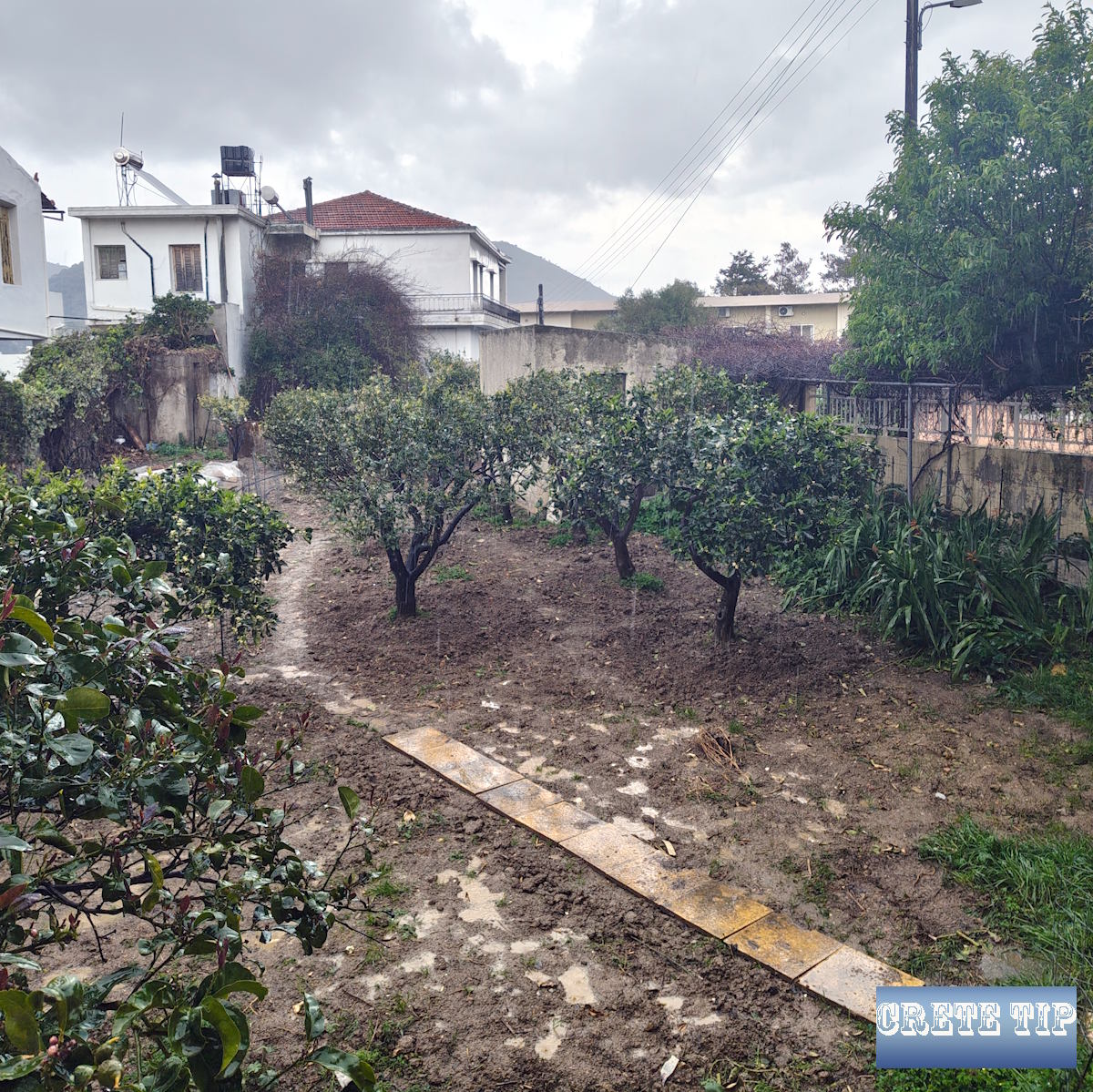
For much of the past year, the outlook for Crete’s water reserves looked bleak. After a parched autumn and a disappointing start to winter, many feared the island was heading toward a severe drought. However, according to the latest data from the National Observatory of Athens (meteo.gr), a “miracle” March has completely shifted the narrative.
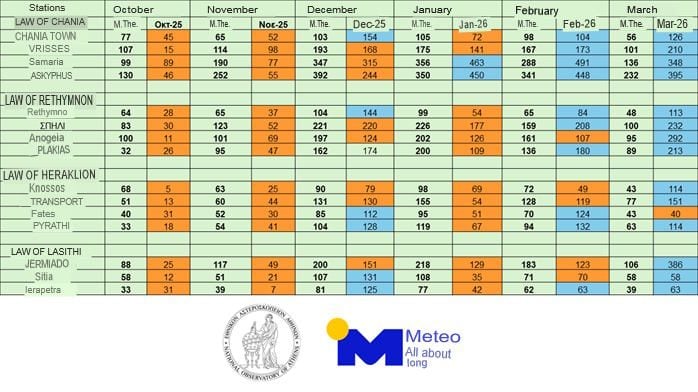
Here is a breakdown of the rainfall levels across Crete from October 2025 to March 2026 and why the recent downpours were a game-changer for the island.
A Worrying Start: October to January
The rainy season began with significant deficits. According to scientists K. Lagouvardos, Ch. Petropoulos, and I. Roussos, the first four months of the hydrological year were underwhelming:
* October & November 2025: Rainfall was extremely limited across all four regional units of Crete (Chania, Rethymno, Heraklion, and Lasithi).
* December 2025: The deficit continued, though some localized areas saw slight improvements.
* January 2026: Most of the island remained dry, with rainfall significantly below the monthly average. The only notable exception was the area near the White Mountains (Lefka Ori), specifically Samaria and Askifou, which saw heavy rains in the latter half of the month.
The Turning Point: February and the March Surge
The tide began to turn in February 2026, when rainfall reached satisfactory levels, particularly in the western parts of the island. But it was March that truly saved the season.
In March 2026, rainfall levels across the entire island were exceptionally high. This “miracle month” didn’t just meet the average—it shattered it in several locations.
The Lasithi Plateau Record
The most stunning statistic comes from the Lasithi Plateau (Oropedio Lasithiou). In March, the monthly rainfall recorded was nearly four times the historical average for the month. This massive influx of water has been vital for replenishing the local aquifers and reservoirs.
Why This Matters: Reservoirs and Monitoring
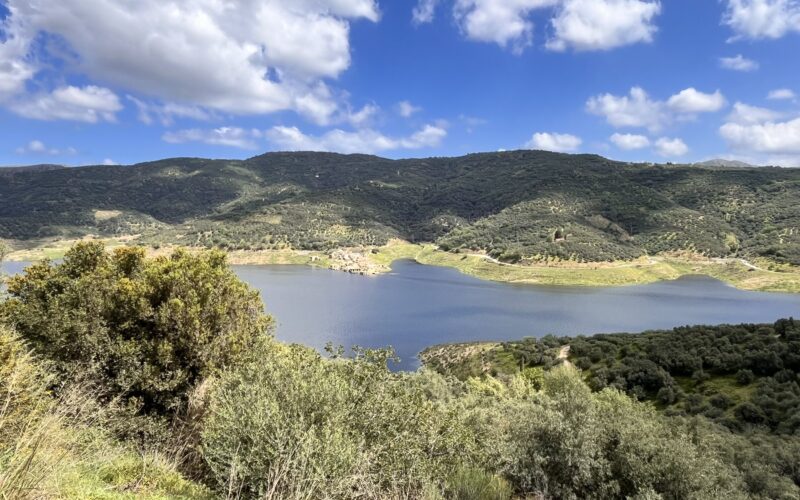
The late-season rains have had a direct, positive impact on the volume of water stored in Crete’s reservoirs. After months of concern, the deficit has been significantly reduced, providing a much-needed safety net for the upcoming summer months when water demand peaks due to agriculture and tourism.
The experts at meteo.gr emphasized that these fluctuations highlight the importance of a dense network of meteorological stations. By tracking these parameters in real-time, authorities can better monitor climate trends and manage the island’s precious water resources.
Summary of Rainfall (Oct 2025 – March 2026)
Period | Status | Key areas |
|---|---|---|
Oct. – Nov. | Very low | Deficit across the whole island |
December | Low | Minor local improvements |
January | Below average | High values only in Samaria/Askifou |
February | Satisfactory | Particularly in western Crete |
March | Extremely high | Lasithi Plateau (four times the average) |
While the winter started with a “lost year” vibe, the spring rains have ensured that Crete heads into the warmer season in a much stronger position.
Drought Alert: Eastern Crete Remains “Thirsty” Despite Recent Spring Storms
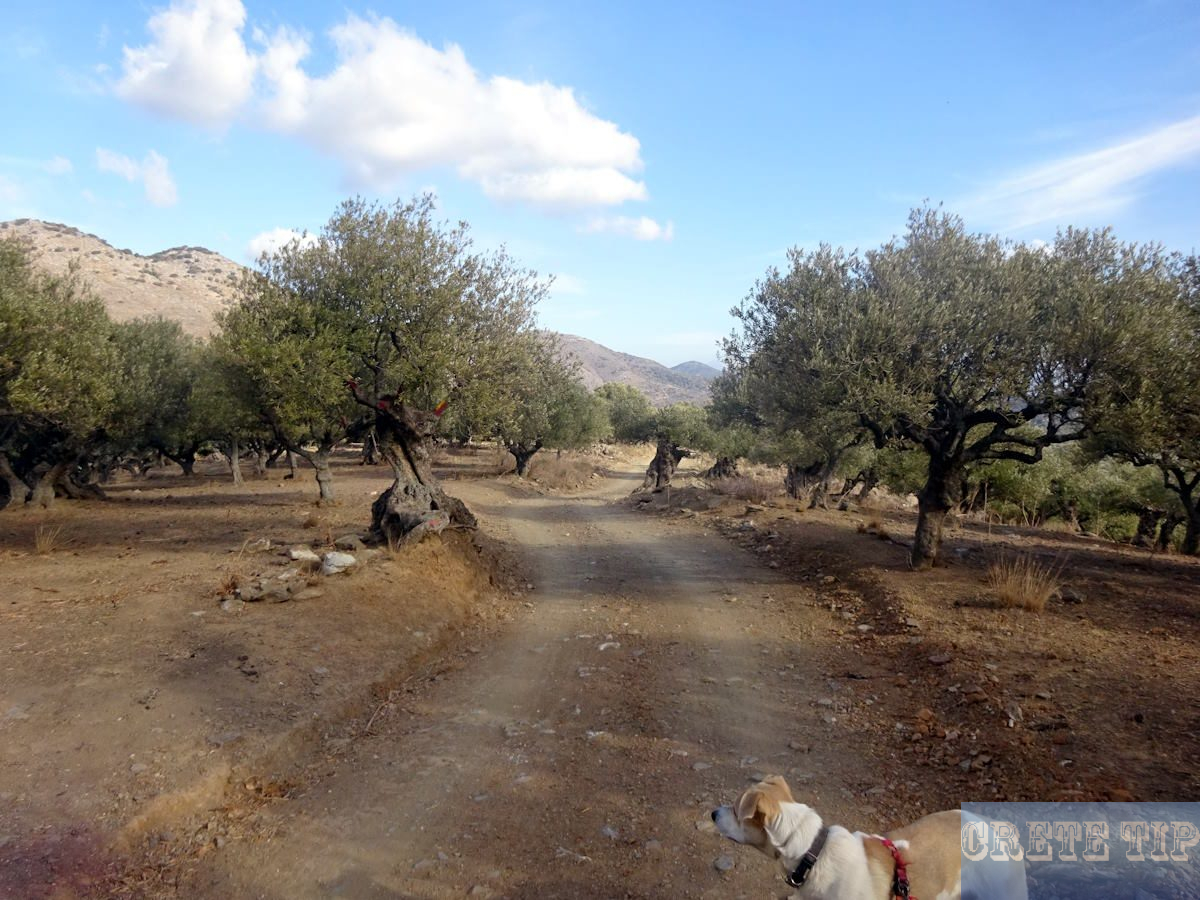
While much of Greece has breathed a sigh of relief following a series of wet spring weeks, a new report from the National Observatory of Athens (METEO) highlights a lingering concern: Eastern Crete is still grappling with relative drought.
Despite the heavy rainfall brought by Storm “Erminio” in early April, the soil in the easternmost part of the island has not yet recovered to normal levels. Here is a closer look at the data and what it means for the region.
The Tale of Two Layers: Understanding Soil Moisture
To assess the drought conditions, the METEO team (G. Fragoulidis, K. Lagouvardos, and V. Kotroni) analyzed data from the European Union’s Copernicus service. They focused on two critical soil layers:
1. The Surface Layer (7-28 cm): This layer reacts quickly to recent weather and reflects the rainfall of the last few weeks.
2. The Deeper Layer (28-100 cm): This layer has more “inertia” and reflects the cumulative moisture conditions of the past several months.
Using the Standardized Soil Moisture Index (SSMI), scientists compared current conditions against the 30-year average (1991-2020).
Eastern Crete: An Exception to the Rule
Across most of Greece, the period between March 10 and April 10, 2026, saw a dramatic shift. Thanks to Storm “Erminio” and cooler-than-average temperatures, most of the country transitioned from drought conditions at the end of March to a moisture surplus by mid-April.

However, the maps tell a different story for two specific regions: parts of Epirus and Eastern Crete.

Drought indices in Greece on 10 April 2026 in soil layers of 7–28 cm (left) and 28–100 cm (right). Areas experiencing relative drought are coloured according to the 5-point scale shown in the top right-hand corner of the map. Areas where soil moisture is significantly above the seasonal norm are shown in green, whilst areas with soil moisture close to the average are shown in white. The black outline on the right-hand map indicates areas with particularly flat/rocky terrain (< 40 cm), where the model estimate is likely to be less reliable.
While Western and Central Crete saw significant improvement, Eastern Crete remains one of the few areas in the country where soil moisture is still significantly below the historical average. In these areas, the “thirst” of the land persists, particularly in the deeper soil layers that are vital for long-term agricultural health.
Why This Matters for Agriculture
Soil moisture isn’t just a weather statistic—it is the lifeblood of Crete’s agricultural sector. The water content in these subsoil layers is critical for:
* Crop Development: Ensuring plants have enough water during the crucial spring growth phase.
* Yield Stability: Preventing stunted growth in olive groves and vineyards.
* Water Stress Management: When moisture levels are low, crops enter a state of “prolonged water stress,” which can impact the quality and quantity of the harvest.
A “Relative” Drought
It is important to note that the METEO report defines this as a relative drought. This means that even if the ground doesn’t look bone-dry to the naked eye, the moisture levels are significantly lower than what is “normal” for this time of year. For a region like Eastern Crete, which already faces water management challenges, starting the warmer season with a moisture deficit in the deeper soil layers is a cause for vigilance.
Looking Ahead
As we move further into spring, the focus remains on whether additional rainfall will reach the eastern part of the island or if the region will have to rely heavily on irrigation systems earlier than usual.
For now, the data serves as a reminder that while one storm can change the outlook for a nation, localized regions like Eastern Crete often require more sustained precipitation to truly break the cycle of drought.