

Another rise in road deaths in Crete and the motorway from days gone by, when there were only 10,000 cars on the island.

Crete’s Road Death Crisis: 2026 on Track to Shatter Safety Records with 35% Increase
Crete is facing a alarming surge in traffic fatalities, with preliminary data from the first half of 2026 suggesting that the island is heading toward a dramatic increase in road deaths this year. The grim statistics paint a picture of a transportation safety crisis that demands urgent intervention.
The Alarming Numbers
In just the first six months of 2026, Crete recorded 19 deaths from traffic accidents—compared to 14 fatalities during the same period in 2025. This represents a 35% increase year-over-year, and if the trend continues, the island is on course for a catastrophic final tally by December.
To understand the severity: if this pace holds, Crete could exceed 38 traffic deaths by the end of 2026—potentially the worst year on record in recent memory.
A Troubling Reversal
The 2025 data had offered a glimmer of hope. That year marked the best road safety performance in Crete since 1993, suggesting that safety initiatives and enforcement efforts were finally having an impact.
However, the current trajectory represents a dramatic reversal, erasing years of progress in a matter of months.
Europe’s Worst Performer
Crete’s road fatality rate stands at an alarming 103% above the European average—a statistic that underscores how far behind the island lags on safety metrics.
For context:
- European average: 40 deaths per million residents
- Greece overall: Recently fell below 60 deaths per million for the first time
- Crete in 2024: 103 deaths per million residents—more than double the European average
This disparity reveals that Crete faces unique challenges that are not being adequately addressed.
Why Is Crete Particularly Vulnerable?
According to testimony presented to Parliament’s Special Standing Committee on Road Safety, Crete faces a perfect storm of risk factors:
Explosive Growth in Vehicle Numbers
The island’s vehicle fleet has exploded over the past three decades:
- 1993: 120,000 vehicles
- 2026: 538,000 vehicles—a 4.5-fold increase
- Rental vehicles: 130,000 additional cars in circulation
This dramatic growth in traffic volume has outpaced infrastructure improvements and driver adaptation.
Tourism-Driven Congestion
Crete ranks as the third highest region in Europe for motorcycle and scooter usage, behind only Ibiza and Mallorca—both major tourist destinations. The rise of Airbnb and short-term rental tourism has dramatically increased traffic congestion, with thousands of additional daily journeys undertaken by unfamiliar drivers.
Aging and Inadequate Road Infrastructure
The Crete Regional Authority manages 3,929 kilometers of national and provincial road networks. Many sections are narrow, winding, and poorly maintained—conditions that were acceptable decades ago but are dangerous by modern standards.
Driver Behavior Issues
A concerning statistic from traffic enforcement data reveals that 18% of violators stopped by authorities were driving without a valid license. This suggests a culture of non-compliance that extends far beyond speeding tickets.
The True Cost of Road Deaths
Beyond the human tragedy, road accidents carry massive economic consequences. According to Eurostat data, each fatal traffic accident or serious injury costs approximately €300,000 in direct and indirect expenses, including:
- Hospital and medical treatment
- Loss of work productivity
- Lost employment opportunities
- Material damage
The total annual cost of traffic accidents across Greece exceeds €3 billion, while Crete alone incurs over €100 million annually.
Remarkably, the traffic enforcement fine revenue in Crete alone generates approximately €65 million per year. Combined with accident cost savings, these funds could theoretically build a complete new highway system over a decade—yet the island’s roads remain dangerously inadequate.
Systemic Failures in Road Safety
Addressing the crisis requires more than enforcement. According to evidence presented to Parliament, Crete’s road safety problems stem from:
- Punitive rather than preventive approaches: Traffic fines create a culture of evasion rather than compliance, as drivers become desensitized to penalties
- Infrastructure gaps: Lack of proper road design, signage, and safety features
- Legislative inconsistencies: Outdated traffic codes that don’t address modern hazards like plastic bollards and temporary barriers
- Insufficient resources: Underfunded road maintenance and safety programs
A Call for Action
Experts and officials testifying before Parliament have called for:
- Comprehensive modernization of the Traffic Code with emphasis on prevention
- Accelerated construction of the VOAK (Cretan Ring Road) highway system
- Improved road markings, lighting, and barrier systems
- Targeted enforcement against dangerous driving behaviors
- Driver education and awareness campaigns
- Better coordination between police, firefighters, and medical services
The Human Cost
Statistics can feel abstract, but behind every number is a human tragedy. Each of the 19 deaths recorded in the first six months of 2026 represents a person who did not return home, a family fractured by loss, and a community forever changed.
The question facing Crete is no longer whether action is needed—it is whether that action will come in time to prevent another record-breaking year of preventable deaths.
What Can Be Done?
While systemic change takes time, individuals can take immediate steps to improve safety:
- Obey speed limits and traffic signals
- Never drive under the influence
- Avoid distractions while driving
- Wear seatbelts and helmets
- Report dangerous driving behavior to authorities
- Support infrastructure improvements in your community
Bottom Line
Crete’s road safety crisis is reaching a critical inflection point. The 2026 data suggests that last year’s progress was temporary, not transformative. Without decisive action—both from policymakers and individual drivers—the island faces the grim prospect of 2026 becoming one of its deadliest years on record. The time for warnings has passed; the time for action is now.
From 10,000 Cars to Gridlock: Why Crete’s BOAK No Longer Fits Modern Life

The Northern Road Axis of Crete (BOAK) is one of the island’s most vital transportation corridors. Stretching across Crete, it connects major cities like Heraklion, Rethymno, and Chania. But while its importance has only grown over the decades, its design tells a very different story—one rooted in a time when traffic looked nothing like it does today.
When the current BOAK was originally built in the late 1960s and early 1970s, Crete had roughly 10,000 cars—a number that now seems almost unimaginable. Today, a single large car rental company on the island can operate more vehicles than that. The explosive growth in tourism, population, and vehicle ownership has transformed the island’s mobility needs, leaving the aging road struggling to keep up.
An Outdated Design in a Modern World
The BOAK was considered a major infrastructure achievement at the time of its construction. However, it was designed for a completely different era—one with minimal traffic, lower speeds, and far less demand. Fast forward to 2026, and drivers are navigating a road that many argue no longer meets basic safety and efficiency standards.
In several sections, the road remains narrow, with limited separation between opposing traffic. Temporary solutions, such as plastic lane dividers and 2+1 lane configurations, have been introduced to reduce head-on collisions. While these measures may offer some improvement, they fall short of the standards seen on modern highways across the rest of Greece.
The Safety Challenge
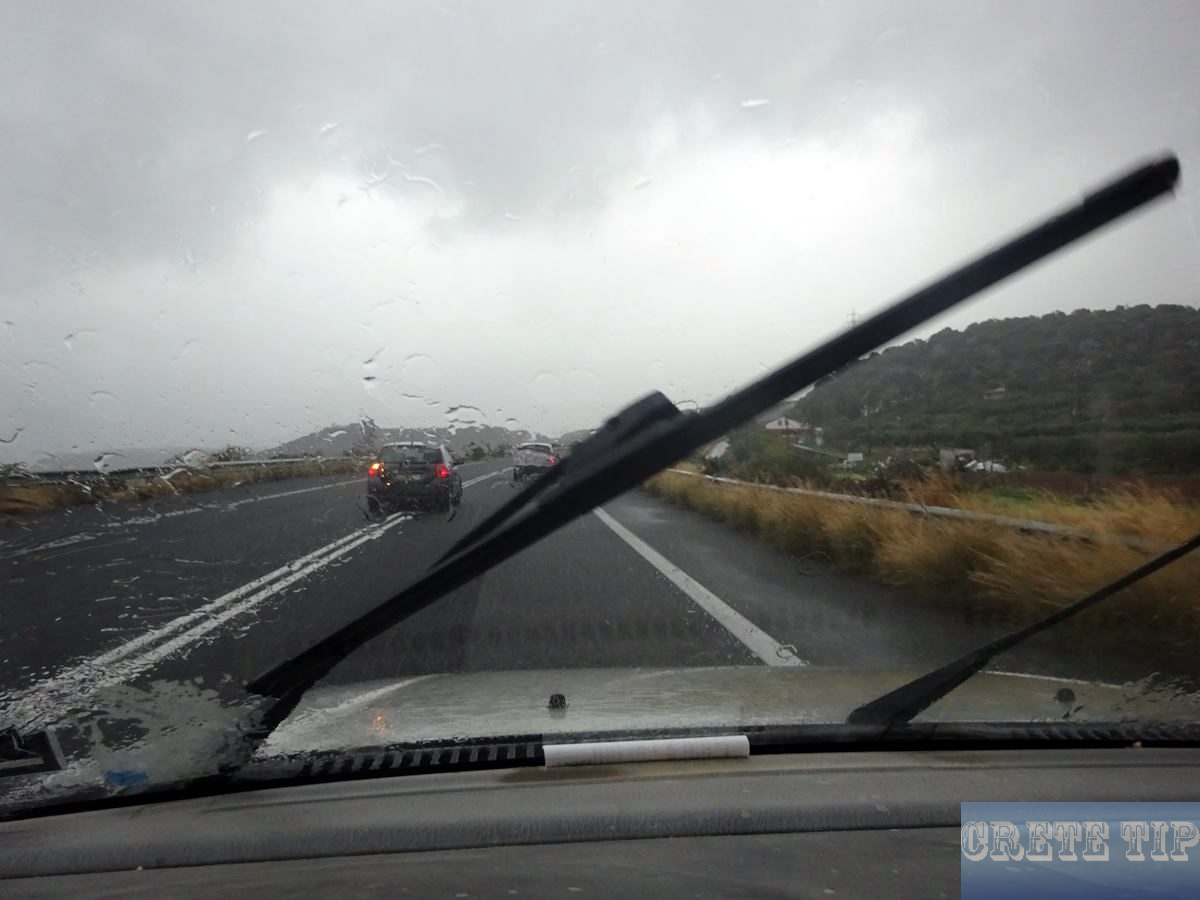
One of the most pressing concerns surrounding the BOAK is safety. Drivers frequently report stressful and even dangerous conditions, particularly during overtaking maneuvers on narrow stretches. With vehicles often passing within inches of each other, the margin for error is minimal.
The road’s original dimensions simply weren’t designed for today’s traffic density or vehicle sizes. Larger modern vehicles—and even classic cars with wider frames—can struggle to stay comfortably within lanes, especially when combined with high-speed overtaking.
A Growing Gap Between Demand and Infrastructure
The contrast between BOAK and other major Greek highways is striking. Elsewhere in the country, drivers benefit from multi-lane motorways, central barriers, and modern safety features. On Crete, however, much of the primary road network still reflects infrastructure decisions made more than 50 years ago.
This growing gap highlights a broader issue: infrastructure that once served its purpose well can become a liability when it fails to evolve alongside societal and economic changes. In Crete’s case, the surge in tourism and mobility has outpaced the road’s capacity to safely accommodate it.
Looking Ahead
The conversation around upgrading the BOAK has been ongoing for years, with plans and proposals frequently discussed. The challenge lies not only in funding and construction but also in navigating bureaucratic hurdles and land-use constraints.
What is clear, however, is that the road’s current state reflects a bygone era—one where 10,000 cars were the norm, not hundreds of thousands. As Crete continues to grow, the need for a modern, safe, and efficient highway becomes increasingly urgent.
A Highway Built for Yesterday: How Crete’s Roads Collapsed Under 50 Times More Traffic

Crete’s infrastructure crisis has a simple explanation: the island’s main highway system was designed for an era that no longer exists. When the current BOAK (Cretan Ring Road) was constructed, Crete had approximately 10,000 vehicles. Today, that number has exploded to over 538,000—a 54-fold increase—yet the road infrastructure has barely evolved to match.
The Highway That Became Obsolete Before It Was Finished
The BOAK represents one of Greece’s most ambitious infrastructure projects, designed to create a modern highway system connecting Crete’s four prefectures and improving access to the island’s interior. However, the project’s timeline reveals a critical problem: by the time sections were completed, they were already inadequate for current traffic volumes.
The gap between planning and completion—compounded by explosive growth in vehicle ownership—means that Crete’s primary road network was essentially outdated from day one of operation.
Exponential Growth in Vehicle Numbers
The numbers tell a remarkable story of transformation:
- 1993: 120,000 vehicles on Crete
- 2000: 200,000+ vehicles
- 2010: 350,000+ vehicles
- 2026: 538,000 vehicles registered on the island
- Tourism factor: An additional 130,000 rental vehicles in circulation during peak season
This growth rate far exceeds population increases or economic development patterns. Several factors have driven this explosion:
- Rising incomes: Increased purchasing power allowed more households to own vehicles
- Tourism boom: Crete transformed into one of Europe’s premier destinations, bringing millions of annual visitors
- Urbanization patterns: People moved away from city centers to suburban areas, increasing reliance on personal transportation
- The Airbnb effect: Short-term rental tourism created new transportation patterns and congestion hotspots
- Economic accessibility: Cheaper used cars entered the market, making vehicle ownership achievable for lower-income households
A Road Network Designed for a Smaller Island
The BOAK was conceived in an era when traffic projections were fundamentally underestimated. Urban planners of the 1980s and 1990s could not have anticipated:
- The explosive growth of tourism beyond all forecasts
- The rise of the sharing economy and short-term rentals
- The proliferation of motorcycles and scooters (Crete now ranks among Europe’s highest in two-wheeler usage)
- Shift patterns where workers commute longer distances daily
- The commercialization of once-quiet rural roads
When the current system was designed, these factors were either non-existent or barely on the radar of transportation planners.
Unfinished Business
Adding insult to injury, the BOAK itself remains incomplete after decades of construction. Key sections that would relieve congestion have not been built, while existing segments struggle under demands they were never engineered to handle.
The project’s prolonged timeline means:
- Cost overruns: Projects that should have been completed in the 1990s are still ongoing in the 2020s, with budgets ballooning
- Piecemeal development: Incomplete sections create traffic bottlenecks rather than improving flow
- Outdated standards: Road sections built in the 1990s may not meet modern safety or capacity requirements
- Maintenance challenges: Aging infrastructure requires increasingly expensive upkeep
The Consequences of Underestimation
The mismatch between road capacity and vehicle volume has had profound consequences:
Safety Crisis
As mentioned earlier, Crete’s road fatality rate stands at 103% above the European average. Narrow, winding roads designed for 10,000 daily vehicles now carry traffic volumes they cannot safely accommodate.
Congestion and Delays
Tourist destinations, commercial hubs, and residential areas experience chronic traffic jams, particularly during peak tourism season (May through October) and on weekends.
Environmental Impact
Congested roads mean longer commute times, increased fuel consumption, and higher emissions. Vehicles stuck in traffic emit significantly more pollutants than those traveling at steady speeds.
Economic Inefficiency
Businesses lose productivity as deliveries face delays, workers spend hours commuting, and visitors become frustrated with poor accessibility to attractions.
Why the Problem Persists
Despite decades of awareness, Crete’s road infrastructure problem has proven stubbornly difficult to solve:
- Funding constraints: Complete highway modernization requires billions of euros that Greek budgets struggle to allocate
- Political cycles: Long-term infrastructure projects span multiple electoral cycles, creating inconsistency in planning and funding
- Geographic challenges: Crete’s mountainous terrain makes highway construction expensive and complex
- Competing priorities: Tourism infrastructure, water systems, and other needs compete for limited resources
- Historical inertia: Decisions made decades ago continue to constrain current options
The Current State of Affairs
Today, Crete’s road network reflects a patchwork of different eras:
- Narrow, winding roads from the pre-BOAK era, still used for daily transportation
- Modern highway sections that provide temporary relief before merging into congested local roads
- Incomplete projects that create confusion and bottlenecks
- Aging infrastructure requiring constant maintenance and repairs
The result is a transportation system that satisfies no one: not visitors frustrated by slow progress to attractions, not residents enduring lengthy commutes, and not businesses struggling with logistics challenges.
What Would Modern Planning Look Like?
If planners could design Crete’s road system today with knowledge of current traffic volumes and patterns, it would look dramatically different:
- Wider, more direct highways with multiple lanes
- Bypass routes around congested population centers
- Dedicated tourist corridors separating leisure traffic from commercial and residential flows
- Public transportation alternatives to reduce private vehicle dependence
- Smart traffic management systems using real-time data
- Integrated logistics networks for commercial deliveries
Instead, planners are forced to work within constraints of existing infrastructure, making incremental improvements that lag far behind actual demand.
The Path Forward
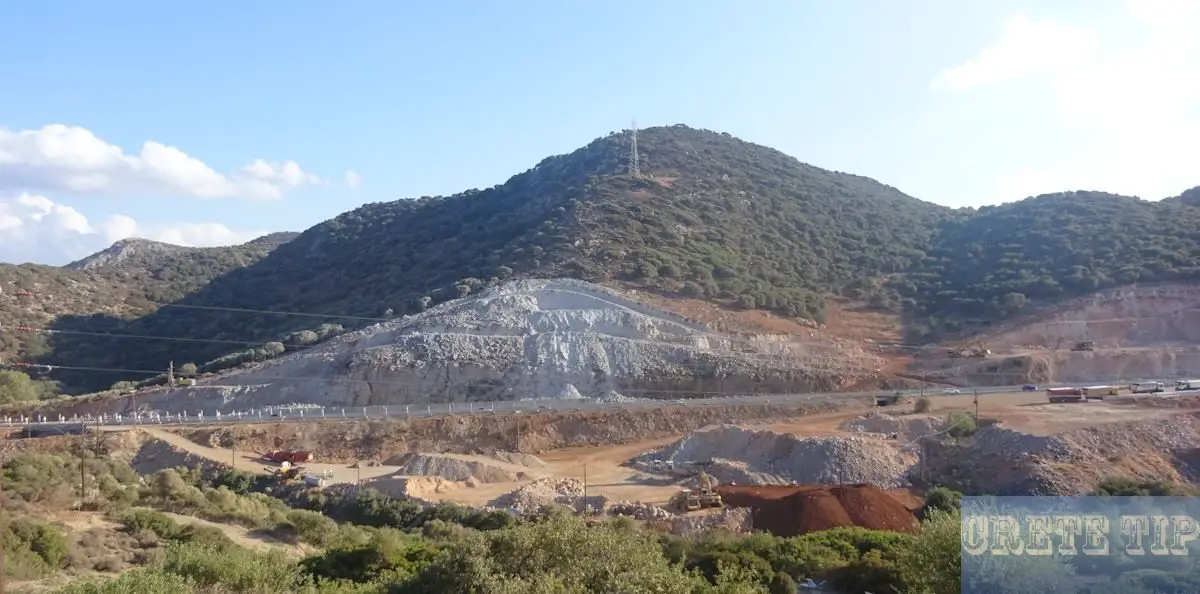
Addressing Crete’s infrastructure crisis requires acknowledging that the old road system simply cannot be modernized enough to meet current needs. Continuing to patch and expand existing routes is treating symptoms, not addressing the underlying problem.
Potential solutions include:
- Accelerated completion of the BOAK with increased funding prioritization
- Investment in public transportation to reduce private vehicle dependence
- Strategic tourism management to distribute visitor traffic across multiple routes and times
- Urban planning reforms that reduce the need for long-distance commuting
- Congestion pricing that discourages unnecessary vehicle use during peak times
A Cautionary Tale
Crete’s situation serves as a stark reminder of the dangers of underestimating growth and delaying infrastructure investment. When a road built for 10,000 vehicles must accommodate 538,000, no amount of patchwork repairs can restore adequate function.
The island is now paying the price—in traffic fatalities, economic inefficiency, environmental degradation, and quality of life—for planning decisions made decades ago.
Bottom Line
The BOAK was once a vision of modernity and progress. Today, it is a case study in how quickly infrastructure can become inadequate when growth outpaces planning. Crete’s road crisis is not the result of poor management alone—it is the inevitable consequence of building for yesterday’s island while accommodating today’s reality. Until policymakers acknowledge that incremental fixes cannot solve a fundamental capacity problem, Crete will continue to suffer the consequences of a transportation system fundamentally mismatched to its present needs.
Sources:



