

Newsflash from Monday, 23 November 2026:

Turkey is moving closer to passing legislation that will formally enshrine its “Blue Homeland” maritime doctrine into domestic law. The proposed bill focuses heavily on the Aegean Sea (Aigaio, the sea separating Greece and Turkey) and the Eastern Mediterranean.
According to the Haberturk TV network, Turkey’s ruling Justice and Development Party (AKP) is in the final stages of drafting the bill. The legislation is expected to be put to a vote in the Turkish Grand National Assembly in December.
The move has triggered alarm in Greece, particularly concerning the waters surrounding Crete (Kriti, Greece’s largest island, located in the southern Aegean).
What is in the ‘Blue Homeland’ Bill?
The “Blue Homeland” doctrine has long been a cornerstone of Turkey’s strategic claims in the region. Until now, these arguments existed primarily as political declarations.
According to the Turkish publication Turkiye Today, the lack of a domestic legal framework made it difficult for Ankara to defend its positions in maritime disputes. The new bill aims to close this gap by creating comprehensive internal laws.
The legislation will introduce regulations regarding the continental shelf, maritime zones, and the exploitation of the seabed and subsoil. It also includes provisions for economic, scientific, and environmental activities.
Notably, the bill references different territorial water widths in the Aegean and the Mediterranean. It also includes claims over certain islets that Turkey refers to as “grey zones.”
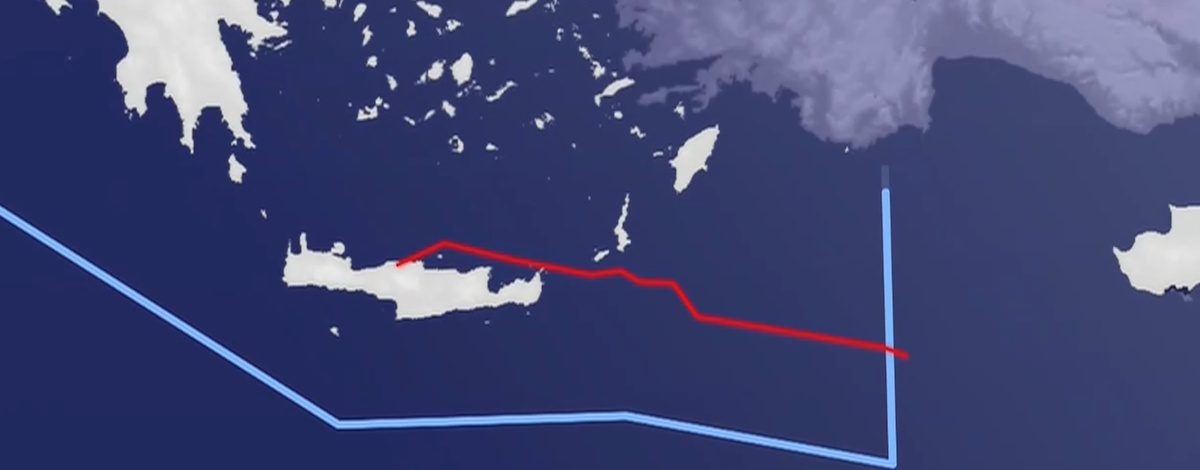
Maps broadcasted by Turkish media show these maritime claims extending as far as the 25th meridian. This boundary covers a significant portion of the Aegean Sea.
Differing Perspectives on the Legislation
The motivations behind the bill are viewed very differently depending on the source. In Turkey, President Tayyip Erdoğan’s government has faced mounting pressure from the political opposition over delays in submitting the legislation.
On May 12, 2026, Turkey’s National Center for the Sea and Maritime Law (DEHUKAM) announced that the draft was entering public debate. Writing for Global Panorama, analyst Kenan Şahin argues that the law is not meant to stop negotiations with Greece.
Instead, Şahin states the bill seeks to reduce ambiguity by firmly establishing Turkey’s view of the Aegean as a “semi-enclosed sea.” Conversely, the EUObserver describes the legislation as an attempt to impose a “territorial fiction” on the Eastern Mediterranean.
For Greece, the law presents new diplomatic hurdles. While a Turkish national law cannot alter international maritime law or create legal rights against other countries, Athens worries Turkey will use it to justify administrative actions at sea.
The Cable Dispute: A Catalyst for Tension
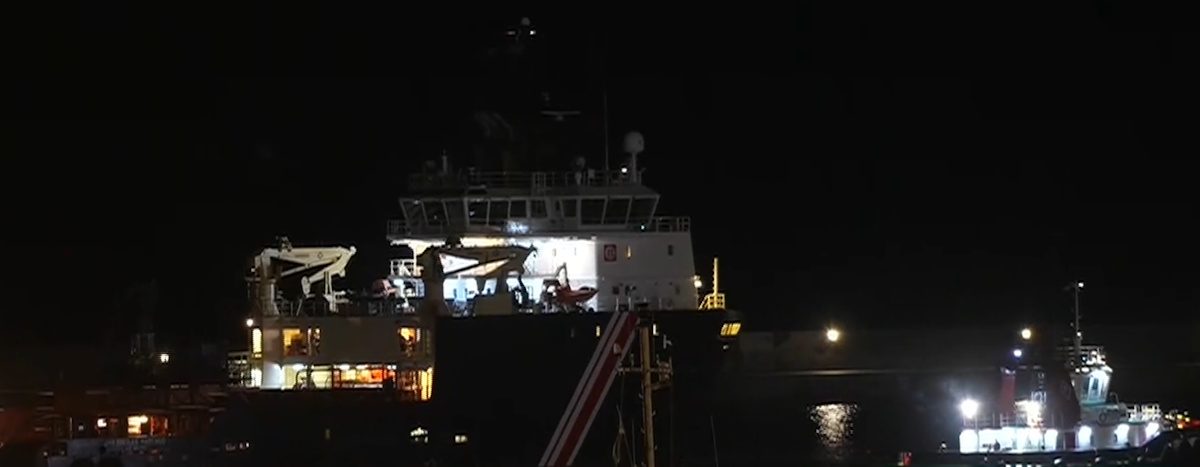
Greece issued a license and a NAVTEX (navigational warning) for the vessel’s research. Turkey immediately responded by issuing its own maritime announcement.
The situation escalated when France sent a note verbale (a formal diplomatic communication) to Ankara regarding the preliminary research. The exact contents of this French document have not been made public.
Greece maintains that the French note did not request Turkish permission, nor did it recognize Turkish jurisdiction in the area. However, Ankara has attempted to frame the ship’s research as an activity conducted with Turkish consent.
Concerns for Crete and the Eastern Mediterranean
The diplomatic friction over the Abeille Marengo was recently the subject of a briefing by Greek Foreign Minister Giorgos Gerapetritis (Γιώργος Γεραπετρίτης) to national political leaders.
Athens is highly concerned that Turkey is trying to use the French diplomatic note as a precedent. The fear is that Ankara will use this framework to challenge future activities in the region.
This could directly impact waters south of Crete. Future seabed research, hydrocarbon exploration, the laying of new submarine cables, or environmental projects in this area could all face similar disputes if Turkey enforces its new “Blue Homeland” laws.
Further reading
- Neakriti: Alarm in the Aegean and Eastern Mediterranean: Turkey prepares law for the ‘Blue Homeland’
- eKathimerini: Turkey preparing legislation for ‘Blue Homeland’ doctrine
- Parapolitika: Turkey’s “Blue Homeland” Bill: Erdoğan Under Pressure
- Global Panorama: Türkiye’s Move in the Law of the Sea: The “Blue Homeland” Law
- IBNA: Türkiye Pushes “Blue Homeland” Doctrine Into Law
- Turkiye Today: How Türkiye is turning Blue Homeland concept into law
- EUObserver: Turkey’s new maritime law to impose Erdoğan’s ‘territorial fiction’



