

Eleftherios Venizelos was a lawyer from a village outside Chania who became the most influential Greek statesman of the early twentieth century. Eleftherios Venizelos (1864–1936) led Crete from Ottoman rule towards union with Greece, then served several times as prime minister of Greece. In the Balkan Wars, he nearly doubled the country’s size and shaped modern Greece through reform, war and treaty. Many Cretans call him the “Great Man of Crete”, and his name still marks streets, squares and Athens airport.
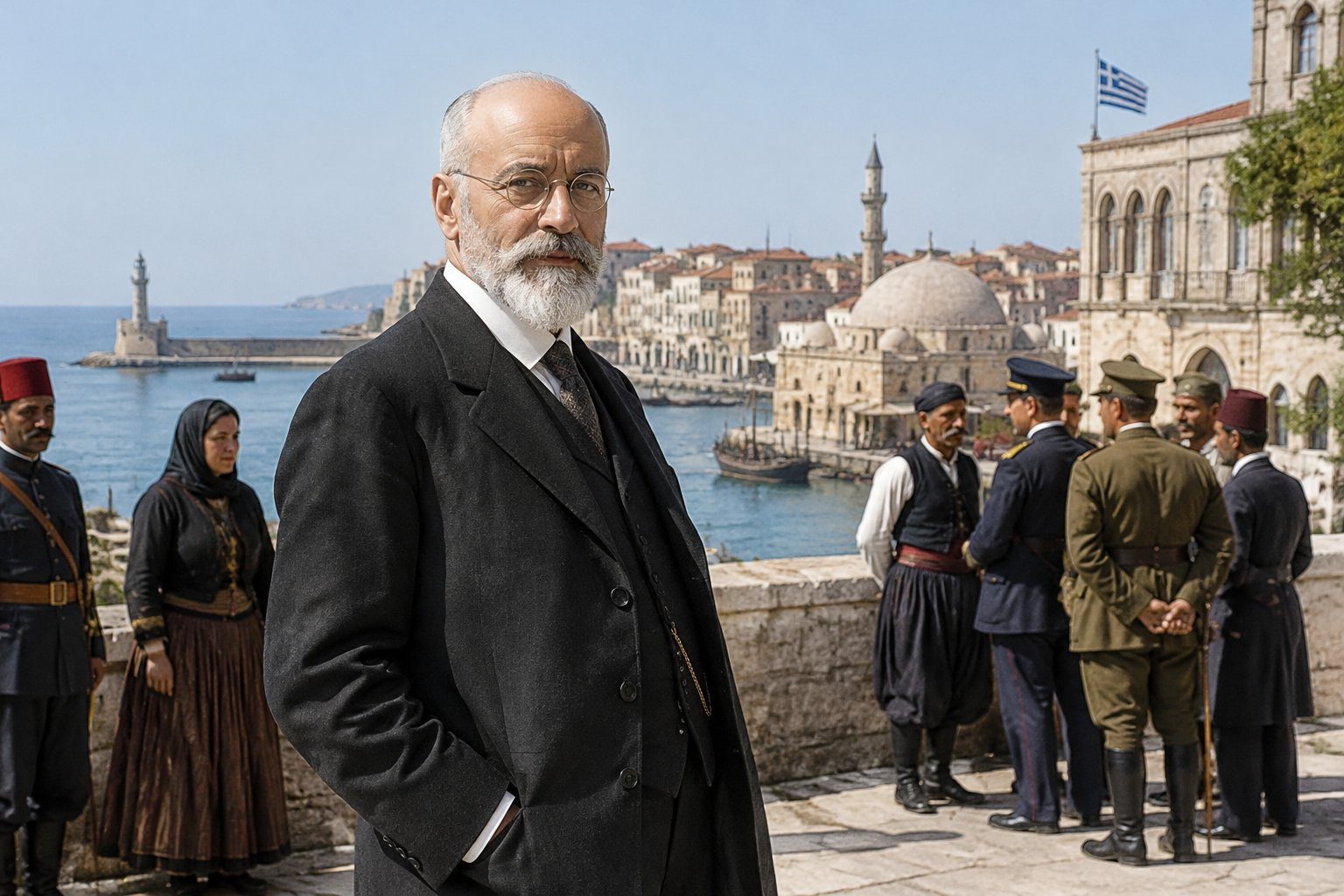
If you spend time around Chania and the wider Hania region, you walk through his life without always noticing. The village where he was born, the house where he lived, the mountain base where he led a revolt and the hill where he is buried all lie within a short drive. Knowing his biography helps you read those places, and much of modern Crete, with clearer eyes.
Why Does Venizelos Matter to Crete and Greece?
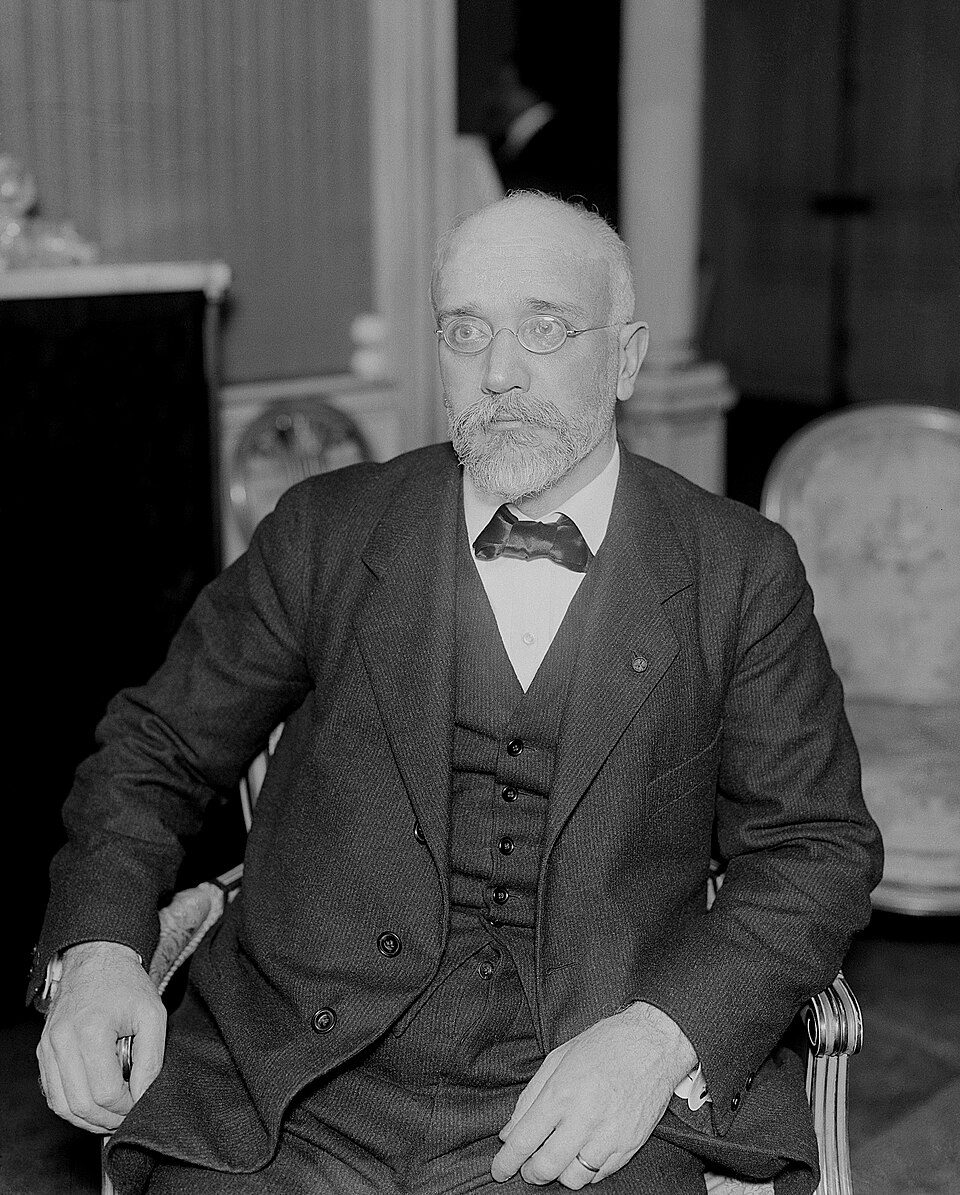
Venizelos matters because few Greek politicians changed both a single island and an entire country so directly. His lifelong drive for enosis transformed the island’s destiny. He went from local revolts in western Crete to peace tables in London, Paris and Lausanne, and his decisions still shape Greek borders and politics.
His Life at a Glance: 1864–1936
| Year | Event |
|---|---|
| 1864 | Born in Mournies, near Chania, on 11 August |
| 1866 | Family flees Crete during the Great Cretan Revolution |
| 1887 | Graduates in law from the University of Athens and returns to Chania |
| 1897 | Emerges as a leader in the Cretan revolt at Akrotiri |
| 1905 | Leads the Theriso revolt against Prince George of Greece |
| 1910 | Becomes prime minister of Greece |
| 1912–1913 | Leads Greece through the Balkan Wars |
| 1913 | Crete formally achieves enosis with Greece on 1 December |
| 1915–1917 | Clashes with King Constantine I in the National Schism |
| 1920 | Signs the Treaty of Sèvres, then loses the election |
| 1923 | Negotiates the Treaty of Lausanne and the population exchange |
| 1928–1932 | Leads his last full government |
| 1936 | Dies in Paris on 18 March and is buried on Akrotiri |
One note on dates: Greece used the Julian calendar until 1923. Dates before then often appear in two versions, about 13 days apart, depending on the book you read.
From Cretan Revolutionary to Prime Minister of Greece
Venizelos began as a Greek politician in a very small arena. He wrote for a Chania newspaper, sat in the Cretan Assembly and joined armed uprisings against Ottoman rule.
The emerging Greek statesman quickly showed a rare ability to bridge island rebel politics and international diplomacy.
By 1910, a military coup had led to an invitation for Venizelos to come to Athens. Within months, he was prime minister of Greece. His early campaign for enosis prepared him for national leadership. That leap from island rebel to national leader is central to any biography of Eleftherios Venizelos.
What Does the Name ‘Great Man of Crete’ Convey?
The title expresses Cretan pride in a local son who helped bring the island into Greece. It’s a popular label, and it reflects one side of a contested record.
Royalists and many Greeks of his own time saw him as divisive and at times ruthless. Turkish and Muslim communities remember those same years as a period of loss and expulsion. On Crete, the nickname signals affection, but it’s worth weighing against the full story of Cretan history.
How Did His Cretan Childhood Shape Him?
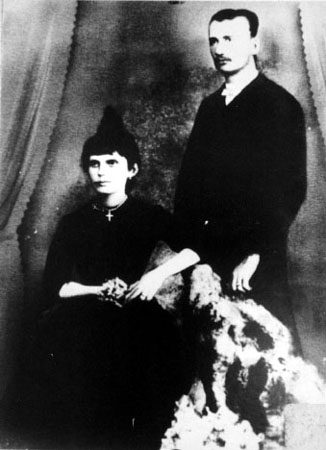
Venizelos grew up in a family marked by revolt and exile. That early experience gave him both a cause and a practical streak. His father ran a business in Chania, his mother came from Theriso, and the Cretan revolutions of his childhood determined where the family lived.
Mournies, Kyriakos Venizelos and the Family’s Exile
He was born on 11 August 1864 in Mournies, a village just outside Chania (often written Hania). His father, Kyriakos Venizelos, was a merchant with a china shop in Topanas, the Christian quarter of the old town. His mother, Styliani Ploumidaki, came from the mountain village of Theriso.
In 1866, the Great Cretan Revolution broke out. The major revolt upended family life and forced Kyriakos and his household to flee to Kythira and Syros.
Taking refuge on Kythira gave the young boy his first taste of exile. Eleftherios started school on Kythira and Syros before the family returned to Crete in 1872.
Cretan Revolutions, Arkadi and the Pact of Halepa
Crete rebelled repeatedly in the nineteenth century, always aiming for union with Greece. This relentless push for enosis defined the island’s political life and shaped generations of fighters.
The 1866–1869 revolution is remembered above all for the Holocaust of Arkadi. Defenders inside the monastery near Rethymno blew up the powder store rather than surrender. The event made Crete famous across Europe.
Earlier, the Ottoman authorities had issued the Organic Act of 1868, granting limited rights. After another rising, the Pact of Halepa (also called the Haleppa Agreement or Pact of Chalepa) of 1878 gave Cretan Christians a local assembly and more self-government. Those bodies grew out of earlier gatherings such as the Pan-Cretan Revolutionary Assembly and the Cretan General Assembly.
In 1884, aged 20, Venizelos drafted a declaration at a Christian gathering at Boutsounaria near Chania, asking for the Pact of Halepa to be properly applied. It was his first political act.
Law Studies, Journalism and Marriage to Maria Katelouzou
His father wanted him to join the family trade. Venizelos enrolled at the Law School of the University of Athens in 1881 anyway. After Kyriakos died in 1883, he ran the business alongside his studies.
He graduated from Athens University in 1887 (some Foundation texts give 1886) and opened a law practice in Chania. In 1888, he helped launch the newspaper Lefka Ori, named after the White Mountains. His articles under the pen name “Lefkoreitis” caused a stir.
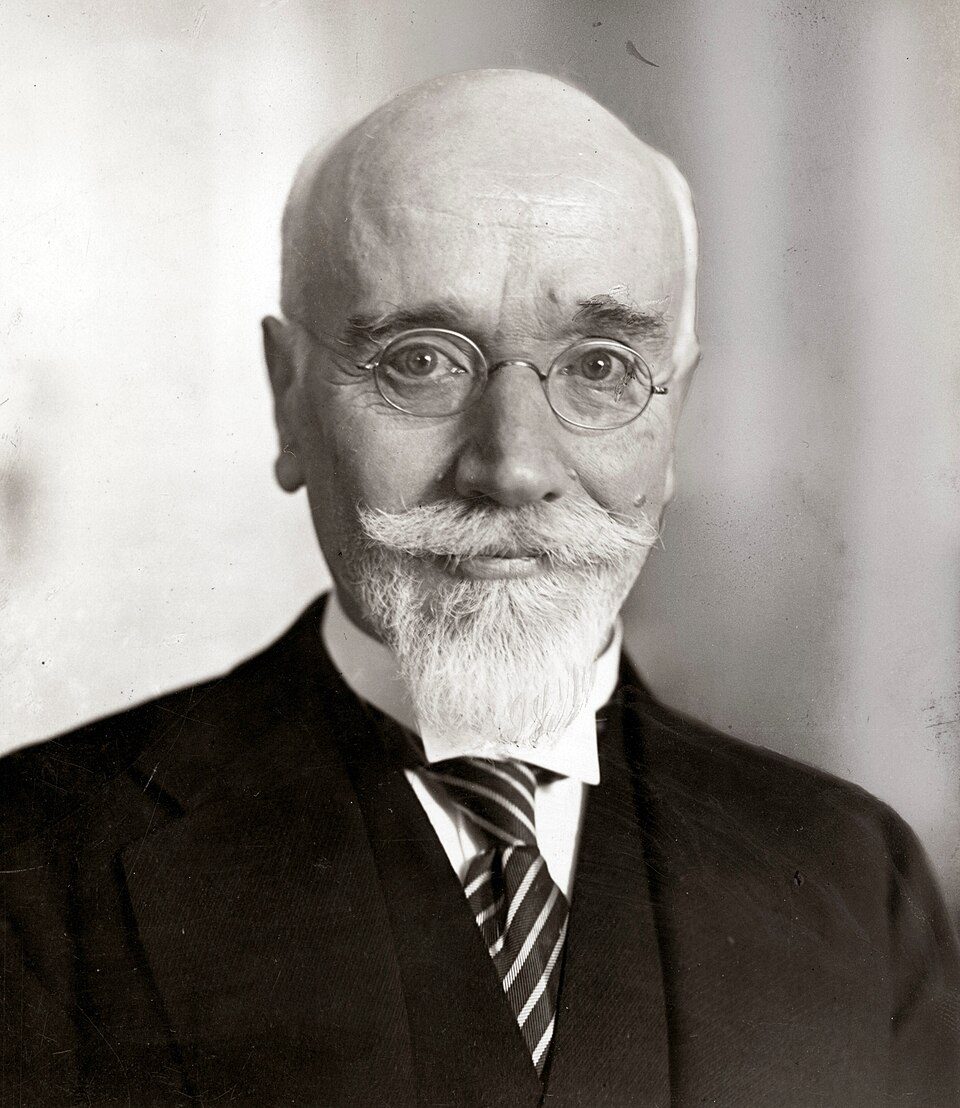
In 1891, he married Maria Katelouzou. Their sons Kyriakos and Sofoklis were born in 1893 and 1894, but Maria died of an infection after the second birth. Following Cretan mourning custom, Venizelos dressed in black and grew the beard you see in nearly every portrait of him.
How Did Crete Move from Ottoman Rule to Union with Greece?
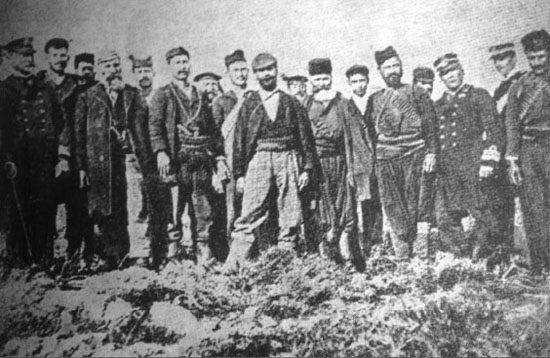
Crete moved from Ottoman rule to Greece in three separate stages: autonomy under the Great Powers in 1898, a unilateral union declaration in 1908, and formal, internationally recognised union on 1 December 1913.
Achieving union with Greece took decades of struggle. For islanders, securing enosis was both a national and cultural mission. Venizelos played a central part in each phase, combining armed revolt with careful diplomacy.
The Revolt of 1897 and the Intervention of the Great Powers
In early 1897, escalating violence ignited another massive Cretan revolt against the Ottoman Empire. For the rebels, enosis remained the single unifying goal.
Venizelos joined the revolutionary committee at the camp on Akrotiri, the peninsula just east of Hania. With encouragement from Athens, the committee declared enosis with Greece.
Greek troops under Colonel Timoleon Vassos landed at Kolymbari in February 1897. Vassos issued a proclamation declaring that he occupied the island in the name of the Greek king, energising the insurgents.
On 9 February, the fleets of the Great Powers shelled the rebels on Akrotiri, and Venizelos wrote a formal protest to the admirals. This intense Cretan revolt forced European intervention. Although the Powers compelled Timoleon Vassos and his force to withdraw, they announced autonomy for Crete.
Greece lost the short Greek-Turkish war that followed. That summer, Venizelos chaired a revolutionary assembly at Archanes and survived an assassination attempt during clashes between “autonomists” and “unionists”.
The Cretan State, Its Constitution and Prince George
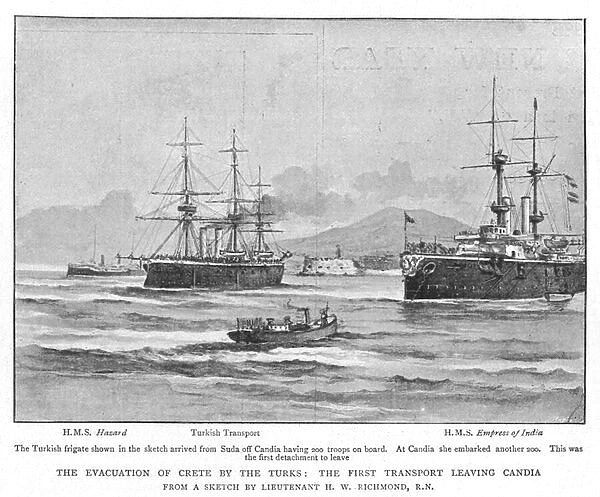
In November 1898, the Great Powers forced the Ottoman army to leave the island. Prince George of Greece, son of King George I, became High Commissioner and landed at Souda Bay on 9 December. The Cretan State was born: self-governing at home, under the Sultan’s nominal rule, with foreign policy outside its control.
Venizelos served on the committee that drafted the Cretan Constitution. In 1899, he became minister of justice in the Cretan government and worked to put legal structures in place under the new constitution.
The partnership soon soured. Venizelos objected to Prince George’s autocratic methods and disagreed with how the Prince handled enosis. In 1901, the Prince dismissed him. Two years later, Venizelos even spent seven days in prison after the Archbishop of Crete sued him.
Why Did Venizelos Lead the Theriso Revolt in 1905?

Venizelos led the Theriso revolt because he saw no lawful way left to remove Prince George’s rule or advance union with Greece. On 10 March 1905, he set up camp in Theriso (also spelt Therisso), his mother’s village in the foothills of the White Mountains, with Konstantinos Foumis and Konstantinos Manos.
The rebels proclaimed enosis and printed their own newspaper and stamps. The Therisso rebellion spread across Crete, and Russian troops fought the rebels in the hardest clashes, at Atsipopoulo and Georgioupoli.
After eight months, the revolt ended in a compromise. Short of money and facing intervention, Venizelos announced the deal in Mournies.
The revolt still had an effect. Prince George of Greece left in 1906, and former Greek prime minister Alexandros Zaimis replaced him.
To consolidate reforms and meet rebel demands, the Cretan Assembly enacted a revised constitution that curbed authoritarian powers.
From the Union Declaration of 1908 to Formal Union in 1913
In 1908, the Young Turk Revolution shook Constantinople, and Cretans seized the moment to declare enosis (union with Greece) on their own. Venizelos, then responsible for justice and foreign affairs, persuaded the Great Powers to accept the new government. International troops left in July 1909.
The declaration had no legal force abroad, as Greece held back to avoid war. Decades of sacrifice for enosis finally paid off after the Balkan Wars.
The Treaty of London and the Treaty of Athens made Crete’s union with Greece final in 1913. On 1 December, with Venizelos present, the Greek flag rose over the Firkas fortress in Chania harbour.

Reforming Greece and Leading It Through the Balkan Wars
Venizelos reshaped the Greek state within three years, then led it into two wars that almost doubled its territory. Constitutional reform and a rebuilt army came first. Alliances and victories followed.
The Liberal Party and the Constitutional Revision of 1911
In 1909, army officers staged a coup at Goudi in Athens and invited Venizelos to help. He won election to the Greek parliament in August 1910 and took office as prime minister on 6 October. The old parties stayed away from new elections that November, and his supporters won heavily.
He built the Liberal Party around reform. Venizelos used the 1911 Constitution to strengthen the rule of law and protect civil servants. His government also reorganised public finances and made primary education compulsory.
Military Reform and the Formation of the Balkan League
Greece had been humbled in 1897. Venizelos brought in French advisers for the army and British advisers for the navy, and bought new warships.
He also made unlikely friends. In 1912, Greece signed a defensive alliance with Bulgaria, joining Serbia and Montenegro in the Balkan League against the Ottoman Empire. The allies aimed to seize Ottoman lands in Europe while the empire was weak.
What Changed in the First and Second Balkan Wars?

In the First Balkan War (October 1912 to May 1913), the Greek army captured Ioannina after heavy fighting, liberating Epirus. Greek forces also took Thessaloniki on 26 October 1912.
At sea, the fleet secured the Aegean islands at Elli and Lemnos. King George I was assassinated in Thessaloniki in March 1913, and his son Constantine took the throne.
The allies then fell out over Macedonia. Bulgaria attacked Greece and Serbia in June 1913, starting the Second Balkan War, and lost within weeks. The Treaty of Bucharest confirmed the results.
| Gains for Greece, 1912–1913 | |
|---|---|
| Territory | Southern Macedonia, southern Epirus, Crete, northern and eastern Aegean islands |
| Size | Roughly doubled |
| Population | Rose to about 4.7 million |
Those gains came at a heavy human cost. Towns changed hands amid fighting, and Muslim, Bulgarian and Greek civilians fled or were driven out across Macedonia.
Why Did the First World War Divide Greece?
The First World War split Greece because its prime minister and king wanted opposite things. Venizelos pushed to join the Entente (Britain, France and Russia), while King Constantine I preferred neutrality. Their quarrel grew into the National Schism.
Venizelos, King Constantine I and the Question of Neutrality
As World War I deepened in January 1915, Britain offered Greece land in Asia Minor if it joined the Allies. Venizelos urged Greece to accept and proposed helping at Gallipoli.
The King, backed by chief of staff Ioannis Metaxas, judged the risks too high. Constantine was also married to the German Kaiser’s sister, which fed suspicion on both sides.
Venizelos resigned, won the May 1915 elections, returned, then resigned again in the autumn when the King refused to help Serbia. British and French troops landed at Thessaloniki at Venizelos’s request.
The National Schism and the Rival Government in Thessaloniki
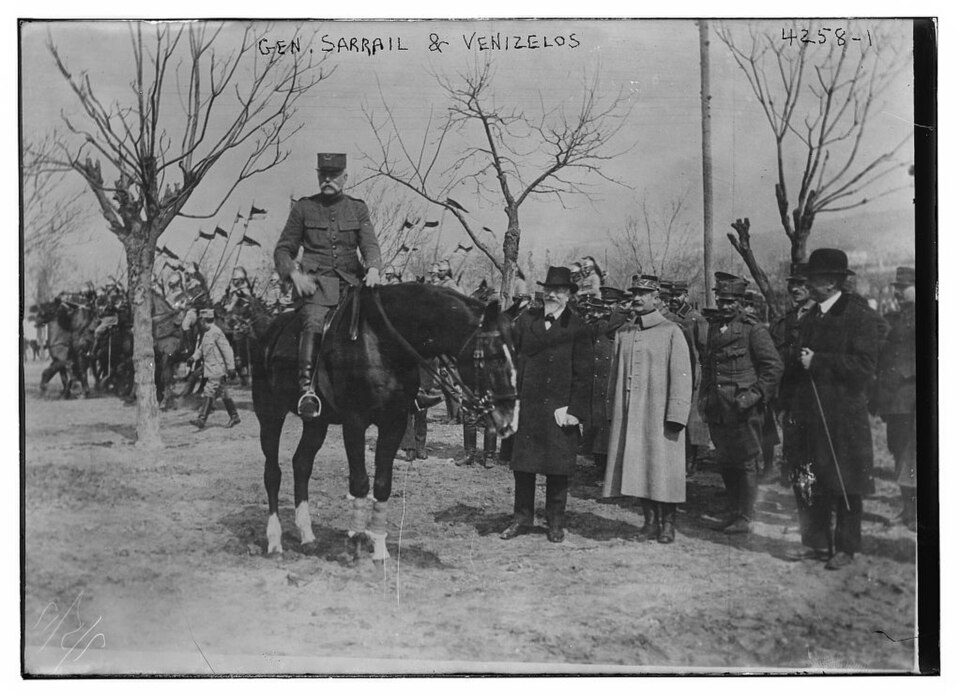
In August 1916, pro-Venizelos officers launched the National Defence movement in Thessaloniki. Venizelos joined them and set up a provisional government that ruled northern Greece, Crete and the eastern Aegean islands.
Support soon spread to the Ionian Sea, where Kythira declared for the Venizelist administration. Greece now had two rival governments.
The split turned violent. In the “November incidents” of 1916, royalists attacked Venizelos’s supporters in Athens after clashes with Allied troops, and the Allies blockaded the city. Families, villages and even the army divided along these lines for decades.
Greece’s Entry into the War on the Allied Side
Under Allied pressure, King Constantine of Greece left the throne in June 1917 in favour of his son Alexander. Venizelos returned to Athens as prime minister of a reunited state and brought Greece into World War I on the Allied side.
Greek troops fought on the Macedonian front in 1918 and helped force Bulgaria out of the war. Taking Greece into World War I gave Venizelos crucial leverage with the victorious powers.
The Ottoman Empire signed the Armistice of Mudros that October. The government sent opponents, including Metaxas, into exile, leaving the wounds of the Schism open.
From the Paris Peace Conference to the Treaty of Lausanne
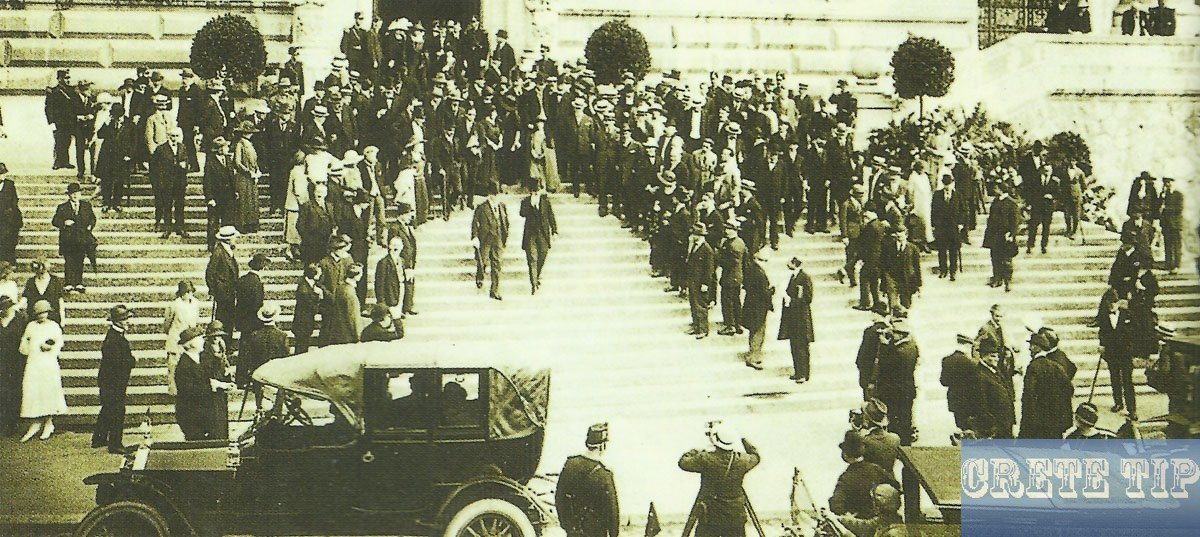
Between 1919 and 1923, Venizelos went from his greatest diplomatic success to negotiating the end of the dream behind it. The Treaty of Sèvres promised Greece large gains. Military defeat and the Treaty of Lausanne replaced them with new borders and mass displacement.
The Megali Idea, Smyrna and the Treaty of Sèvres
The Megali Idea (“Great Idea”) was the hope of uniting all Greek-speaking communities, including those in Asia Minor, in one state. In many respects, it broadened enosis to encompass the wider Greek world. At the Paris Peace Conference in 1919, Venizelos won the respect of Allied leaders and pressed Greece’s claims to the coast around Smyrna (today’s İzmir).
France awarded him the Grand Cross of the Legion of Honour for his diplomatic skill and wartime partnership. Greek troops landed in Smyrna in May 1919.
In August 1920, Venizelos signed the Treaty of Sèvres, which gave Greece Eastern and Western Thrace and control of the Smyrna region. Supporters spoke of a “Greece of two continents and five seas”. The Ottoman government signed, but Turkish nationalists under Mustafa Kemal rejected the treaty, and it never came into force.
Electoral Defeat in 1920 and the Asia Minor Catastrophe
Days after Sèvres, two former royalist officers shot and wounded Venizelos at the Gare de Lyon in Paris. Back home, war-weary voters turned against him. The Liberals lost in November 1920, and Venizelos failed even to win his own seat. He left for Paris and married Elena Skylitsi in London in 1921.
The new royalist government brought back King Constantine, costing Greece Allied support, and pushed deeper towards Ankara. In August 1922, the Greek army collapsed. Smyrna burned, and about 1.2 million Greeks fled Asia Minor, many with nothing.
Lausanne, New Borders and Compulsory Population Exchange
Out of office, Venizelos led the Greek delegation at Lausanne. In January 1923, he signed a convention for a compulsory population exchange with Turkey, the new state that replaced the Ottoman Empire. On 24 July 1923, the Treaty of Lausanne fixed borders that still largely stand.
The exchange followed religion. Orthodox Christians in Turkey went to Greece, while Muslims in Greece, including Cretan Muslims who spoke Greek and had lived on the island for generations, went to Turkey. The agreement made exceptions for Greeks in Istanbul and Muslims in Western Thrace.
For refugees on both sides, this meant losing homes, graves and livelihoods forever. Many Cretan villages and Chania neighbourhoods were resettled by families from Asia Minor, which is why you still find their churches, place names and recipes on the island. Historians credit Lausanne with ending the cycle of Greek-Turkish wars, while recognising the suffering it made permanent.
His Final Governments, Exile and Death in Paris
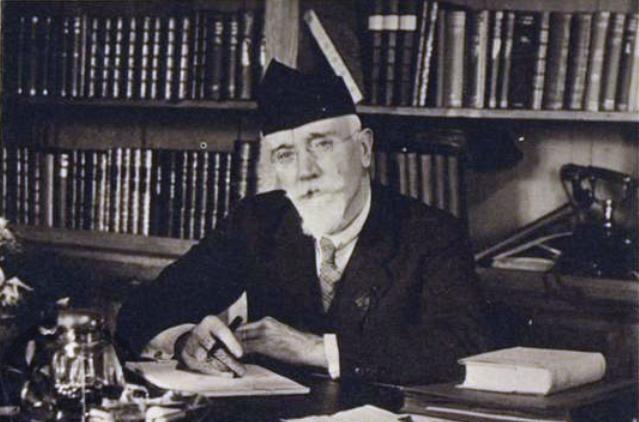
Venizelos’s last years brought his most productive peacetime government, along with violence and a final break with Greece. His short spell as prime minister in 1924 lasted only 25 days. He settled in Chania in 1927 before returning to national politics.
Reform and Reconciliation During the 1928–1932 Government
He won the August 1928 election by a clear margin, aged 65, and governed for four years. His record from this period is concrete:
- founding the Bank of Greece’s working framework, the Agricultural Bank, the Council of State and the National Theatre
- building about 3,000 schools
- major infrastructure works and new legislation despite the 1929 crash
- friendship treaties with Italy (1928) and Yugoslavia (1929)
- the 1930 Greek-Turkish friendship treaty signed in Ankara
The Turkish treaty stands out. Seven years after Lausanne, Venizelos worked with Atatürk to settle property disputes and build trust between former enemies.
The Assassination Attempt of 1933 and Failed Coup of 1935
The Liberals lost in 1932 and again in 1933. On 6 June 1933, gunmen attacked Venizelos’s car on Kifisias Avenue in Athens.
A bodyguard was killed, and his wife Elena was slightly hurt. The couple took refuge in Chania.
On 1 March 1935, Venizelist officers launched a coup to stop the return of the monarchy, and Venizelos backed them from Crete. The coup failed, and he left Greece on 12 March, never to return.
Authorities tried prominent supporters and executed some of them. After a rigged referendum, King George II was restored.
Death in 1936 and Burial on Akrotiri
Venizelos spent his final months in a flat at 22 rue Beaujon in Paris. Though in poor health, he still followed Greek politics. He died after a stroke on 18 March 1936.
The government feared unrest at a funeral in Athens, so a destroyer carried his body straight to Chania. Huge crowds mourned across Greece, and he was buried on Akrotiri, near the place where he had fought in 1897.
Where Can You Explore His Legacy on Crete?

You can trace Venizelos’s life within roughly 20 kilometres of Chania and greater Hania. The places below connect his story to sites you can visit in a day. It makes sense to see them in the order of his life.
Mournies and the Family Home in Halepa
Mournies sits just south of Chania. The village is quiet and residential, and Venizelos announced the end of the Theriso revolt there.
The Venizelos family villa in Halepa (also written Chalepa), the elegant suburb east of the old town, was his home from 1880 to 1910 and again from 1927 to 1935. Chalepa was home to the Great Powers’ consulates and Prince George’s residence.
Today, the house is the Residence-Museum, which opened in 2015. It has 18 rooms with original furniture and objects, along with rooms devoted to the 1920 and 1933 assassination attempts.
Walk the surrounding streets, lined with old neoclassical villas, and you’ll get a feel for the Cretan State period.
Theriso and the Landscape of the 1905 Revolt
Theriso lies at about 580 metres in the foothills of the Lefka Ori (White Mountains). The road climbs through the 6-kilometre Theriso Gorge, a lovely drive in its own right.
The former rebel headquarters now houses the Museum-Headquarters of the Theriso Revolution, run by the Venizelos Foundation. Inside, you’ll find the “Therisso 1905” flag and the press used for the rebel newspaper.
Village tavernas make the trip an easy half day. Opening times change by season, so plan around midday.
The Venizelos Graves and the Foundation’s Historical Collections
The Venizelos graves on Akrotiri stand on a hill above Chania, where Eleftherios and his son Sofoklis are buried. Akrotiri served as the strategic centre of the 1897 Cretan revolt. Today, visitors and locals alike come for the panoramic view over the city and bay.
The National Research Foundation Eleftherios K. Venizelos, based at the historic Chalepa residence, keeps a digital archive of 65,000 records and a specialist library on the period. If you want to go deeper than the signboards, its collections are the most reliable place to start.

Understanding Modern Crete Through Venizelos’s Life
Venizelos’s life helps explain why Crete belongs to Greece, why Chania has its distinctive architecture and memorials, and why politics on the island still stirs strong feelings. The long road to enosis shaped his career.
He grew from a young lawyer in mourning in Halepa into an influential Greek statesman who sat at Europe’s peace tables.
His record has two sides. He won territory, introduced reforms and later made peace with Turkey, but he also deepened the National Schism and signed away communities in the population exchange. Seeing both sides helps you read Cretan history honestly.
When you’re next in Chania, start at the Halepa residence, drive up to Theriso, and end the day at the graves on Akrotiri. That simple route covers his story, from rebel to national leader of modern Greece.
Frequently Asked Questions
What did Eleftherios Venizelos do for Crete?
He led Crete’s struggle against Ottoman rule and brought about its union with Greece. He championed enosis from his youth, took part in the 1897 revolt, helped write the original Cretan constitution, led the 1905 Theriso revolt, and secured formal union on 1 December 1913.
Why is Venizelos considered an architect of modern Greece?
As a transformative Greek statesman, he nearly doubled Greece’s territory in the Balkan Wars, incorporating Epirus, Macedonia and Crete. He also spearheaded sweeping constitutional reforms in 1911.
His Treaty of Lausanne set borders that largely remain today. His 1928–1932 government also built thousands of schools and key state institutions.
Why was Eleftherios Venizelos exiled?
He left Greece twice. After losing the 1920 election, he chose self-exile in Paris. In 1935, he fled for good after a Venizelist coup he supported failed.
What caused Eleftherios Venizelos’s death?
He died of a stroke in Paris on 18 March 1936. He had been in poor health during his final exile.
Where is Eleftherios Venizelos buried?
He is buried on Akrotiri, on a hill overlooking Chania. His son Sofoklis lies beside him at the site known as the Venizelos graves.
Why is Athens International Airport named after Venizelos?
Opened in March 2001, the airport honours one of the most important figures in modern Greek history. Its official name is Athens International Airport “Eleftherios Venizelos”.


