Christopsomo is a Greek Christmas bread that Greek families have been baking for centuries during the festive season. The name literally means ‘Christ’s bread’ and brings good luck and blessings for the New Year.
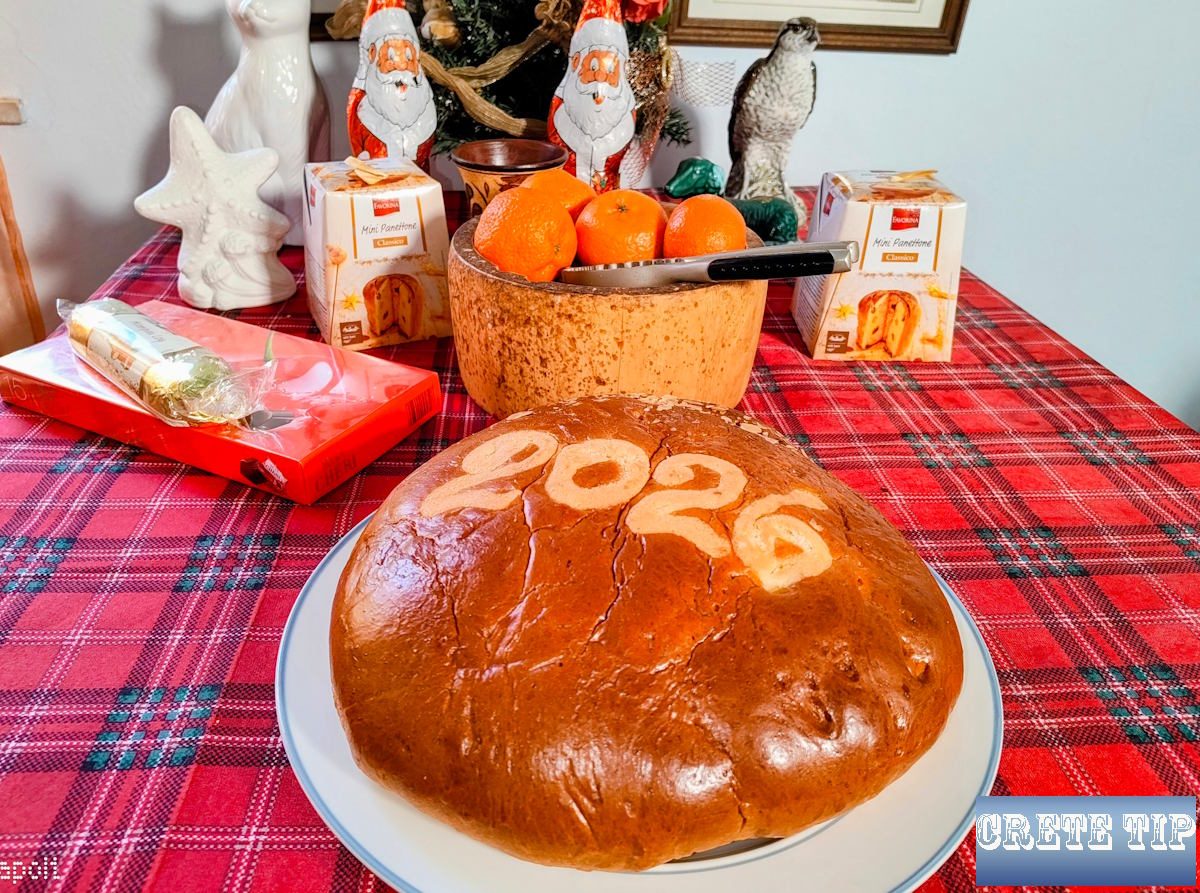
With its slightly sweet taste, spices such as cinnamon and cloves, walnuts and raisins in the dough, it is perfect for Christmas brunch or as a gift.
What makes Christopsomo (Χριστόψωμο) special is not only its taste, but also its decoration with a dough cross, nuts and sesame seeds. The preparation is easier than you might think.
By leaving it to rise overnight in the fridge, you can prepare the yeast dough at your leisure and then shape and bake it the next day.
From choosing the right spices to kneading the dough and shaping it, there are many ways to make this bread an eye-catcher on your festive table.
The result? A fluffy, aromatic bread that tastes delicious warm with butter, honey or jam.
What is Christopsomo? Meaning and tradition
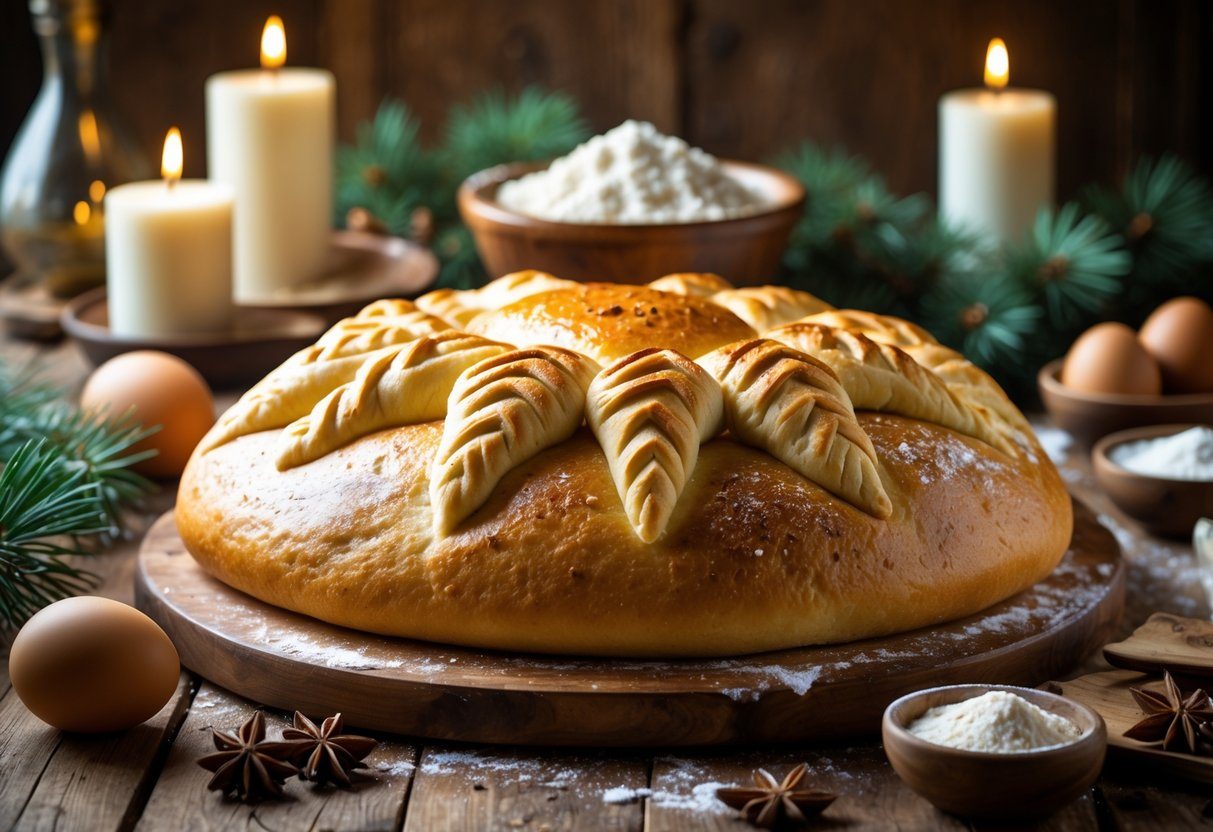
Christopsomo (Χριστόψωμο) translates as ‘bread of Christ’ and is a traditional Greek Christmas bread. This yeast bread combines religious symbolism with hopes for prosperity and blessings for the coming year.
Symbolism of Christopsomo
The cross on top is the focal point. It honours Christ and is the most important symbol.
Bakers often press a walnut in its shell into the centre of the cross – it represents fertility and abundance.
The decorations have deep meanings. Sun or star patterns represent the light of Christ.
Cloves are often added to the dough, reminiscent of the spices of the Three Kings. Some families shape small dough figures representing animals or tools, symbolising blessings for the household and work.
Olive oil in the dough connects the bread with Greek culture and the Mediterranean region. Cinnamon and cloves are reminiscent of precious gifts.
Traditional Christmas rituals
Baking Christopsomo is considered a sacred ritual. The housewife usually starts preparing it a few days before Christmas.
Many families say prayers or blessings while kneading the dough. On Christmas Eve, the head of the household cuts the bread and makes the sign of the cross over it beforehand.
The first piece belongs to Christ and is often set aside for the needy. Other pieces are intended for family members, the house and sometimes for absent relatives.
The bread remains on the table throughout the Christmas season. Some families save the crumbs and scatter them on the fields later in the year – for a good harvest, perhaps?
Regional specialities
In Greece, there are many different recipes for Christopsomo. On the islands, more aniseed and orange peel are often added to the bread.
In the mountains, walnuts and honey are more commonly added. Some regions like it sweeter and add raisins or dried figs to the dough.
Others bake a savoury version with olives or even sheep’s cheese. The shape? Sometimes round, sometimes oblong – depending on family tradition.
The decoration also varies: some families make elaborate patterns with strips of dough, others stick to a simple cross. Everyone uses sesame seeds and almonds a little differently.

Comparison with other Christmas baked goods
Christopsomo is somewhat reminiscent of other Mediterranean festive breads. Italian panettone is also a sweet yeast bread with dried fruit, but it is baked with lots of butter.
Greek Christmas bread contains olive oil, which gives it a different texture. German stollen is denser and heavier, often with marzipan and icing sugar.
Christopsomo remains lighter and less sweet. Symbolism plays a greater role in Greek bread than pure enjoyment.
Unlike gingerbread or cookies, Χριστόψωμο is only baked once and served as a whole loaf. It takes centre stage at Christmas dinner and is not a little snack for in between meals.
Ingredients for Christopsomo: What makes Greek Christmas bread special
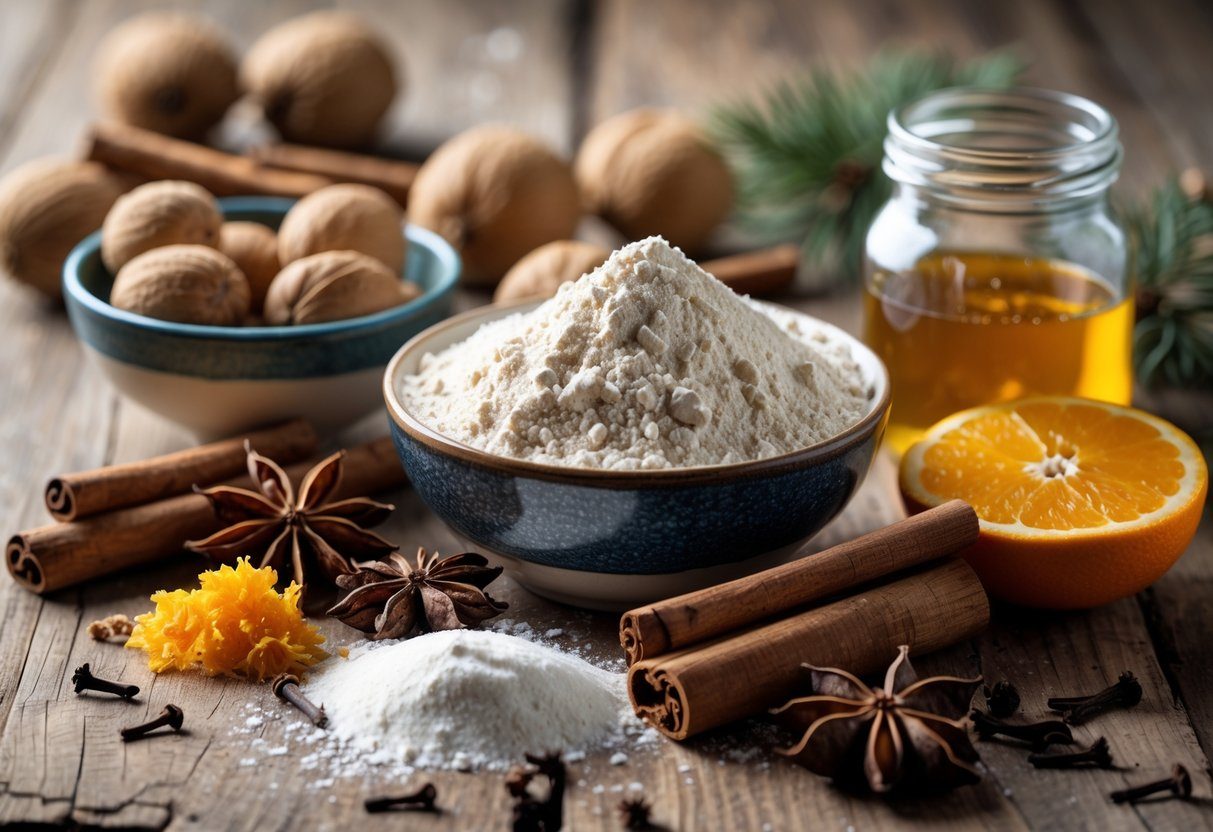
The ingredients make Christopsomo a festive bread with a distinctive flavour. Spices, nuts and dried fruit transform a simple yeast dough into an aromatic Christmas bread.
Main ingredients and their significance
The yeast dough forms the basis. You need strong wheat flour, fresh yeast or dried yeast, lukewarm water and a pinch of salt.
The flour should have a high protein content so that the bread becomes fluffy. Olive oil is always included and makes the dough smooth.
It replaces butter and gives the bread a slightly fruity taste. Honey or sugar provide a subtle sweetness and help the yeast to ferment.
The dough must be left to rise for at least an hour until it has doubled in volume. Many people leave it to rest overnight in the fridge – this makes it even fluffier.
Aromatic spices: cinnamon, cloves & aniseed
Aniseed gives Christopsomo its typical flavour. The seeds have a slight liquorice taste and are distributed throughout the bread.
Use about one teaspoon of aniseed for a large loaf. Cinnamon and cloves round off the aroma and add warmth to the dough.
These spices are perfect for the Christmas season. Some recipes also include mahlepi, a spice made from ground cherry pits.
The spices are kneaded directly into the dough. Add them towards the end of the kneading time so that they are distributed more evenly.
Nuts, raisins & other variations
Walnuts are a classic ingredient in Christopsomo. They are roughly chopped and kneaded into the dough or used for decoration.
Traditionally, a whole walnut is placed in the middle, where the cross is located. Raisins add extra sweetness and moisture to the bread.
You can soak them in a little water beforehand to make them nice and soft. Other popular ingredients are:
- Dried apricots or figs
- Almonds instead of walnuts
- Orange zest for fresh flavours
Sesame seeds are often sprinkled on top. The seeds are sprinkled on after brushing with egg and ensure a nice crust.
Vegan & alternative sweeteners
If you want to bake Christopsomo vegan, use rice syrup or agave syrup instead of honey. Both work great in the dough and make it smooth.
A mixture of plant-based milk and a little oil is sufficient for brushing. The bread will still turn golden brown.
Some people also use maple syrup if they don’t have rice syrup to hand. The olive oil in the dough makes the bread almost vegan anyway – only the egg milk for the glaze needs to be replaced.
Baking Christopsomo: step-by-step instructions
Greek Christmas bread takes time, but the work is really straightforward. Leaving the yeast dough to rise overnight in the fridge gives it a particularly rich flavour and allows you to plan your baking in a relaxed manner.
Prepare the poolish or pre-ferment
Start the evening before: prepare the dough. Dissolve 5 g of fresh yeast together with 65 g of liquid honey in 270 g of lukewarm water.
Leave the mixture to stand for about 15 minutes. The first bubbles indicate that the yeast is now active.
In a large bowl, mix 500 g flour (type 405), 50 g olive oil, 2 teaspoons spices (cinnamon, cloves, aniseed or cardamom) and ½ teaspoon fine sea salt.
Add the yeast water to the dry ingredients. Knead everything until you have a soft, slightly sticky dough – this is perfectly normal.
After 15 minutes of resting, knead the dough again for 5-6 minutes. Shape it into a rough ball, place it in a bowl and cover it.
Kneading yeast dough properly and letting it rise
Leave the dough to rest at room temperature for 30 minutes. Then place it in the fridge – leaving it to rise overnight makes the bread particularly aromatic.
Leave the dough to rest in the fridge for at least 12 hours, or longer if you like. The small amount of yeast ensures slow, even rising.
The next day, take the dough out. Place it on a floured work surface and knead it thoroughly.
Weigh out about 170 g for the cross and set this part aside. The rest is ready for the filling.
Add the filling
Mix 100 g coarsely chopped walnuts and 100 g sultanas into the main dough. Flatten the dough, spread the nuts and raisins over it, fold it over and knead everything well.
Repeat until everything is evenly distributed. Shape into a ball and place on a baking tray lined with baking paper.
Flatten the ball with your hands into a thick, round flatbread about 4 cm high. Cover with an upturned bowl and leave to rest for 30 minutes.
Whisk 1-2 tablespoons of milk with 1 teaspoon of honey. Brush the bread all over with this mixture – this will give it a nice brown colour later.
Decorating and shaping
Halve the dough that you set aside. Roll each half into a long strand.
If the dough shrinks, let it rest for 5 minutes and then continue rolling. Place the two dough rolls crosswise on the bread.
You can simply overlap them or twist them in the middle – both look pretty. Press the ends firmly onto the bottom edge of the bread.
Brush the cross with the honey and milk mixture. Press a nut with its shell into the middle – traditionally a walnut, but hazelnuts also work.
Scatter more walnuts or almonds around the cross. Sprinkle generously with black or light sesame seeds.
If you like, stick a few cloves into the dough as decoration. Cover the bread and leave to rest for another 15 minutes.
Then bake at 175°C fan oven (preheated, middle shelf) for 30 minutes. Then turn the temperature down to 130°C and bake for another 10 minutes.
The finished yeast bread will sound hollow and be golden brown when you tap the bottom.
Tips and tricks for a successful Christopsomo
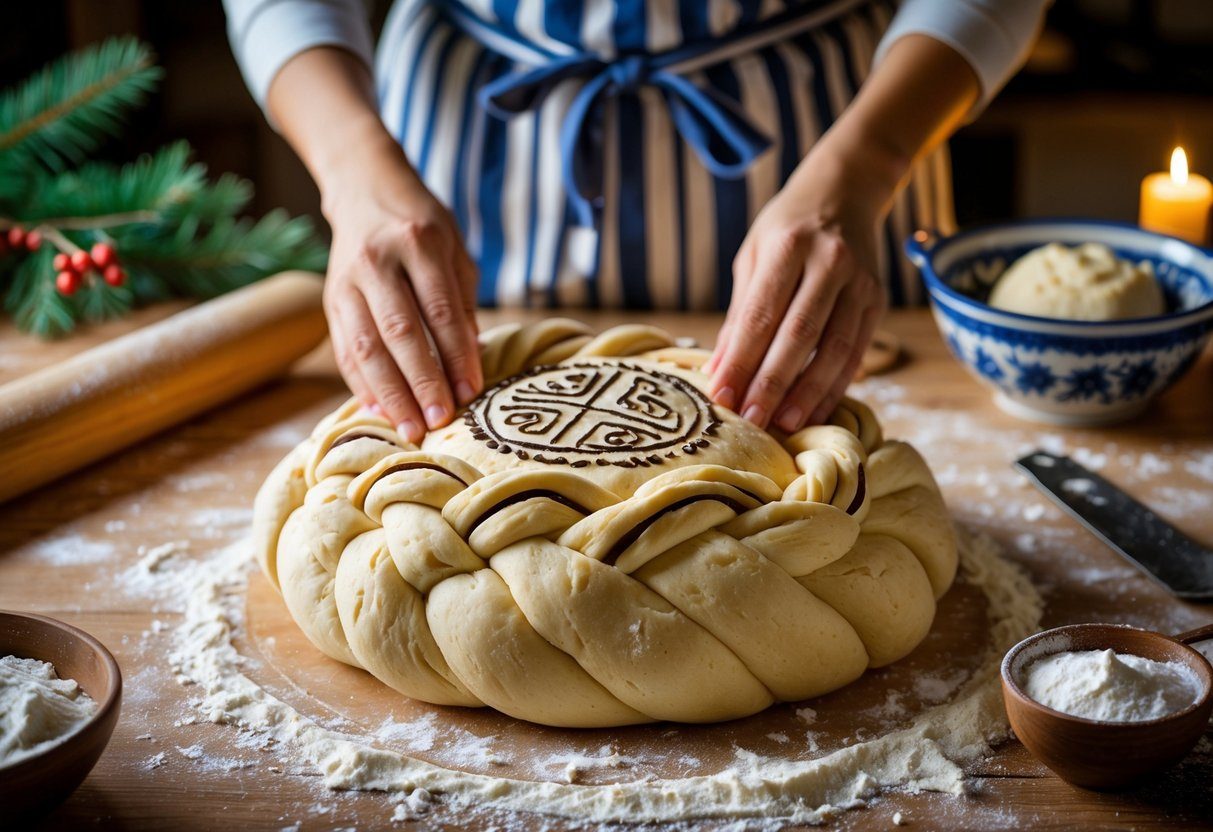
The right dough preparation and baking temperature determine how the Greek Christmas bread tastes in the end. With a few tricks, Christopsomo works surprisingly well even for beginners.
Overnight fermentation vs. classic dough preparation
Overnight fermentation in the refrigerator brings significantly more flavour to the bread. The dough only needs 5 g of fresh yeast per 500 g of flour and slowly develops its aroma over 12-13 hours.
This method is great if you want to bake at a leisurely pace the next morning. If you need to bake quickly, you can also use the classic method with more yeast.
Double the amount of yeast and leave the dough to rise at room temperature for about 2 hours. The flavour will be less complex, but the bread will still turn out well.
Many bakers who bake synchronously swear by overnight fermentation. The dough remains more pliable, is easier to shape and does not tear as easily.
Baking temperature and time control
Christopsomo actually needs two baking phases. First, bake at 175 °C fan oven for 30 minutes so that it rises nicely and gets some colour.
Then reduce the temperature to 130 °C for another 10 minutes – this keeps the bread moist on the inside and prevents it from becoming too dark on the outside. The milk and honey glaze is added before baking.
This gives it its typical golden brown colour and slight sheen. Some people brush it on again after 20 minutes for even more shine.
The bread is ready when it sounds hollow when you tap it from underneath. The core temperature should reach around 95 °C.
If you are unsure, use a wooden skewer: it must come out dry.
Avoid common mistakes
Too much flour when kneading makes the dough dry and firm. The dough can remain a little sticky – that is perfectly fine.
It is better to lightly oil your hands than to keep adding more flour. The raisins and nuts must be distributed evenly.
Flatten the dough, spread the ingredients and knead them in portions. This prevents lumps from forming.
The cross made of dough must adhere well to the bread, otherwise it will come off during baking. Press the ends firmly onto the bottom.
You can also moisten the dough rolls slightly with water to help them stick better. Insufficient proving time is a common mistake.
The dough needs at least 30 minutes to prove after shaping, plus another 15 minutes after decorating. Otherwise, the bread will be too dense.
Serving and enjoying Christopsomo festively
Christopsomo is traditionally cut on Christmas Day. Greek Christmas bread is perfect for a festive brunch or as a highlight on the Christmas table.
Traditional occasions: Christmas & Christmas brunch
The bread is traditionally baked on 24 December and served on Christmas Day. The host cuts it into pieces by hand – without using a knife.
Christopsomo is a real eye-catcher at Christmas brunch. The richly decorated bread with the cross goes well with other festive dishes.
It is served warm or at room temperature. The spices and nuts make it something special on the festive table.
Many families cut the first piece as a sign of a blessed New Year.
Serving suggestions and toppings
Christopsomo tastes great on its own, but it can also be topped in many different ways. Its slightly sweet flavour goes well with many spreads.
Sweet variations:
- Honey or jam
- Greek yoghurt with honey
- Cream cheese with cinnamon
- Nut cream
Savoury options:
- Butter with sea salt
- Greek cheese such as feta or graviera
- Olive oil for dipping
You can also lightly toast the bread. This brings out the flavours of the spices even more.
Serve with coffee, hot tea or a glass of sweet Greek wine. Cut the slices about a finger’s width thick so that the crust and crumb are nicely showcased.
Creative variations & modern versions of Christopsomo
The traditional Christopsomo can be modified in many ways. Many bakers try out different nuts, spices and decorations to give the classic Christmas bread their own touch.
Popular ingredient variations
Many prefer hazelnuts or almonds to the classic walnuts. These nuts give the bread a milder flavour.
Some bakers also mix different types of nuts simply to add variety.
There is also scope for experimentation with spices. Aniseed and cinnamon usually remain the basis.
But why not try cardamom or nutmeg? If you don’t like cloves, simply leave them out or replace them with other Christmas spices.
The raisins can be replaced with cranberries, dried apricots or figs. Some people marinate the dried fruit in orange juice or even Metaxa – this adds extra flavour.
Fresh orange zest gives the dough a fruity note. I think this goes quite well with the spices.
Decoration ideas for the bread
The classic cross made of braided dough remains the most popular decoration. However, you can also braid other Christian symbols or simply beautiful patterns.
The braids can be thinner or thicker, depending on what you feel like.
Walnuts, almonds and sesame seeds are particularly suitable for the surface. Many people press whole nuts into the dough before the bread goes into the oven.
Black and white sesame seeds look really pretty together.
After baking, you can dust the bread with icing sugar or spread it with honey. Some people also decorate it with candied fruit or shortcrust pastry stars.
However, the decoration should not look too overloaded – a little restraint does no harm.
Seasonal and regional variations
If you want to bake the bread all year round, you can simply adjust the spices. In spring, lemon and vanilla taste much fresher than cinnamon or aniseed.
In summer, I sometimes try fresh herbs such as lavender – it sounds strange, but it tastes surprisingly good.
In Greece, there are dozens of different versions anyway. Some families prefer it sweet, others prefer it more subtle.
On the islands, honey is often used in the dough instead of sugar. This gives the bread its own unique flavour.
Nowadays, bakers like to experiment with wholemeal or spelt flour. This makes the bread a little more nutty.
For the vegan version, simply leave out the egg for brushing or use oat drink. Plant-based milk also works great.