

Newsflash from Saturday, 16 May 2026:
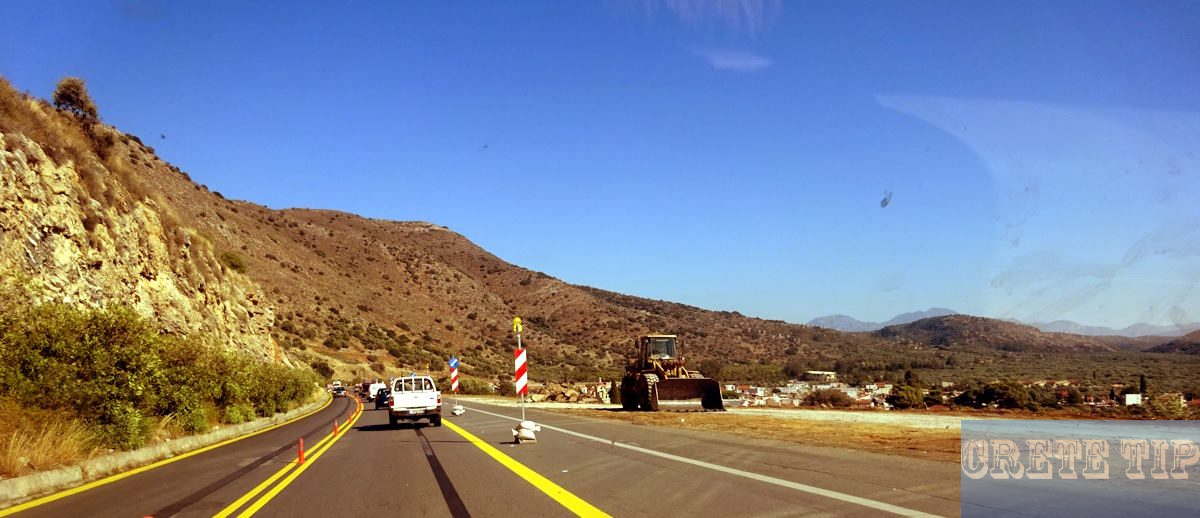
Crete is erupting in outrage over the proposed Northern Road Axis of Crete (BOAK) highway expansion. Property owners facing expropriation are calling compensation packages “insulting,” while farmers warn the project will destroy centuries-old olive groves and eliminate the region’s agricultural foundation. Legal challenges are mounting as approximately 1,000 affected landowners unite against what they view as an unjust land grab.
A Crisis of Compensation: €1,460 Per Square Meter vs. Market Reality
For many residents, the BOAK expropriation process has become a nightmare of inadequate compensation and shattered lives.
One homeowner from Maroulá in Rethymno described the devastating personal toll: “I’m losing my home—the only asset my family owns. The compensation they’re offering is nowhere near fair market value.”
The numbers tell the story:
The government is offering €1,460 per square meter for residential property. Meanwhile, the actual commercial market value ranges from €2,500 to €4,000 per square meter—sometimes higher. This represents a loss of roughly 60-70% of true property value.
“They’re essentially stealing our wealth,” one property owner stated bluntly. “This isn’t compensation. It’s confiscation.”
The problem extends beyond the buildings themselves. Homeowners are also losing landscaped outdoor spaces, garden improvements, and infrastructure investments that add significant value to properties. For families whose homes represent their life savings, the blow is catastrophic.
Legal Battles Intensify: Courts Hear 5 of 6 Expropriation Cases
The judicial system is now grappling with the scope of the crisis. Last Tuesday, the Monocratic Court of Appeals in Chania heard five of six expropriation lawsuits filed by the government, with one case involving the Sisses area postponed until June 2nd.
What’s clear from legal proceedings: property owners are fighting back. They’re not simply accepting the government’s valuations. Courts are being asked to determine whether the compensation offers meet constitutional requirements for fair expropriation procedures.
The sheer scale is staggering—legal circles estimate the BOAK’s new route affects approximately 1,000 property owners across Rethymno and Chania. This explains the unprecedented intensity of resistance.
Agricultural Apocalypse: “This Is a Crime Against the Olive Grove”
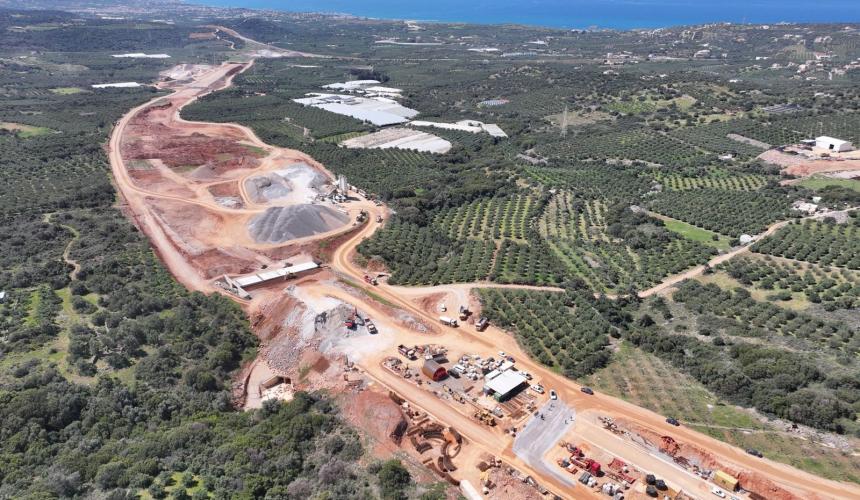
But the BOAK isn’t just a property dispute. Agricultural cooperatives view it as an existential threat to the region’s farming heritage.
On May 10th, the Administrative Boards of three major agricultural organizations—the Agricultural Union of Western Rethymno, the Agricultural Olive Oil Cooperative of Adele, and the Agricultural Olive Oil Cooperative of Pigi—issued a joint statement of categorical opposition to the proposed route.
Their central accusation: the highway is designed to cut directly through highly productive agricultural land, threatening to destroy the historic olive groves of Eastern Rethymno.
Why Are Farmers So Angry?
The cooperatives raise a compelling question that government planners haven’t adequately answered: “Why expand into new territory when the existing road can be widened?”
The current highway already has straight infrastructure and includes previously expropriated lands. Widening the existing route would require far less destruction and disruption. Instead, the government’s proposed new route devastates prime agricultural real estate.
“This isn’t just about compensation,” a cooperative representative explained. “This is about destroying irreplaceable productive capacity that sustains families and communities.”
The Lost Asset: Why Olive Oil Matters More Than Tourism
Agricultural leaders are making a sophisticated economic argument that challenges the government’s development priorities.
Olive oil production is 100% domestically-controlled. Whether exported as bulk product or processed oil, the entire profit margin stays in Greece. Every euro of value is captured within the national economy.
Compare this to the “all-inclusive mass tourism” model that dominates the region’s economic planning. In that model, most profits flow overseas—to international hotel chains, foreign travel companies, and external investors. Local communities capture only a fraction of economic value.
“Land is our future,” the cooperatives declared in their joint statement. “Tourism can be lost to pandemics, wars, or climate change. But land provides food security.”
This represents a fundamental challenge to the region’s economic strategy: Is Crete building an economy based on service provision to tourists, or on sustainable local production?
A Cascade of Failures: Why Citizens Don’t Trust Government Projects Anymore
Agricultural leaders didn’t stop at opposing the BOAK. They conducted a scathing review of major public works projects that have preceded it—and the list is damning:
Latzima Airport: Millions spent on expropriations for an airport that was never built. A monument to waste.
Rethymno Port: Remains unsafe and perpetually troubled due to siltation problems. Capital-intensive infrastructure that fails to deliver.
VIOPA Business Park: An investment fiasco in an unsuitable location.
Arkadios Reservoir & Potami Dam: Projects that remain inactive or incomplete, trapped in bureaucratic gridlock and disputes over revenue management.
Biological Treatment Facility: Millions of cubic meters of clean water are discarded into the sea instead of irrigating agricultural lands. A spectacular failure in resource management.
Rethymno Hospital: Barely functioning, kept operational only through the dedication of overworked doctors and nurses.
“If this is the track record of major public works in our region, why should we trust the BOAK will be any different?” asked one municipal official. “The pattern is clear: grand promises, massive disruption, disappointing results.”
The Constitutional Question: Environmental Protection vs. Infrastructure Demands
The cooperatives formally accused the government of violating Article 24 of the Greek Constitution—provisions mandating environmental protection and sustainable development principles.
A critical legal principle hangs in the balance: Can the state expropriate vast tracts of highly productive land to construct infrastructure when less destructive alternatives exist?
If the answer is yes, property rights become subordinate to infrastructure planning. If the answer is no, the government must pursue alternatives—possibly including a southern bypass route that would protect developed settlements.
A Growing Movement: Collective Resistance Organizing
Citizens and farmers aren’t passively accepting government decisions. Affected communities are establishing collective organizations to coordinate resistance and present unified demands.
Their key arguments:
1. Route revision is necessary. The current path creates unreasonable destruction; alternatives should be evaluated.
2. Compensation must reflect fair market value. The gap between offered and actual property values is unconstitutional.
3. Agricultural land deserves protection. Productive capacity shouldn’t be destroyed without exhausting alternatives.
4. Environmental concerns are legitimate. Multiple road axes concentrated in small areas fundamentally alter regional character.
5. Development capacity is being sacrificed. The concentrated infrastructure destroys the region’s future growth potential.
An Intriguing Proposal: Could Better Planning Prevent Disaster?
Civil engineer and President of Crete Development Organization Theodorus Ninos has proposed a creative solution: establish a specialized mechanism operating under the Technical Chamber of Greece’s supervision.
His proposal would:
– Create an organized technical system for collecting and processing data on project concerns
– Record observations, objections, and modification proposals
– Evaluate and prioritize requests with institutional legitimacy
– Include participation from municipalities, local organizations, engineers, and citizens
– Apply corrective interventions guided by principles of social justice
“This initiative should move forward immediately with institutional safeguards,” Ninos emphasized. The Technical Chamber would have authority to assess demands and recommend design modifications for the route sections between Kissamos and Chersonissos.
Such a mechanism could transform technical planning from a top-down exercise into a collaborative process that incorporates local expertise and public input.
What Happens Next?
Court cases continue through June. The government appears committed to the current route despite opposition. Property owners face deadlines for responding to expropriation notices. Farmers are mobilizing more extensively.
This isn’t simply a dispute over a highway. It’s a conflict between competing visions for Crete’s future:
– Infrastructure expansion vs. community preservation
– Development-at-any-cost vs. sustainable planning
– Adequate compensation vs. inadequate buyouts
– Agricultural heritage vs. tourism economy
– Constitutional rights vs. state authority
The Human Cost
Behind the legal arguments and economic calculations are families losing homes, farmers watching ancestral lands disappear, and communities facing irreversible transformation.
One woman summed it up: “We’re not trying to stop progress. We’re asking for fair treatment, reasonable compensation, and planning that considers whether there are better ways to do this. Is that too much to ask?”
For now, the answer appears to be yes. But the growing resistance suggests the government’s path forward will be anything but smooth.
Source:



