

Newsflash from Monday, 10 August 2026:

After years of delays caused by property disputes, utility relocations and design revisions, the first major section of Crete’s ambitious east-west motorway is expected to open by the end of summer 2026.
A long-awaited milestone
The Neápoli–Ágios Nikólaos section of the BOAK (North Crete Motorway) is now scheduled to be delivered in September 2026. This 10.2-kilometre stretch—funded by the European Union’s Recovery and Resilience Fund—represents the first tangible progress on a project that has faced significant obstacles since its inclusion in the recovery programme in 2021.
The original completion date was September 2025. That target slipped, but work is now expected to conclude by the end of August 2026 for the recovery fund requirements, with overall project completion pushed back to October 2027.
What’s causing the delays?
Three main factors have held up construction:
- Property acquisitions: Land expropriations have proven more complex and costly than anticipated. The budget for acquisitions has risen from €11.55 million to €18.55 million—an increase of roughly €7 million. A court decision in 2025 set final compensation rates for affected properties, legal fees and court costs.
- Utility relocations: Moving water, electricity, telecommunications and other essential services away from the motorway corridor has required extensive coordination and caused construction delays.
- Design revisions: Several sections of the project required reworking after initial studies proved incomplete or inaccurate.
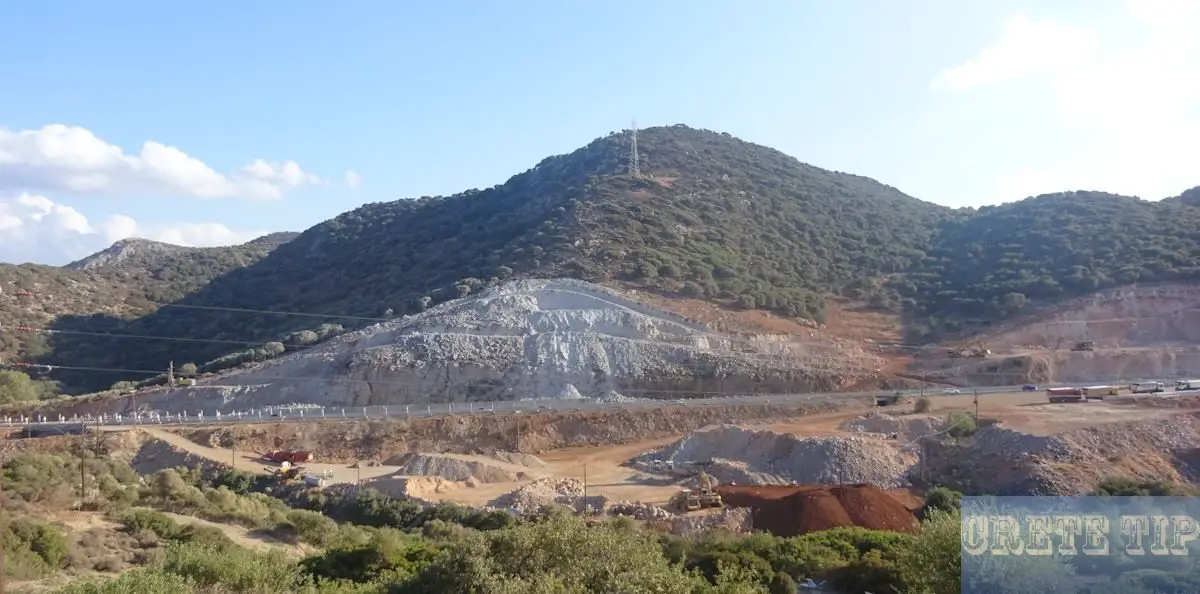
Project scope and funding
The full Neápoli–Ágios Nikólaos motorway will be 14.5 kilometres long, stretching from the first entrance to Neápoli to the Kritsiás interchange. It will feature two lanes in each direction plus emergency lanes.
The Recovery and Resilience Fund covers only a 10.2-kilometre portion, with the remaining stretch funded by Greece’s Sectoral Development Programme. Of the three grade-separated junctions planned (Neápoli, Límnoi and Ágios Nikólaos), the recovery fund finances only the Límnoi interchange; the other two use national funding.

Changes to neighbouring sections
The Chersónisos–Neápoli section (part of the same project) has also undergone financial restructuring. The European recovery fund contribution has been reduced from €90 million to €57 million—a cut of approximately €33 million—though the total public spending remains unchanged.
Under the new terms, the recovery fund will pay for research, studies, and early phases of excavation for three planned tunnels, plus one major bridge. Later tunnel work will be funded entirely by the Greek government, outside the recovery programme scope.
Why this matters for Crete
The BOAK is Crete’s largest road infrastructure project in decades. Once complete across the entire island, it will connect the western city of Chaniá with the eastern town of Sítiá, dramatically improving travel times and supporting economic development across the region.
The September deadline for the first section represents real momentum—but also underscores how complex large infrastructure projects can be, especially when property rights, environmental considerations and technical challenges intersect.
BOAK Highway Costs Spiral: Rising Expropriations, Delayed Works and Pressure on Recovery Fund

Crete’s ambitious motorway project faces mounting financial pressures as property acquisition costs climb, construction timelines slip and questions grow about whether EU recovery funding will stretch far enough.
Expropriation costs exceed budget
The Northern Road Axis of Crete (BOAK)—one of Europe’s largest highway projects under construction—is experiencing significant cost overruns tied to property acquisitions. Initial budget estimates for land purchases have been substantially exceeded as court decisions, compensation claims and legal fees mount.
Affected property owners have challenged initial valuations through the courts. Judicial rulings have in many cases set compensation rates higher than originally anticipated, pushing the total acquisition budget well beyond projections.
Construction delays compound the problem
Project delays are adding to costs in multiple ways. Utility relocations—moving water, electricity, telecommunications and sewage infrastructure out of the motorway corridor—have proven more complex and time-consuming than planned. Design revisions required after initial surveys proved incomplete or inaccurate have further slowed progress.
The ripple effect is significant: longer timelines mean extended contractor engagement, higher labour costs, increased material expenses and delayed opening of revenue-generating sections.
Recovery Fund faces mounting pressure
The European Union’s Recovery and Resilience Fund is footing a substantial portion of BOAK’s bill, but the rising costs threaten to outpace available funding. Budget reallocations between sections of the project have already begun—with some portions receiving reduced EU backing and others relying more heavily on Greek government coffers.
There is growing concern within Crete’s business community and among local authorities that the recovery fund envelope may not be sufficient to cover the full scope of work as originally envisioned. If gaps emerge, completion timelines could slip further or sections could be scaled back.
The bigger picture
The BOAK represents a €2.5 billion-plus investment intended to transform connectivity across Crete. Spanning over 200 kilometres from Chaniá in the west to Sítiá in the east, it is essential infrastructure for tourism, agriculture, commerce and everyday mobility.
However, the project illustrates how real-world complexities—property rights disputes, utility coordination, environmental requirements and geological challenges—can push even well-intentioned, well-funded infrastructure initiatives over budget and past deadlines.
The European recovery fund was designed to help member states recover from the COVID-19 pandemic, but it is not infinite. As costs rise across multiple BOAK sections simultaneously, stakeholders face difficult choices about priorities, scope and timelines.
What’s next?
Close monitoring of the project budget and the recovery fund balance will be essential in the coming months. Any further cost escalations could prompt difficult conversations about phasing, deferrals or scope reductions.
For now, the first major section—Neápoli to Ágios Nikólaos (10.2 km)—remains on track for September 2026 delivery, but the broader project trajectory remains uncertain.



