

Newsflash from Sunday, 19 July 2026:
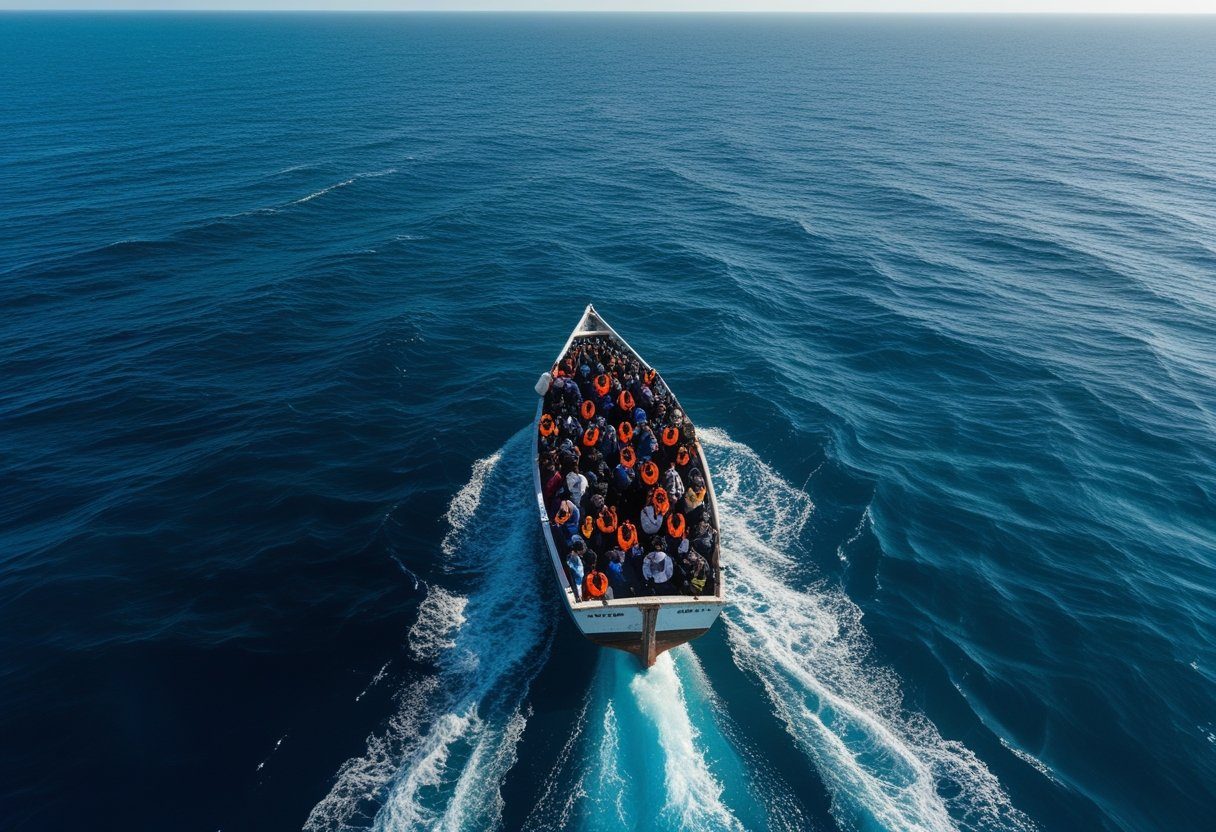
High-Seas Rescue: 47 Migrants Safely Recovered South of Heraklion in Coordinated Operation
A coordinated search and rescue operation was successfully carried out south of Heraklion, Crete, leading to the safe recovery of approximately 47 migrants who were found adrift at sea.
The operation was conducted under the supervision of Greece’s Joint Rescue Coordination Center (JRCC), following the detection of a vessel located about 55 nautical miles southeast of Kaloi Limenes, in the Municipality of Faistos.
The migrant boat was initially spotted by a Frontex aerial unit during a routine patrol. Shortly after, a vessel operating under the Frontex mission reached the scene and safely recovered all individuals on board.
Challenging Conditions at Sea
At the time of the rescue, weather conditions in the area included northwesterly winds reaching up to 4 on the Beaufort scale. While not extreme, such conditions can still pose significant risks for small, overcrowded vessels attempting long sea crossings.
Authorities confirmed that all passengers were safely transferred to the port of Kaloi Limenes without incident.
Next Steps for the Rescued Migrants
Upon arrival at the port, the migrants were expected to undergo the standard reception and identification procedures, in line with national and European protocols for handling such cases.
The operation highlights the ongoing challenges faced in the Eastern Mediterranean, where rescue missions remain a frequent necessity due to continued migrant crossings.
Greek authorities, in cooperation with European agencies such as Frontex, remain on high alert to respond swiftly to similar incidents and ensure the safety of those at sea.
Crisis on Crete: 8,552 Migrants Arrive in Six Months as Island Becomes Greece’s Primary Gateway

A comprehensive report released by Refugee Support Aegean (RSA) reveals the scale of migrant arrivals to Crete and Gavdos in the first half of 2026, painting a picture of an island overwhelmed by unprecedented numbers and a state apparatus struggling to keep pace.
According to data provided by the Hellenic Coast Guard, between January 1 and June 30, 2026, a total of 8,552 migrants arrived on Crete and Gavdos — a significant increase compared to the 7,336 arrivals recorded during the same period in 2025.
Crete: Now Greece’s Primary Migration Gateway
The surge underscores a dramatic shift in migration patterns. Nearly two years after migrant flows were redirected from the Aegean Sea to southern Crete, the island has solidified its position as Greece’s main entry point. Officials from Greece’s Ministry of Migration and Asylum have publicly acknowledged that approximately 70% of all migrant arrivals to the country now arrive at Crete.
The distribution of arrivals across Crete’s major ports reveals Heraklion as the primary landing point, receiving 3,850 migrants during the first half of 2026. Other major ports included Chania (2,859), Ierapetra (928), and Rethymno (896). A single incident was also recorded near Kalamata, involving 19 migrants whose vessel, departing from Libya, was intercepted 68 nautical miles southwest of Cape Tainaron.

Ierapetra: The Third Gateway and Its Struggles
Ierapetra, despite hosting the third-highest number of arrivals on Crete with 928 migrants, has emerged as a focal point for humanitarian concerns. The town’s reception facilities — a converted old school in the Kalogeroi area equipped with basic sanitation and chemical toilets — have been in continuous operation throughout the six-month period.
The municipality of Ierapetra has shouldered significant responsibilities, providing meals, hygiene items, and transportation to Heraklion for migrants in transit. Local NGOs, including the Greek Red Cross’s Ierapetra branch, the organization Crete for Life, and A Drop in the Ocean, have stepped in to fill critical gaps in care.
Tragic Loss at Sea
The report documents several maritime disasters that claimed lives during the period. Most notably, a shipwreck off the coast of Ierapetra in March resulted in the deaths of 22 people. According to survivor testimonies, the victims died from the hardships of the journey, and their bodies were subsequently dumped at sea on the orders of smugglers.
Additional tragedies included a maritime accident near Kaloi Limenes in February that resulted in three confirmed deaths and 25 missing persons, a drowning incident in June, and the death of a 30-year-old Bangladeshi man who died in a hospital in Chania following a rescue operation.
Documented Cases of Violence and Abuse
Manolis Papadakis, president of the Ierapetra branch of the Greek Red Cross, provided harrowing accounts of the conditions migrants endured. In an interview with RSA, he described encountering newly arrived migrants bearing visible signs of physical abuse, including wounds from whippings and blunt-force trauma inflicted with clubs.
“There were newly arrived migrants with marks of beatings, specifically from whips and clubs, something confirmed by our Red Cross doctor,” Papadakis said. “We have also documented cases of hypothermia in winter and dehydration affecting both adults and infants. Dermatological problems have included burn injuries when passengers sitting near fuel tanks in boats come into contact with the containers.”
The report emphasizes that among the arriving migrants are frequently women, infants, and survivors of violence and torture — vulnerable populations in urgent need of specialized support.
Demographic Overview: Primary Countries of Origin
The majority of arrivals originated from Bangladesh (3,536 individuals) and Sudan (3,159), followed by Egypt (1,049), South Sudan (346), and Eritrea (135).
Of particular concern is the number of unaccompanied and accompanied minors: 780 children and adolescents arrived during the six-month period. The primary countries of origin for minors were Egypt (362), Sudan (182), Bangladesh (113), and South Sudan (58).


State Infrastructure: Inadequate and Ad Hoc
Despite the sustained surge in arrivals, RSA’s central finding is damning: nearly two years into this crisis, the Greek state has failed to establish organized, appropriate reception infrastructure. Instead, authorities continue to rely on temporary, makeshift arrangements.
In Chania, a former exhibition center in Agyia was converted into a temporary reception facility with approximately 550 beds, a mobile clinic, and administrative buildings. As of late June, only 163 people were housed there, with capacity for approximately 350.
Heraklion presents an even more dire situation. The “Old Freezer” at the port, with capacity for only 70-80 people, has become a bottleneck that has forced authorities into ad hoc arrangements — including the June incident where 43 newly arrived migrants were forced to remain on a bus due to lack of accommodation space. These individuals were eventually transferred to Ierapetra to ease overcrowding in Heraklion.

The Human Cost of Policy Failure
The report’s documentation makes clear that behind the statistics are real human beings enduring trauma, violence, illness, and danger. The reliance on temporary facilities, the absence of coordinated state planning, and the dependence on charitable organizations and local municipalities to fill the gaps represent a failure of governance at a time when humanitarian need is at its peak.
For Crete and Gavdos, the first half of 2026 has cemented the islands’ role as the primary gateway for migrants entering Greece — but without corresponding investment in humane, sustainable reception infrastructure.
Sources:
Creta24 – Rescue operation for 47 migrants south of Heraklion



