

Newsflash from Saturday, 10 October 2026:
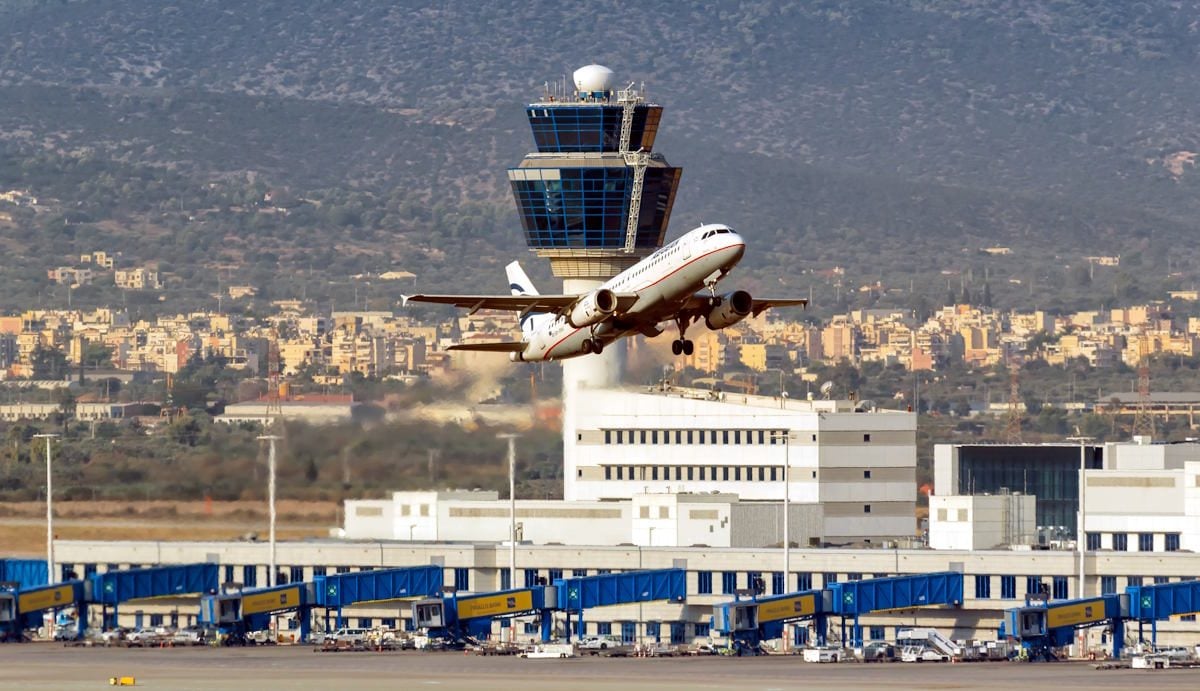
As soaring fuel costs push airlines into crisis mode this winter, Greece’s flagship carrier Aegean Airlines has reason to celebrate: it was just named the safest airline in Europe, according to a new industry index.
The two stories are intertwined. While fuel prices threaten the financial survival of carriers across the continent, Aegean’s achievement highlights that safety and resilience can coexist even in turbulent times.
A Difficult Winter Ahead for European Airlines
Airlines are bracing for a tough winter season as high jet fuel prices force them to cut flights, slash costs, and even request delays on aircraft lease payments.
The pressure stems from the energy shock triggered by the war involving Iran, which has driven up fuel costs across the aviation sector.
EasyJet and Germany’s Lufthansa are already reducing winter flight schedules. Meanwhile, Delta Air Lines downgraded its annual profit forecast, citing an estimated $6 billion increase in costs this year due to the Middle East conflict.
“This is now a full-blown crisis,” said Michael O’Leary, CEO of Ryanair. “Next year everyone will be under pressure. We’re trying to limit losses as much as possible and adapt to the new reality.”
Risk of Bankruptcies This Winter
Industry executives, analysts, and financiers warn that the risk of airline collapses this winter — from now through the end of March — is higher than in previous years.
This follows the collapse of U.S.-based Spirit Airlines in May and the suspension of operations by airBaltic last month.
“Small and medium-sized airlines will struggle a lot this winter and face survival challenges,” said Luis Gallego, CEO of IAG, the group that owns British Airways. “Some will come close to collapse, and some won’t make it.”
Ryanair’s O’Leary estimates that fuel price increases caused by the Middle East war will persist at least until 2028.
Why Fuel Costs Are So High
Airlines that previously locked in fuel prices through hedging agreements are now seeing those deals expire, forcing them to either accept much higher prices or buy fuel on the open market at greater risk.
According to easyJet CEO Kenton Jarvis, fuel purchased today for delivery in six months now costs $1,200–$1,300 per ton — compared to a normal price of around $700 per ton.
The gap between crude oil prices and jet fuel prices — known as the “crack spread” — has widened so much that airlines including Lufthansa and IAG are now hedging jet fuel directly rather than crude oil.
U.S. airlines generally don’t hedge fuel prices this way, leaving them more exposed to this year’s price spike.
“Everything points to a difficult winter, even for airlines that have protected themselves from price swings,” said aviation analyst John Strickland. “We’ll see many flight cancellations, and for some airlines, survival itself is at stake.”
Flight Cuts Already Underway
EasyJet has doubled its planned winter flight cuts, removing an additional 700,000 seats from its schedule.
In September alone, airlines removed 6 million seats from October, November, and December schedules — roughly 1% of the industry’s total capacity, according to Cirium data.
Nearly a dozen airlines, including some based in the Gulf region, have already requested delays on aircraft lease payments, with some seeking to push back payments by several months and others requesting a roughly 10% reduction in monthly installments.
Aegean Airlines Named Europe’s Safest Carrier
Aegean Airlines (Greece’s national flag carrier) has been ranked the top airline for safety in Europe for 2026, according to the European Airline Safety Index published by AirAdvisor.
The ranking, based on a decade of data (2016–2025), evaluated 20 European airlines. Aegean topped the list with a score of 89 out of 100, ahead of Ryanair (86/100) in second place and Austrian Airlines (85.5/100) in third.
Aegean achieved a perfect 40/40 score for its safety record, having recorded zero accidents over the ten-year period. It also scored 13/15 for operational safety, 9/10 for fleet quality, and a perfect 5/5 for financial stability.
AirAdvisor noted that a clean accident record alone wasn’t enough to top the rankings — British Airways and SAS also had zero accidents but didn’t make the top five. Aegean stood out for excelling across all evaluated categories.
How the Index Works
The ranking assessed the ten largest low-cost and ten largest mainline carriers in Europe, based on 2025 EUROCONTROL flight data, using six criteria:
- 40% — Safety record (IATA data, 2016–2025)
- 20% — Certification and oversight (ICAO data on national aviation authority effectiveness)
- 15% — Operational safety systems
- 10% — Fleet age and technical profile
- 10% — Pilot training
- 5% — Financial stability
AirAdvisor emphasized that the index is meant for comparison purposes only and should not be treated as an absolute measure of whether an airline is “safe” or “unsafe.”
Interestingly, low-cost carriers performed competitively against full-service airlines. Three of the top five safest airlines — Ryanair, Norwegian, and SunExpress — are budget carriers. The overall gap between mainline (82.8/100) and low-cost (79.2/100) averages was just 3.6 points.
Low-cost airlines even outperformed mainline carriers on fleet age, with Wizz Air and Pegasus both scoring a perfect 10/10 in that category.
“Many travelers assume a cheaper ticket means accepting more safety risk, but the data doesn’t support that,” said AirAdvisor CEO Anton Radchenko. He added that ticket price says very little about how safe an airline actually is.
Rank | Airline | Type | Score /100 |
|---|---|---|---|
1 | Aegean Airlines | Mainline | 89 |
2 | Ryanair | Low-cost | 86 |
3 | Austrian Airlines | Mainline | 85.5 |
4 | Norwegian | Low-cost | 85 |
5 | SunExpress | Low-cost | 84.5 |
6= | Air France | Mainline | 83.5 |
6= | British Airways | Mainline | 83.5 |
6= | Iberia | Mainline | 83.5 |
9= | Turkish Airlines | Mainline | 83 |
9= | Lufthansa | Mainline | 83 |
11 | KLM | Mainline | 82.5 |
12 | easyJet | Low-cost | 82 |
13= | Eurowings | Low-cost | 81.5 |
13= | SAS | Mainline | 81.5 |
15 | Wizz Air | Low-cost | 79.5 |
16 | Transavia | Low-cost | 79 |
17 | Vueling | Low-cost | 77 |
18 | Jet2.com | Low-cost | 73 |
19 | SWISS | Mainline | 72.5 |
20 | Pegasus Airlines | Low-cost | 64.5 |
What does this mean for visitors?
- Expect possible flight disruptions this winter: With airlines cutting capacity due to fuel costs, travelers flying to or from Crete should check flight schedules in advance and consider booking earlier.
- Stay flexible with travel plans: Given the rising risk of cancellations or route changes, it may be worth choosing refundable fares or travel insurance that covers airline disruptions.
- Flying with Aegean offers peace of mind: If you’re planning trips in or out of Crete, Aegean’s top safety ranking may reassure travelers concerned about carrier reliability amid industry turmoil.
- Don’t judge safety by ticket price: The report confirms that budget airlines like Ryanair, Norwegian, and SunExpress rank among the safest in Europe — a cheaper fare doesn’t mean compromised safety.
- Monitor news on smaller carriers: If you’re booked with a smaller or budget airline this winter, keep an eye on their financial stability, given industry warnings about potential bankruptcies.
Sources: Hania News and Money Tourism



