

The 12 key changes affecting hotels, beaches and short-term rentals – criticism from the Cretan hospitality and tourism sectors.

Greece has officially launched its Special Spatial Framework for Tourism (ΕΧΠ-Τ), effective since August 7, 2026, establishing the country’s first comprehensive national planning rules for tourism development. This landmark legislation fills a regulatory gap that has existed since 2012, reshaping how and where tourism infrastructure can be built across Greece.
The new framework represents a strategic shift toward sustainable, organized tourism growth while protecting sensitive coastal and island environments. It marks a historic moment for Greek tourism policy, introducing clear, transparent and unified rules for the entire sector.
What Is the Special Spatial Framework for Tourism?
The Special Spatial Framework for Tourism (ΕΧΠ-Τ) is a national spatial planning document published by the Ministries of Environment & Energy and Tourism on August 7, 2026 (Government Gazette 658/7-8-2026). It defines strategic directions and medium-to-long-term objectives for tourism development at the national level.
For the first time in modern Greek history, the framework establishes clear rules determining where tourism can develop, under what conditions, and how to balance economic growth with environmental protection and quality of life. The document aims to organize tourism development in a structured, sustainable manner while respecting each region’s unique characteristics.
Core Objectives & Strategic Goals
The framework prioritizes sustainable tourism development that respects the carrying capacity of each area and the particular features of every region. It seeks to improve the overall tourist experience, promote diverse tourism forms beyond the traditional “sun and sea” model, and extend the tourism season through quality infrastructure.
The ΕΧΠ-Τ supports spatial rebalancing and dispersal of tourism activity, promotes thematic tourism alongside conventional beach holidays, and gives particular emphasis to islands and environmentally sensitive areas. It also guides urban planning strategies for the coming years, ensuring tourism coexists harmoniously with other productive sectors.
12 Major Changes for Hotels, Beaches & Short-Term Rentals
1. Increased Building Rights for New Hotels Outside Town Plans
New hotel developments outside existing town plans now benefit from higher floor area ratio (FAR) limits. This encourages quality hotel construction in less-developed areas while maintaining building standards and environmental compliance.
2. Special Rules for Islands & Coastal Zones
Islands and coastal areas receive tailored regulations reflecting their environmental sensitivity and limited carrying capacity. These rules protect fragile ecosystems while allowing controlled, sustainable tourism development.
3. Enhanced Coastal Protection Measures
Stricter protection rules apply to coastal and marine zones, particularly in areas experiencing high tourism pressure. The framework establishes buffer zones and development restrictions to preserve beach quality and marine environments.
4. Short-Term Rental (Airbnb) Guidelines
The framework introduces clear directives for short-term rental regulation, addressing concerns about housing affordability and neighborhood character. Local authorities now have structured guidance for managing platforms like Airbnb within their jurisdictions.
5. Area Classification System
Greece is divided into five categories based on tourism intensity levels, from saturated destinations to emerging tourism areas. This classification determines building permissions, density limits and development conditions specific to each zone’s characteristics.
6. Stricter Rules for Saturated Destinations
Popular destinations like Chersonissos, Malia and Nea Kydoneia face tighter restrictions to prevent overdevelopment and quality degradation. New hotel construction in these areas must meet higher environmental and architectural standards.
7. Incentives for Underdeveloped Regions
Less-developed tourism areas receive incentives including favorable building regulations and simplified approval processes. This encourages investment in underutilized regions and spreads tourism benefits more equitably across the country.
8. Protected Area Designations
The framework identifies areas requiring special protection due to environmental sensitivity, archaeological significance or cultural value. Development restrictions in these zones preserve Greece’s natural and cultural heritage.
9. Integration with Other Economic Activities
Tourism development rules now explicitly consider coexistence with agriculture, fishing, energy production and other industries. The framework prevents tourism from monopolizing land use or displacing other productive sectors.
10. Quality Standards for New Infrastructure
New hotels and tourism facilities must meet contemporary standards for architecture, sustainability, accessibility and guest amenities. This ensures Greece maintains competitive advantage through quality rather than quantity.
11. Environmental Impact Requirements
All significant tourism projects now require environmental assessments and sustainability certifications. Developers must demonstrate waste management, water conservation and energy efficiency plans before approval.
12. Local Authority Coordination Framework
Municipalities and regional authorities receive clear guidelines for implementing national tourism policy at the local level. This creates consistency while allowing regional adaptation to specific conditions and needs.
Direct Applications vs. Future Guidance
The ΕΧΠ-Τ contains two components: immediately applicable regulations taking effect August 7, 2026, and future guidance for local and regional urban planning documents. This phased approach allows rapid implementation of national rules while enabling gradual local integration.
Immediately enforceable provisions include increased FAR limits for new hotels, coastal protection measures and short-term rental directives. Local urban plans will incorporate broader strategic directions over the coming years.
Impact on Different Stakeholder Groups
For Hotel Developers
Hotel developers benefit from clearer, more transparent approval processes and increased building rights in designated areas. However, they face stricter environmental standards and design requirements ensuring quality construction and sustainable operations.
For Beach Municipalities
Coastal authorities gain tools to manage tourism pressure, protect beaches and preserve local character. They also receive guidance for balancing development with environmental conservation and community welfare.
For Airbnb & Short-Term Rental Platforms
Short-term rental regulation becomes more structured and predictable, reducing uncertainty for property owners and platforms. However, local authorities now have authority to implement quotas, licensing requirements and neighborhood protection measures.
For Environmental & Cultural Organizations
The framework strengthens protections for sensitive ecosystems, archaeological sites and culturally significant areas. Environmental groups gain clearer legal grounds for challenging inappropriate development proposals.
Historical Significance
For decades, Greece lacked a comprehensive national tourism spatial framework, relying instead on regional plans that varied widely in quality and enforcement. The 2012 planning law created a regulatory vacuum that this 2026 framework finally addresses.
The ΕΧΠ-Τ establishes Greece as a modern tourism destination with strategic planning comparable to international standards, signaling commitment to sustainable growth rather than unchecked development.
What’s Next?
Local authorities must now align their urban planning documents with the new national framework over the coming months. Tourism stakeholders—developers, municipalities, environmental groups and residents—must familiarize themselves with the new rules and engage in local planning consultations.
The framework will be implemented progressively through local and regional urban planning updates, creating a nationwide system that balances tourism prosperity with environmental protection and quality of life.
Crete’s Hospitality Sector Welcomes New Tourism Plan—But Demands Stronger Local Rules

The Cretan Hospitality Association has described Greece’s new Special Spatial Framework for Tourism as a necessary first step toward clearer and more stable rules for tourism development.
However, the association stresses that the framework should not be treated as a complete or unchangeable plan. Instead, it should become the starting point for continuous institutional dialogue, scientific assessment and local participation.
What the Association Welcomes
The association says that several provisions were improved following consultation and the incorporation of proposals from tourism-sector institutions.
- Upgrading and modernizing existing hotels
- A shift from quantitative growth to higher-quality, environmentally responsible development
- Protection for destinations facing intense tourism pressure
- Stronger water, wastewater, transport, healthcare and waste-management infrastructure
- Destination Management Plans
- Development of specialized tourism products and extension of the tourism season
- Closer links between tourism, local production and host communities
It also welcomes the recognition that short-term rentals require clearer rules. Yet it warns that policy directions must quickly be followed by specific legislation, effective inspections and equal operating conditions.
Concern Over Short-Term Rentals
According to the association, the uncontrolled expansion of short-term rentals reduces housing availability for permanent residents and tourism employees. It can also increase pressure on infrastructure and create unequal competition with legally licensed tourism businesses.
The association therefore calls for an effective regulatory framework that protects residents while ensuring fair competition across the accommodation market.
Why the Plan Matters for Crete
Crete combines internationally established resorts, fast-growing areas, mountain communities and destinations with very different development needs. A single approach cannot adequately reflect these contrasts, the association argues.
For the island, the application of the new framework must take into account water scarcity, coastal protection, infrastructure capacity, employee housing and the potential to extend the tourism season.
Key Demands for the Next Stage
The Cretan Hospitality Association is calling for faster completion of Local and Regional Urban Plans, alongside a stronger role for local communities and tourism institutions.
- Scientific assessment of each destination’s carrying capacity
- Avoidance of horizontal restrictions that ignore local realities
- Funding for essential public infrastructure
- Clear implementation without unnecessary bureaucracy
- Immediate legislation for short-term rentals
The association also shares the substantive reservations expressed by Panhellenic Federation of Hoteliers President Yiannis Hatzis, particularly regarding how the framework will work in practice.
Beyond the Question of Capacity
The central issue, according to the association, is not simply how much tourism the new plan will permit, but what kind of tourism it will create.
Sustainable development cannot be achieved through restrictions alone. It requires flexible rules adapted to the real conditions of each destination, adequate public infrastructure and an ongoing dialogue between the state, businesses and local communities.
Crete’s Tourism Leaders Reject New Spatial Plan as “Flawed”—Here’s Why
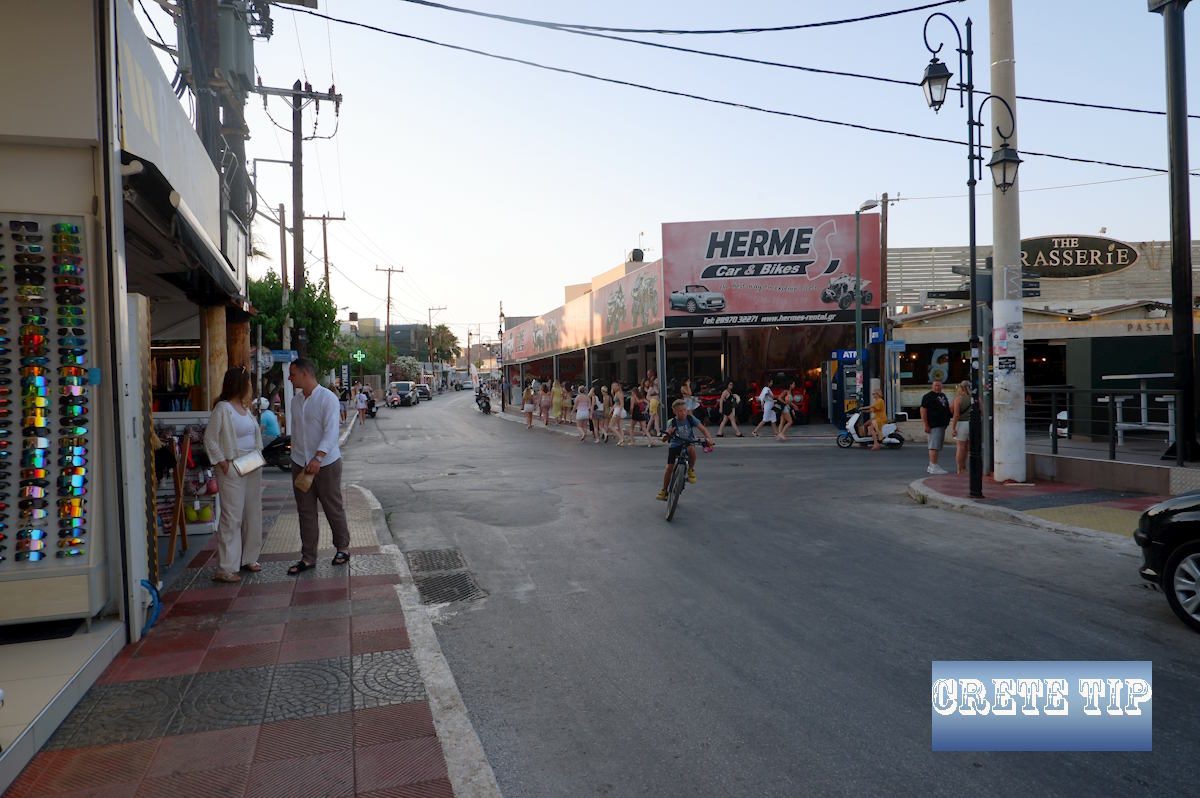
Crete’s tourism sector has launched a scathing critique of Greece’s new Special Spatial Framework for Tourism, with regional officials and hospitality organizations calling the plan fundamentally flawed and disconnected from ground realities. The objections center on how the framework calculates tourism pressure, assigns development categories and fails to account for local infrastructure variations.
Kyriakos Kotsoglou, Regional Vice-Governor for Tourism and E-Governance in Crete, has publicly outlined serious concerns that reflect broader criticism from tourism institutions across the island.
The Core Problem: Flawed Pressure Calculations
The framework calculates tourism pressure using 2010 Kapodistrian municipality boundaries and Demic units without providing detailed numerical data. This creates absurd classifications where economically booming areas are grouped with nearly empty villages.
For example, the plan classifies Nea Kydoneia, Malia and Chersonissos as “controlled development” destinations—yet these three compete directly as saturated markets. Meanwhile, the entire northern coast from Chania to Agios Nikolaos falls into the “development” category, treating completely different economies identically.
The Geropótamos Anomaly
One of the plan’s most glaring contradictions involves Geropótamos municipality. It receives the same classification as Platanias, Rethymno and Chania—despite having only three hotel units in Panormo while the rest of the municipality from Latzimas onward remains empty.
Kotsoglou calls this “sacrilege”—using the same rules for a virtually undeveloped area as for major tourist destinations. The classification fails to reflect actual tourism intensity on the ground.
Krassi vs. Malia: The Identical-Classification Problem
The plan assigns identical zoning and development rights to Krassi (a traditional village) and Malia (a densely developed resort), simply because they fall within the same Kapodistrian municipality. This creates a 16-hectare (40-acre) building rights requirement for both.
As Kotsoglou explains, this means a family entrepreneur in Krassi cannot build a three-unit hotel without proving carrying capacity across the entire Krassi area. In Malia, however, someone else needs only 12 hectares for the same project—an absurd contradiction.
Infrastructure Ignored: The Nea Kydoneia vs. Platanias Case Study
Nea Kydoneia boasts full coastal infrastructure, a northern axis road, comprehensive lighting, biological sewage treatment and zero traffic congestion. Yet the framework classifies it as “Category A” (controlled development).
Platanias—one kilometer away with nearly identical tourism intensity—has inferior infrastructure yet receives “Category B” (development) status. This means Nea Kydoneia residents and investors face stricter restrictions despite having better public services.
The framework completely ignores infrastructure capacity, penalizing well-organized destinations while permitting expansion in less-prepared areas. This represents a fundamental planning error that contradicts basic urban development principles.
What Tourism Leaders Propose Instead
Kotsoglou and other regional officials call for pressure analysis based on current short-term rental data at the local community level rather than historical municipality boundaries. This would identify actual tourism saturation rather than theoretical classifications.
The analysis should include granular assessments of specific villages—Melidoni, Margaritis, Lakkous, Omalos—to reflect genuine local conditions and development potential. Data should come from Recovery Fund materials already available and updated annually.
The Infrastructure Factor
Any viable spatial framework must account for public infrastructure networks by region. A destination with sewage treatment, adequate water supply and transport capacity should not be restricted identically to an area lacking these essentials.
Currently, the framework’s restrictions operate independently of infrastructure reality, creating perverse incentives that penalize well-managed areas and encourage development where services are insufficient.
Municipal Discretion Concerns
The framework permits municipalities to upgrade or downgrade a destination’s classification by only one category in Local Urban Plans (ΤΠΣ). Kotsoglou questions why a mayor should be able to modify national classifications based on local political considerations.
He argues this creates legal uncertainty and opens the door to inconsistent application across municipalities, defeating the framework’s stated purpose of establishing clear national rules.
Broader Sector Consensus
Kotsoglou emphasizes that Crete’s tourism sector—not just regional government—opposes the framework fundamentally, not merely its details. The objections reflect a consensus view that the plan is conceptually flawed.
Tourism institutions welcome stricter coastal protection (25-meter buffer zones, restrictions on shoreline work) and recognize the need for spatial planning. However, they reject the methodology used to classify destinations and allocate development rights.
The “Bed Per Hectare” Problem
The framework’s “beds per hectare” metric creates illogical outcomes. Two areas with identical bed density receive different treatment simply because they fall into different municipality boundaries or development categories.
Kotsoglou argues this metric is “unreliable”—it ignores carrying capacity factors like infrastructure, employment availability, seasonal patterns and local environmental conditions.
Data Currency Issues
Recovery Fund materials used to calculate tourism pressure come from pre-pandemic or early-pandemic periods and have not been updated despite significant market changes. The data are now 2-3 years old, yet the framework treats them as authoritative for the coming decade.
Sector leaders call for immediate data refresh and annual updates to maintain relevance as tourism markets evolve.
What Happens Next?
Local Urban Plans must now incorporate the framework’s directives, but Crete’s tourism sector is organizing to challenge problematic classifications during municipal planning consultations. Regional officials are advocating for pressure-calculation methodology revisions.
Whether national government will respond to these substantial objections remains unclear. The sector remains unified in its view that while spatial planning is necessary, this particular framework requires fundamental corrections before implementation.



