

Property sales have plummeted by 71 per cent, whilst prices are soaring to unaffordable heights – How much do luxury villas cost in Crete? – How many years do you need to save to buy your own home in Greece?
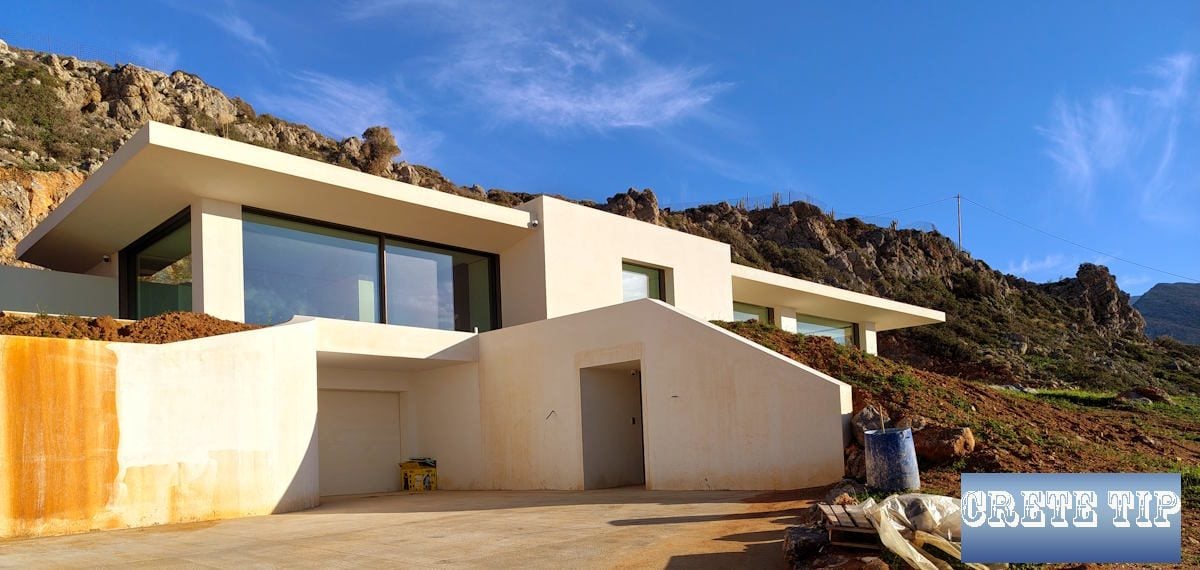
Crete’s Housing Crisis Deepens: Property Sales Plummet 71% as Prices Soar Out of Reach
Crete’s real estate market is sending unmistakable warning signals. Property sales have collapsed by a staggering 71% in Heraklion — the island’s largest city — during the first half of 2026 compared to the same period last year, according to official data from Greece’s Property Values Registry (AAΔE).
The dramatic downturn paints a troubling picture: prices are climbing while demand is plummeting, creating a dangerous disconnect that threatens both homebuyers and the broader economy.
The Numbers Tell a Dire Story
National Trends
While Heraklion’s 71% decline is among the steepest in Greece, the broader picture is equally grim:
- Nationwide property sales fell 18% in the first half of 2026 versus 2025
- 53 regional units experienced declines of 20% or more
- Only 17 regions showed growth, and even that was modest at 14%
The Listing Graveyard
Perhaps most alarming: 96.9% of published property listings remain unsold.
Of the properties listed for sale in the first half of 2026, only 3.1% actually sold — a 15.4% decline from the 3.7% sold in the same period of 2025. This means the market is flooded with properties that nobody is buying.
Heraklion’s Worst-Case Scenario
Heraklion wasn’t just one of many regional declines — it ranked among the five worst-performing regions in Greece, alongside:
- Thasos (−82% decline)
- Evritania (−78%)
- Phocida (−67%)
- Larissa (−52%)
Prices Rising While Sales Collapse: The Paradox
In what seems counterintuitive, property prices have continued climbing despite the sales collapse.
Property prices nationwide rose 6% in May 2026 compared to May 2025, with:
- 68 regional units experiencing price increases of 1-20%
- Only 6 regions seeing price decreases
The weighted average asking price in May 2026 stood at €2,806 per square meter — up from €2,641 in May 2025.
The Valuation Problem
Real estate experts warn that Greek property prices are overvalued by 16-24%. Unless prices fall by more than 20%, economists predict:
- The sales slowdown will continue indefinitely
- The real estate market will stagnate completely
- Thousands of unsold properties will languish on the market
What Real Estate Agents Are Saying
Agapitos Legakis, Vice President of the Association of Real Estate Agents of Eastern Crete, confirmed the grim market conditions in an interview with local media.
Rising Prices = Hesitant Buyers
“Customers are not making decisions easily, primarily because of the increases in property prices,” Legakis explained. The simple equation: when prices rise faster than incomes, people stop buying.
A Hidden Time Lag Problem
There’s another complication: statistics don’t capture actual market activity in real-time.
According to Legakis, deals can take six months or longer to finalize through notary contracts. This means:
- A property agreed upon in January might not appear in statistics until July
- The first-half 2026 sales figures actually reflect deals closed in late 2025
- Properties agreed to in mid-2026 won’t show up in statistics until later in the year
“We cannot have a clear picture because many properties may have closed at a different time than when the purchase is finalized,” Legakis noted.
Extended Closing Times
Buyers are now taking much longer to evaluate options, analyze costs, and scrutinize their choices — extending the time from agreement to finalized contract from weeks to months.
Legal and Bureaucratic Headwinds
Beyond prices, the market faces additional obstacles:
Land Registry Delays
Significant delays in the Property Register (Ktematologio) are slowing down transactions. Property transfer requests are backlogged, with no clear timeline for processing.
Zoning Complications
New regulatory conditions for “out-of-plan” land parcels have created uncertainty. These properties — buildable but technically outside municipal boundaries — now face unclear certification processes.
“We are not certain whether these parcels can obtain building permits,” Legakis explained, “and because of this uncertainty, many deals are stalled.”
A recent law extended the deadline for obtaining building permits on out-of-plan parcels to June 30, 2027, but uncertainty remains.
Where Investment Is Still Happening
Despite the overall slump, some market segments remain active:
- Older apartments in existing buildings continue to attract buyers who renovate them
- Investment properties aimed at tourist rentals maintain steady interest
- Properties in prime locations (Mykonos at €7,629/sq.m, Paros at €5,778/sq.m) still command sales
The Expert Advice
Legakis urged potential buyers and sellers to:
“Work with legitimate real estate agents who understand the market complexities. Through professional associations, we can help you navigate numerous issues to avoid wasting time and money.”
What This Means for Crete’s Future
The property market collapse raises serious questions:
- Will prices finally adjust downward? The 16-24% overvaluation suggests further corrections ahead
- Can the market absorb this inventory? With 96.9% of listings unsold, years of stagnation may follow
- What about the broader economy? Real estate typically drives employment, construction, and tax revenue
For now, the message is clear: Crete’s property market is broken. Prices are too high, sales are collapsing, and bureaucratic barriers are making transactions increasingly difficult and time-consuming.
Unless significant price corrections occur or the regulatory environment improves dramatically, the market faces a prolonged stagnation that could ripple through Crete’s entire economy.
Dream Homes by the Sea: How Much Do Luxury Villas Cost in Crete, the Ionian Islands & the Peloponnese?

Greece’s luxury property market continues to attract strong international interest, with Crete, the Ionian Islands, and the Peloponnese emerging as top destinations for buyers seeking high-end villas by the sea.
But how much does it actually cost to own a slice of Mediterranean paradise? Recent market data reveals notable differences in pricing — and rising demand, especially from foreign investors.
Crete Leads Demand — With Competitive Prices
Crete stands out as the most sought-after location, with more than 1 in 3 foreign buyers (35.15%) actively searching for property on the island in 2026 — up from 29.42% the previous year.
Despite this growing demand, prices remain relatively competitive compared to other premium destinations in Greece.
- Newly built villas with a pool (off-plan): €3,800 – €4,500 per sq.m.
Areas on the southern coast of Crete, particularly in the regions of Chania and Rethymno with views of the Libyan Sea, are especially popular among international buyers.
Peloponnese: Similar Entry Prices, Growing Appeal
The Peloponnese is gaining traction as a quieter, more affordable alternative to island living, while still offering strong investment potential.
- Newly built villas: Starting from €3,800 per sq.m.
Its accessibility from Athens and expanding tourism infrastructure make it an increasingly attractive choice for both holiday homes and long-term investments.
Ionian Islands: The Premium Market
The Ionian Islands — particularly Corfu and Lefkada — command significantly higher prices, reflecting their international prestige and established luxury markets.
- Corfu: Around €5,600 per sq.m.
- Lefkada: Around €5,500 per sq.m.
These islands remain favorites among high-end buyers seeking exclusive villas with strong rental potential and lush landscapes.
Why Buyers Are Choosing Off-Plan Villas
An increasing number of buyers are opting for off-plan properties — villas purchased before construction is completed.
This trend is driven by several advantages:
- Lower purchase prices compared to completed homes
- Flexibility to customize layouts and materials
- Potential for higher returns as property values rise during construction
What Buyers Are Really Looking For
According to market experts, today’s buyers are less focused on a specific location and more concerned with finding the “right” property.
Key criteria include:
- Sea views
- Privacy
- Proximity to the beach
- Easy accessibility
- Legal and construction reliability
Why Crete Continues to Stand Out
Beyond pricing, Crete offers a unique combination of advantages that strengthen its position:
- Long tourist season thanks to its mild climate
- Improved accessibility, including year-round international flights
- Major infrastructure projects, such as the new Kasteli airport
- Strong development pipeline, with thousands of new housing permits issued
These factors make the island particularly appealing for investors seeking both lifestyle benefits and steady returns.
The Bottom Line
While prices vary significantly by region, one thing is clear: Greece’s luxury villa market remains highly attractive, especially to international buyers.
Crete offers the best balance between price and demand, the Peloponnese provides value and accessibility, and the Ionian Islands continue to dominate the premium segment.
For buyers, the choice ultimately comes down to priorities — budget, location, and long-term investment goals.
The Brutal Math: How Many Years of Savings Does It Take to Buy a Home in Greece?

The dream of homeownership in Greece is becoming increasingly elusive. New research reveals a sobering reality: families with modest incomes now need 11 to 39 years of continuous savings just to scrape together the down payment for an apartment.
And that’s before they even qualify for a mortgage.
The Housing Crisis in Numbers
Property Prices Keep Climbing
Property prices across Greece have surged dramatically, with no signs of slowing:
- National average prices range from €1,455 to €3,626 per square meter
- Cumulative price increase since 2018: nearly 47%
- Latest annual increase: 5.99% nationwide
While the rate of increase has slowed, the absolute prices have reached levels that lock out ordinary families.

Athens and Surrounding Areas Lead the Surge
Attica region shows the most dramatic price escalation:
- Average Athens price: €4,179 per sq.m.
- South Athens suburbs: up to €7,553 per sq.m. (15%+ annual increases)
- Central Athens neighborhoods:
- Petralona: €2,900/sq.m.
- Sepolia: €2,200/sq.m.
- Kolonos: €2,000/sq.m.
- Lycabettus: €5,400+/sq.m.
- West Athens suburbs: Only Agia Varvara, Menidi, Nea Halkidona, and Agios Anargyroi remain below €2,000/sq.m.
Even cheaper neighborhoods have become unaffordable for average earners.
Islands Command Premium Prices
Island locations push prices to extreme levels:
- Aegean Islands: €3,626 per sq.m. (highest average)
- Cyclades: €4,553 per sq.m. (3.8% annual increase, 55% cumulative over 6 years)
- Thessaly region: 12.6% annual increase (fastest-growing region)
The Savings Reality Check
The 11-Year Scenario: A Middle-Class Neighborhood
According to recent research by Prosperty, a family with modest monthly income looking to buy in Patissia (a middle-class Athens neighborhood) must:
- Set aside every euro remaining after essential expenses
- Save continuously for 11 years
- Accumulate enough for the down payment only
The 39-Year Nightmare: Premium Neighborhoods
For families wanting to buy in more expensive areas, the situation becomes absurd:
- Savings required: up to 39 years
- This assumes zero life disruptions (job loss, medical emergencies, etc.)
- By the time the down payment is saved, buyers may be too old to qualify for a mortgage
The Real-World Example That Explains Everything
A Family’s Monthly Budget
Let’s look at a concrete example from the research:
Income: €3,000/month
Rent: €950/month
After rent and essential expenses: €350/month remains
This family spends the breakdown like this:
- Supermarket groceries
- Child-related expenses
- Utility bills
- Transportation costs
- Miscellaneous expenses
That leaves just €350 monthly to save — about 11.7% of gross income.
The Property Purchase Goal
To buy a modest 100 sq.m. apartment in a middle-class neighborhood:
- Property price: €320,000
- Required down payment (20%): €64,000
- Loan closing costs: €16,000
- Total capital needed: €80,000
At €350/month savings: 19 years minimum
The Double Problem: High Prices AND Crushing Rents
The housing crisis isn’t just about purchase prices — skyrocketing rents are the real killer.
How Rents Destroy Savings
High rental costs create a vicious cycle:
- Families must pay steep rents to have a place to live
- Large rent payments eliminate savings capacity
- Without savings, down payments remain impossible
- Forced to rent indefinitely, while prices continue rising
In effect, renters are caught in a trap where their monthly housing costs prevent them from ever accumulating the capital needed to escape renting.
Banks Step In — But at a Cost
Recognizing the savings crisis, Greek banks have begun relaxing lending standards, increasing the share of property value they’ll finance.
Higher Loan-to-Value (LTV) Ratios
As of Q2 2026, banks are now willing to finance larger portions of property purchases:
- Small loans (up to €50,000): 75.1% LTV (up from 69.2% in Q2 2025) — +6 percentage points
- Medium loans: 79-80% LTV (up 6-8.6 percentage points)
- Large loans: 84% LTV (up 6-8.6 percentage points)
- Maximum financing available: up to 90% LTV for qualified borrowers
What This Means
A 5 percentage point increase in LTV translates to an additional €12,500 in bank financing on a €250,000 property purchase — reducing the down payment burden slightly.
However, this doesn’t solve the fundamental problem: families still need substantial capital upfront, and they still can’t save it while paying high rents.
The Cumulative Impact: 47% Price Increases Since 2018
The scale of the problem becomes clear when viewing price growth over time:
- 2018 baseline: Average national prices
- June 2026: Nearly 47% higher
- Wage growth: Nowhere near 47% in the same period
Property prices have outpaced income growth by a massive margin, making the affordability crisis structural, not cyclical.
Regional Variations: Is Anywhere Affordable?
While prices vary by region, affordability remains difficult nationwide:
Region | Average Price (€/sq.m.) | Annual Growth |
|---|---|---|
Aegean Islands | €3,626 | Highest |
Cyclades | €4,553 | 3.8% |
Attica | €4,179 | Strong |
Thessaly | Lower average | 12.6% (fastest) |
National low | €1,455 | Varies |
Even in lower-price regions, savings timelines remain measured in years or decades.
What This Means for Greece’s Future
Generational Wealth Transfer Becomes Crucial
With 11-39 years of savings required, only families with inherited wealth or parental assistance can realistically buy property. This deepens inequality and locks out social mobility.
Youth Emigration Risk
Young Greeks facing impossible homeownership timelines are increasingly looking abroad, threatening brain drain and demographic decline.
Rental Market Pressure
As ownership becomes unattainable, demand for rentals remains high, keeping rents elevated and perpetuating the savings trap.
The Bottom Line
Buying a home in Greece today requires either:
- A decade or more of uninterrupted savings (11-39 years)
- Family financial support or inherited wealth
- A significant income increase or job change
For ordinary families living paycheck to paycheck while paying rent, homeownership has effectively become out of reach.
Until property prices fall significantly or wages rise dramatically, Greece’s housing crisis will continue to lock ordinary families out of the property market — despite banks’ willingness to lend.
Sources:
Creta24.gr — Heraklion Property Sales Collapse 71%
Nea Kriti — Real Estate Agents Comment on Market Slump
ZarpaNews.gr
CretaLive
Fonien



