

Newsflash from Thursday, 18 June 2026:

The Rise of Last-Minute Travel: Why 2026 Is Redefining How We Book Holidays
The tourism landscape in 2026 is undergoing a noticeable shift, with last-minute bookings emerging as the dominant trend. Across Greece and much of Europe, travelers are delaying their decisions, choosing flexibility over early planning—reshaping how the entire industry operates.
Travelers Are Waiting Longer to Book
According to industry experts, more tourists are now booking their holidays just days or weeks before departure. This growing tendency makes it increasingly difficult for hoteliers and tourism businesses to predict demand or plan ahead.
Rather than securing trips months in advance, travelers are monitoring prices, seeking deals, and waiting for the right moment to commit. While this approach offers greater flexibility for consumers, it introduces uncertainty for service providers.
Pressure on Prices and Profit Margins
The rise in last-minute bookings often forces hotels to offer discounts and special deals to fill rooms. As a result, profit margins are being squeezed, especially at a time when operational costs—such as energy, staffing, and supplies—continue to rise.
This creates a challenging balance: maintaining competitiveness while protecting financial sustainability.
Shorter Stays, Changing Habits
Another major shift accompanying this trend is the decline in average length of stay. While week-long holidays were once the norm, travelers are now increasingly opting for shorter getaways—often just three or four days.
This rise in “long weekend” travel means that while arrival numbers may increase, overall overnight stays and total spending do not necessarily follow the same upward trend.
Safety Remains Greece’s Competitive Edge
Despite these evolving patterns, Greece continues to benefit from its reputation as one of the safest destinations in the Mediterranean. In times of geopolitical uncertainty and global instability, this perception plays a crucial role in attracting visitors.
Industry leaders emphasize that safety, combined with Greece’s geographic position and tourism infrastructure, continues to reassure international travelers.
More Than Just Arrival Numbers
Experts stress that evaluating tourism performance now requires a more nuanced approach. It is no longer enough to measure success by the number of arrivals alone.
Key indicators such as length of stay, visitor spending, and overall economic impact are becoming increasingly important in understanding the true health of the tourism sector.
The Growing Role of Alternative Accommodation
The expansion of short-term rental platforms is also reshaping the market. A significant share of demand is shifting away from traditional hotels, further complicating revenue forecasts and competition within the sector.
A New Era for Travel
While uncertainty has become a defining feature of the 2026 season, one thing remains clear: people are still eager to travel. Holidays continue to be seen as a priority, even if booking behavior has changed.
For the tourism industry, adapting to this “last-minute era” will be essential—requiring flexibility, smarter pricing strategies, and a deeper understanding of evolving traveler expectations.
Source
As 2026 unfolds, the way we plan our holidays is clearly changing—making spontaneity the new normal in global travel.
The Summer of the Low-Cost Airlines: Budget Carriers Now Dominate Over 50% of European Flights

Despite a sharp rise in airfares driven by global fuel costs and geopolitical tensions in the Middle East, the summer of 2026 is officially the season of the low-cost carrier (LCC). New data reveals that budget airlines have not only recovered to pre-pandemic levels but are now outperforming traditional “legacy” carriers across Europe and particularly in the Greek market.
A New Milestone: 53% of Daily Activity
In a significant shift for the aviation industry, low-cost carriers now represent the backbone of European connectivity. During the peak week of May 18–24, 2026, four of the ten largest airlines in Europe were budget-friendly operators. Collectively, these companies accounted for 53% of the daily activity among the continent’s top carriers, averaging 7,255 flights per day.
While the era of “ultra-cheap” €10 tickets may be fading due to operational costs, the demand for budget travel remains higher than ever as travelers prioritize reaching popular Mediterranean destinations.
The Leaders of the Pack
The rankings for the start of the summer season show a clear hierarchy in the skies:
- Ryanair: Firmly in first place, operating 3,736 flights daily—a 6% increase compared to 2025.
- easyJet: Holding steady in second place with 1,769 daily flights.
- Wizz Air: The fastest-growing player in the market, seeing a massive 22% increase in activity with 1,096 flights per day, landing it in 6th place overall.
- Vueling: Rounding out the top ten with 654 daily flights.
In contrast, traditional giants like Lufthansa and British Airways saw annual decreases in flight volume of 9% and 2%, respectively, highlighting a struggle to match the aggressive expansion of their low-cost rivals.
The Impact on Greek Tourism
Greece remains a primary driver for this low-cost surge, with heavy traffic flowing particularly from the United Kingdom. The presence of these airlines is felt most strongly at Greece’s regional gateways. While Ryanair holds a 4.5% share of flights at Athens International Airport, its influence skyrockets at the 14 regional airports managed by Fraport Greece, where it commands 17% of total flight activity. easyJet follows closely with a 9% share of the regional market.
The Double-Edged Sword of Flexibility
While LCCs provide essential connectivity for Greek tourism, their business model is built on extreme flexibility and “ruthless” efficiency. Unlike traditional carriers, budget airlines are quick to cancel routes or close bases if they find more profitable opportunities elsewhere.
Recent examples of this volatility include:
- Ryanair’s decision to close its base in Thessaloniki for the winter season to restructure its network.
- Norse Atlantic Airways discontinuing its direct Athens–Los Angeles route after just one summer. Despite high occupancy, the airline chose to lease its aircraft to India’s Indigo, citing better commercial returns.
Conclusion
As we move further into the 2026 summer season, it is clear that low-cost carriers are no longer just an alternative—they are the primary engine of European tourism. For destinations like Crete and the Ionian islands, these airlines are vital, even if their “here today, gone tomorrow” approach to route planning keeps local tourism authorities on their toes.
Source
Are you flying with a budget airline this summer? Share your experience with rising fares and flight availability in the comments below!
Crete’s Tourism Report Card: What Visitors Love and Where the Island Must Improve
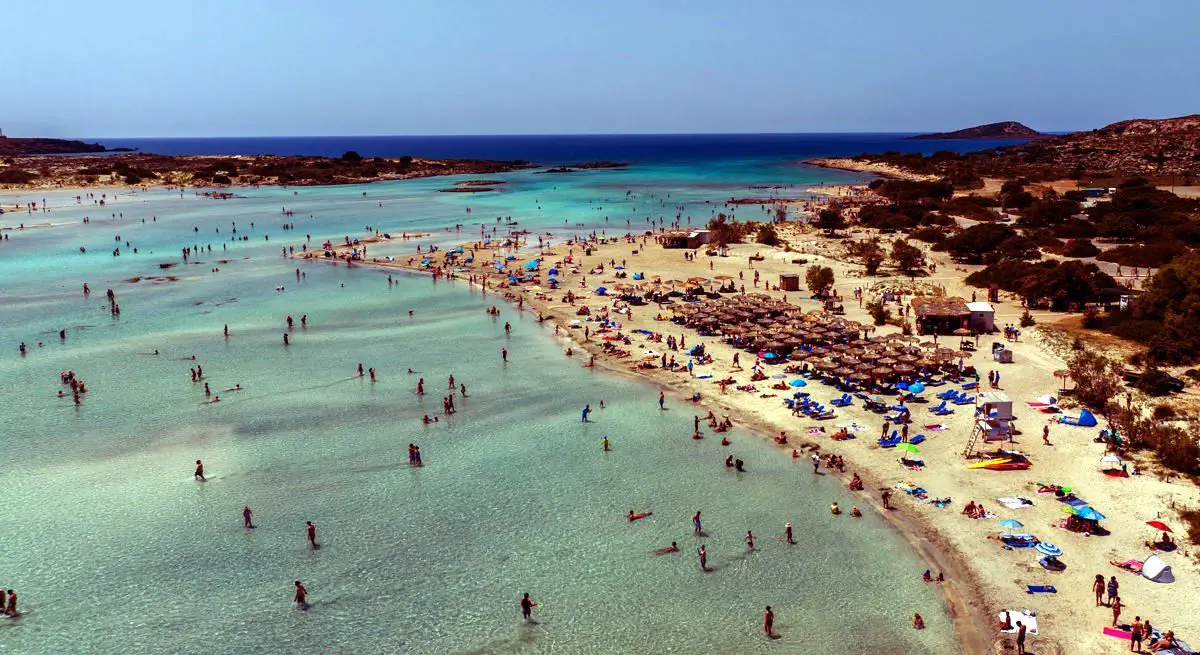
Crete remains a crown jewel of Mediterranean tourism, consistently drawing millions of visitors with its unique blend of ancient history and breathtaking natural beauty. However, as the 2026 season progresses, feedback from international travelers highlights a clear divide: while the island’s “soul” remains its greatest asset, aging infrastructure and environmental concerns are becoming harder to ignore.
Based on recent tourism data and visitor surveys, here is a breakdown of Crete’s competitive strengths and the critical areas where improvements are needed to maintain its world-class status.
The Strengths: Why Crete Remains a Top Global Destination
The reasons travelers choose Crete year after year are deeply rooted in the island’s identity. According to visitor feedback, these are the high points of the Cretan experience:
- Unmatched Hospitality: The famous Cretan philoxenia remains the island’s strongest “brand.” Visitors consistently rank the warmth and friendliness of the local people as the highlight of their trip.
- Gastronomy and Local Products: The Cretan diet is no longer just a meal; it’s a primary reason for travel. From high-end restaurants to mountain tavernas, the quality of local olive oil, wine, and produce continues to wow international palates.
- Natural Diversity: Very few destinations offer the variety found in Crete—from the turquoise waters of Elafonisi to the rugged peaks of the White Mountains and the deep Samaria Gorge.
- Historical Depth: The Minoan palaces, Venetian harbors, and Byzantine monasteries provide a cultural richness that few competitors can match.
- Safety and Security: In an era of global uncertainty, Crete is perceived as an exceptionally safe and family-friendly destination.
The Weaknesses: Areas Demanding Urgent Attention
While the “software” of Crete (the people and culture) is thriving, the “hardware” (infrastructure and services) is showing signs of strain. Tourists and industry experts point to several recurring pain points:
1. Road Infrastructure and Safety
The state of the roads remains the #1 complaint among tourists who rent cars. Narrow lanes, poor lighting, and inadequate signage—combined with sometimes aggressive local driving habits—create a stressful experience for visitors trying to explore the island.
2. Waste Management and Cleanliness
Despite the island’s beauty, visitors often note issues with litter in public spaces and overflowing bins in high-traffic areas. Improving the image of cleanliness is essential for a destination that markets itself as a pristine natural paradise.
3. Public Transport Connectivity
While the KTEL bus network is reliable between major cities, tourists find it difficult to reach more remote villages or specific beaches without a private vehicle. A more integrated, tourist-friendly transport system is frequently requested.
4. Digital Transformation
While major hotels have modernized, many smaller businesses and public sites still lag in digital services. Visitors expect seamless high-speed Wi-Fi, digital ticketing for all archaeological sites, and more robust online booking options for local experiences.
5. Over-Tourism in “Hotspots”
Certain iconic locations, such as Balos Lagoon or Knossos, face extreme crowding during peak hours. Tourists are increasingly calling for better flow management and “smart” visiting systems to prevent the experience from feeling like a chore.
The Path Forward: Quality Over Quantity
The consensus among tourism stakeholders is that Crete must shift its focus from simply increasing the number of arrivals to enhancing the quality of the experience. By investing in sustainable infrastructure and addressing the “pain points” mentioned by visitors, Crete can ensure that it remains a premier destination for decades to come.
Sources
Are you planning a trip to Crete this year? What is the most important factor for you when choosing a destination? Let us know in the comments!



