

Blood, Faith and Memory: The Dark Story Behind Heraklion’s “25 August Street”.
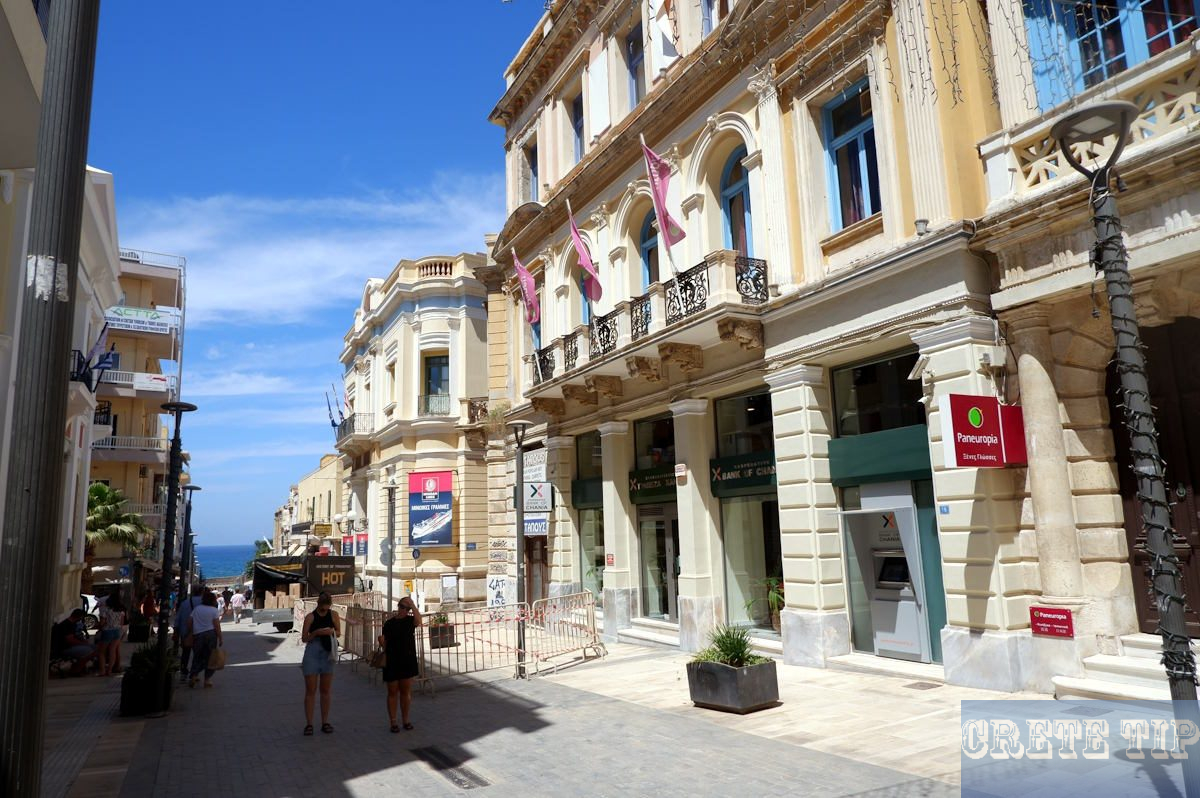
Today it is one of the most popular streets in Heraklion, linking the old harbour with the heart of the city. But the name “25 August Street” commemorates one of the darkest days in Crete’s modern history.
Tuesday, 25 August 1898
Crete was then in a critical transitional period, with the Great Powers pushing to implement a regime of autonomy on the island. In Heraklion, the British forces in control of the area were attempting to hand over the tax office at the Customs House to the new authorities.
Thousands of Muslims had already gathered the previous day at Tris Kamares in protest. By midday on 25 August, the tension exploded into bloodshed.
A city in flames
Armed Turkish-Cretan irregulars first attacked the British soldiers stationed at the Harbour Gate, then turned their weapons on the Christian population. Houses and shops were torched, properties looted and civilians slaughtered in the streets, in their homes and in their shops.
The area around the port, along today’s 25 August Street, became a killing field. Some Christians fled the flames, others sought refuge in the consulates, and some even threw themselves into the sea to escape.
Among the victims was Lysimachos Kalokairinos, the British vice-consul, who was murdered along with members of his family while his house burned. Estimates put the number of Christians killed at 500 to 800, along with 14 British soldiers, sailors and marines (source: Wikipedia).
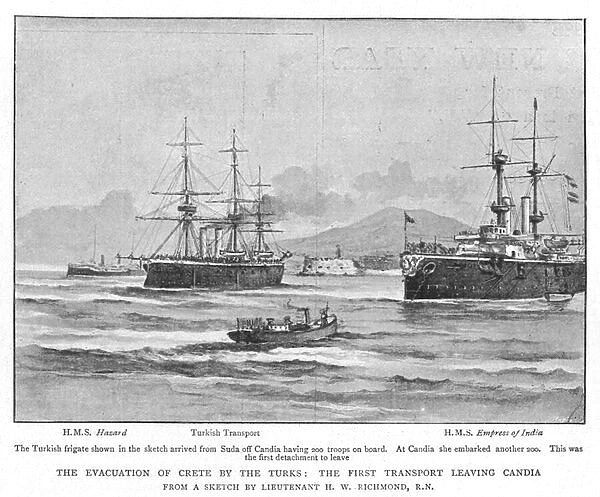
The massacre ended only when British warships in the harbour, including HMS Hazard, began shelling the town. Royal Navy surgeon William Maillard was later awarded the Victoria Cross for his courage that day.

The turning point for the Cretan Question
The international outcry that followed, especially over the killing of British servicemen, forced the Great Powers to act decisively. An ultimatum was delivered to the Sultan demanding the withdrawal of Ottoman troops.

By early November 1898 the last Ottoman soldier had left Crete, ending 253 years of Ottoman rule. Shortly afterwards the autonomous Cretan State was formed under High Commissioner Prince George, paving the way for union with Greece in 1913.
The feast of Saint Titus on the same day
By a striking coincidence of the calendar, 25 August is also the feast day of Saint Titus, the first Bishop of Crete and close disciple of the Apostle Paul. Paul called him his “true child” in the faith and entrusted him with organising the first Christian communities on the island.
So for Heraklion the date carries a double weight: faith and tradition on one hand, sacrifice and the struggle for freedom on the other.

A street that carries the memory
Every year on the feast of Saint Titus, the city honours the Christians massacred in 1898. In the courtyard of the historic church stands the monument to the victims, where a memorial service is held and wreaths are laid.
The same will happen this year, on Tuesday 25 August 2026, following the Orthros and the Hierarchical Divine Liturgy at Saint Titus. More than a century later, 25 August is far more than the name of a street — it is the memory of a tragedy that changed the course of Cretan history.

Sources: Cretalive, Creta24 and Wikipedia.



