

Newsflash from Thursday, 9 July 2026:
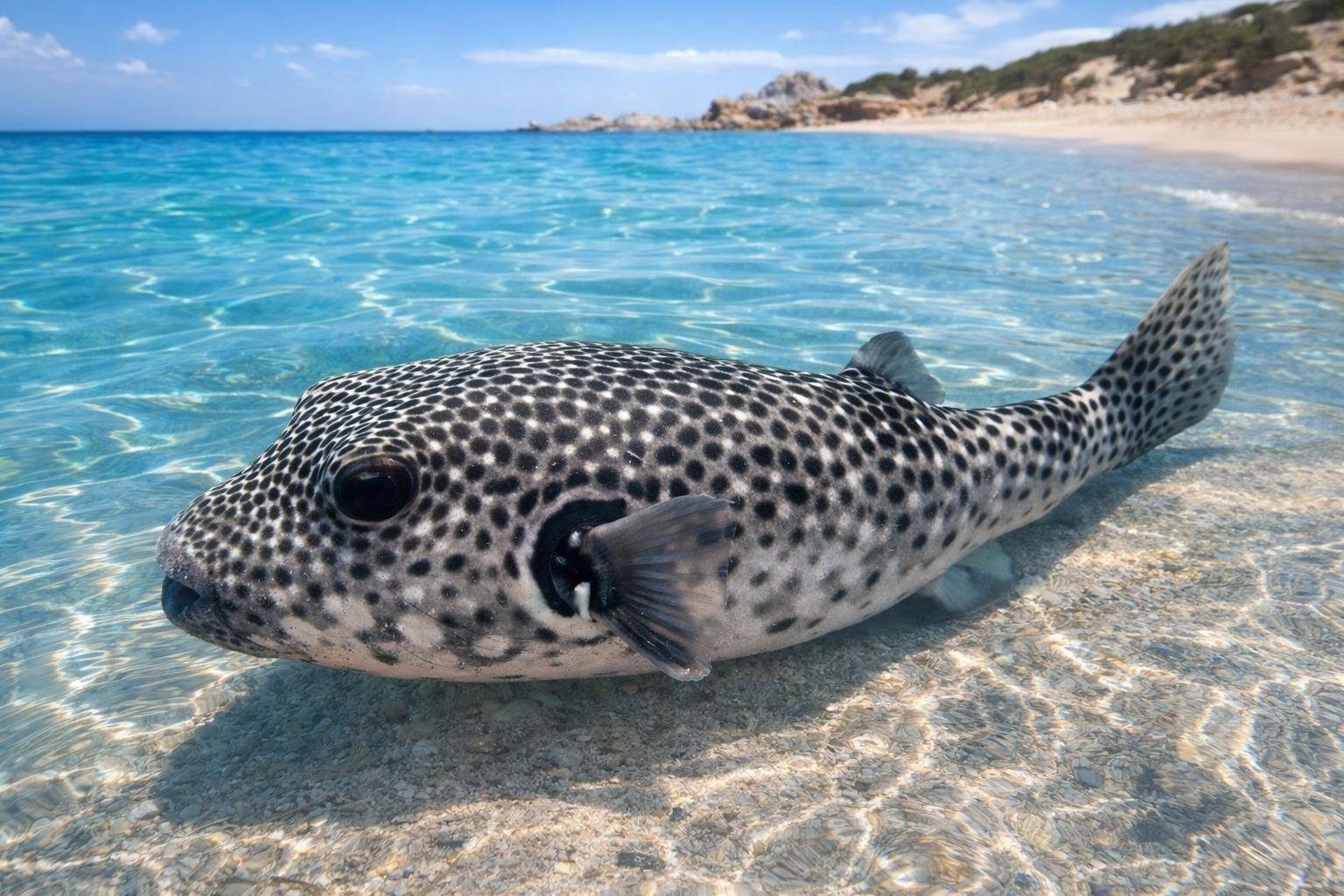
Disturbing Encounters in Popular Tourist Areas
Recent incidents have put the spotlight on the potential dangers. Near Patras, a swimmer reported being struck in the neck by a large fish believed to be a pufferfish, resulting in visible injuries that required medical attention. In Crete, a similar sighting at Marathi Beach caused alarm among beachgoers before staff intervened and removed the fish from the water.
Medical professionals noted that while the Patras injury was ultimately classified as an abrasion rather than a bite, the encounter highlights the unpredictable nature of these fish. Experts advise that any injury caused by marine life should be immediately cleaned and assessed by healthcare providers.

Unexpected Catch: Grandfather and Grandson Pull Toxic Pufferfish from Busy Chania Beach
Beachgoers at Agioi Apostoloi in Chania were left stunned when a grandfather and his young grandson managed to catch a large pufferfish during a morning swim. The unusual incident unfolded along the rocky edge of the popular beach, quickly drawing attention from nearby swimmers.
According to reports, the pair encountered the invasive fish—known locally as “lagokefalos”—while in the water and succeeded in trapping it. Lacking proper equipment, they improvised by using a child’s plastic beach toy to carry the sizeable catch ashore, a moment that was captured on video and widely shared online.
The presence of pufferfish in Greek waters is no longer considered rare, as the species continues to spread across the Mediterranean. However, experts strongly warn that these fish are highly dangerous and should never be touched or handled, as they contain potent toxins and can inflict serious bites.
Authorities continue to advise swimmers to remain cautious and avoid contact with unfamiliar marine life, even in shallow and crowded beach areas.
A Toxic Threat Beneath the Surface
The danger posed by pufferfish goes beyond physical contact. The species carries tetrodotoxin, a powerful neurotoxin with no known antidote, making it extremely hazardous if consumed. Authorities stress that under no circumstances should the fish be eaten, even if caught.
Additionally, the fish’s strong jaws are capable of causing serious wounds, with reports indicating they can bite through hard materials—including fishing gear.
Greece Responds with Barriers and Bounties

To protect swimmers, Greek officials have begun installing floating barriers in high-risk areas such as Euboea. These systems, made of anchored netting and surface floats, are designed to keep pufferfish and other marine hazards away from designated swimming zones.
At the same time, authorities are attempting to curb the species’ spread through financial incentives. Fishermen are now offered approximately €5.33 per kilogram of pufferfish caught, encouraging active removal from affected waters.
Impact on Fisheries and Marine Ecosystems
Local fishermen are among those most affected. The pufferfish frequently damages nets with its sharp teeth, increasing operational costs and disrupting catches. Despite removal efforts, some experts remain skeptical, noting that warming sea temperatures will likely continue to support the species’ expansion.
Originally from the Indian Ocean, the pufferfish entered the Mediterranean via the Suez Canal and has steadily spread westward over the past two decades.
Should Swimmers Be Worried?
While the growing number of sightings has fueled anxiety, marine scientists emphasize that aggressive encounters with humans are still relatively rare. Most incidents occur when the fish feels threatened or disturbed.
Still, vigilance is key. Swimmers are advised to avoid unfamiliar marine species, remain calm in the water, and seek immediate medical care if injured. Authorities also reassure the public that Greece’s beaches remain safe overall, with preventive measures actively being expanded.

As the summer season peaks, the presence of this toxic invader serves as a reminder that even paradise can come with unexpected risks—ones that require awareness, preparedness, and swift response.
Nature’s Counterattack? Could Loggerhead Turtles Help Control Toxic Pufferfish in the Mediterranean

Particularly in the waters around Crete—where both species are increasingly present—researchers are examining whether these iconic marine turtles could play a role in naturally limiting pufferfish populations.
A Dangerous Invader on the Rise
The silver-cheeked pufferfish (Lagocephalus sceleratus), often referred to in Greece as “lagokefalos,” has become a growing environmental concern. Originally entering the Mediterranean via the Suez Canal, the species has rapidly expanded its range, aided by rising sea temperatures.
Its impact is significant: it damages fishing gear, competes with native marine species, and poses a serious health risk due to tetrodotoxin, a powerful neurotoxin that can be fatal if consumed.
The Loggerhead’s Unique Advantage
Scientists have identified the loggerhead turtle as one of the few marine species capable of preying on pufferfish. Thanks to a natural tolerance to tetrodotoxin and exceptionally strong jaws, these turtles can consume hard-shelled prey—and potentially toxic fish.
Evidence supporting this theory has emerged from the analysis of stranded turtles, where remains of pufferfish have been found in their stomach contents. This suggests that the species may already be part of the loggerhead’s diet.

Crete: A Natural Laboratory
Crete offers a unique setting for studying this interaction, as it hosts both a significant population of loggerhead turtles and a growing number of pufferfish. Researchers are particularly interested in whether the presence of turtles could help curb the spread of the invasive species—at least on a local scale.
However, experts caution that while the findings are promising, there is still no direct visual evidence showing turtles actively hunting live pufferfish. It also remains unclear whether they feed primarily on live specimens or scavenge dead ones.
No Single Solution to a Complex Problem
While the loggerhead turtle may contribute to controlling pufferfish numbers, scientists emphasize that it cannot serve as a standalone solution. The rapid spread of the species is linked to broader environmental changes, including climate change, habitat degradation, and the decline of natural predators due to overfishing.
Protecting marine ecosystems and restoring biodiversity are considered essential steps in addressing the issue long-term.
A Symbol of Marine Health
Beyond its potential role as a natural regulator, the loggerhead turtle is widely regarded as a key indicator of ocean health. Its presence reflects the overall condition of marine ecosystems, making its protection even more critical.
As research continues, the interaction between loggerhead turtles and pufferfish highlights the complexity of nature—and the possibility that solutions to modern environmental challenges may already exist within it.
Sources:



